Greek Sheepdog Dog Breed: Info, Pictures, Care & More

In this article
The Greek Sheepdog originated from Greece, as you’d probably expect from their name.
This breed is thought to have ancient origins, though the beginning of their existence is largely unknown. They closely resemble sheepdogs from neighboring countries, which suggests that they all share a common ancestor.
Breed Overview
Height:
Weight:
Lifespan:
Colors:
Suitable for:
Temperament:
However, even today, some of these breeds are a bit difficult to tell apart. Some dogs may even belong to both breeds. As soon as a few hundred years ago, a dog’s breed may have depended more on their geographical location than actual genetics.
Today, the Greek Sheepdog is not typical. They are often used as working dogs, though they are sometimes kept as companions in Greece. In the United States and other countries, these dogs are quite rare.
Greek Sheepdog Characteristics

Greek Sheepdog Puppies
The major hurdle when it comes to adopting these canines is finding one! They are exceedingly rare in the United States. They are around in Greece, so it may be possible to import one. However, the travel costs will likely cost you hundreds of dollars.
Some breeders ship internationally, while others will require you to come and get the dog. These options will vary in price. Be sure to do plenty of research before you purchase a puppy—travel costs can get expensive.
Temperament & Intelligence of the Greek Shepherd 🧠
The Greek Shepherd was originally bred for guarding sheep. They are well-known for their ferocity when guarding what they consider theirs. Many dogs were known to protect all the sheep in an area, not just those that they had been assigned to. During the annual sheep migration around Greece, many of these shepherds protected thousands of sheep together.
It wasn’t uncommon for those walking in rural areas to arm themselves against Greek Shepherds, should one mistake them as a thief. Even a shepherd’s family members had to be careful about approaching the sheep unless they had a good relationship with the dog. However, that doesn’t mean these dogs are innately aggressive. They are highly protective of what’s theirs, which often makes them excellent guard dogs.
The Greek Sheepdog is often wary around strangers, as you would expect. They are even reserved around long-time family friends, typically only wanting attention from close family members. They need extensive socialization to ensure that they aren’t aggressive toward anyone walking through the front door.
This breed was initially bred to be a working animal. We don’t recommend this breed for new owners, as they can be a bit of a handful.
Are These Dogs Good for Families? 👪
They can be because they are incredibly protective and tend to bond closely with everyone in their family. However, they also need extensive socialization or they can be a bit too protective. Their larger size allows them to put up with children. Therefore, they likely aren’t to be fearful of them, which lowers the chance of aggression.
However, socialization is vital for this breed. Otherwise, they can become a bit aggressive. We only recommend these dogs for families who have plenty of time on their hands. They require quite a bit of work. They aren’t just family dogs—they were bred to be working dogs. Therefore, they can be more than many families can handle.
Does This Breed Get Along with Other Pets? 🐶 😽
Yes and no. They can get along with other dogs if they are correctly socialized. You should socialize them regularly when they are puppies to ensure that they interact with other dogs. Traditionally, they would have been raised around other sheepdogs and worked alongside them when they got older. However, their protective instinct also means that they may be aggressive toward dogs they don’t know.
Socialization should begin at an early age. Otherwise, your dog could become fearful of other dogs because they aren’t used to interacting with them. Dogs typically interpret anything new as potentially dangerous. Therefore, your job is to make meeting other dogs a completely normal part of life.
Greek Sheepdogs can get along well with cats and other animals. They do have a bit of a prey drive, but most of this is focused on herding. Therefore, they often try to herd cats and similar animals, which is not fun for the other animals. We don’t recommend them in homes with other pets for this reason. Their herding behaviors can get a bit aggressive and cause stress to other animals, even if the dog never actually hurts anyone.

Things to Know When Owning a Greek Sheepdog
Food & Diet Requirements 🦴
The Greek Sheepdog does not require any special nutrition compared to other dogs. They typically do well on any commercial, high-quality dog food. However, you may want to select a dog food specifically designed for larger dogs because Greek Sheepdogs grow to be quite large.
When these dogs are growing, it is vital to feed them puppy food designed specifically for large breed puppies, though. As large dogs, Greek Sheepdogs need specific requirements to grow. If these are not met, they may develop bone and joint problems later. The nutritional needs of large-breed puppies do not match those of smaller dogs. Therefore, you should feed them food specifically designed for them.
You should also be careful not to feed your puppy too much. Too many calories can cause uneven growth. While this can cause many different health concerns, the most common one is hip dysplasia.
Typically, this occurs when the ball or socket of the joint grows at a too-fast rate, preventing it from lining up correctly. This causes excessive wear and tear, eventually leading to arthritis-like symptoms in the dog at a relatively young age.
Exercise 🐕
As work animals, these dogs require regular exercise. They need a great deal of activity and mental stimulation. Most thrive best when given a job to do, even if they are kept solely as companions. They thrive at agility competitions and anything that gets them moving and thinking at the same time.
We recommend them for active families only. Without the correct amount of exercise, they can quickly become bored and destructive. Exercise and boredom are common causes of destructive behavior in canines. If they aren’t provided with enough fun, they’ll try to make their own, which usually involves them eating your couch.
You can expect the Greek Sheepdog to need at least 2 hours of exercise a day. This can include brisk walks or plenty of physical play. The exercise should be moderate to intense.
Their high exercise needs often make them inappropriate for apartments. They do best with a large yard that they can run around in. But that doesn’t mean that you can put them in a fenced-in area and expect them to meet their own exercise needs. They often won’t get up and move around unless you encourage them to.
Training 🎾
The Greek Sheepdog is quite trainable. They are intelligent and bond well with their family. However, they aren’t necessarily as trainable as a German Shepherd or Labrador Retriever. Their primary purpose was to guard sheep, and that job didn’t require much training. These dogs are born with innate herding instincts, making training unnecessary.
Still, their high intelligence enables them to learn many different commands. You can expect them to readily learn, especially if you start them at a young age. Their intelligence also comes with a need for mental stimulation, though. Greek Shepherds need something to put their minds to, or they can become bored. You don’t want these dogs trying to come up with their own fun!
Training these dogs is often necessary if just to keep their mind working. Getting these dogs to understand commands usually isn’t the problem. Instead, your main issue is typically coming up with new things to teach them.
We highly recommend training classes, especially those that involve plenty of interaction with other dogs. On top of basic training classes, you should plan on enrolling in advanced ones as well.
Grooming ✂️
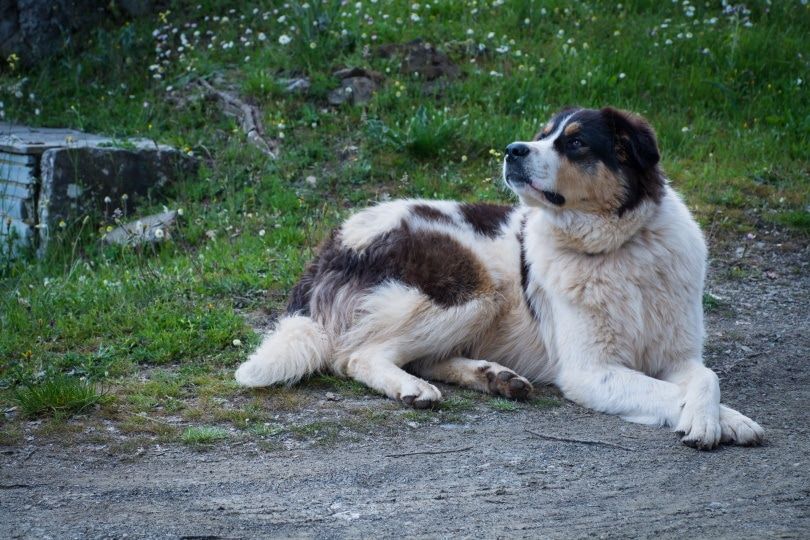
The Greek Sheepdog requires significant grooming due to their long coat. You should brush their coat at least every other day to keep it free from tangles. Every day is often better, especially if your dog is relatively active. Due to their large size, this can take a while.
Luckily, these brushing sessions should also help keep their coat clean. Brushing will remove quite a bit of loose hair, which these dogs will produce plenty of. The brush can also remove dirt and debris, keeping your canine clean for longer. Regular brushing sessions also help move the dog’s natural oils around their fur, keeping it healthy and shiny. An adequately oiled coat is less likely to get dirty and may improve your dog’s skin health.
If you stay on top of these grooming sessions, you likely won’t have to worry about bathing your canine all that often. The brush should do an excellent job of removing dust and dirt. We only recommend bathing them when it is essential. Otherwise, too many baths can damage their fur and skin, causing health problems and irritation.
Luckily, these dogs don’t need professional grooming. They shouldn’t be trimmed much because this can affect their ability to regulate their body temperature. If you brush them regularly at home, you shouldn’t have to worry about taking them to a groomer.
Like all dogs, you’ll also have to brush their teeth and trim their nails. Tooth brushing should occur a few times a week, though daily is often better. Keep an eye on their nails, and cut them when they become overgrown. If you can hear your dog’s nails when they walk on a hard surface, they are too long. You can visit a professional for this or do it at home. Many groomers provide walk-in services like nail clipping if you don’t feel comfortable doing it yourself.
Due to their floppy design, a Greek Sheepdog’s ears are somewhat prone to infections. You should check them regularly for dirt and debris, as these can lead to infections. Regular ear cleanings may be necessary. If you notice any redness or your dog seems irritated, visit a vet right away. Ear infections can potentially turn serious quite quickly.
Health and Conditions 🏥
The Greek Sheepdog is usually healthy. They were bred for practical purposes, which often means that the healthiest dogs were chosen to produce puppies. Over time, this has led to a relatively healthy breed. However, they are still prone to certain illnesses.
We don’t know much about this breed’s health because these dogs are so rare. There have been few studies done on the breed, and most of them do not involve health. Since so few dogs exist, it is hard to say which illnesses only exist within certain lines and which penetrate through the whole breed.
We can make a few educated guesses as to the health problems that these dogs may develop. Most of them are due to their larger size, which comes with its own set of problems.
For instance, larger dogs are often prone to hip dysplasia. They take longer to grow, and therefore, their hips have more opportunities to get uneven. Once the hips get uneven, the wear often means that they don’t go back to being straight. Genetics do play a role in this disease, but you have to consider environmental factors as well. Overexercise and overfeeding puppies can both lead to hip dysplasia.
Bloat may also be expected in this breed. This condition seems most common in large dogs with deep chests. No one knows precisely what causes bloat. However, we know that it involves gases building up in the stomach, with the stomach sometimes twisting.
Male vs. Female
The only significant difference between males and females is their size. Males are often larger than females by quite a bit. For example, males can weigh up to 121 pounds, while females can only reach 88 pounds. Males usually stand a few inches taller than females as well.
Beyond that, there is no evidence that anything else is different. There are misconceptions that one sex is more aggressive than the other, but this doesn’t seem to be a common thought among Greek Sheepdog breeders.
Socialization is more vital to their temperament and aggression level than their sex. If you happen to meet a specific aggressive dog, their sex probably doesn’t have anything to do with it.
3 Little-Known Facts About the Greek Sheepdog
1. They may not actually be a separate breed.
These canines were initially used to herd the sheep of the Balkans, who annually migrated over Greece and the Sar Mountains.
These dogs crossed multiple countries at different times. It is thought that these different areas may have given different dog names, which eventually led to the rise of different breeds, though they were originally all the same.
2. The Greek Shepherd is declining in numbers.
Like many dog breeds, these dogs aren’t as populated today as they once were. As they became less and less necessary for practical sheep herding, their numbers began to take quite a hit. Various breeding programs have been started to revive the breed, but only about 3,000 known dogs exist today.
3. They aren’t recognized by the AKC.
The American Kennel Club does not currently recognize this breed. They are not common in the United States, and no one has yet to go through the long process of getting them recognized.
Final Thoughts
The Greek Shepherd is a rare dog. They are typically only found in Greece, and even there, they are uncommon. There are as few as 3,000 individuals left. If you’re interested in adopting one of these dogs, you’ll likely need to import one from Greece.
This breed was bred mainly for practical purposes. They herded and guarded sheep until only a few decades ago. They have powerful guarding instincts, similar to those of many other herding dogs. Socialization is essential to ensure that they are accepting of strangers and not too protective of their families.
Luckily, they are quite intelligent, so training and socializing are often straightforward. Just be sure to start from a young age. Their intelligence does mean that they require extensive mental stimulation, though.
We do not recommend this breed for newer dog owners. Their guarding instincts require careful consideration and handling.
Related Read:
Featured Image Credit: pixels outloud, Shutterstock
Expert dog care, straight to your inbox
News, insights, expert advice, and everything dog.

No spam — unsubscribe anytime.
By signing up, you agree to our Terms & Conditions and Privacy & Cookies Policy.
How useful was this post?
Click a star to rate. You can leave written feedback afterwards. (We read all feedback.)
Kristin loves to help pet parents create a fulfilling life for their pets by informing them on the latest scientific discoveries and helping them choose the best products for their pets. She currently resides in Tennessee with three cats, four dogs, two fish, and a lizard, though she has dreams of owning chickens one day!