
Do Akitas Shed a Lot? Facts & Grooming Tips

In this article
View 6 More +Praised for their loyalty, bravery, and noble traits, Akita dogs are big, strong, and highly protective. Plus, they have a lush, dense double coat that safeguards them from the weather. So, does that mean Akitas shed 24/7?
No, not quite. While the fur does blow extensively during the spring and fall, for the rest of the year, Akitas shed moderately.
So, how often should you brush their coat? Will twice a week be enough to keep it in shape? Which tools are recommended for brushing, cleaning, and bathing an Akita dog? Join us, and let’s talk about the Akita coat in more detail, go over the grooming routine, and learn how we can help this dog shed less.

Majestic Protectors: A Quick Look at Akita Dogs
Famous for their protective nature, Akitas thrive and flourish alongside their favorite humans. However, they’re not very friendly with strangers, fellow canines, or other pets. But this attitude can be altered a bit via early socialization. Bred for one specific goal—to serve as watchdogs—these smart, heavy-boned dogs scare intruders away with a single bark.
An adult male can reach 28 inches in height and weigh up to 130 pounds, making for a mighty protector. In Japan, Akitas are known as a symbol of health, longevity, and happiness. The big, broad head, strong, muscular legs, and curled-over tail are the trademarks of this breed, along with the perky ears and dark, beautiful eyes. And once they create a bond, it’s for life!

What Kind of a Coat Do These Dogs Have?
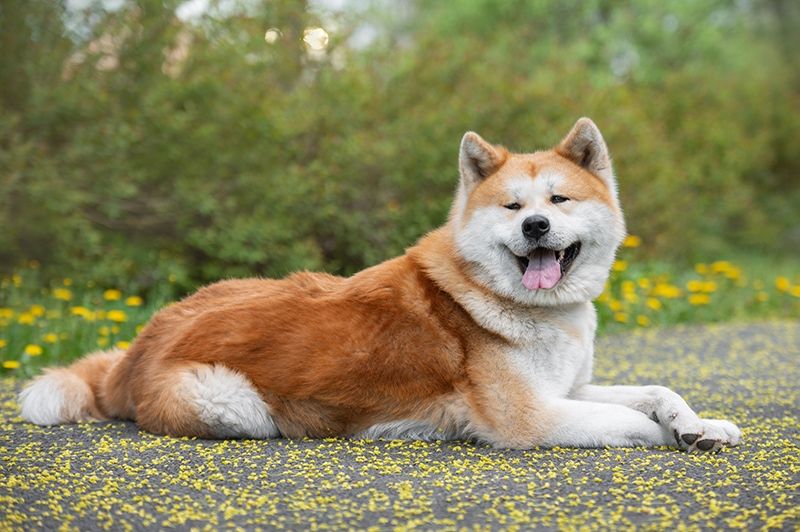
Akitas have a dense coat that protects them from rain, snow, wind, and other natural elements. It’s a double coat, of course: the undercoat is very short and soft, yet thick, while the outer layer is rather harsh and wiry. If you take a closer look at the fur, you’ll see that it’s especially dense on the pup’s tail. The hair is also a bit longer on the rear legs and shoulders.
Now, white is arguably the most widespread coat color. However, Akitas are also available in black, red, brown, fawn, and various combinations of silver, fawn, and red, to name a few. Markings are often a part of the deal as well. For example, if you want a black mask with white markings or a white-on-white combo, you can get it with an Akita.
Are Akitas Heavy Shedders?
According to the AKC, Akitas shed moderately or even minimally throughout the year, but that all changes when the “blow” season starts. So, to answer the question—are these mighty dogs heavy shedders—it depends on the time of the year. While the exact date might change a bit depending on the climate, living conditions, and other factors, most Akitas shed extensively in early winter and mid-summer.
And when that happens, you need to prepare yourself for daily brushing and cleaning. If you’re lucky, the blow season will go away in two weeks. Unfortunately, it can just as easily go on for up to two months (four times longer). You’ll instantly know when the dog’s coat goes back to regular shedding. So, no need to time it or anything.

How Do You Take Care of the Fur?
Even if you’ve never done this before, it won’t take long to master the art of grooming. Generally, brushing the coat once or twice a week should keep it in proper shape. And when the pup starts blowing like it’s nobody’s business, you’ll have to start brushing it every single day. Otherwise, the pet will turn the house into one big pile of hair. No carpet, couch, or clothes will be safe from the Akita fur!
So, stay one step ahead by grooming the dog extensively. Use slicker brushes to remove the dirt, debris, and dead hair from the topcoat and a grooming rake to handle the undercoat. For distributing the skin oil evenly, we recommend bristle brushes. Don’t use rakes too often, though, as that will irritate the dog’s skin. Be patient, go slow, and praise the pup: that’s how you get this done.
Can You Make an Akita Shed Less?
Shedding is a natural and essential process for our fur babies. By saying goodbye to the old fur, they grow a new, healthier coat that protects their skin from outside threats. The shedding intensity depends on the breed, coat type (double or single), diet, allergies, and, of course, the time of the year.
Here are some tried-and-true techniques for minimizing the shedding:
What Does a Sudden Spike in Shedding Indicate?
If you’re noticing that your Akita is shedding more than it used to, yet the blowing season isn’t even close, it might be a sign of various health issues. We’re talking about allergies, infections (bacterial and fungal), parasites, and serious medical conditions, including liver and immune diseases. Sometimes, excessive hair loss is a side effect of stress or anxiety.
In other cases, it could be triggered by something more serious like cancer, thyroid/adrenal issues, or problems with the dog’s immune system. Have the Akita thoroughly checked by a veterinarian to learn exactly what’s causing it. The sooner you figure it out, the easier it will be to help the pup. If you are concerned about the health and well-being of your pet, seek veterinary advice for the best course of action.
The Grooming Routine: Trimming, Bathing, and Cleaning
With the coat in tip-top shape, don’t forget to take a minute to also trim the dog’s nails (once in 3–4 weeks), clean its ears (once a month), and brush its teeth (2–3 times a week, or daily). As for washing the doggo, once in 1–2 months is enough for most Akitas. That said, if it’s an active dog that likes to play outside, you might have to bathe it a bit more often to remove all the dirt and debris.
Also, consider using a deshedding shampoo. To ensure the pet is comfortable, always use the same brushes, nail trimmers, and shampoos. This way, the dog will quickly get used to it all. Thankfully, most Akitas don’t mind being groomed. They might be a bit hesitant at first, but, once you create trust, it shouldn’t be hard to persuade the doggo to take a quick bath, brush its coat, or trim the paws.
If you are looking for the perfect, pet-friendly shampoo and conditioner combo, we highly recommend the products by Hepper. With a soothing oatmeal shampoo, free of soaps and other harsh chemicals, and a cucumber and aloe-scented conditioner, your pet's skin and coat will be smooth, hydrated, and irritation-free.
| Image | Product | Details | |
|---|---|---|---|

|
Hepper Oatmeal Pet Shampoo |
|
Check Price |

|
Hepper Pet Conditioner |
|
Check Price |
At Dogster, we’ve admired Hepper for many years, and decided to take a controlling ownership interest so that we could benefit from the outstanding products of this cool pet company!
Keeping an Akita Dog Safe
The lush double coat does a solid job of protecting Akita dogs from cold weather, but it also makes them prone to overheating. So, if it’s a hot, sunny day outside, it would be best to postpone that walk or tug-of-war session until the sun sets. And if you still decide to go outside, make sure the four-legged bud stays in the shade and pack a bottle of water to keep it hydrated.
Also, make a habit of regularly checking the Akita for ticks, fleas, and signs of mosquito bites. This is especially true for owners who let their dogs off the leash in the wilderness. And please remember that shaving the hair and leaving the dog exposed won’t miraculously solve the tick/flea problem. Instead, try giving the dog some parasite-prevention meds (only after consulting with a veterinarian).

Summary
Despite the imposing size, with the right people, Akitas are sweet and loving and cause little to no trouble. On top of that, these Japanese beauties are low-maintenance pets. A 30-minute walk around the neighborhood and some short, high-energy games back home will keep their spirits up. As for grooming, you won’t have to spend hours tending to their fur.
For the most part, Akita is a low-shedding breed. That said, when the shedding season hits, you’ll have a hard time keeping up with all the dog hair on your carpet, furniture, and clothes. Thankfully, by using the right tools and techniques, it’s very well possible to minimize the damage and keep that luxurious coat in great shape!
Featured Image Credit: Kristina Chizhmar, Shutterstock
Expert dog care, straight to your inbox
News, insights, expert advice, and everything dog.

No spam — unsubscribe anytime.
By signing up, you agree to our Terms & Conditions and Privacy & Cookies Policy.
How useful was this post?
Click a star to rate. You can leave written feedback afterwards. (We read all feedback.)

Nicole has loved animals of all sizes her whole life so it's no wonder she has dedicated her career to helping them through what she loves best: learning, writing, and sharing knowledge with others. She’s the proud mom of two dogs, a cat, and a human. With a degree in Education and 15+ years of writing experience, Nicole wants to help pet parents and pets around the planet to live happy, safe, and healthy lives.