Get

In Your Inbox

Dogster is reader-supported. When you buy via links on our site, we may earn an affiliate commission at no cost to you. Learn more.

Why Do Dogs Lick Their Own Wounds? The Interesting Answer

Share

dog licks a dermatological wound

If your dog has ever had an injury, you’ve likely seen them try to lick their wound. But why does almost every dog try to lick their wounds, and should you let them do it?

We’ll dive into everything you need to know about why dogs lick their wounds. Since dogs don’t have hands to treat their injury, they use their tongues, but you shouldn’t let them do it. It might be a bit frustrating to get them to stop, but we’ve also highlighted a few ways you can get them to stop licking their wounds for you here!

divider single dog paw oct 2024

Why Do Dogs Lick Their Own Wounds?

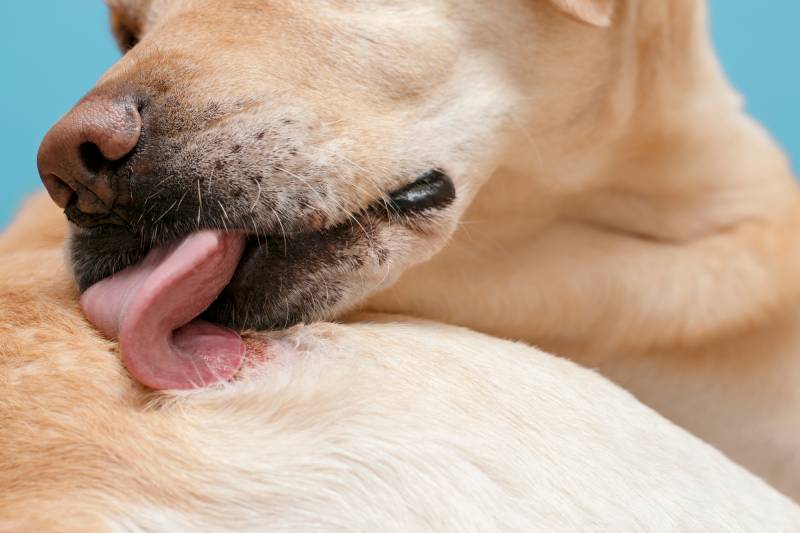
It’s instinctual for dogs to lick their wounds. They don’t have hands like us that they can use to treat their injuries, so their next best option is their tongues. When dogs lick their wounds, it helps them in a few ways. First, it provides some relief from pain and discomfort. When you rub or hold a wounded area on your body to temporarily relieve the pain, the same is true for your dog.

Moreover, dog saliva has slight antibacterial properties against specific types of bacteria. It’s not the most effective cleaning agent, but before dogs had access to modern medicine, it was their only option.

Licking their wounds is the only way they have to treat themselves, and they will do whatever they can to help themselves, even if it does more harm than good in the end.


close up dog licking wound
Image By: Wichaiwish, Shutterstock

divider dog paws 4 oct 2024

Should You Let Your Dog Lick Their Wounds?

Since their tongues have antibacterial properties, it might seem like it’s not a bad idea to let your pup lick their wounds. However, it can still cause an infection.

Not only that, but a dog licking their wound excessively can lead to further irritation, hot spots, and more damage to the area. Licking was better than nothing before dogs had access to medicine through their owners, but since you can give them the medicine they need, it’s best to keep them from licking their wounds.

divider single dog paw oct 2024

How to Keep Your Dog From Licking Wounds

Because your dog licking their wounds can cause more harm than good, keeping them from licking injured areas is best. If your dog cannot stop licking an injury, what can you do about it?

We’ve highlighted three ways you can try to keep your dog from licking their wounds:

1. Cones & Inflatable Collars

a golden retriever dog wearing a cone of shame
Image By: Kyla Metzker, Shutterstock

This is the classic way to keep your dog from licking a wounded area, and it’s the most popular option for a reason. Plastic cones and collars are effective at keeping your dog from licking a wounded area no matter where it’s at, but most dogs don’t like the way they feel.

They make softer cones compared to the hard plastic ones of the past, and many dogs find them more comfortable. Inflatable collars are typically far more comfortable for your dog, but some dogs still don’t like them.


2. Dog Clothing

Dog wearing red christmas sweater
Image By: Ryan Seth Nau, Shutterstock

This might work, depending on the location and type of injury. If your dog has an injury on their stomach, a dog shirt might be all you need to keep them from licking it. Remember that many dogs will still try to get to an injury even if they’re wearing clothing.

However, for smaller injuries and more compliant dogs, the clothes might be more comfortable than a cone or inflatable collar.


3. Dressings
veterinarian dressing the wound on a dog with gauze
Image By: BetterPhoto, Shutterstock

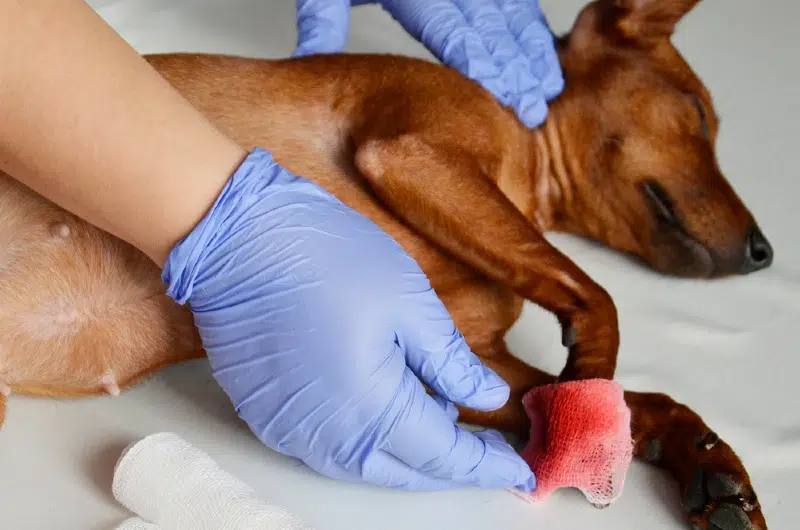
No matter where your dog has an injury, you can always try putting a dressing over it to keep your dog from licking it. Like dog clothing, many dogs will still try to get under the dressing to get to the injury, but for smaller injuries and dogs that aren’t quite as persistent, it might be a better option than a cone or inflatable collar.

divider dog paws 3 oct 2024

Final Thoughts

Now that you know a little bit more about why a dog licks their wounds, what it can do, and ways you can keep them from doing it, the next time your dog gets an injury, you’ll have a better idea of what to expect and what you can do about it.

It might be a natural instinct for your dog, but when you’re trying to do what’s best for them, you need to keep their tongues away from their injuries!

See also: 


Featured Image Credit: fetrinka, Shutterstock

Want content like this delivered to you?

Sign Up For Our Newsletter

News, insights, expert advice, and everything dog

* By submitting, you agree to our Terms & Conditions and Privacy & Cookies Policy.


How useful was this post?

Click on a star to rate (you can leave written feedback after clicking submit)

Help us improve Dogster for pet parents!

Your feedback really matters.

What did you like about this post? Also how can we improve it?

Join the conversation

Leave a Reply

You’re very welcome to leave a comment or question. Please know that all comments must meet our community guidelines, and your email address will NOT be published. Let’s have a positive and constructive conversation.


Talk With A Vet Online

Peace of mind,
anywhere, anytime

Affordable vet advice

Dogster’s Weekly Photo Contest Winners: Best Easter Photo (April 9, 2026)

Every week our team gets the privilege of sorting through our readers photos to choose what dogs will win this weeks contest! See...

We Didn’t Just Add a Dog to Our Life – We Built a Life With Him

“We didn’t just bring a dog home—we built a life together.” Most people are quietly taught a version of pet ownership that looks...

What Most Airlines Won’t Let You Do With Your Dog (Even If You Pay Extra)

Airline pet policies are notoriously hard to navigate. The information is scattered across different pages, buried in FAQ sections, and often contradicts what...

Designer Breeds: Best of Both? New Study Says No

“I’ll take a highly trainable, low-shedding lapdog, hold the heart disease and anxiety!” Something I always found amusing was when people would point...

More related

How to Train a Havanese: 14 Great Tips

Do you easily get fooled by your little Havanese’s cuteness? Of course, you do; who wouldn’t? With their small size, affectionate nature, and...

How Long Do Australian Shepherds Live? Average Lifespan, Data & Care

Aussies are such good buddies that we want to spend as much time with them as possible. Maybe you are noticing the fur...

Are Dogs Allowed in HomeGoods? Updated in 2026

No matter where you live, the odds are high that you have a HomeGoods store nearby. HomeGoods is a paradise for just about...

Will a Labradoodle Get Along With My Kids? Breed Socialization & Safety Tips

As a parent, finding the perfect dog for your family is a big decision. We’ve all heard the saying that kids need a...

Keep reading

My Dog Ate Moldy Food: What Should I Do? Vet-Approved Facts & Signs Toxicity

If your dog has eaten moldy food—perhaps you didn’t store the food properly, or your dog ate the moldy food from the garbage—it is a cause for concern. Mold can make your dog sick, which is why you should take...

Regular vs Premium Dog Food: What’s the Difference? Vet Reviewed Facts

As consumers demand, manufacturers will supply. Consumers spoke throughout the early 2000s, asking for a more balanced diet for themselves and their pets. The market then exploded with trending phrases like “Premium,” Super Premium,” and “Ultra Premium.” The truth about...

Dogster_Regular vs Premium Dog Food

Can Dogs Eat Garlic Bread? Vet Approved Facts, Safety Guide & FAQ

Maybe you had some yummy garlic bread for supper and your dog stole a bite, or you’re just wondering if you can feed them some. Can dogs eat garlic bread? The short and simple answer is no. Garlic bread is...

Can Dogs Eat Garlic Bread

Can Dogs Eat Bread? Vet-Verified Types & Risks

Humans have enjoyed bread since ancient times. It is a staple in most households, and we’ve derived so much pleasure from eating it. But if you’ve been thinking about sharing some with your dog, you want to ensure dogs can...

Can Dogs Eat Bread

Can Dogs Eat Peanut Butter? Is It Good for Them? Vet-Reviewed Health Facts

If you are a dog owner, you are probably aware of how often peanut butter is recommended for dogs to eat. Many dogs find the taste of peanut butter irresistible, so it has multiple uses aside from being a tasty...

Can Dogs Eat Peanuts

Do Dogs Need Vitamin E? Vet-Verified Benefits & Risks

Dogs need vitamin E, as it’s an essential nutrient that provides antioxidants that protect against free radical damage. Free radicals are negatively charged atoms released during your dog’s normal metabolic processes. But when dogs or humans are ill or under...

Vitamin E capsules

Why Is My Dog Gaining Weight But Not Eating More? 10 Vet-Reviewed Reasons

Did you know that 59% of dogs in the United States are considered overweight or obese1? It’s true, and extra pounds put dogs at risk of developing debilitating health conditions like arthritis and reduce their lifespan. However, if your dog...

dog sitting on weighing scale

Can Dogs Eat Ghee? Vet-Approved Facts & FAQ

Ghee is a form of clarified butter from South Asia that has been prominent in Hindu culture for thousands of years. It’s commonly used as a cooking oil in Indian and Middle Eastern cuisine and is known for having numerous...

Can Dogs Eat Ghee

Love Dogs? So Do We! Join the Dogster Community

Stay informed with expert pet care insights delivered straight to your inbox! Discover professional guidance on animal behavior, feeding tips, trusted product picks, and much more.


Sign up for the Dogster Email Newsletter