In this article
View 3 More +It’s a fact of dog ownership: they often get into things and eat objects they shouldn’t, whether it’s used condoms, dirty diapers, or the topic we’ll be going into today—tampons. If it has a scent your pup finds mildly appealing in some way, they’ll find a way to get at it. It’s an often not talked about problem, but if you menstruate or live with someone who does, this topic is something that needs to be discussed as it’s not only gross but potentially dangerous. Read on to learn more about why dogs eat tampons and what you need to do to stop this risky behavior.

Why Do Dogs Eat Tampons?
They Are Exploring New Scents
Pair the naturally curious nature of dogs with their extremely heightened sense of smell, and you have a recipe for disaster when it comes to getting them into trouble. A dog’s ability to smell is 1,000 to 10,000 times better than ours, so it makes sense that they often explore their world with their noses and gain intimate knowledge about their environment through sniffing, licking, and tasting things.1 Nothing your dog can access will be off limits to their explorations, including the things you’ve discarded in your bathroom’s wastebasket.
You already know that dogs love sniffing groins, mainly because there are sweat glands there that release pheromones and scents that are intriguing to your pet. While we don’t know for certain exactly what information your pup is garnering from smelling your crotch, it may be info such as mood, sex, and age. The pheromones released by a menstruating person may smell differently to dogs, which may be partly why your pup may be glued to your groin more during that time of the month and attracted to your products.

They Are Natural Hunters
Dogs are natural hunters and excellent scavengers. It is their scavenging ability that draws them to any pungent odors that may be associated with decay and bodily fluids. Once your pup gets a whiff of the fluids on your used tampons, they’ll be focused on finding the source and determining its use, whether it’s meant to be a toy or food source.
The Dangers of Ingesting Tampons
Eating a tampon is dangerous. Your dog can be exposed to several issues if they eat your menstrual hygiene products, including:
Intestinal Blockages
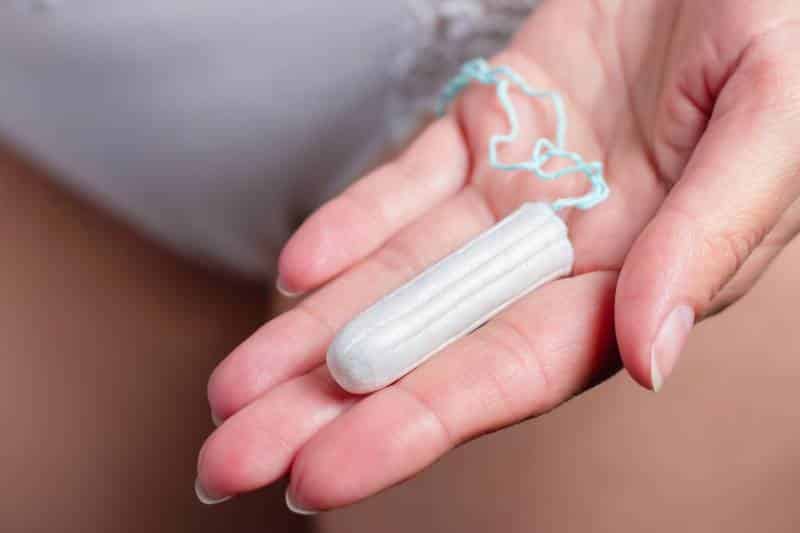
Unfortunately, tampons can be extremely dangerous if ingested. The very factors that make tampons effective as personal hygiene products can wreak absolute havoc inside your dog. Tampons are designed to absorb liquids on contact, expanding as they get wet. If it were to swell to maximum capacity inside your dog’s intestines, it could cause intestinal blockages and other issues. So, if you have reason to believe your pup has eaten a tampon, especially an unused one that can still expand, you’ll need to act fast.
Poisoning
While tampon manufacturers and the Food and Drug Administration say tampons are safe, this may not be the case for every product. According to a report in Time magazine, feminine hygiene products can be contaminated by PFAS, the “forever chemicals” that have been linked by the U.S. Environmental Protection Agency to numerous health concerns, including decreased fertility and increased risk of some cancers.
Not only are these chemicals dangerous to us, but they may also pose a risk to our pets. While your pet is more likely to be affected by PFAS via long-term exposure to household products such as cleaning products, dust, and waxes, it’s still worth mentioning.
Choking Hazard
A dog that swallows a tampon or pad whole could choke on it as it travels through their esophagus. One of the first signs of choking is coughing, often accompanied by difficulty inhaling, pawing at the mouth or head, and a panicked or frantic demeanor. Choking is another emergency that should be seen by a vet.
If you need to speak with a vet but can't get to one, head over to PangoVet. It's our online service where you can talk to a vet online and get the advice you need for your dog — all at an affordable price!

What to Do if Your Dog Ate a Tampon
The sooner you get advice and care from your veterinary team, the better the outcome will be for your pet. Call your vet as soon as you know your dog has gotten into your feminine hygiene products. Try to determine how much they’ve eaten, if possible, as this will likely be one of your vet’s first questions. Your vet will help you decide the next steps based on how much your pet’s eaten, whether that be bringing them into the clinic for a physical exam or monitoring them from home.
- Vomiting
- Diarrhea
- Difficulty urinating or defecating
- Inappetence
- Unwillingness to lie down
- Weakness
- Painful abdomen
These signs can indicate an intestinal blockage, which can be life-threatening. This is a medical emergency that requires immediate veterinary care.
Do not induce vomiting unless doing so under professional advice. Doing so without your veterinarian’s consent can worsen your situation.
How to Prevent Future Tampon Ingestion
If you know your dog likes to explore your bathroom wastebasket, you must be more mindful of where you’re disposing of your used menstrual hygiene products. You may need to invest in a pet-proof trash can with a covered top or even keep your bathroom door closed to prevent access to both used and unused tampons.
Final Thoughts
Dogs often eat tampons because they’re attracted to the scent of your bodily fluids. It’s not pleasant for us to think about, but it’s natural and normal for dogs. What’s not normal or safe is ingesting the tampons. If you know your dog has eaten a used or unused menstrual hygiene product of any kind, we recommend contacting your vet for advice. They may suggest you bring your pup in for a full physical examination to ensure there are no blockages to be concerned about, or they may recommend you monitor them at home.
The best way to ensure you don’t deal with potentially life-threatening blockages or internal damage is to keep your menstrual hygiene products well out of reach by investing in pet-proof garbage cans or keeping your bathroom door closed.
See Also:
Featured Image Credit: Skrypnykov Dmytro, Shutterstock