Get

In Your Inbox

Dogster is reader-supported. When you buy via links on our site, we may earn an affiliate commission at no cost to you. Learn more.

Can Dogs Have Snow Cones? Vet-Approved Health & Nutrition Facts

Share

Snow Cone in a bowl

Few treats are better for cooling us down on a hot summer day than a crisp, flavorful snow cone. As the furriest members of the family, our dogs can often use the relief from the heat more than anyone. There are several ways to let your best friend enjoy a snow cone, but with the wrong ingredients, you can also turn this delightful refreshment into an unhealthy and risky snack.

divider dog paws 2 oct 2024

Why Dogs Can’t Eat Some Snow Cones?

Dogs can eat some snow cones if they’re primarily water, and contain safe, non-toxic ingredients. Ice cubes aren’t ideal for dogs due to the choking hazard and the potential for damaging their teeth, but the shaved ice in snow cones is easy to swallow and quick to melt, relieving any substantial dangers.

On a hot day, a snow cone can provide cooling relief and a healthy supply of water, which helps prevent the threat of exhaustion or dehydration. The biggest worry with any snow cone isn’t the ice but the flavoring.

Many of the syrups in snow cones have more sugar than your dog should eat. Depending on the sweeteners, they may even be toxic.
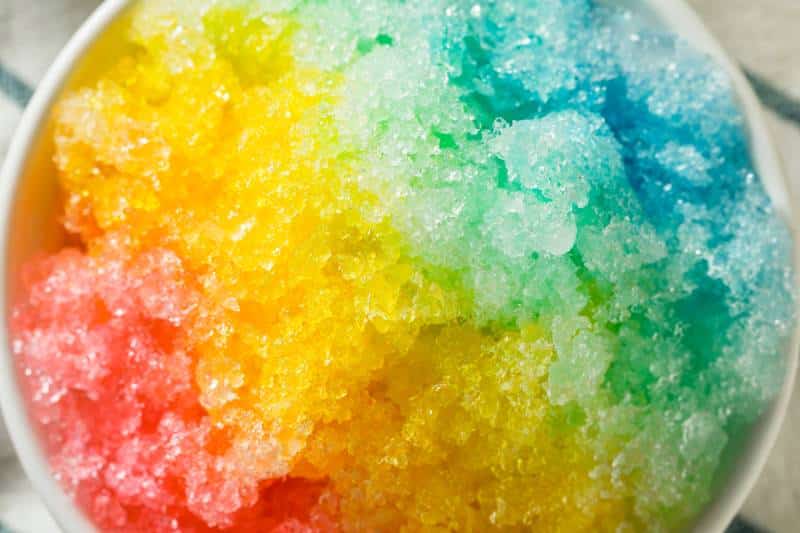
Sweet Homemade Shaved Rainbow Hawaiian Ice in a Bowl
Image Credit: Brent Hofacker, Shutterstock

Sugar

In moderation, natural sugars in fruits and vegetables are generally safe for your dog, as are added sugars in treats, which should only account for up to 10% of a dog’s daily diet. The sugar content in an average snow cone with flavored syrup is likely more than your dog needs, even for a large breed.

Too much sugar can cause several immediate issues, including an upset stomach, gas, diarrhea, and vomiting.

Over time, excessive sugar consumption can potentially contribute to or worsen certain medical conditions, including:
  • Obesity
  • Diabetes
  • Pancreatitis (painful inflammation of the pancreas)

Xylitol

Xylitol is a common artificial sweetener in sugar-free gums, candies, and baked treats. It is toxic to dogs. Even in minute doses, xylitol can cause hypoglycemia through a surge of insulin released from the pancreas.

The rapid drop in blood sugar can cause several issues within an hour of ingesting xylitol, including:
  • Vomiting
  • Diarrhea
  • Weakness
  • Ataxia (coordination problems)
  • Seizures

In worst-case scenarios, xylitol poisoning can lead to liver failure and possibly death. If you flavored your snow cone with xylitol and your dog had a taste, contact your veterinarian immediately and follow their advice.

Other artificial sweeteners, such as sorbitol, aspartame (Equal), saccharin (Sweet’N Low), sucralose (Splenda), and stevia, are not considered toxic to dogs. In excess, they can cause GI discomfort similar to sugar.

As it isn’t always clear what kind of sweetener is in various flavorings, it’s generally best to play it safe and keep artificial sweeteners, colors, and flavors away from your dog.

If you need to speak with a vet but can't get to one, head over to PangoVet. It's our online service where you can talk to a vet online and get the advice you need for your pet — all at an affordable price!

PangoVet_Mention-in-Content Savings V1

Dogster divider_v2_NEW_MAY_24_

What Kind of Snow Cones Can I Offer My Dog?

A dog-specific recipe is the best choice if you want your pet to enjoy a snow cone. With a formula devoted to your pet, you can ensure they only receive a healthy assortment of ingredients. Plus, you’ll have a better chance of your dog liking it!

Making dog-friendly snow cones is easy and only requires fresh fruits or veggies and ice.

A few flavorful and colorful choices that are safe and satisfying for your pup include:
  • Pumpkin
  • Raspberries
  • Watermelon
  • Strawberries
  • Carrots
  • Peas
  • Blueberries
  • Bananas
  • Cucumbers
  • Peaches
  • Pears
  • Apples

First, purée your dog’s favorite choices in a blender until smooth. Then, crush the ice cubes in a blender or snow cone machine. Put the crushed ice in a bowl or cup, and pour the pureed flavoring over the top to mix it in.

Alternatively, you can freeze your pureed mix in ice cube trays. Once frozen, put the frozen fruit and veggie cubes in a blender to crush them, and serve!

man handling snow cones on a table
Image By: Adam Winger, Unsplash

Can Dogs Eat Ice Cream Cones?

The same concerns for snow cones apply to ice cream. Ice cream cones aren’t hazardous to dogs, but they are unhealthy. The high sugar content can cause nausea and other gastrointestinal issues, and any sugar-free or low-carb ice cream featuring xylitol is toxic.

To make matters worse, dogs are often lactose intolerant, lacking the enzymes needed to digest milk. Too much cream can cause GI issues like diarrhea, gas, and stomach aches if the sugar doesn’t bother them. A healthier alternative is a non-dairy ice cream or frozen yogurt, though you should only serve them in moderation.

divider dog paws 2 oct 2024

Conclusion

Snow cones are a tasty treat even your dog can enjoy, provided you give them custom flavoring. While the random bite of the standard syrup-infused snow cone probably won’t hurt them, you should skip the high-sugar treats whenever possible, and avoid toxic artificial sweeteners.

However, you can make dog-friendly snow cone flavors at home to treat your pet for the ultimate relief when the temperatures rise.

See Also:


Featured Image Credit: nomadphoto, Shutterstock

Want content like this delivered to you?

Sign Up For Our Newsletter

News, insights, expert advice, and everything dog

* By submitting, you agree to our Terms & Conditions and Privacy & Cookies Policy.


How useful was this post?

Click on a star to rate (you can leave written feedback after clicking submit)

Help us improve Dogster for pet parents!

Your feedback really matters.

What did you like about this post? Also how can we improve it?

Join the conversation

Leave a Reply

You’re very welcome to leave a comment or question. Please know that all comments must meet our community guidelines, and your email address will NOT be published. Let’s have a positive and constructive conversation.


Talk With A Vet Online

Peace of mind,
anywhere, anytime

Affordable vet advice

Dogster’s Weekly Photo Contest Winners: This Spot is Mine! (February 26, 2026)

Every week our team gets the privilege of sorting through our readers photos to choose what dogs will win this weeks contest! See...

We Bred English Bulldogs So Extreme They Can’t Mate Naturally

Picture this: A male English Bulldog waddles over to a female in heat, full of confidence and swagger. Then… nothing. His barrel chest,...

Damning Dry Dog Food Report Not What It Seems

Over the past few days, pet and vet communities have been reeling from the revelation that high levels of heavy metals have been...

Ask Dr. Paola- Help! My Dog’s Won’t Stop Barking! (February 23, 2026)

Welcome to our “Ask Dr. Paola” series, where every Monday we bring expert advice straight from Dr. Paola Cuevas (MVZ) to help our...

More related

Are Bully Sticks Safe for Puppies? Vet-Reviewed Nutrition & Safety Facts

We all love to give our pets treats, and there are plenty of options out there. Some will be better than others, so...

How Much Does a Dog Eye Exam Cost in 2026? Average Price & Info

Veterinary care is such an important part of our relationship with our dog. Just like we require doctor visits, our pups need to...

Labrador Retriever Puppies for Sale in Minnesota: 2026 Breeders List

Once you meet a Labrador Retriever, it is easy to see why they are one of the American Kennel Club’s (AKC) most popular...

Apricot Poodle: Info, Pictures, Care Guide & More

Apricot Poodles are not their own separate dog breed but instead a rare color variation of the Standard, Miniature, or Toy Poodle. Apricots...

Keep reading

Jinx Dog Food Review 2026: Our Expert’s Opinion

As dog owners, it’s always common for us to shop around to improve our dog’s eating experience. We think nutrition is one of the most important things you can focus on for your dog’s health. We take it very seriously,...

Dogster_Jinx Dog Food Review

Evolve Dog Food Review 2026: Recalls, Pros & Cons

Review Summary If you’re looking at different food brands, and trying to decide what would work best with your pooch—let us introduce you to Evolve. It can work very well for the right canine, and we want to explain what...

Dogster_Evolve Dog Food Review

Can Dogs Eat Acorns? Vet-Verified Facts & Safety Guide

Dogs love exploring their surroundings and trying new things. So, it’s not uncommon for them to become curious about natural snacks like acorns and the nuts of oak trees (Quercus species). But as pet owners, it’s important to understand the...

Can Dogs Eat Acorns

10 Best Dog Foods for Newfoundlands in 2026 – Reviews & Top Picks

Feeding a Newfoundland is a bit different than feeding a Chihuahua. While all dogs will have similar protein needs, there are other things your Newfoundland will require in dog food (such as minerals and nutrients). Finding the perfect dog food...

newfoundland dog

Can Dogs Eat Scallions? Vet-Verified Nutrition Facts & Risks

If your dog licks their lips as your vegetable stir-fry sizzles on the stove, you might wonder if it’s safe to slip them a bite. It might not seem dangerous to give them just a taste, but you should first...

Can Dogs Eat Scallions

Annamaet Dog Food Review 2026: Pros, Cons & Final Verdict

Review Summary With healthy, natural ingredients, great research, and different options to meet your dog’s needs, Annamaet definitely stands out. This premium food company has over thirty years of experience in making dry food, and it has consistently given us...

Dogster_Annamaet Dog Food Review

6 Best Dog Foods for Kidney Disease in 2026 – Reviews & Top Picks

Every dog parent dreads the idea of their dog getting sick, and kidney disease is no joke for dogs. As in the case of humans, this disease is not curable, but manageable. All we can do is make lifestyle changes...

Veterinarian examines dog in a veterinary clinic

Can Dogs Eat Fish? Vet-Verified Facts & FAQ

Though fish is most commonly associated with cats, many dogs love it, too. If your dog goes bonkers for a fishy treat, they’re in luck—in most cases, dogs can safely eat certain types of fish as long as they’re prepared...

Can Dogs Eat_Fish

Love Dogs? So Do We! Join the Dogster Community

Stay informed with expert pet care insights delivered straight to your inbox! Discover professional guidance on animal behavior, feeding tips, trusted product picks, and much more.


Sign up for the Dogster Email Newsletter