In this article
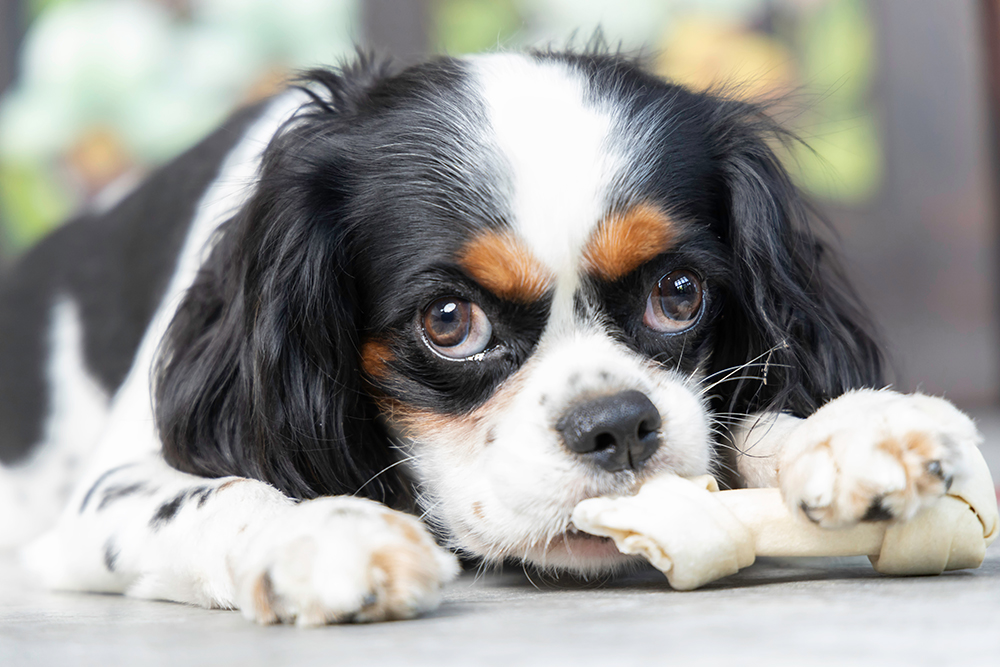
View 2 More +Dogs and bones are a combination as old as time. Dogs have been shown chewing bones in popular media for so long that it’s hard to tell where the association came from in the first place. It also isn’t going anywhere, especially since it has plenty of roots in reality.
But why do dogs love bones so much? Many owners can attest to the fact that dropping a bone in their dog’s paws can keep them occupied for hours and help get out a lot of pent-up chewing energy.
However, bones are not safe for most dogs and can lead to a variety of serious health concerns. We present you with all the facts here, so you can make an informed decision about whether you want to give your dog a bone or play it safe by offering other types of chews.

Should Dogs Be Chewing Bones?
Some dogs will chew bones throughout their whole lives and never experience an issue doing so. Others are not so lucky, and there may be several health risks associated with chewing bones. Many dogs will try to swallow pieces of bone whole, which may lead to choking or a gastrointestinal blockage.
In reality, dogs can chew bones, but most of them shouldn’t. If you’re not sure if you should offer your dog a bone, we recommend you speak to your vet first and consider more appropriate and safe chews instead, as we feel it’s just not worth the risk.
Some of the health risks associated with dogs chewing bones are:
- Teeth fracture
- Mouth, tongue, and throat damage
- Piece of bone getting stuck at the roof of the mouth
- Hollow bone getting looped around the dog’s lower jaw
- Choking
- Gastroenteritis with vomiting and diarrhea
- Bleeding injuries in the digestive tract
- Gastrointestinal blockage (will require surgery)
- Constipation and straining to defecate
- Food poisoning due to bacteria present in the raw bones
- Risk of pancreatitis in some dogs
Now, based on these risks, many veterinary professionals recommend against giving dogs bones, as they are not safe. However, that does not mean that there aren’t dogs that chew bones and do not experience these health issues. But it goes without saying that dogs don’t need bones, and safer chews will be more appropriate.
Still, we will explain in more detail why dogs like bones, and for owners who still want to offer their dogs a bone, we will provide tips to make it as safe as possible. However, the risk of something going wrong will always be there.
So, why do dogs actually like chewing bones?
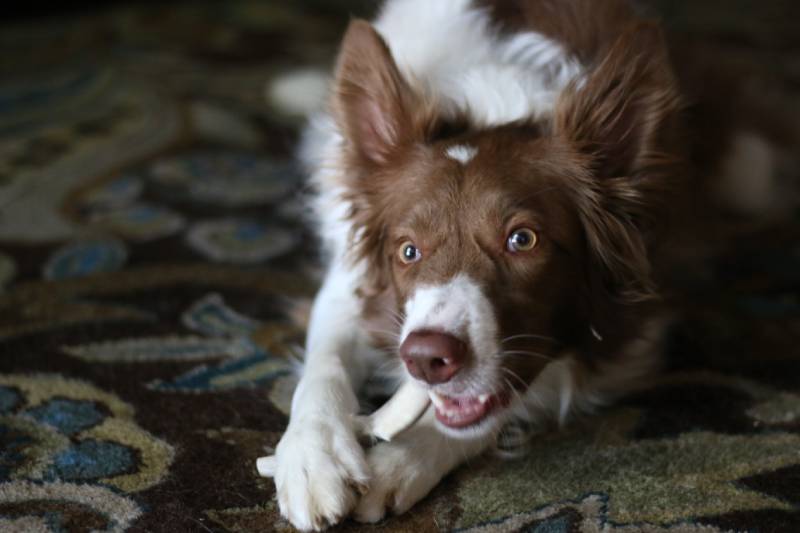
The 3 Reasons Dogs Chew Bones
1. They’re Delicious and Nutritious
Bones represent a source of nutrition for dogs. They’re facultative carnivores, so they can get their nutrition from both plant and animal matter, depending on what’s available.
Bone marrow contains a lot of essential nutrients and healthy fats that are both tasty and nutritious. Aside from healthy fats, bones represent an excellent source of calcium and other minerals for dogs, but this may not be as readily available as the bone marrow because it requires slowly softening the bone material with saliva and breaking off small pieces and digesting it.
Raw bones may also often have leftover meat that they can snack on as they chew. While dogs nowadays get all their essential nutrients from their dog foods, their ancestors would have needed to ensure they got every ounce of nutritional value they could get out of their environments.
There is no doubt that bones can be nutritious snacks for dogs, but the main issue is how they come and their size, shape, consistency, and sometimes even fragility if they easily break off into sharp splinters when being chewed. The nutritional value they provide may not be sufficient to justify the risks associated with chewing bones.

2. It’s Fun and Engaging for Them
Dogs enjoy chewing on things just for fun, and bones can be an outlet for this behavior. If you have a dog that likes to gnaw on something and is a heavy chewer, supervise them at all times if you offer them a bone or another chew. Bones may not be safe for “scarfers” and strong chewers, so giving your dog a large bone and closely supervising them is vital. The bone should be removed before it becomes small enough to represent a hazard. A safe alternative may be a licky mat or a food-filled Kong toy that will keep them occupied for a little while without the worries associated with chewing a bone.
Dogs learn to chew when they’re very young. Chewing on toys and other objects helps alleviate discomfort during the teething stage. This chewing stimulates them mentally and satisfies a lot of their prey drives while reducing boredom and anxiety.
If your dog is feeling bored or frustrated due to lack of physical exercise or mental stimulation, chewing can become a destructive behavior. Dogs suffering with separation anxiety may also use chewing as a way to relieve stress.
In order to prevent or reduce your dog’s excessive or inappropriate chewing, get down to the root cause of the behavior. Make sure they get plenty of physical activity every day, like stimulating walks, hikes, and playtime with various toys, and get them to try new things, such as scent work, agility, or other sports.
3. It May Help Keep Their Teeth Clean
Chewing on bones or other hard chews may also help clean the dog’s teeth. The chewing motion not only helps dislodge food particles stuck in their teeth but also helps prevent plaque build-up, as their teeth will scrape against the surface of whatever they’re chewing on.
Although chewing bones, antlers, or bully sticks may help reduce the plaque on their teeth, this is not a substitute for regular dental hygiene and brushing.


Safe Ways to Give Your Dog a Bone
If you decide to give your dog a bone, please be mindful of the risks associated with it, and always supervise your dog while chewing. Don’t just start throwing your dog bones from the dinner table. Despite some of the potential benefits, which can also be gained through other chewing activities and safer chews, it can be dangerous to give bones to your dog, and many veterinary professionals will recommend against it because irresponsible feeding practices can be very harmful to your pup.
Here are some basic tips for giving bones to dogs:
- Cooked bones should never be given to dogs since cooking them makes them brittle and prone to splintering. These splinters could cut your dog’s mouth or throat if ingested and can damage their digestive tract.
- Small bones should not be given to large dogs. They can be swallowed, and the dog can choke on the bone, even to the point of death. Any bones given should be appropriately sized for your dog to avoid any choking hazards.
- While some large dogs can handle small bones, it’s often better to be safe than sorry. You know your dog’s chewing style best, so use your best judgment on the size of the bones that they receive. If you have a dog that can’t be trusted not to swallow a small bone, make sure you take the bone away from your dog once it’s small enough to fit in their mouth.
- Commercial marrow bones, antlers, and other chew toys may be safer for dogs, but they should still be supervised while chewing, as mouth and teeth injuries can occur, and dogs may try to swallow large pieces whole.
- Chicken and turkey bones should not be offered to dogs at all, as they are sharp when they break into fragments and small enough to tempt the dog to swallow them.
- Any raw bones should be refrigerated when your dog isn’t chewing on them and discarded after a few days. Keeping a raw bone for too long, even in the refrigerator, is a breeding ground for bacteria that can make your dog sick.
- You should always monitor your dog when they’ve got a bone. Even if a bone isn’t brittle, it can still break or splinter, and you’ll want to be able to respond quickly and take the bone away if it does.
Conclusion
Bones are generally not the safest snacks for most dogs. That’s not to say that some dogs can’t chew them without experiencing any ill effects, but there is a long list of potential health issues associated with chewing bones. However, bones may present some benefits when fed responsibly and can help entertain and stimulate your dog! Always be vigilant about the conditions and circumstances under which your dog is provided bones, and be mindful that they can still present certain health risks.
Featured Image Credit: PxHere