Get

In Your Inbox

Dogster is reader-supported. When you buy via links on our site, we may earn an affiliate commission at no cost to you. Learn more.

What Happens If a Dog Licks Human Blood? Vet-Verified Health Risks & Care

hungry border collie puppy dog licking its lips with tongue

If you are a pet owner and have found yourself bleeding or injured, you might have noticed that your dog wants to lick the wound. While most dogs will come to investigate, some will also try to lick the blood. There are heartwarming reasons that your dog will attempt to, and often manage to lick the wound. However, licking human blood can also be dangerous to your dog and you.

Why do dogs lick human blood? How is it dangerous to both of you? We’ll answer these questions and more below.

divider dog paws oct 2024

Why Do Dogs Lick Human Blood?

The simple answer is that your dog will lick your blood to try and take care of you. When a dog has been injured, its instinct is to try and heal themselves by licking the wound. This trait is present in dogs and other species, such as rats and cats. While it’s sweet that your dog is trying to heal you by licking your wound, it’s also dangerous.

While there are components of a dog’s saliva that help heal wounds, which is why they do it to themselves, your dog’s mouth and saliva contain bacteria that can infect an open wound.
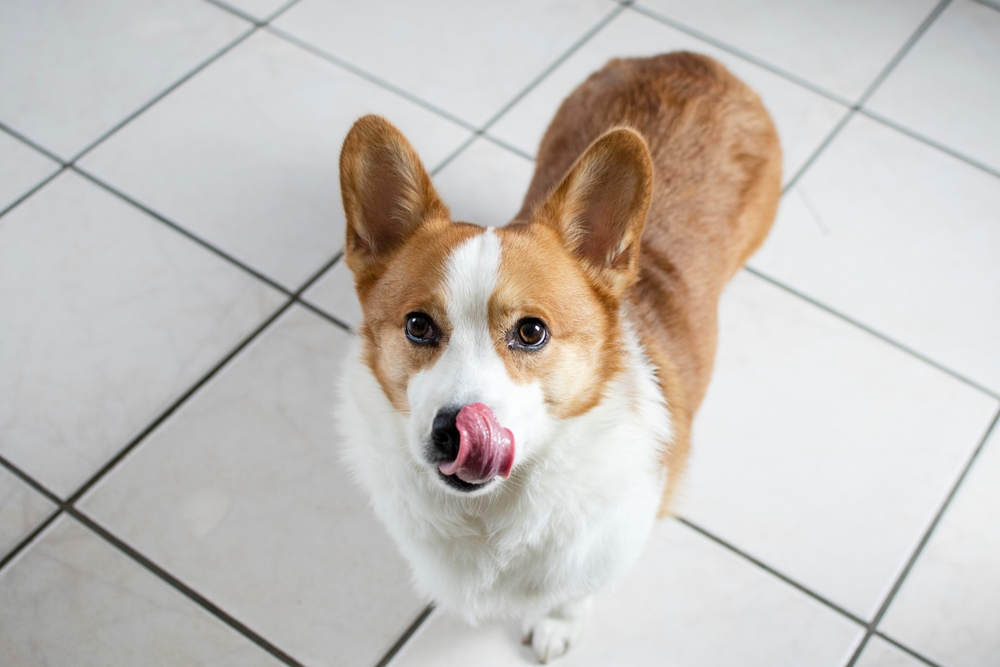
pembroke welsh corgi dog licking its nose
Image Credit: Ana Sha, Shutterstock

What Happens If a Dog Licks Human Blood?

If your dog licks your blood, they aren’t completely safe either. There are very few illnesses that a dog can contract from licking a person’s blood. However, some human illnesses, particularly those involving our respiratory tracts, can be passed onto dogs via our blood.

Examples of such illnesses include pneumonia, flu, or even tuberculosis. It is because these illnesses (which affect the respiratory system) can gain access to your dog’s respiratory system if they lick contaminated blood. This is because the respiratory system shares some common anatomical locations with the digestive system.

Although very rare, licking copious amounts of human blood could also make a dog sick, cause diarrhea, and lead to vomiting episodes. However, realistically speaking a dog would have to ingest very high amounts of blood for this to happen—the fact that they would have access to such high amounts of blood is truly rare (and obviously implies that whoever is bleeding is in a life or death situation).

How Can My Dog Licking My Wound Make Me Sick?

Many pet owners don’t realize that there are illnesses they can catch by letting their dog lick their wounds. The main concern with a pet dog licking your wounds is that their saliva naturally contains millions of microbes (bacteria) that would gain access to your bloodstream if your dog were to lick an open wound. This essentially implies an infection. As such, you should never allow your dog, no matter how healthy they are, to lick your wounds.

It is also worth mentioning a specific viral disease that a dog could hypothetically pass on to a person from their saliva. This disease is rabies. In dogs, rabies has no cure, and a rabid dog is always humanely euthanized, as the dog can transmit the virus to a human via their saliva. The best way to protect yourself (and your dog) from this ever happening is to have them vaccinated for rabies.

A Note From Our Veterinarian

If you’ve been bitten by any animal, you should always wash the wound with a disinfectant soap and warm water for a period of around 20 minutes and promptly see your healthcare provider.

The vaccine protocol for rabies varies for dogs depending on the geographic location the dog is located. In areas where rabies is considered endemic, the vaccine is often advised as a core vaccine (and in some instances can be a legal requirement). In other areas, the vaccine might be listed as a non-core vaccine. It’s best to follow your veterinarian’s lead when it comes to vaccinating your pet.

Other disease-causing agents worth mentioning that a dog may transmit to a person via their saliva include the following:

  • Campylobacter: This bacterium causes severe diarrhea and vomiting and can lead to secondary infections.
  • Salmonella: Salmonella isn’t just found in contaminated meat and plants; it can also be transferred by your dog licking your wounds. It is another bacterium that will cause gastrointestinal distress and can be dangerous (potentially fatal) if not treated.
  • Giardia: This is a parasite that generally affects water supplies. However, it has a slight chance of being transferred through saliva, so it’s best not to let your dog lick your wounds.

divider dog paws 2 oct 2024

Protecting Your Wound From Your Pup

As mentioned above, no matter how healthy your dog is, you shouldn’t let them lick your wounds. If you do have an open wound, you should have it completely covered with a wrap or bandage, so that you form a protective barrier between the wound and your dog (and other contaminants) as the wound heals.

Depending on the nature of your wound, the type of dressing you can use on it would vary. It’s best to follow your healthcare provider’s instructions for complex wounds (which warrant medical attention anyway).

divider dog paws oct 2024

Final Thoughts

While it may be tempting to let your pup lick your wounds, it’s not a good idea. Dogs’ saliva carries bacteria that can cause an infection and a few potentially fatal diseases you might not have thought about. It’s also highly possible that you can make your canine pal sick.

Make sure to put a Band-Aid or gauze bandage on any wound you have to keep your dog from licking the wound. Complex wounds require a medical professional’s input. Also keep in mind that you should immediately see a doctor if your dog does lick your wound, no matter how seemingly healthy your dog is.


Featured Image Credit: smrm1977, Shutterstock

Want content like this delivered to you?

Sign Up For Our Newsletter

News, insights, expert advice, and everything dog

* By submitting, you agree to our Terms & Conditions and Privacy & Cookies Policy.

How useful was this post?

Click on a star to rate (you can leave written feedback after clicking submit)

Help us improve Dogster for pet parents!

Your feedback really matters.

What did you like about this post? Also how can we improve it?

Join the conversation

Leave a Reply

You’re very welcome to leave a comment or question. Please know that all comments must meet our community guidelines, and your email address will NOT be published. Let’s have a positive and constructive conversation.

Talk With A Vet Online

Peace of mind,
anywhere, anytime

Affordable vet advice

Golden Saint Dog Breed: Info, Pictures, Care & More

The Golden Saint is a hybrid breed, which means that it results from intentional cross-breeding. In this case, breeders combined the Golden Retriever...

What Happens to Dogs That Fail Police Training? Facts & FAQ

Police dogs are a vital part of the police force, employed in jobs that humans simply cannot do, including advanced drug detection, search...

How Powerful Is a Dog’s Hearing Compared to Humans? Facts & FAQs

Dogs have incredibly impressive senses, and we typically associate dogs with their amazing sense of smell. But how well do they hear? Dogs...

American Foxhound Boxer Mix Dog Breed: Info, Pictures Care & Facts

Sometimes, when considering adding a new canine companion to the family, you want to find a breed that’s just a bit out of...

More related

Dogs with Underbites: Vet-Reviewed Causes of Canine Malocclusion

Does your dog have one of those cheesy grins? Those lower teeth sticking out further than the top, or perhaps it’s the top...

Cream Labradoodle: Info, Pictures, Origin & History

With their low-shedding coats, high intelligence, and outgoing personalities, Labradoodles are a hit with canine lovers from all walks of life. These dogs...

How Smart Are Dalmatians? Facts & FAQ

Dalmatians are iconic dogs with their unique spotted coats and charming personalities. But have you ever wondered just how intelligent they are? Can...

14 Most Popular Dog Breeds in California in 2026 (With Info & Pictures)

California is known as a place of sun, fun, Hollywood glamour, and tech industry heavy-hitters. However, it’s also a state full of dog...

Keep reading

Organ Meat for Dogs: Vet-Verified Safety & Preparation Tips 

Organ meats from animals that are raised properly and safely, such as farmed chickens, turkeys, ducks, cows, and sheep, can be a healthy and nutrient-rich treat for your dog. However, while dogs can technically eat organ meat, it’s crucial that...

Cooked chicken livers and gizzards in hot cast iron pan

5 Vet-Verified Benefits of Venison in Dog Food: Canine Diet & Health

A vast selection of commercial dog foods are available, including ones with different meats and meat-based ingredients. Dogs are facultative carnivores which means they need meat-based proteins, but can also eat some plants, and like all animals, they benefit most...

venison_Shutterstock_DronG

What Berries Can Dogs Eat? Vet-Verified Nutrition Facts & FAQ

Can dogs eat berries? Well, there’s no simple answer to this seemingly simple question. There are over 400 different types of known berries, and some are safe for dogs to eat, while others are only safe for human consumption. Some...

cluster of elderberry fruit

How Long Does It Take for a Dog to Digest Food? Vet-Approved Digestive System Basics

We all know that what we feed our dogs—and how they digest it—plays a key role in their overall health. If you’re wondering how long it takes for a dog to digest their food, unfortunately, the answer is not a...

french bulldog eating or drinking from a bowl

Acana Dog Food Review 2026: Pros, Cons, Recalls & FAQ

Acana is a unique company that produces dog food in Alberta, Canada, and Auburn, Kentucky. It manufactures dog food for the American market in Auburn and formulas for Canada and Europe in Alberta. Champion Pet Foods, Acana’s parent company, has...

Dogster_Acana Dog Food Review

Authority Puppy Food Review 2026: Recalls, Pros & Cons

Review Summary A new puppy can bring a lot of excitement into your life! Along with the adorable pictures and play, there are some tough questions, like what you will be feeding your new bundle of fur. If you are...

Dogster_Authority Puppy Food Review

Can Dogs Eat Chives? Vet-Verified Nutrition Facts & FAQ

If you love to cook, chances are your kitchen is stocked with many of the basic ingredients you need for your favorite recipes. Vegetables and herbs from the Allium (onion) family, including chives, are among the most common seasonings used...

Can Dogs Eat_Chives

How to Store Homemade Dog Food: 6 Vet-Reviewed Tips

Making homemade dog food can be a great option for your canine; after all, you can’t get much fresher than homemade. However, storing the food can be a bit more complicated, as it lacks the artificial preservatives found in commercial...

Homemade brown rice dog food on a feeding bowl