

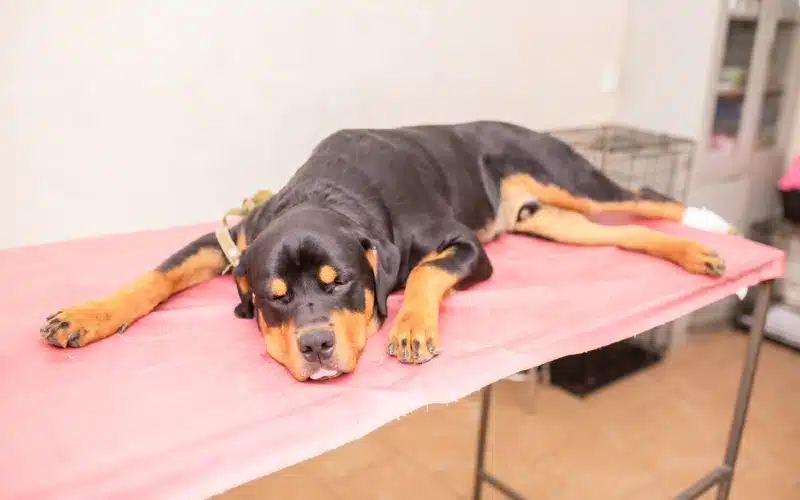
We tend to be more afraid of the things that we can’t see than those that we can. While an open wound on your dog that is gushing blood may be frightful, internal bleeding is actually scarier. Since you can’t see it, it may take longer for a vet to determine the cause and get it under control.
In this article, we share information on how to determine the signs, causes, and other important information about internal bleeding in dogs so you can quickly get your pup the help that they need.

What Is Internal Bleeding in Dogs?
Internal bleeding occurs when blood is lost inside a dog’s body rather than outside of it. Unfortunately, the name may be the only aspect of internal bleeding that’s this straightforward.
Blood is required by every tissue in the body as a source of nutrients necessary for survival. When blood is lost from the system, it can severely disrupt this balance, leading to potentially serious problems.
Most of the time, when you think of your dog bleeding, it’s seeing red blood leaking from a wound somewhere on their body. This is external bleeding. Internal bleeding occurs similarly in that blood is being lost from the blood vessels, but instead of spreading outside the dog’s body, it goes into areas inside the body, most often the abdomen and chest.
Since you can’t see the blood coming out to know that your dog is bleeding, you’ll have to rely on other, usually subtler signs that your pup has a problem. Internal bleeding can occur in a few different ways—it may be a small amount over time or a large amount all at once. Both scenarios will be accompanied by similar signs; the difference is how quickly they appear.
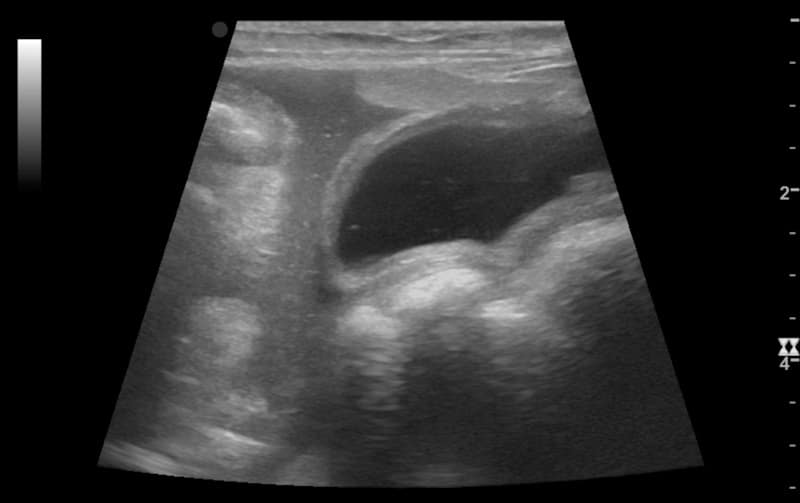
What Are the Signs of Internal Bleeding in Dogs?
The signs of internal bleeding are a bit similar to those of external bleeding, minus actually seeing red blood. Both are due to the lack of blood reaching places in the body where it’s needed. What you may see with internal bleeding includes:
- Pale gums and tongue
- Weakness, lethargy, depression
- Panting or increased breathing rate
- Cool skin, especially in the ears, legs, and tail
- Difficulty breathing
- Black, tarry stools
- Vomiting blood or bloody stools
- Bright red gums
- Sudden collapse
Seeing any of these signs in your dog is an emergency. See a vet immediately if you suspect that your dog is bleeding internally.
Did you know you can speak to a veterinarian without having to travel? Just head over to PangoVet. It's our online service where you can talk to a vet online and get the advice you need for your pet — all at an affordable price!

What Are the Causes of Internal Bleeding in Dogs?
Sometimes, there’s a major event that leads to internal bleeding in dogs. Other times, you may not know that anything has happened until there’s significant blood loss or your dog starts showing signs of internal bleeding. Here are a few examples of causes of internal bleeding in canines.
1. Trauma
Trauma is at the top of the list of causes of internal bleeding in dogs. This could be blunt force trauma from a fall, car accident, or blow. There may be no outward signs of the injury, just the ones that present from the internal bleeding. It can also be a wound from a bite, gunshot, or puncturing material.
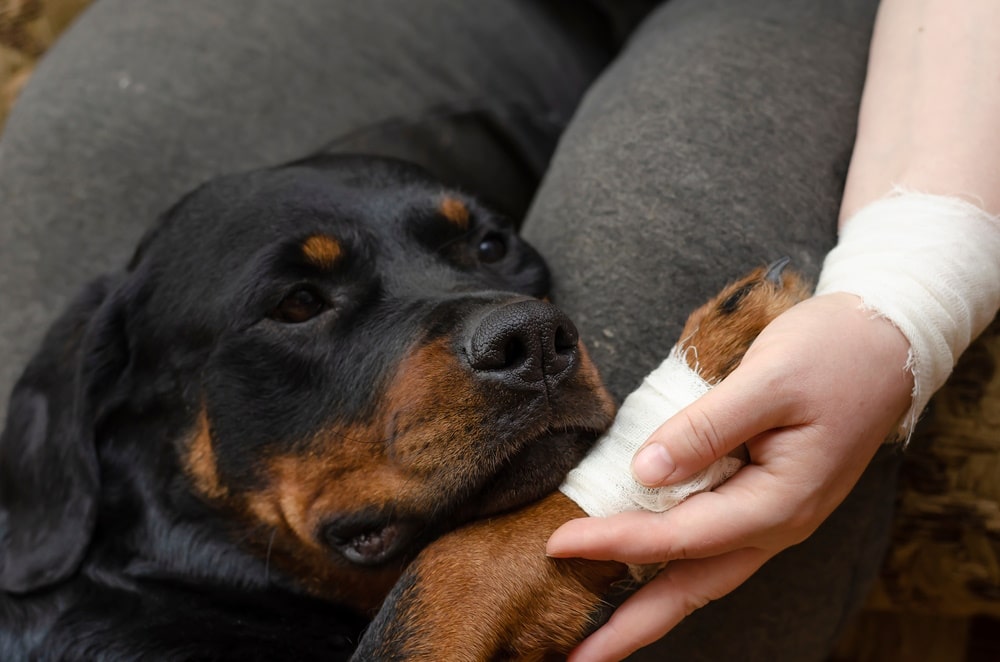
2. Ruptured Masses
Tumors, both cancerous and noncancerous that affect the internal organs in the abdomen and chest can become quite large before they’re detected. Sometimes, they can rupture, leading to internal blood loss. This is often the first sign that a tumor was there in the first place.
3. Ulcers
Ulcers in the digestive system can be a form of internal bleeding in dogs. Not every ulcer will bleed, but some do, potentially a large amount. You may see bright red blood in your dog’s vomit or feces, or you may see black, digested blood in their feces, depending on where the ulcer resides.
4. Bleeding Disorders
If your pup has anything off with their blood’s ability to clot, they may experience internal bleeding. Things like autoimmune diseases, rodenticide toxicity, liver disease, and issues that develop secondary to infection, cancer, or inflammation can lead to abnormal bleeding, potentially internally, because the blood can’t clot and keep the bleeding under control.

5. Post-Op Bleeding
Recently undergoing surgery is a potential cause of internal bleeding in dogs. Blood vessels that were once sealed may be reopened, causing blood loss inside the body. This can happen for several reasons, with one of the main ones being too much activity after the operation. Always follow the vet’s recommendations for post-surgical care instructions.
How Do I Care for a Dog With Internal Bleeding?
Internal bleeding is an emergency in dogs. There is nothing that you can do at home other than call ahead to the veterinary hospital to let them know that you’re coming in. A vet will take it from there. If your pup is losing a large amount of blood, they will first get them stabilized either with fluid therapy or possibly a blood transfusion. For severe bleeding, emergency surgery may be necessary to get the blood loss stopped.
Once your dog is stable, the work of determining a cause begins. Diagnosing internal bleeding in dogs may require various tests, including blood work and imaging. Additional clotting tests or tissue sampling may be required.
Further treatment may include surgery, continued fluid therapy or transfusions, medications, and supplements to aid in clotting and to treat underlying diseases. Some dogs may need considerable hospitalization time following an internal bleeding episode.

Frequently Asked Questions (FAQ)
How Long Can a Dog Live With Internal Bleeding?
Internal bleeding in dogs can either be a gradual process or a sudden one. When the process is gradual, dogs typically lose a small amount of blood over a long period. These dogs may live weeks or months without anyone noticing anything. For dogs with sudden internal bleeding, the amount of time that they can survive will depend on the amount of blood that’s being lost and how quickly. The greater the blood loss, the shorter the survival time if treatment isn’t undertaken.
Can Internal Bleeding in Dogs Be Cured?
Internal bleeding has no at-home treatments. It requires veterinary attention, and the sooner, the better. Depending on the cause and the amount of blood lost, internal bleeding can be treated and cured. However, certain causes, such as trauma or tumors, may create significant damage that can’t be fixed.
Conclusion
Blood loss is blood loss, whether it happens on the outside of the body or the inside. All the tissues in the body rely on a regular supply of blood for survival. This means internal bleeding in dogs is an emergency situation. It’s vital to retain as much blood as possible in the system at all times for a dog’s survival. If you suspect that your dog is bleeding internally, even slightly, see a veterinarian immediately.
Featured Image Credit: Vera Larina, Shutterstock
 What Is Internal Bleeding in Dogs?




























5 Responses
Gisteren mijn hond met bloeding in haar buik moeten laten inslapen van de 1 op de andere dag kruising herder labrador. Meisje van 9 jaar. Ze zakte opeens de nacht ervoor door haar achterpoten en raakte in een shock. Meteen naar de Spoedkliniek maar ze was al stervende. Zijn helemaal kapot van verdriet.
Hello Elisabeth,
thank you for reaching out, although it is heartbreaking to read your message. I am incredibly sorry to hear about what happened to your dog. Take some time to process and grieve, because losing such a companion is always devastating.
Best wishes to you!
I just went though this with my shar pei/lab mix. Only 8.5 years old. He was lethargic for a couple days but then bounced back to his normal self, at least I thought. Then about 2 weeks later I brought him into the vet one night because he was barely moving and started to have body or muscle spasms and was very figdety. They showed me how his gums were pale and they found blood in the abdomen. Unfortunately, he wasn't stable enough to operate. It was heartbreaking to put him down, especially since he seemed to go downhill in just 1 day.
Hi David, I’m so sorry you had to go through that—it sounds absolutely heartbreaking. Thank you for sharing his story—it takes courage, and it might help someone else catch signs they wouldn’t otherwise notice. I hope you can find solace in all of the memories you made together over the years.
This happened to my pooch a few months ago, just lay down in the middle of a walk and didn't want to do anything for the next couple of days, thought it was poisoning, then found out bleeding in the abdomen and the fluid was going around her liver and heart, had to put her to sleep and i don't think it is something i can truly get over, she was 10 half years old, i miss her badly. She was fine a few months ago with no signs of anything. gutted.