Ear Dermatitis In Dogs: Our Vet Explains the Signs, Risks & Treatment
In this article
Ask any general practice veterinarian what type of ailments they see most often in dogs and I will guarantee you that skin and ear problems will make the top three. Healthy skin is vital for a healthy body, being the first line of defense against injury and infection, an essential part of the sensory system, and the body’s largest organ.
Although they make up a relatively small part of the whole, the ears are an important part of the integumentary system (aka skin, hair, nails, and glands), as well as one of the most commonly affected by inflammation and infection.
Ear dermatitis, which is inflammation of the skin of the ear, is more accurately known as otitis, and it is one of the most common—and most frustrating—canine conditions to manage and treat. To understand why, let’s take a closer look at the signs of otitis in dogs, what causes it, and what makes it so challenging to deal with.

What Is Ear Dermatitis (Otitis)?

Dermatitis is inflammation or infection of the skin, and ear dermatitis (otitis externa) refers to the infection or inflammation of the outer ear, which includes the ear flap (pinna), ear cartilage, and the horizontal and vertical canals—everything on the outside of the eardrum (tympanic membrane). Diseases of the middle and inner ear are called otitis media and interna and are not typically categorized as dermatitis. Both ears may be affected, or just one.
Just like dermatitis, otitis externa has a number of different potential causes, many of which are exacerbated by the anatomy of the ear itself. Unlike our short, straight, and (relatively!) hairless ear canals, the ear canals are longer, have a bend in the middle, can be extremely narrow, and are often hairy—some more than others. The result is a dark, warm, and moist environment in which bacteria and yeast thrive.
The main causes of otitis externa are:
- Bacterial infection
- Fungal (yeast) overgrowth
- Allergies/atopy
- Parasites
- Foreign objects (eg. grass seeds)
Complicating things further, most of these causes can lead to others, so just treating the bacterial or yeast infection will not resolve the problem if the underlying cause is allergies or a foreign object. Unfortunately, most of the time, otitis externa presents in much the same way irrespective of the cause, so investigation is always needed to get to the bottom of the problem.

What Are The Signs of Otitis Externa?
The most common signs of otitis externa in dogs include:
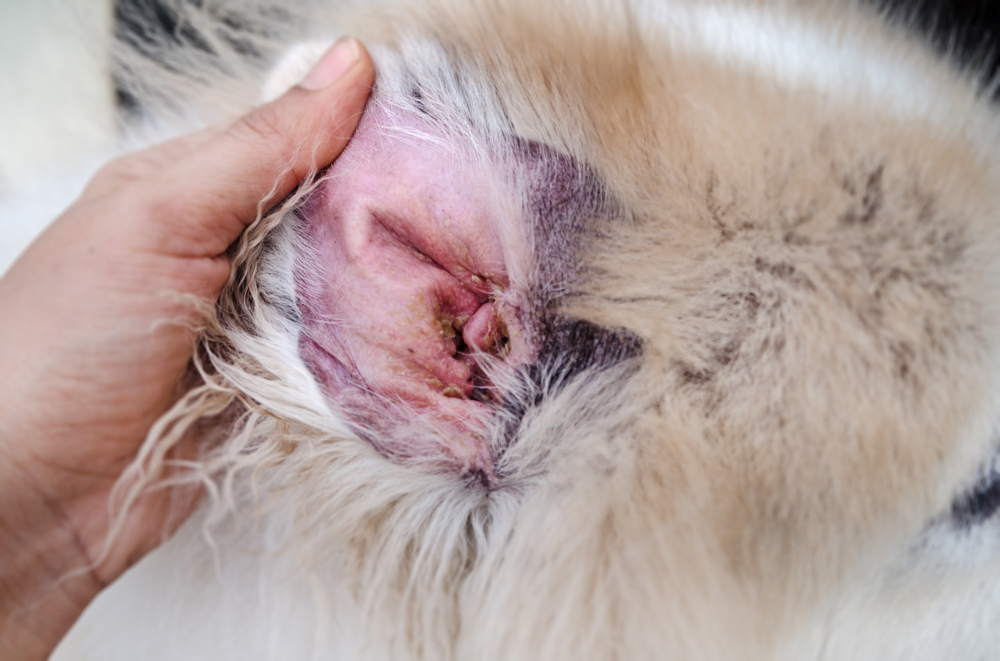
- Redness of the pinna and ear cartilage
- Itching (pruritus)
- Head shaking
- Trauma and/or hair loss around the ear from scratching
- Pain - dogs may whimper, whine, or yelp out when they are scratching their ear, or if you touch it
- Smell - you may notice an unpleasant odor coming from your dog’s ear
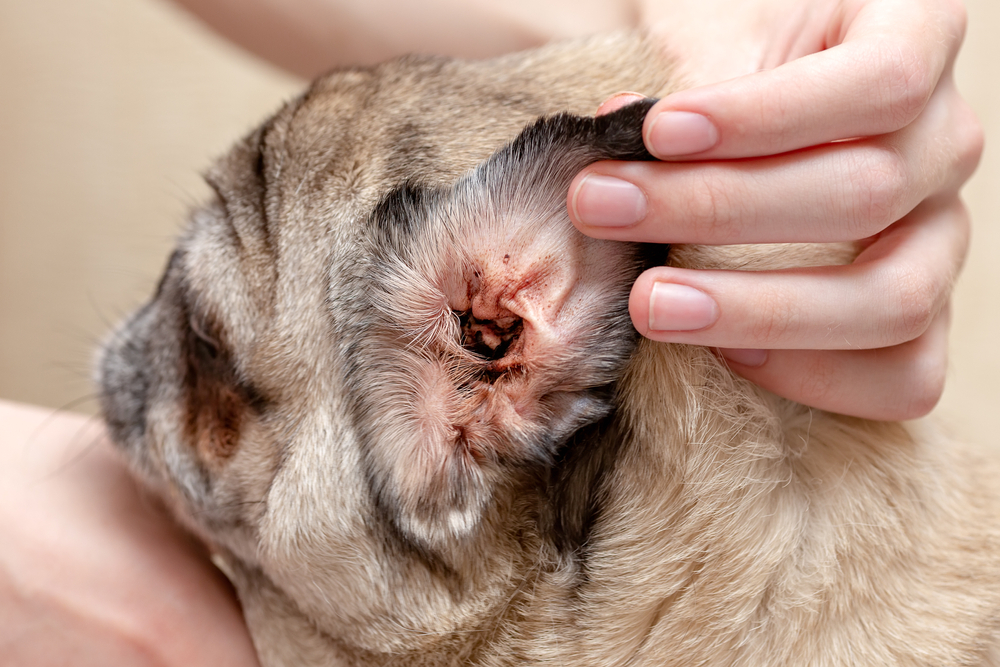
- Discharge - in a range of consistencies (dry and crumbly, waxy, thick liquid) and colors (creamy, yellow, green, brown, black), and may even contain traces of blood.
- Head tilt
Dogs suffering from chronic or recurrent otitis often develop thickened ear canals and the skin under the ear flap and around the opening to the canal becomes ‘lichenified’ (dry, crusting skin and small bumps, giving the skin the appearance of lichen). This is due to prolonged inflammation, swelling, and damage to the tissue. This is particularly common with yeast infections.
Some dogs may even develop an aural hematoma, which is a fluid-filled pocket on the pinna resulting from prolonged damage to the capillaries and connective tissue from scratching and shaking.

How Is Otitis Externa Diagnosed?
Diagnosing a dog with otitis is quite straightforward, and is based on the clinical signs. It must be differentiated from neurological causes of head tilting or head shaking, or coagulation (clotting) disorders in the case of aural hematoma.
The tricky part is diagnosing the type and underlying cause of the otitis externa, which involves a combination of history taking, physical examination, and laboratory tests. Your vet needs to find out:
Patient History
How quickly did the signs appear?
Gradual onset suggests infection, while a sudden irritation may indicate a foreign object
How long have they had signs of otitis
Has the dog had ear problems in the past?
If so, do they happen around the same time of year?
Do they have any other skin complaints?
Physical Examination
External appearance of the ears
Otoscopic examination of the canals
Are they hairy (hirsute)?
Is there inflammation or thickening of the canal walls?
Is there discharge in the canals?
Is the tympanic membrane visible? Intact or damaged?
Laboratory Tests
Examination of discharge under the microscope: Bacteria? Yeast?
Swab sample to send for culture & sensitivity to determine which organisms are present, which treatment is needed, and whether there is any indication of antibiotic resistance:
Ideally, this test should be performed for every ear infection, but it is particularly important if this is not your dog’s first infection. Repeated treatments can encourage antibiotic resistance.

How Is Otitis Externa Treated?
The treatment for otitis will depend on the presenting and underlying cause.
Bacterial and/or Fungal Infection
Following identification of the organisms involved, your vet will usually prescribe a medicated ear treatment based on the culture and sensitivity results. They may also prescribe an ear cleaner, oral antibiotics, or steroids to bring down inflammation and treat or prevent otitis media/interna.
Allergies/atopy
Dogs that suffer from repeated ear dermatitis/otitis often have underlying skin allergies, which may be due to environmental allergens like pollen, grass, or dust, or may be linked to their food. Without identifying and managing these allergies, ear infections are likely to recur.
Many cases of canine otitis are due to the overgrowth of Malassezia pachydermatis, a tiny, peanut-shaped yeast organism that lives naturally in the skin. The inflamed, moist, and broken skin caused by allergies and scratching provides these organisms with the ideal environment, resulting in a Malassezia overgrowth or infection.
Parasites
Ear mites are seen less commonly in dogs than in cats, but they do cause itchy, smelly ears, and can predispose your dog to secondary infection. Additionally, fleas, ticks, and other mites can result in pruritus and scratching. Your dog will need to be treated for such parasites in order to control the otitis.
Foreign Objects (eg. grass seeds)
If your dog suddenly starts shaking their head, scratching their ear, and crying in pain after a lovely day out in the fields, there’s a good chance they’ve picked up a grass seed. These pesky pieces of vegetation almost seem to have been designed to infiltrate ears and become embedded between toes.
In very rare cases, your vet may be able to retrieve a seed without using sedation if it hasn’t gone too far into the ear canal (and you have an exceptionally stoic dog!), but removing grass seeds from the ear usually requires sedation. Not only can it be quite painful and distressing for your dog, but if they move suddenly, we risk damaging the eardrum. It also gives them a better chance of finding any other seeds that might be lurking around the feet or ears.
10 Ways To Reduce Your Dog’s Risk of Otitis
There’s no surefire way to prevent ear dermatitis, but there are certainly some steps you can take to reduce your dog’s risk of being affected in the first place (or the risks of it coming back).
1. Keep an eye on their ears
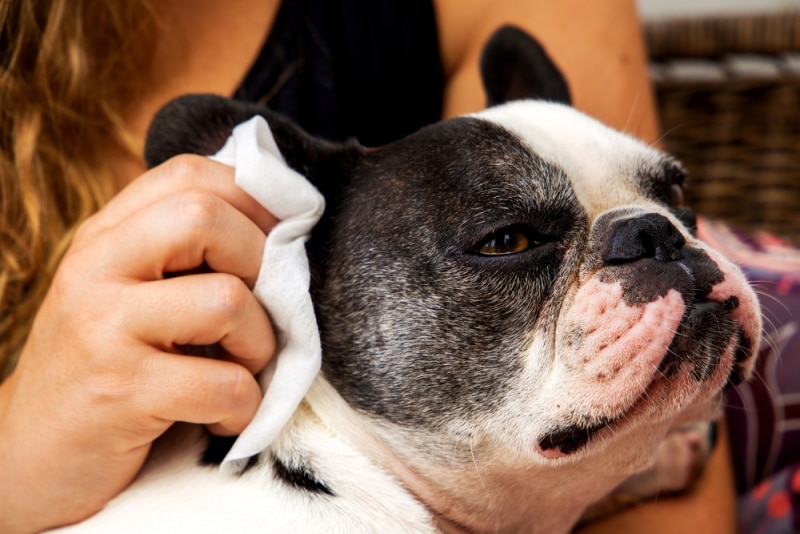
You don’t always need to clean your dog’s ears, but it is important to regularly check them, and even give them a wipe with a tissue to make sure it’s coming away clean. This also desensitizes your dog to having their ears touched, examined, and cleaned, which will make life much easier if they do develop an ear problem in the future. This is something that you should start doing when they are puppies, along with handling their paws and checking their mouths.
2. Be mindful of the season
If your dog suffers from seasonal allergies, talk to your vet about how best to manage the condition. Dogs with relatively mild reactions can often be managed with antihistamines, but continued scratching will open them up to secondary infections. Which brings us to:
3. Don’t ignore the itch
While the occasional scratch here and there is completely normal for a dog, if your dog is regularly scratching, biting, or rubbing at the skin, there is a reason. Diagnosing a food allergy or skin condition early will make all the difference when it comes to managing the disease and preventing complications like otitis.
4. Stay on top of parasite prevention
Keeping your dog free from fleas, mites, and ticks will go a long way to keeping pruritus at bay.
5. Ask for a demonstration
I was always amazed by the number of people who didn’t feel confident that they were putting eardrops in correctly, but never asked for instructions. I make a point of always demonstrating how to apply ear drops to every client to make sure they are comfortable with the process. It’s no use paying for ear drops that just end up on the outside of the ears or on the walls!

6. Always give the full course of antibiotics
Even if your dog’s infection seems to have resolved, it is important to always administer a complete course of antibiotics as prescribed by your vet.
If the infection is only 90% gone when you stop treatment, the 10% that remains are the organisms that were able to withstand the medication, so when the infection comes back, it will be more resistant to treatment. Each time this happens, we end up with fewer and fewer medications that can eradicate the infection.
7. Keep your follow-up appointments!
You might think that it’s easy to tell that your dog’s ear problem has been resolved based on their behavior, along with the improved look and smell of their ear.
At your recheck appointment, your vet can repeat their otoscopic examination and perform a repeat microscopic exam to look for any remaining organisms before giving your dog the all-clear.
8. Spend the money now or regret it later
The first time you take your dog to the vet with an ear problem, you may be shocked at the price of the recommended tests and treatments, and it would be easy to take the less expensive path of just taking home a generic treatment and hoping for the best. This might cost you less in the short term, but by spending the larger amount at the very start, you have a much better chance of eliminating the problem with the most appropriate treatment, making it less likely that the infection will return or become resistant to treatment.
9. Take care of swimmers
If your dog loves to swim, there’s a good chance that you’ve had to deal with an ear infection or two. Because of the L-shaped ear canals, water will easily go in, but does not easily come out.
Take an ear-drying solution with you to the beach, lake, or pool to use as soon as their swimming session is over. This type of cleaner is designed to displace water in the ear canals with a solution that helps the ear dry quicker and be less hospitable for yeast and bacteria.
10. Stay on top of grooming
Despite the erroneous claims made by some fans, ear cropping is not performed to reduce the risk of otitis. If this were the case, ear cropping would have become popular in breeds with floppy, hairy ears, not those with short coats and relatively upright ears to begin with.
Poodles, Cocker Spaniels, Basset Hounds, and Italian Spinones are among the breeds more commonly affected by ear problems (but have never been subjected to ear cropping!), so it is important to keep the hair on the underside of their pinna and around the ear canal clean and short.
Plucking the hair in the canals is a controversial practice, as it can be painful and lead to inflammation if not done correctly. The goal of ear plucking should only be to dislodge and remove hairs that have come loose and become trapped in the net of hair; we should not be pulling growing hair out of the skin - ouch!
Final Thoughts
As you can see, ear dermatitis, or, otitis externa, is a multifaceted problem. Getting a proper diagnosis can seem expensive, but recurrent infections will be even more so. Getting your dog used to having their ears touched, cleaned, and examined, will not only make it much easier and less stressful for you to monitor and treat them, but your vet will thank you too!
If your dog has a red, itchy, smelly ear, or they are regularly scratching or shaking their head, make an appointment with your vet to get the problem treated sooner rather than later; it may save you a lot of time and money in the long run.
Featured Image Credit: February_Love, Shutterstock
Expert dog care, straight to your inbox
Vet-reviewed advice, training tips, and the best of Dogster. Free, and you can unsubscribe anytime.
By signing up, you agree to our Terms & Conditions and Privacy & Cookies Policy.
Dr. Karyn Kanowski, BVSc MRCVS (Vet)
Dr. Karyn is originally from Queensland, Australia, and has resided in the UK for the past 10 years. She graduated from The University of Queensland School of Veterinary Science in 2010, and also holds a Bachelor’s degree in Zoology. Karyn is passionate about using experience, evidence, and working with pet owners to provide the best solutions for pets. She also believes in making reliable information about animal health accessible to everyone. 5 cats and 4 dogs let her share their home with her and her husband, and when she is not practising as a veterinary surgeon, she spends her time writing, gardening, and cleaning up pet hair!
Join the conversation
Ask a question, share your story, or send private feedback.