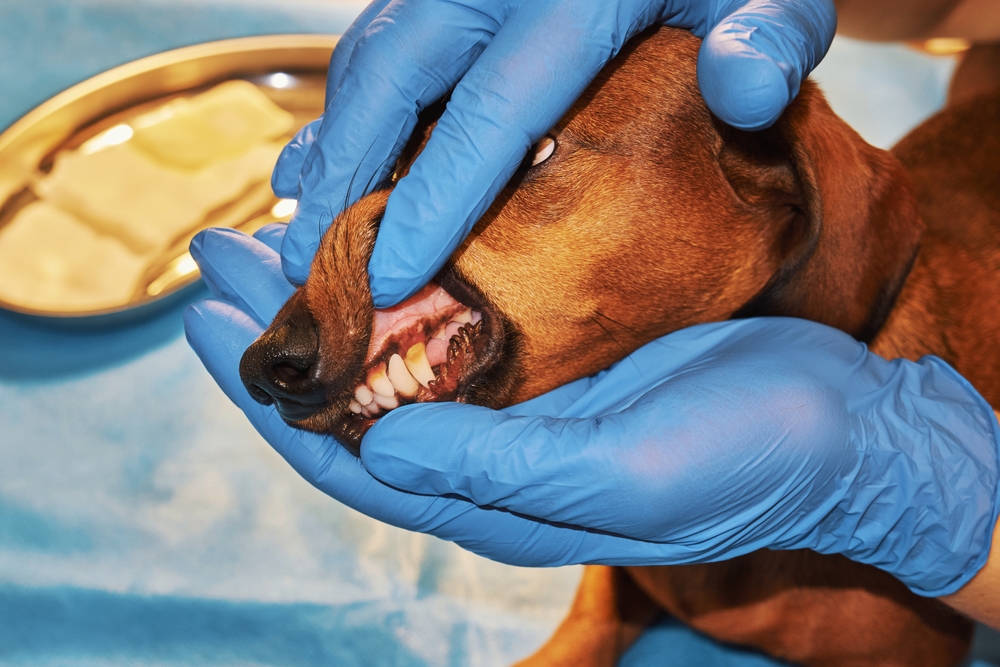
We often think of a dog’s teeth as one of their strong suits, evolved over time for powerful and effective chewing. However, dog teeth are just as sensitive as ours; they can develop tartar, experience trauma, and wear down the enamel. All of these issues will cause discoloration of the affected teeth and will predispose these teeth to infection.
Dogs are also very good at hiding their pain; seldom will they show any sign of discomfort or difficulty eating until the problem is very far down the road. So, what’s going on with your dog’s discolored tooth? And what can we do about it?

The 4 Common Causes of Tooth Discoloration
1. Plaque and Tartar
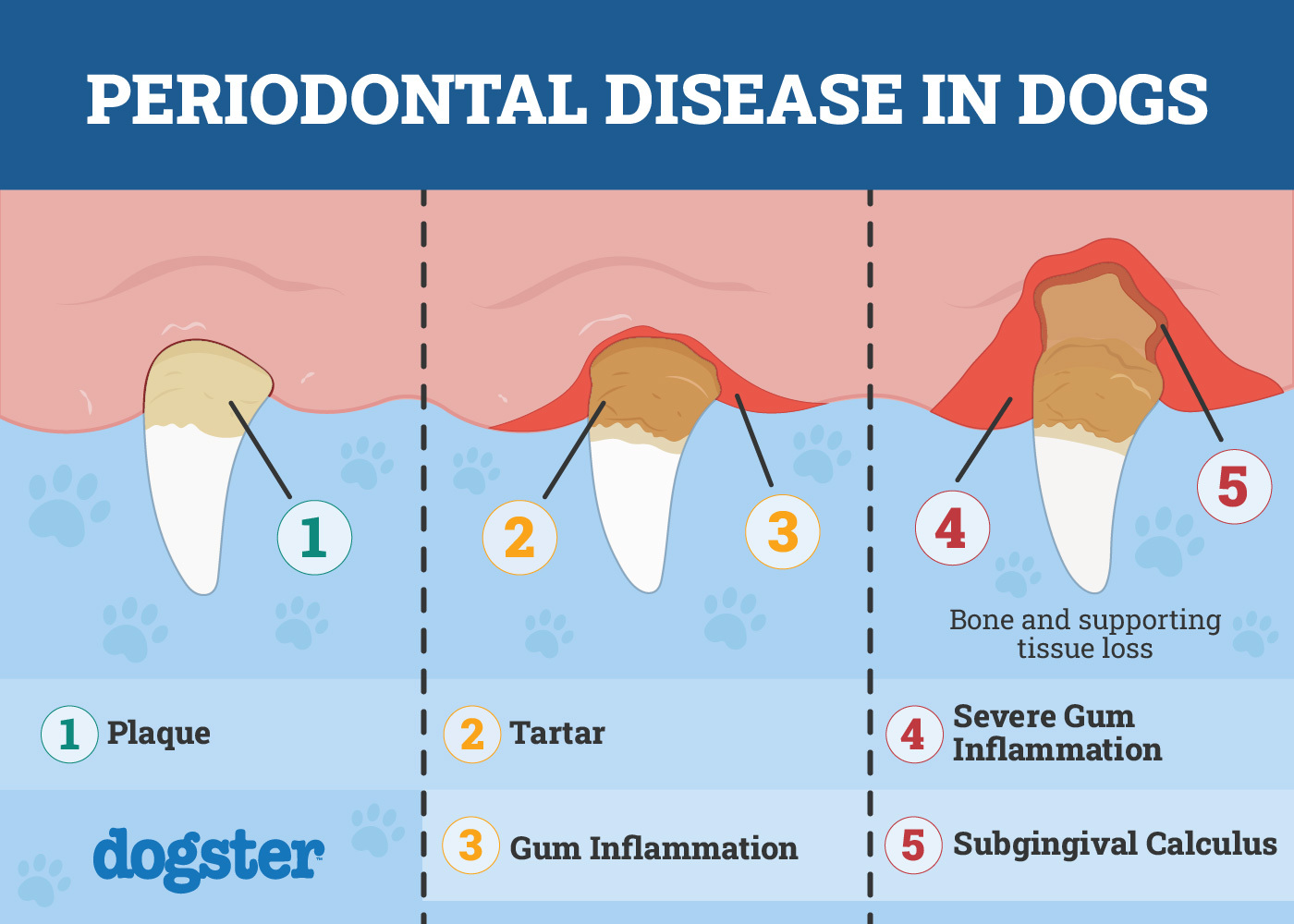
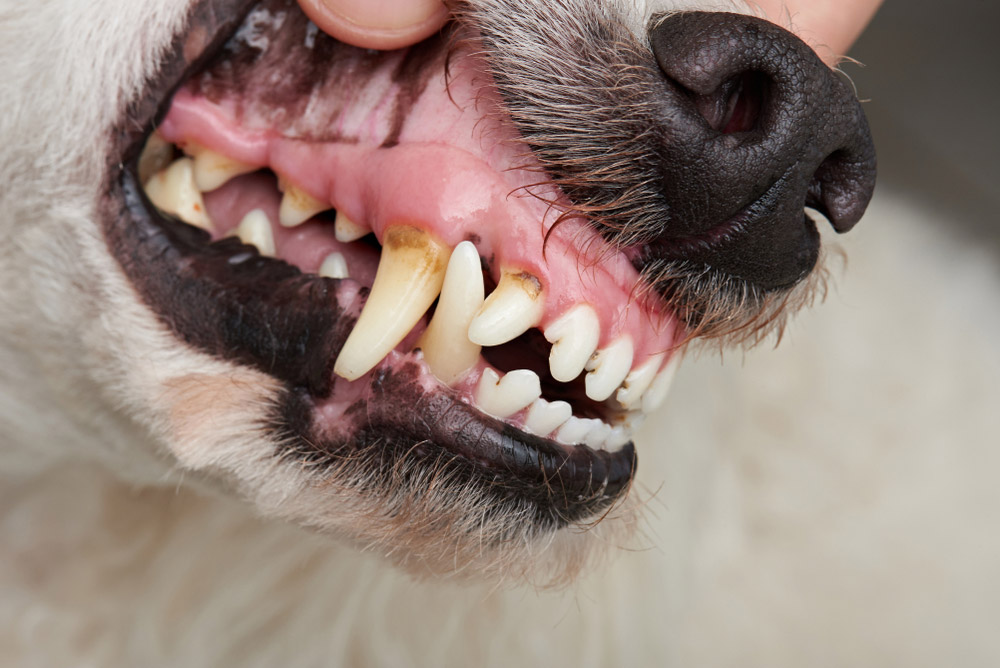
Accumulation of plaque and tartar is far and away the most common cause of tooth discoloration in dogs. This will appear as yellow or brown discoloration of the teeth; usually several teeth are affected, and the material is visible as a film or crust on top of the tooth surface.
This is referred to as periodontal disease, which means inflammation of the tissues surrounding the teeth, such as the gums and jawbones. It is estimated that at least 80% of adult dogs have some degree of periodontal disease, though this staggering statistic does not mean that the problem should be disregarded. Periodontal disease results in discoloration of the teeth, redness of the gum line, and bad breath. Severe cases may cause chewing discomfort, though most dogs will eat despite their periodontal disease.
So, what can be done to fix this? Daily brushing with pet-grade toothpaste and a dog-friendly toothbrush is the key to preventing the accumulation of plaque. Dental chews, which are designed to break off plaque while chewing, are another good option. If these methods are not effective, a thorough inspection and “clean-up” under anesthetic can be performed by a registered veterinarian.
2. Trauma
Trauma to a tooth can cause the entire tooth to change color. Teeth affected by severe trauma often appear pink initially, then slowly change to grey. There may or may not be plaque present on top of the tooth (as an unrelated problem). The trauma we are referring to is “blunt” or “concussive trauma”, and it causes something called intrinsic straining. Common causes are catching Frisbees, accidental clashes whilst playing, and biting or catching hard objects like stones, bones, or hard toys.
Intrinsic staining occurs when the pulp cavity of the tooth is affected by trauma. The pulp contains blood vessels, which supply the tooth with all of the nutrients it needs to stay alive. When the pulp is traumatized, hemorrhage occurs (which causes the pink discoloration). This will slow blood flow within the pulp and cause pulpitis, also known as inflammation of the pulp.
If left untreated, pulpitis results in death of the pulp. Remember, bacteria love to find dead tissue in the body, and it can be very hard for antibiotics to reach dead tissue. The end result is a significant infection of the oral cavity.
There are three options for managing these teeth. The first is a ‘watch and wait’ approach, with regular vet checks and annual dental X-rays. However, as we’ve touched upon, it can be hard to determine which intrinsically stained teeth are painful, and which aren’t. We could be missing an ongoing source of pain, or we could detect pain when the infection is severe. The second option is to remove the source of pain and infection.
This involves either extraction of the stained tooth (which is effectively dead), or root canal therapy (generally performed by veterinary dental specialists).

3. Worn Enamel
Enamel covers the surface of the crown of the tooth (the part we can see above the gum line). It is a hard, glossy substance that protects the tooth; it is incredibly durable and believed to be stronger than bones. Underneath enamel is dentin, which is calcified tissue that makes up the bulk of the tooth structure.
When a dog is given excessively hard objects to chew on, and when they chew on these objects over and over again, the enamel of the tooth becomes worn down. Tennis balls can also cause this to occur. The result of worn enamel is the exposure of the underlying dentin; the tooth senses this change and tries to make more dentin, but this new dentin will often be brown in color.
The only way to avoid rapid or excessive wear of the teeth is by being careful with what you allow your dog to chew. Avoid marrow bones, antlers, rocks, and tennis balls.

4. Medications
Dogs don’t drink tea, coffee, or red wine. However, their teeth can become discolored as a result of other things that have gone into their mouth. Certain medications will cause discoloration of the teeth. Chlorhexidine is sometimes used as an antiseptic mouthwash to keep bacteria at bay. If used over long periods of time, the teeth can change color, but this is no cause for concern.
Similarly, if tetracycline medications (a class of antibiotic) are used while a dog is still a puppy, their adult teeth may take on a permanent yellow-brown staining.
If you’re concerned about your dog’s health we suggest you speak to a vet.
If you need to speak with a vet but can't get to one, head over to PangoVet. It's our online service where you can talk to a vet online and get the advice you need for your dog — all at an affordable price!
Conclusion
Discoloration of one or more of your dog’s teeth warrants a visit to the veterinarian. Whether the cause is plaque, trauma, worn enamel, or medication staining, early intervention will give the best chance of saving the affected teeth before infection sets in.
See Also:
- Why Are My Dog’s Teeth Brown? Vet-Approved Facts & Care Tips
- My Dog’s Tooth Is Turning Purple, What’s Wrong? Our Vet Explains Risks & Treatment
Featured Image Credit: DAndreev, Shutterstock
 The 4 Common Causes of Tooth Discoloration