Dogs love exploring the world around them, and one of their most common and frustrating habits is doing some of that exploring with their mouths. Perhaps most frustrating of all is the dogs that are picky with their food but have no qualms about licking, chewing, or eating sticks, stones, and other inanimate objects that happen to cross their paths. Most of the time, this is a fairly harmless behavior, but it is one that can have some very serious consequences.
Ingesting foreign objects or substances could lead to gastroenteritis, infection, poisoning, or obstruction, all of which will require a trip to the vet, with the latter most likely resulting in surgery.
Swallowed objects, referred to as foreign bodies, are the most common source of canine bowel obstructions, but they aren’t the only cause. We’re going to take a look at the things that can cause a roadblock in your dog’s intestines, what you need to be on the lookout for, and how you can reduce your dog’s risk of ending up on the surgical table.

What Is a Bowel Obstruction?
Although some will use the term only when talking about the large intestine, “bowel” and “intestine” may be used interchangeably, and it is the small intestine that is most commonly involved in an obstruction. Compared to the large intestine, the small intestine has thicker, more muscular walls, is significantly longer, and the space inside (the lumen) is much smaller. Therefore, if something is to become lodged somewhere in the intestinal tract, it’s usually going to be in the small intestine. Once things reach the large intestine, it is a much shorter, wider path to the exit!
As the name suggests, a bowel obstruction is a blockage of the intestine, but there are different causes and categories of this condition.
If you suspect your dog has a bowel obstruction, are concerned for their wellbeing, or simply want more information on their health, you should contact your vet directly for an assessment.
If you need to speak with a vet but can't get to one, head over to PangoVet. It's our online service where you can talk to a vet online and get the advice you need for your pet — all at an affordable price!

The 5 Causes of Bowel Obstructions
1. Foreign Body
Stones, corn cobs, socks, underwear, tennis balls, and toys are amongst the most common foreign bodies to find themselves lodged in the intestines of unwary dogs, as well as stone fruit seeds, champagne corks, and makeup sponges. Smaller objects or materials like grass or hair can also accumulate in the intestines and cause an obstruction.
2. If It Can Go In, Why Can’t It Come Out?
Have you ever wondered how an object can fit down the esophagus but not through the intestines? This is mostly due to the fact that the intestines are a much longer and winding tube to travel through. Additionally, by swallowing, dogs have some conscious control over the passage of food and objects down the esophagus. Once in the intestines, movement is controlled purely by peristalsis, or the waves of muscle movement in the intestinal wall that pushes food along the tract.
3. Intussusception
No, we’re not talking about the confusing Leonardo DiCaprio film. Intussusception is when part of the small intestine folds into itself, like a telescope being retracted.
This condition is most common in young dogs and is often the result of severe gastrointestinal inflammation or intestinal worms. The intussusception can become completely stuck, causing a total blockage. Or it can also be mobile, sliding in and out, making it much more difficult to diagnose (sliding intussusception).
4. Tumors
There are many different types of masses or tumors that can impact the intestines, either by growing inside the lumen, on the intestinal wall, or even on an adjacent organ and causing compression on the bowel. Some are benign, like leiomyoma, but others, like adenocarcinoma, are more sinister forms of cancer.
5. Ileus
As we mentioned earlier, peristalsis is responsible for the passage of food through the digestive tract. If this process stops, so does the passage of food. This is known as ileus or intestinal stasis, and it can occur for a variety of reasons, including:
- Physical trauma/overhandling in surgery
- Neurological disease
- Infection
- Drugs
Ileus doesn’t cause a physical blockage, but the lack of motility can result in a functional obstruction, preventing or delaying passage through the intestinal tract.
What Are the Signs of Bowel Obstruction?
Irrespective of the underlying cause of the bowel obstruction, the clinical signs are generally quite similar but will depend on whether there is a complete or partial blockage. With the exception of ileus, all of the above scenarios can result in complete or partial obstructions, which is why clinical history and diagnostic tests are essential to get to the bottom of the problem.
Complete Obstruction
As the name suggests, this is when a foreign body, mass, or intussusception completely blocks the intestinal lumen. This is an emergency situation that can lead to perforation or rupture of the intestinal wall if not treated quickly.
- Inappetence
- Nausea, drooling
- Vomiting or retching (usually occurs at least 1 hour after eating/drinking)
- Abdominal bloating, pain, or discomfort
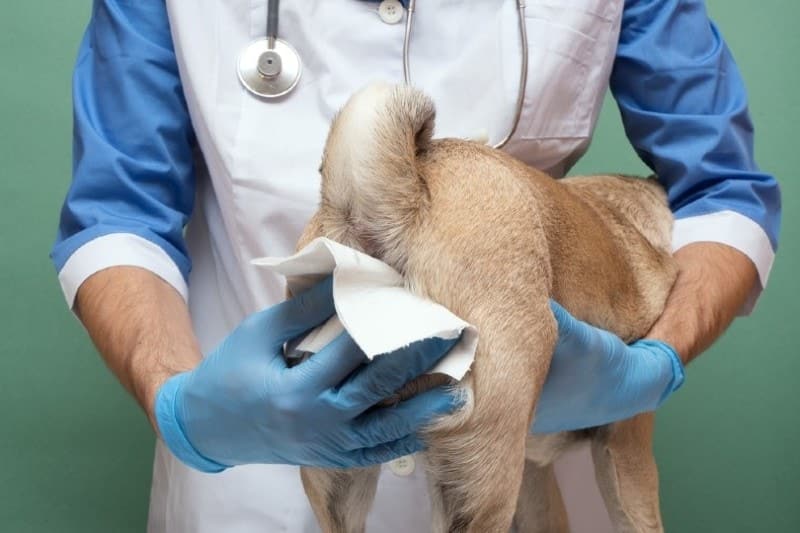
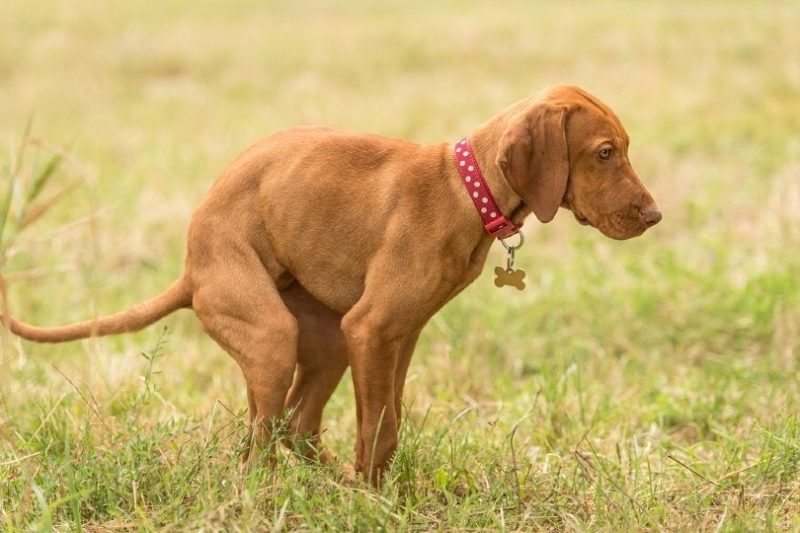
- Non-productive straining to defecate (may pass small amounts of watery feces)
- Dehydration
- Injected mucous membranes (white of eyes looking pink/red, gums are dark pink/red)
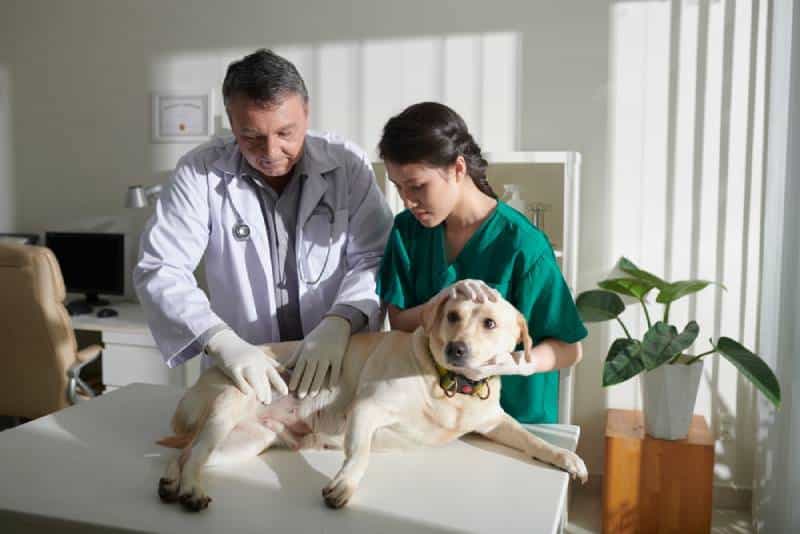
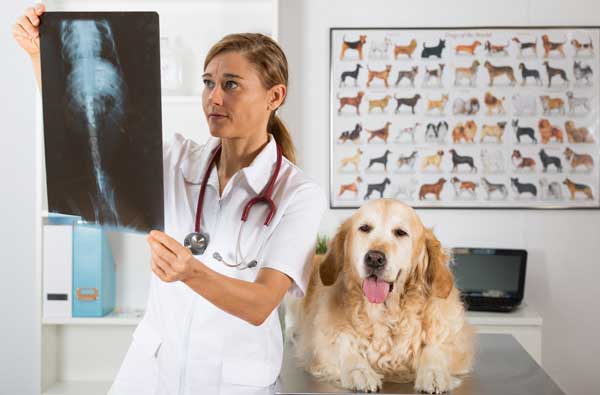
Diagnosis of complete bowel obstruction is usually based on the dog’s clinical signs and history, along with blood tests to rule out other causes and assess patient stability, as well as imaging (usually an x-ray or ultrasound). In some cases, your vet may be able to feel a foreign body or mass in the intestines during their initial examination, narrowing down the list of possible diagnoses. Even so, blood tests should still be performed to ensure there are no other underlying issues or concurrent diseases.
Partial Obstruction
Partial bowel obstruction can be a lot trickier to diagnose, as the clinical signs can wax and wane, sometimes disappearing altogether. Things that can cause a partial obstruction include small, soft, or linear foreign bodies, tumors, and sliding intussusception. Even x-rays and ultrasounds can miss a partial obstruction if the imaging isn’t performed at just the right time, especially if the cause of the obstruction is an object that does not show up well on x-ray.
Although many of the signs of a partial obstruction are similar to those listed above, there are some differences to be aware of. The most notable is the fact that these signs may come and go and be less severe.
- Inappetence
- Nausea, drooling
- Vomiting or retching (more likely to keep water down and eat small, frequent meals)
- Abdominal pain or discomfort
- Irregular passage of feces
- Dehydration (severity depends on how much water they keep down)
A partial bowel obstruction will often be misdiagnosed as some common gastrointestinal disorders, including:
- Gastroenteritis
- Pancreatitis
- Colitis
- Inflammatory bowel disease
Diagnosis of a partial bowel obstruction often involves exploratory surgery. The same diagnostic approach discussed earlier may still give us a diagnosis, but partial obstructions can be inconsistent, and it is not uncommon for diagnosis to take several weeks to rule out all other possible causes of the clinical signs before proceeding with surgery.
What Is the Treatment for Bowel Obstruction?
The way in which a bowel obstruction is treated will be surgical or medical, depending on what is causing it. In all cases, intravenous fluid therapy to treat dehydration, pain relief, and gastroprotectants are an important part of treatment.
Foreign Body
Surgical removal is usually required to remove a foreign body. The one exception is if the object has reached the large intestine, in which case fluid therapy and an enema may be used to coax it the rest of the way.
Depending on the size of the foreign body and whether or not there is significant damage to the intestine, the object will be removed through an incision in the intestinal wall (enterotomy) or by removing part of the intestinal length (enterectomy).
Tumor
In some cases, a tumor will be removed using the enterectomy technique, but this will depend on the type, size, and location of the mass. More invasive, diffuse, or metastatic cancers may be treated with a combination of surgery, chemotherapy, or palliative care.
Intussusception
Intussusception is treated surgically and may simply involve manually pulling the entrapped section of the intestine from where it has folded in on itself. If there is a suspicion that the intussusception may reform, which is particularly likely in a sliding intussusception, an enterectomy may be performed to remove the problematic section of the bowel.
A vital part of treating intussusception is identifying and treating the underlying cause, such as worming treatment or managing diarrhea or inflammation.
Ileus
In most cases, ileus can be treated medically with prokinetic medications that stimulate peristalsis. If the ileus is the result of a neurological problem, the prognosis may be more guarded.
How Can I Prevent Bowel Obstruction in My Dog?
There are lots of things you can do to reduce the risk of your dog acquiring a bowel obstruction, including:
- Teach your dog to “drop it.” In addition to good recall, this is one of the most important commands you can teach your dog.
- Look at the world through your dog’s eyes. Just because you wouldn’t put it in your mouth doesn’t mean they won’t. If they can swallow it but not digest it, it can cause an obstruction.
- Use a muzzle. If you have a dog that is known for swallowing things they shouldn’t, invest in a comfortable muzzle for them to wear on walks. They’re much cheaper than abdominal surgery!
- Keep on top of intestinal parasites. Whether by having regular fecal egg counts or routine worming treatment, make sure worms can’t lead to bigger issues, especially with dogs under 12 months old.
- Don’t be complacent about diarrhea. Lots of dogs have diarrhea from time to time, but if your dog has it frequently, even if they seem well in themselves, it can be a sign of inflammatory bowel disease, which if not managed can lead to a number of health problems, including intussusception.
There are some things over which we have no control, and certainly cancer and tumors fall into that category. We may not be able to prevent them, but early detection and intervention can make a huge difference in the outcome. Keeping an eye out for changes in your dog’s weight, appetite, stool appearance, and frequency, and how comfortable they are when you touch their belly can help you spot a problem.
FAQ
Can a Dog Fart With a Blockage?
Yes. Gas is one thing that may still sneak past even a complete obstruction, and they are usually particularly smelly.
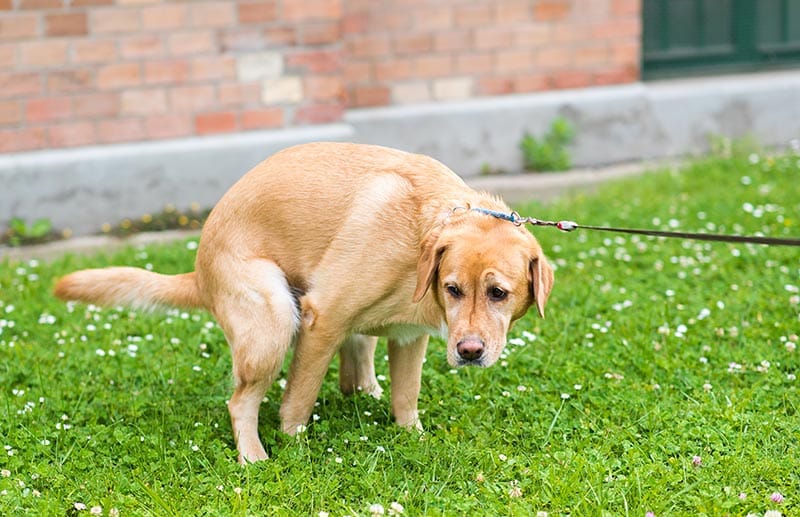
Can My Dog Still Poop With a Blockage?
Yes. Even dogs with a complete obstruction can pass small amounts of watery diarrhea. If there is a partial obstruction, your dog may be able to pass completely normal feces occasionally, but more often they will pass smaller amounts of soft feces or diarrhea.
My Dog Swallowed a Stone/Toy/Corn Cob. When Should I Call the Vet?
Now! Although some foreign bodies may be able to pass through the digestive tract, others are highly likely to cause a blockage. Your vet may recommend an x-ray to assess the size and location of the object to determine the safest course of action. In some cases, this may involve removing the object using endoscopy or making your dog vomit.
Never attempt to make your dog vomit at home unless instructed to do so by your veterinarian. Depending on what they have swallowed, making them vomit may cause more damage and complications.

Final Thoughts
Bowel obstruction is a relatively common problem in dogs, particularly those that have a penchant for swallowing everything in sight. Removing tempting objects, monitoring your dog when they play with toys, and keeping on top of worming treatments are some of the best ways to reduce the risks of bowel obstruction in dogs, but there are some causes that cannot be prevented.
Familiarize yourself with the signs of bowel obstruction, and do not hesitate to seek veterinary advice if you think your dog could have a blockage or if they have eaten something they shouldn’t have.
Featured Image Credit: SasaStock, Shutterstock