In this article
Dental health is just as important for dogs as it is for us. Without regular dental care, dogs can be prone to yellow or brown discolored teeth, bad breath (halitosis), redness and swelling of the gums (gingivitis), eroded gums, and loose and missing teeth.
When dental disease is left untreated, it can cause substantial pain and infection. This may make it difficult for your dog to eat normally and can contribute to weight loss.
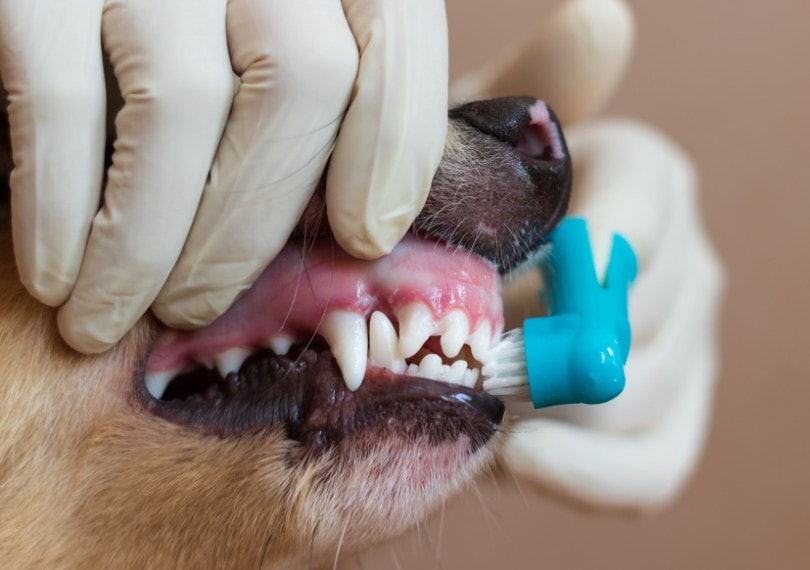
You can minimize dental disease in your dog by taking a proactive approach to their dental care. This care starts at home with regular toothbrushing. Brushing your dog’s teeth daily will help remove plaque in the same way that it does for our teeth, preventing the buildup of tartar and subsequent periodontal disease.

How Many Teeth Do Dogs and Puppies Have?
Normal adult dogs have 42 teeth.1 These include incisors, canines, premolars, and molars. Puppies normally have 28 teeth. By 6–7 months of age, most puppies have shed their baby teeth and have a full set of adult teeth.

What Are the Signs of Dental Disease?
Dental disease is a common health problem in dogs. About 80% of dogs over 3 years of age have dental disease.2 Periodontal disease and broken teeth are the most frequent dental issues.
Periodontal disease is the inflammation and infection of the tissues surrounding a tooth, including the gums and bone holding the tooth in place. While cavities are common in people, they make up less than 10% of all cases in dogs.
- Yellow or brown teeth
- Bad breath
- Red, swollen, bleeding gums
- Gum erosion and bone loss around the tooth root
- Loose or missing teeth
- Broken teeth
- Chronic pain
- Tooth abscessation
- Difficulty eating
- Weight loss
Dental disease affects more than just the teeth and gums. Bacteria from your dog’s mouth can enter the bloodstream and travel to the heart, lungs, liver, and kidneys, leading to potentially serious and life-threatening complications, such as heart disease.
The consequences of poor dental care are why regular at-home brushing, dental exams, and professional cleanings under anesthesia (not anesthesia-free cleanings) are recommended as part of your dog’s healthcare routine.
If you’re concerned about your pet’s well-being, we recommend you contact a veterinarian.
If you need to speak with a vet but can't get to one, head over to PangoVet. It's our online service where you can talk to a vet online and get the advice you need for your dog — all at an affordable price!
How Do Dogs Get Dental Disease?
Thousands of bacteria call your dog’s mouth home. As they set up shop on a tooth and proliferate, they form a thin layer known as plaque. Over time, the plaque thickens and hardens into tartar, which is difficult to remove.
Plaque can be prevented from forming into tartar by removing it with daily toothbrushing. If plaque and tartar remain on a tooth, it can lead to gingivitis and eventually, periodontal disease.

How Do I Start a Daily Brushing Routine for My Dog?
Forming a dental routine for your dog at home involves progressing slowly with small steps along with positive reinforcement. Use these brushing tips from the American Veterinary Medical Association to start your dog on the path to better dental health!
- A soft-bristle brush or finger brush specifically designed for dogs
- A toothpaste made for dogs (human toothpaste can make them sick)
- Dental treats, toys, and water additives approved by the Veterinary Oral Health Council
- Introduce your dog to the toothbrush and toothpaste by leaving the items out for a week.
- Allow your dog to investigate by smelling and tasting them.
- Use treats to help your dog form a positive association with the toothbrush and toothpaste.
- Gently rub some of the dog toothpaste on your dog’s teeth and gums.
- Follow up with a treat.
- Positively associate the process of having the paste applied to the teeth and gums with a treat reward.
- Slowly and briefly begin using the toothbrush with the toothpaste in your dog’s mouth.
- Focus on brushing the outside of your dog’s teeth.
- Reward your dog with treats and praise.
- Progressively increase to longer brushing times as your dog gets comfortable with the process.

Tips for Keeping Your Pet Healthy and Safe
- Begin a daily toothbrushing routine for your dog.
- Schedule regular dental exams and professional dental cleanings with your veterinarian.
- Use dental products that are approved by your veterinarian and/or the Veterinary Oral Health Council.

Final Thoughts
Daily toothbrushing is a great way to maintain your dog’s oral health. Dental disease in dogs is the most common health problem encountered by veterinarians. Regular brushing and cleaning can help remove plaque bacteria from your dog’s teeth.
In combination with regular dental examinations and dental cleanings with your veterinarian, it’s an integral part of keeping your dog healthy and happy.
See also:
- Is a Broken Dog Tooth an Emergency?
- Why Is My Dog Missing Teeth? 5 Vet Reviewed Reasons
- Can Dogs Use Human Toothpaste? Vet-Verified Info & Facts
Featured Image Credit: DWhiteeye, Shutterstock