Get

In Your Inbox

Dogster is reader-supported. When you buy via links on our site, we may earn an affiliate commission at no cost to you. Learn more.

Do You Have a Scared Puppy? 6 Vet-Approved Tips on How to Help Them

Share

yorkshire terrier puppy dog peeking from around a wall

Coming into a new home and meeting new people is an extremely stressful situation for puppies, and every dog will react differently. But if your pup simply isn’t adjusting or if you’re finding that they’re scared of everything, there are a few things you can do to help.

Dogster_Website dividers_v1_Jan 18 2024-03

The 6 Things to Do to Help a Scared Puppy

If you notice your puppy is scared all the time or of a specific thing, there are a few things you can do to try to get them a bit more comfortable. Not every option we highlighted here is appropriate for every dog, but we’re sure there’s something here that will help with your situation! Of course, before trying any of these tips, we always recommend speaking to your vet or a dog behaviorist to ensure it’s the right course of action for your pet as an individual.

scared corgi puppy
Image by: Paul’s Lady, Shutterstock

1. Identifying Fear in Dogs

While you might think you have a good understanding of how a dog shows fear, the truth is that they show it in multiple ways, and you may or may not easily recognize it.

For example, you might have seen a scared puppy that is constantly whining, but you might not realize that yawning could also be an indicator of a scared or anxious pup. Some dogs also get so scared that they lose control of their bowels, which some owners react negatively to and then make the situation even worse. In reality, they should ignore the behavior and use pet-safe wipes to clean them up.

With these things in mind, you’ll want to familiarize yourself with some of the most common signs of a scared or anxious dog.

Signs of a Scared Dog:
  • Avoidance
  • Tailed tucked between hind legs
  • Averting eye contact
  • Dilated pupils
  • Trembling
  • Panting or pacing
  • Slow movement or “freezing”
  • Not accepting food or treats
  • Licking lips
  • Leaning away from the thing they’re nervous of
  • Raising a paw to show they are apprehensive
  • Hiding
  • Flattened ears
  • Yawning
  • Barking, whining, or growling
  • Submissive urination
  • Clinginess to owner
  • Drooling
  • Loss of control over bowels

If you can notice the first signs of stress and distract or remove your dog from the situation, you will be stopping them from ramping their emotions up past the point of no return.


2. Find The Trigger

If you notice that your puppy is acting scared, the first thing you need to do is determine what exactly is scaring them. Some dogs fear lightning or thunder, while others don’t like the noise the air conditioner or dryer makes.

Identifying what is scaring your puppy can help you determine the next steps you need to take and whether it’s possible to simply remove the triggers instead of trying to deal with the underlying fear.
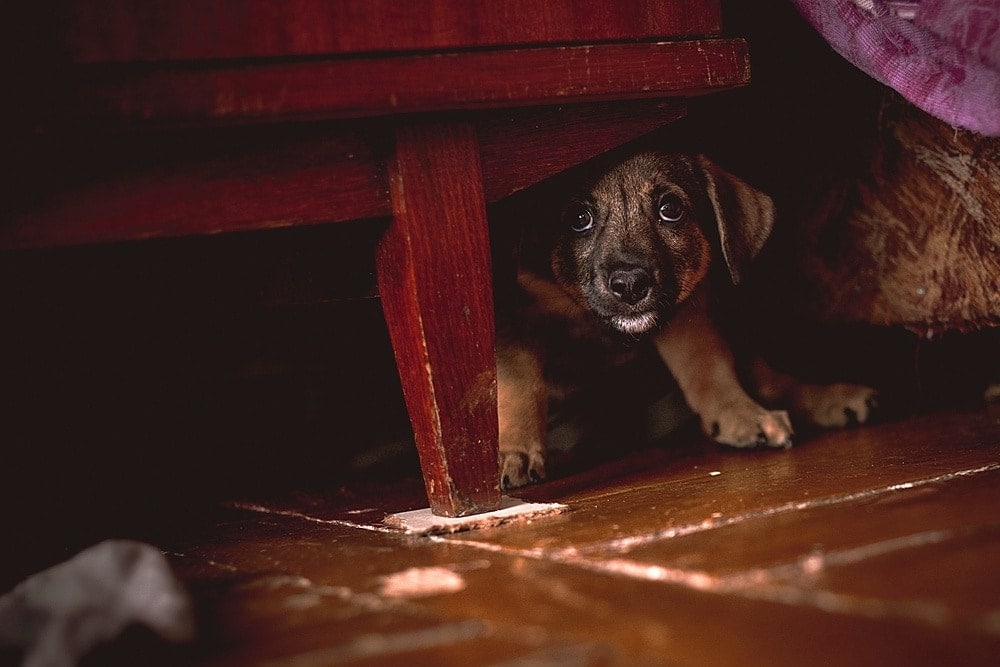
scared puppy hiding under furniture
Image by: evgengerasimovich, Shutterstock

3. Comfort Them

When your dog is scared, you should try comforting them. Try to get them calmed down as much as possible, and hopefully, they’ll begin to see that they don’t need to worry about the thing they’re scared of. Simply petting your dog and talking to them can make a huge difference, and eventually, they might feel comfortable and safe enough to handle whatever is scaring them.

If possible, it’s best to remove them from the current situation and work on their reaction over the next few months through slow and steady desensitization.  Always remain as calm as possible because they’ll pick up on how you’re feeling and hopefully learn to follow your lead.


4. Gradually Expose Them to New Things

The more you can expose your puppy to in the first 15 weeks of their life, the better. Exposing them to things early on allows them to accept new things as nothing to worry about, which can help them deal with unfamiliar things or situations in the future.

Puppy of the Spanish mastiff on a green grass
Image Credit: alarich, Shutterstock

5. Try Desensitizing Them

This isn’t always the best or most appropriate choice depending on the individual, but sometimes, desensitization and counterconditioning can be extremely effective. For instance, if your dog doesn’t like a specific sound, you can try slowly exposing them to the noise at lower levels before slowly increasing the volume. Over time, your pet might learn to ignore the noise completely! However, this takes a lot of time and patience, so you’ll have to move at a pace that they’re comfortable with.


6. Talk to a Vet or Animal Behaviorist

You don’t always need to take your pup to a vet just because they’re scared of something, but if their fear is having a negative impact on their life and nothing you’re doing is working, it is certainly worth it. The vet or a dog behaviorist can give you some additional recommendations to help calm them down, and often, working with a behavioral specialist can give you the confidence to remain consistent in your training approach, which will benefit both you and your pup in the long run.

If you need to speak with a vet but can't get to one, head over to PangoVet. It's our online service where you can talk to a vet online and get the advice you need for your pet — all at an affordable price!


PangoVet_Mention-in-Content Savings V1

dogster face divider

Final Thoughts

Helping your puppy adjust to their new home and surroundings isn’t always the easiest thing to do, but when you do it right, you get a much happier and well-adjusted pup.

If you suspect your dog isn’t adjusting the way they should, we highly recommend reaching out to their vet to see if there’s anything else you should do or if there’s an underlying medical problem they can help you address.  Once you get the all-clear on any medical conditions, you can work with a behaviorist to help correct the anxiety and give your pup a happier, more confident life.


Featured Image Credit: Annette Shaff, Shutterstock

Want content like this delivered to you?

Sign Up For Our Newsletter

News, insights, expert advice, and everything dog

* By submitting, you agree to our Terms & Conditions and Privacy & Cookies Policy.


How useful was this post?

Click on a star to rate (you can leave written feedback after clicking submit)

Help us improve Dogster for pet parents!

Your feedback really matters.

What did you like about this post? Also how can we improve it?

Join the conversation

Leave a Reply

You’re very welcome to leave a comment or question. Please know that all comments must meet our community guidelines, and your email address will NOT be published. Let’s have a positive and constructive conversation.


Talk With A Vet Online

Peace of mind,
anywhere, anytime

Affordable vet advice

Why Some Dogs Treat Mealtime Like Playtime – And When to Pay Attention

Most dogs are reliable eaters. Bowl goes down, food disappears. So when a dog starts batting kibble across the kitchen floor, tossing pieces...

Major Win for Dogs: Ontario Becomes the Final Province to Ban Ear Cropping and Debarking

​​Ontario has approved new animal welfare regulations that will prohibit elective ear cropping and devocalization (debarking) procedures in dogs from January 1, 2027....

Dogster’s Weekly Photo Contest Winners: Most Adorable Puppy (June 8, 2026)

Every week our team gets the privilege of sorting through our readers photos to choose what dogs will win this weeks contest! See...

The Spice Cabinet Dangers Most Dog Owners Don’t Think About

Most people know chocolate is off-limits for dogs. Fewer realize that some of the most common herbs and spices sitting in a kitchen...

More related

How to Teach a Dog to Spin: 5 Easy, Vet-Approved Tips

Spinning is one of the many fun tricks that man’s best friend can easily be taught to do. This is a beginner-level trick...

Mini Corgi vs. Corgi: Detailed Breed Comparison

The Pembroke Welsh Corgi and the Cardigan Welsh Corgi are affectionate, intelligent, and lovable, and make excellent watchdogs. But what about the Miniature...

8 Best Organic Puppy Foods in 2026: Reviews & Top Picks

Puppies require healthy, high-quality foods as they grow through this developmental stage. One of the best ways to ensure your puppy gets nutritious...

How to Prepare Dogs for Back-to-School Season: 5 Vet Approved Tips & FAQ

Your dog probably gets quite used to it when the kids are home for the summer. Full-time playmates? They would never want for...

Keep reading

Dr. Marty Nature’s Blend Dog Food Review 2026: Our Expert’s Opinion

Review Summary Dr. Marty is a pet food company founded by long-time veterinarian, Dr. Marty, whose focus for the past 45 years has been on creating healthy and nutritious all-natural foods for dogs and cats. Dr. Marty’s mission is to...

Dogster_Dr. Marty Nature’s Blend Dog Food Review

What To Add to Dog Food for Dry Skin: 9 Great Ideas

As dog owners, we understand the frustration of a pet that scratches and licks excessively, but it is much more agonizing for the dog. If you checked for fleas and there are none, your canine friend likely has dry, itchy...

woman feeding dalmatian dog

Can Dogs Eat Brussels Sprouts? Vet-Verified Nutrition Facts & Tips

When it comes to Brussels sprouts, it seems that you either love ‘em or you hate them, there is no in-between. There are people out there who adore this veggie and could eat them with every meal. Then again, some...

Can Dogs Eat Brussels Sprouts

Can Dogs Eat Sweet Potato Fries? Vet-Verified Nutrition Facts & Better Options

If you’re coming to this article concerned and ready to call the vet—just know that sweet potato fries aren’t toxic for your dog. However, if they are already made into fries, and you haven’t just cut up a fresh, sweet...

Dogster-Can-Dogs-Eat-Sweet-Potato-Fries

Can Dogs Have Prunes? Vet-Verified Nutrition Facts & FAQ

Dogs can have a number of fruits and veggies, as they are omnivores just like us! However, our systems are a lot different. So, even though we can safely eat prunes, you may wonder if our pups are able to....

Dogster-Can-Dogs-Have-Prunes

11 Best Canned & Wet Dog Food For Pitbulls in 2026: Reviews & Top Picks

As the person responsible for your dog’s well-being and health, you likely take your pet’s nutrition very seriously. Canned and wet dog foods are great options for many pet owners as they are easy to use, and pit bulls generally...

pitbull puppy eating from plate

Can Dogs Eat Salt? Vet-Verified Facts, Risks & FAQ

Salt is a pantry staple, used to cook with, season with, and preserve. Some people can’t enjoy a meal without adding an extra dusting of salt, especially to meaty dishes like steaks, stews, chips, or eggs. It may make you...

Can Dogs Eat Salt

7 Golden Rules for Feeding Your Dog: Vet-Verified Advice & Info

As a dog owner, you know the key to your pup’s good health is proper nutrition. Navigating the different types of dog food out there can be confusing. You want to make sure they are getting what they need, but...

Dog Feeding Schedule

Love Dogs? So Do We! Join the Dogster Community

Stay informed with expert pet care insights delivered straight to your inbox! Discover professional guidance on animal behavior, feeding tips, trusted product picks, and much more.


Sign up for the Dogster Email Newsletter