

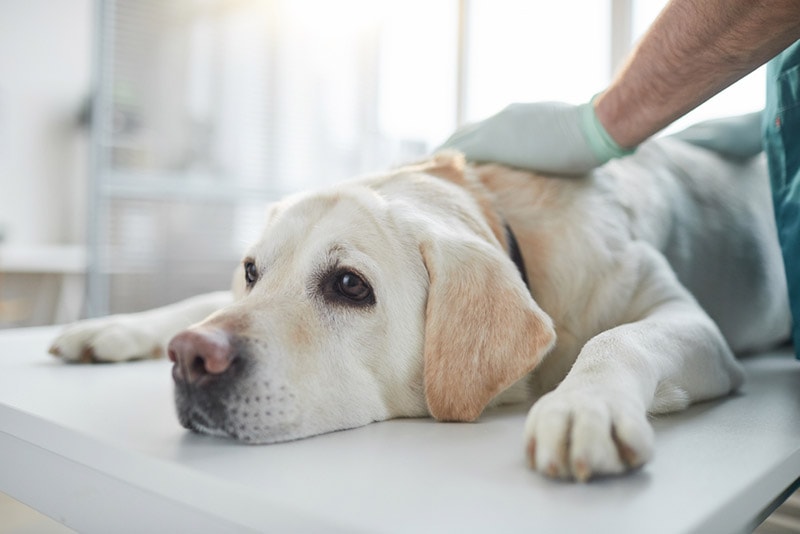
Finding a lump on your dog is never fun. If the lump doesn’t seem to bother your dog, isn’t painful to the touch, and feels like other lumps your dog already has, does that need to be checked by a veterinarian? All new lumps on dogs should be screened by a veterinarian, though the good news is a lump like the one described above may be a lipoma, a common and almost always benign tumor.
Would you like to know more about lipomas?

What Is a Lipoma in Dogs?
Lipomas are a type of tumor. The fat cells of the body are called adipocytes or sometimes lipocytes. Any cell type can develop a tumor. When a benign tumor of lipocytes forms, that is called a lipoma.
Benign tumors are those that generally infiltrate the area around them at worst and do not spread via metastasis to other parts of the body. Removing them properly is also usually curative.
Malignant tumors are more aggressive, more likely to spread both locally and to other parts of the body, and can be fatal in many cases, especially without treatment. Removing malignant tumors, even with proper margins, often doesn’t mean they won’t come back in the future.
Lipomas are the poster child for benign tumors in dogs. They usually grow slowly, rarely negatively affect the dog, are typically cured if removed surgically, and are one of the most common tumor types diagnosed at the average veterinary clinic.
Lipomas come in three forms. The first and most common is the simple lipoma. The second is the infiltrative lipoma, a more aggressive version of a lipoma that can behave differently than expected but is very rare. Lastly, there is the myelolipoma, which is essentially a lipoma made of both fat cells and precursor blood cells. When we talk about lipomas, simple lipomas are generally what we’re talking about.

What Are the Signs of a Lipoma in Dogs?
With rare exceptions, lipomas grow in the subcutaneous layer of the body, immediately underneath the skin, which is where fat is often deposited. Lipomas tend to have a soft, squeezable feel and can sometimes be moved around freely under the skin. Some lipomas may be firmer, especially while they’re still small. The appearance of a lump like this is commonly the first sign of a lipoma in a dog.
Lipomas are almost never painful. One notable exception occurs when lipomas grow in the region of a joint, like the axillary (armpit) region, grow large, and impede the movement of a limb. This may appear like limping, lethargy, reluctance to run or jump, or even breathing changes. Since many dogs that produce one lipoma will also develop others, several developing in one area can also feel uncomfortable or interfere with normal movement.
Lipomas usually grow slowly though faster growth of a lump doesn’t rule them out, especially for infiltrative lipomas.
What Are the Causes of a Lipoma in Dogs?
Lipomas are genetic, with a strong association to certain breeds. Labrador retrievers are the classic example of a canine patient with lipomas, but other likely breeds include beagles, dachshunds, spaniels, pointers, and schnauzers.
Since lipomas are abnormal growths of fat cells, animals that are overweight are more likely to develop lipomas or struggle with larger lipomas.
Age is also related to the development of these tumors, with older dogs far more likely to develop them than young ones. These tumors are so common in senior dogs that it is rare to find a senior Labrador that doesn’t have at least one, as any Labrador owner could tell you about.

How Is a Lipoma in Dogs Diagnosed?
The first test that will be run on a lipoma in almost any veterinary clinic is an FNA, a fine needle aspirate. This test consists of using a normal, vaccine-sized needle and placing it into the lump, which collects some of those cells inside the needle. These are then expressed onto a slide to be assessed visually or under a microscope. Fat cells form droplets on the slide that are easy to identify and do not dry. While not always common and not easy for the average clinician to differentiate (as opposed to a specialist like a clinical pathologist), the benefit of assessing these cells under a microscope is to rule out a liposarcoma, the malignant form of a lipoma, which are very rare.
While incredibly unlikely, lipomas can potentially grow inside the abdominal or chest cavity. X-rays, ultrasounds, CT scans, or MRIs may be needed in some rare cases to help identify the tumor.
Whenever in doubt, a veterinarian may collect a biopsy sample, which is larger than an FNA, to identify the tumor definitively.
How Is a Lipoma Treated in Dogs?
The best way to treat it is often to leave it alone. While these tumors can grow quite large, it is rare for them to cause a problem. In most cases, lipomas are only treated if they are behaving abnormally, such as growing very large very quickly and potentially growing in between local muscles, if they are getting so large the animal can’t move or settle comfortably, or if they are in the way of limb movement, which may be painful.
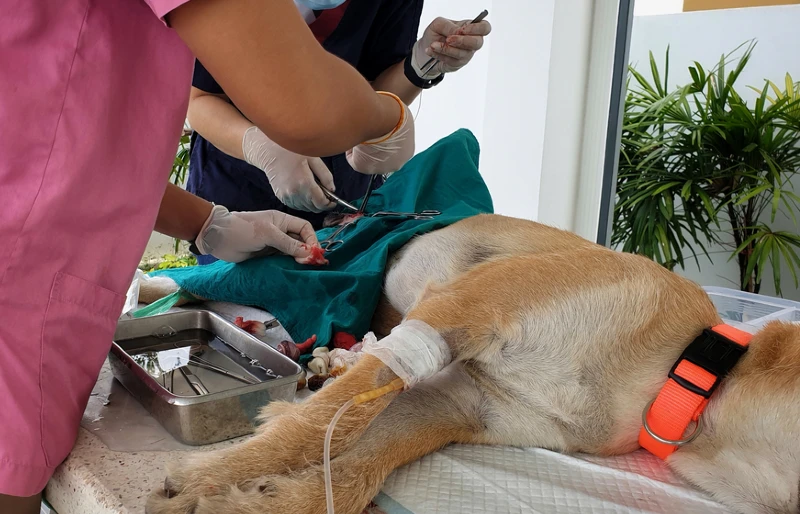
Treatment of a lipoma is usually surgical removal, which is very successful in most cases. Rates of recurrence, if the tumor has been removed with proper margins, are very low, and since the lipomas are often well grouped together or even encapsulated, this is a quick and easy tumor to find the edges of accurately.
It should be noted that removing one lipoma doesn’t change the chance of another lipoma developing in the same area or anywhere else. In fact, a dog that develops a lipoma is very likely to develop more, and removing them as they occur does not change this.
How Do I Care for a Dog With a Lipoma?
Since most dogs with lipomas won’t receive specific treatment, it is important to monitor them at home and report them to your veterinarian at your dog’s annual check-up each year. Attention should be paid to the size and feel of the lipoma, checks for new lipomas should be regularly performed, and any signs of discomfort, pain, mobility issues, or breathing changes should be reported to a veterinarian immediately.
How Do I Prevent Lipomas in My Dog?
Since the most important cause of lipomas in dogs is genetics, there is often nothing you can do to prevent lipomas in your dog other than potentially avoiding breeds that are more likely to develop them. Keeping your dog lean may help reduce incidents of new lipomas or help keep them from growing very large, though this is no guarantee.

Frequently Asked Questions
Are lipomas serious in dogs?
They almost never are, and in fact, they rarely even need treatment.
Do lipomas in dogs need to be removed?
Most lipomas do not need to be removed. Removal is generally only recommended if the lipoma is causing a problem or the location it is growing is likely to develop into a problem later. Dogs already undergoing a different surgical or anesthetic procedure may also be more likely to receive a recommendation to remove their lipoma(s) since they’ll be under anesthesia already anyways.

At what age do dogs get lipomas?
The average age that dogs develop lipomas is about 9-12 years old.
Can a lipoma burst on a dog?
Lipomas do not burst, but another benign lump that can form in the subcutaneous tissue layer and may look or feel similar are cysts, which can burst.

Final Thoughts
Lipomas are a common tumor but one of the best tumor diagnoses a dog can receive. They’re easy to treat, usually don’t require treatment at all, can usually be cured if removed, and almost never carry a poor prognosis for the dog. If you ever notice a lump on your dog that shows signs consistent with a lipoma, be sure to have a veterinarian check it to be sure.
Featured Image Credit: SeventyFour, Shutterstock





























2 Responses
We have a 6 year old Schnauzer that has been diagnosed with a large chest lipoma! The xray showed only a small sliver of one lung was visible! Our wonderful vet prescribed medication but said surgery wasn't an option! We are senior citizens who adore our baby girl…we are sick about this! Do u have any suggestions for us? Thank u so much! Judy Carrell
Hello Judy,
thank you for your question, although we are very sorry to hear about your Schnauzer's issues. In this case, the best thing we can suggest is booking an appointment with one of the veterinarians from PangoVet.com. This is a 20-minute online video call appointment that can be performed from the comfort of your couch, so you don't have to travel anywhere. The veterinarian can give you their opinion and tell you what the next steps should be to help your dog.
Hope this helps!