In this article
View 4 More +Picture this: you’ve been enjoying the warm, sultry weather with your furry canine friend, when all of a sudden your day is ruined by the sudden appearance of a red, painful lesion on your dog’s skin. So it’s straight to the vet to learn that your best bud has a hot spot. But what does that actually mean?
Hot spot is a colloquial term for a superficial skin condition known as pyotraumatic dermatitis or acute moist dermatitis (AMD). Put simply, it is an area of skin that has become damaged, inflamed, and sometimes infected. Let’s take a closer look at why hot spots occur, how to treat them, and tips for avoiding them.

What Is a Hot Spot?
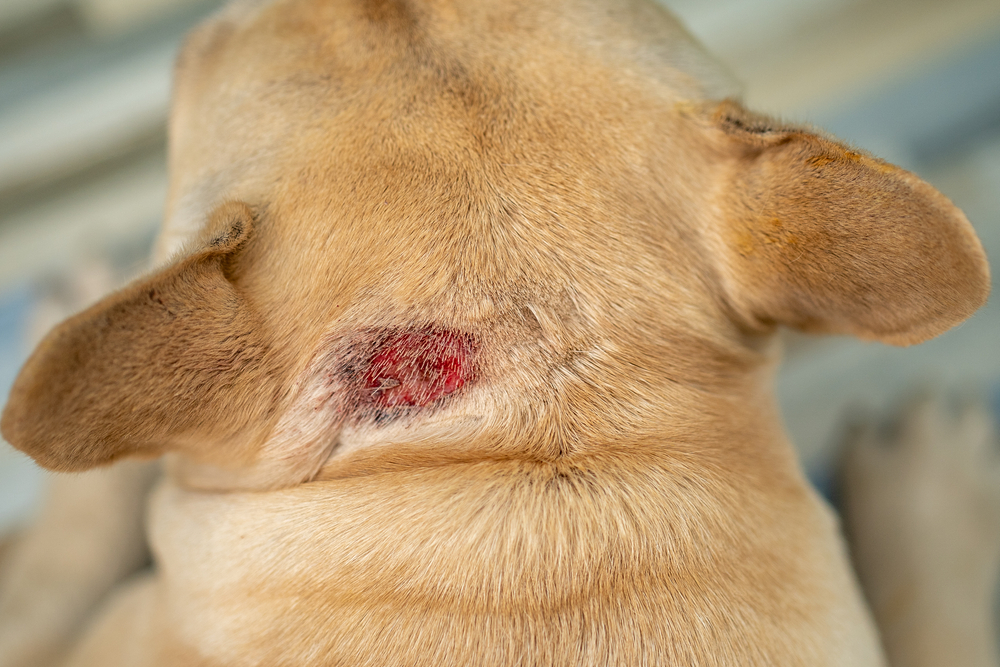
Pyotraumatic dermatitis or acute moist dermatitis – aka ‘hot spot’ – describes a skin condition that usually occurs as a result of trauma to the skin, often started or made worse by scratching, licking, or biting. It is an area of moist, inflamed, and broken skin, with a serous (clear fluid) or purulent discharge.
- Allergies
- Fleas, ticks, and mites
- Impacted anal glands
- Infections (eg. ear infection)
- Knotted/matted fur
- Over grooming painful areas (eg. arthritis)
- Scratches, bites, or wounds
Broken skin and humid conditions are the ideal ingredients for a hot spot to form, and dogs with thick coats are more likely to be affected, as moisture and heat become trapped under the fur. These lesions often start out quite small, but licking, biting, and scratching can turn a spot the size of a dime into an angry, painful wound the size of your hand in a matter of hours. Often, the true extent of the wound cannot be appreciated until the fur has been clipped.
A hot spot doesn’t necessarily mean there is infection, but left untreated, secondary infections can occur.

How Are Hot Spots Diagnosed?
- They suspect an underlying condition
- There is evidence of bacterial or fungal infection
- The hot spot is not resolving
Although most hot spots are typically the consequence of damaged skin in warm, humid conditions, it is important to make sure that there isn’t another reason for their appearance. Checking for external parasites, underlying infections, or pain are important to ensure we are not just treating a superficial problem and missing the bigger picture.
Consulting a veterinarian is recommended for the best course of action.
If you need to speak with a vet but can't get to one, head over to PangoVet. It's our online service where you can talk to a vet online and get the advice you need for your dog — all at an affordable price!
How Are Hot Spots Treated?
In most cases, treating a hot spot is quite straightforward, with the goal being to dry out the lesion. Clipping the fur and using an antibacterial cleaner or shampoo are usually the most effective methods for dealing with a hot spot, but arguably the most important part of treatment is preventing further trauma to the wound.
If your dog can lick or chew the hot spot, you need to use an Elizabethan collar (AKA an E-collar or cone) of some description to prevent this. Covering the lesion will not stop your dog from rubbing the area, and will trap moisture against the skin; the opposite of our goal.
If your dog can scratch at the hot spot, trim their claws to help reduce the amount of trauma caused, or secure a sock or bandage over the foot to minimize damage.
Depending on the size, severity, or presence of infection, your vet may prescribe a steroid cream, anti-inflammatory medication, or antibiotics to deal with the problem. If the hot spot has been triggered by another condition (e.g., fleas, arthritis), these will also need to be addressed.
What a Hot Spot Is Not
There are many other skin conditions that may look like hot spots, which is why it is important to get the right diagnosis from your vet.
- Ringworm can sometimes look like a hot spot, but isn’t usually itchy or moist.
- Cutaneous Lupus Erythematosus produces inflamed lesions on the skin, and is a more complex, systemic disease.
- Leishmaniasis is a potentially fatal disease that is transmitted by biting flies in warmer parts of the world. It can also be transmitted to humans.
- Some forms of skin cancer can produce lesions that may either look like a hot spot, or cause your dog to lick the area, resulting in one.
Hot Spot Treatment and Prevention at Home
The best way to tackle a hot spot starts with a visit to your vet. While many hot spots are uncomplicated and easily treated, it is important to make sure there is no underlying problem, and to confirm that it definitely is a hot spot.
If your dog often suffers from hot spots in the warmer months, there are a few things you can do to help prevent them from forming, and some basic first aid techniques for treating early or minor lesions.
- Moisture is the enemy – ensure dogs are thoroughly dried after a swim or bath. When possible, use ‘dry’ cleaning options like a waterless shampoo or cleaning wipes.
- Humidity is the enemy – during the warmer months, consider getting your dog professionally groomed to keep long coats short, and thick coats thinned.
- Irritation is the enemy – stay on top of your external parasite prevention, and bathe or brush dogs after a day out to remove sand, grass, or pollens from the skin and coat (but remember to dry them thoroughly!).
- Clip the hair – getting air to the hot spot is half of the battle, so if you can safely trim or shave the hair over and around the hot spot, this can improve the situation significantly, as well as allow you to monitor the lesion. Be aware that hot spots are often painful, so your dog may not tolerate this process.
- Make use of safe, antimicrobial products.
- Apple cider vinegar -Its effectiveness is not scientifically proven, but many pet owners swear by its ability to help reduce skin irritation and inflammation. A 50:50 dilution of the vinegar and water can be dabbed or sprayed onto the inflamed area, but watch closely for adverse reactions.
- Listerine (Original only) – Diluted 50:50 with water, and sprayed or dabbed on a hot spot can be effective against mild lesions. Again, this is not a product that has been specifically tested or licensed for this use, but has a lot of anecdotal support.
IMPORTANT: If you suspect your dog has a hot spot and it does not improve with home management within 48 hours, or particularly if it is getting worse, it’s time to visit your vet. Do not use any of the above products near the eyes.

FAQ
Does my dog need antibiotics?
Most of the time, clipping the hair and using topical treatment will be enough to get rid of your dog’s hot spot, but if your vet suspects bacterial involvement, they may prescribe antibiotics
Can I use a steroid cream?
If you have a steroid cream at home that you’ve used to treat inflamed or itchy skin, you may be tempted to share it with your dog. However, preparations for humans are rarely appropriate for pets, and if we’re not actually dealing with a hot spot, it could make things worse. It’s always best to check with your vet before applying anything to your dog’s skin.

Should I bandage the hot spot to prevent licking?
Heat and humidity are where hot spots thrive, and covering them can trap the warmth and moisture against the skin. Covering a hot spot also makes it difficult to monitor it, and these things can grow really quickly. If you’re struggling to stop your dog from licking or scratching at their hot spot, talk to your vet about some ways to keep them out of mischief.
Are hot spots contagious?
No. Hot spots are not caused by infectious disease, and even if they become infected with bacteria, it would be extremely rare for this infection to spread to another dog or human.
Final Thoughts
Hot spots are a superficial form of dermatitis that are most commonly seen in dogs with thicker coats, in warm and humid conditions. Although they often occur after a simple graze or scratch, they can potentially signal another underlying problem. If you suspect your dog has a hot spot, make an appointment with your vet so they can diagnose and treat the problem swiftly, as they can spread very quickly.
The tips above can help reduce your dog’s risk of getting a hot spot, as well as provide some immediate relief at home, but should not replace the advice and treatment of your vet.
Featured Image Credit: Tienuskin, Shutterstock