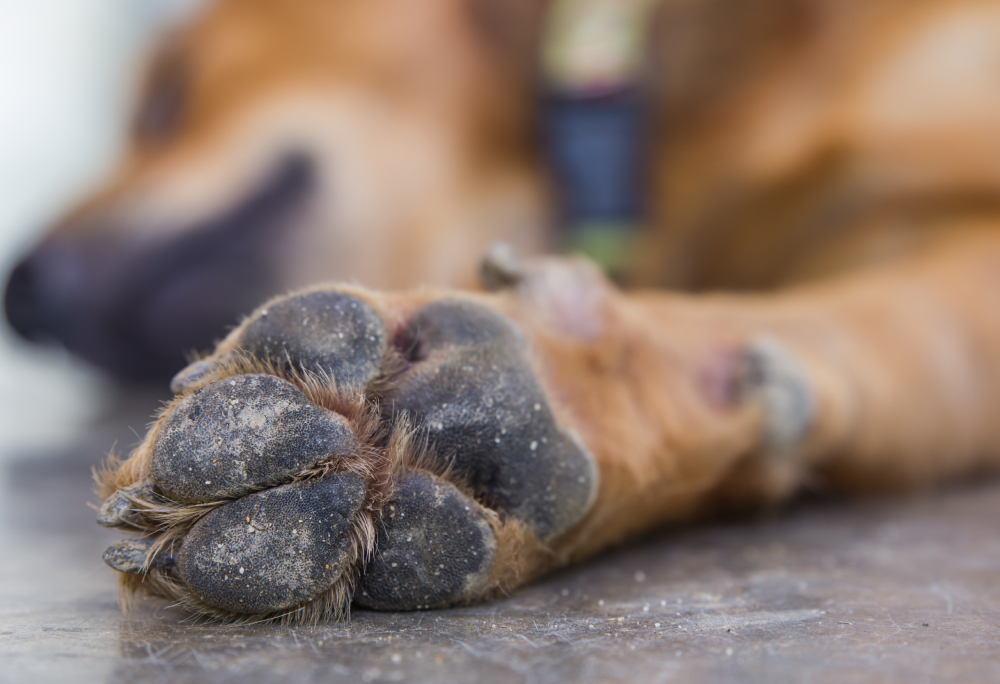
Sore feet can make life really miserable, and it’s no different for our dogs. In fact, with four paws on the ground, their problems can be twice as bad as ours! Pododermatitis is an often-painful condition that may be an acute, isolated problem, or for some dogs, be a chronic lifelong condition that needs regular treatment and long-term management.
Let’s take a closer look at pododermatitis, what it means for your dog, and how to help keep their paws healthy and pain-free.

What Is Pododermatitis?
Pododermatitis refers to inflammation of the skin and feet. It is not a specific diagnosis or disease, and it may have a number of different underlying causes. It can affect a single paw or all of them. There are two broad ways in which this term may be used.
- To describe an acute or isolated condition, such as an allergy or infection.
- To describe a chronic condition that some dogs and certain breeds are genetically predisposed to, often requiring lifelong management.
Acute Pododermatitis
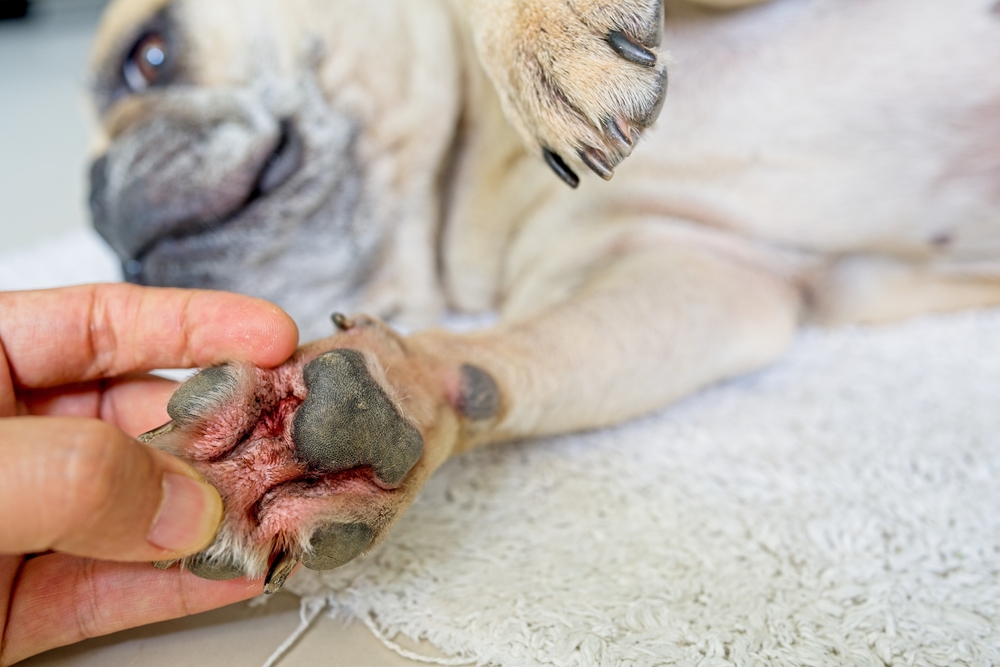
Pododermatitis can result from trauma, allergy, or infection affecting the paws. The skin between the paw pads is very soft and sensitive and within easy reach of a dog’s tongue when it feels painful or itchy. Often, relatively minor problems are made worse by the trauma of licking, causing further inflammation and damage to the skin, opening it up to secondary bacterial or fungal infections.
Dogs that suffer from allergies or atopy may have repeated flare-ups of pododermatitis, turning this acute problem into a chronic or repeated issue.
Cases of acute pododermatitis tend to be red, inflamed, swollen, moist, itchy, and painful. There may be bleeding, cysts, or open sores on the feet.
Chronic Pododermatitis
There are a number of conditions that can cause long-term or chronic inflammation of the paws. As mentioned above, dogs with atopy often have repeated or ongoing pododermatitis, and this can result in chronic changes in the skin of the feet. In cases of chronic pododermatitis, the inflammation is often less red, moist, or swollen, and the skin tends to be thicker and drier in response to the chronic inflammation.
Dogs with underlying pain or arthritis in their lower limbs or feet will often lick the paws to provide some relief, causing the skin to become sore and raw, which can be misdiagnosed as pododermatitis. However, just as with an allergy, chronic licking can encourage infection.
There are also some immune-mediated and genetic conditions that cause pododermatitis, such as:
- Interdigital cysts/furunculosis (breeds commonly affected are the Shar Pei, Labrador, and Bulldog)
- Pemphigus foliaceus
- Lymphocytic plasmacytic pododermatitis
- Familial paw pad hyperkeratosis
- Lethal acrodermatitis of Bull Terriers
What Are the Signs of Pododermatitis?
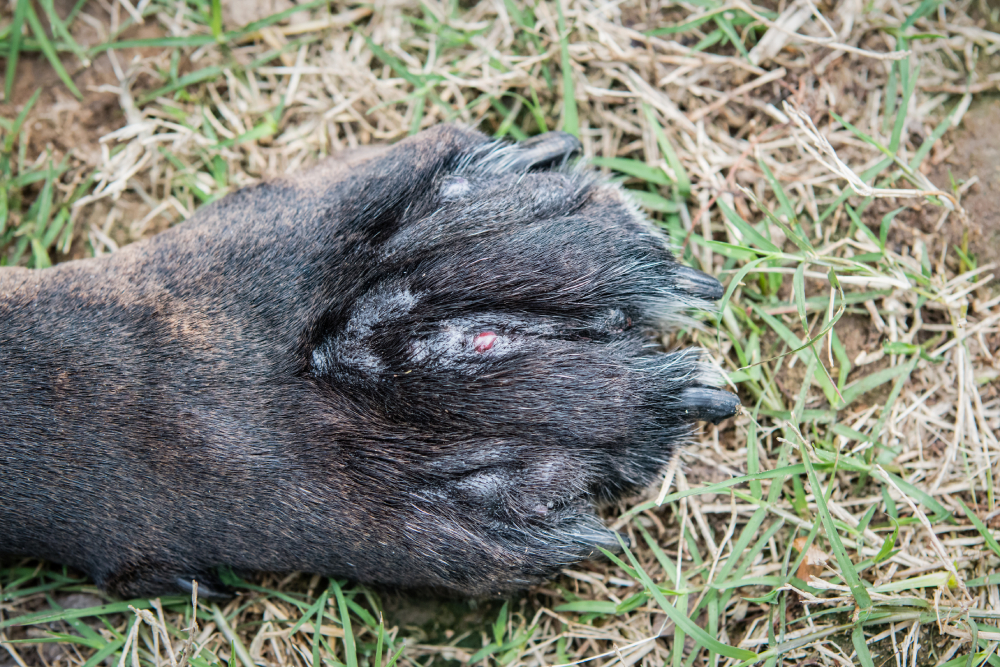
The signs of pododermatitis will vary depending on the specific location, cause, and severity of the problem, but almost all cases will have one clinical sign in common: irritation.
Whether it’s due to an infection, a foreign object, blocked follicles, allergies, sloughing skin, or cysts, dogs with pododermatitis will lick, bite, and chew at their feet. For some, it is an intense, aggressive itch that disrupts their daily lives, while for others it becomes a habit they indulge in whenever they have a chance to rest up and nibble those inflamed feet.
- Loss of fur/bald patches on the feet and toes
- Pink, inflamed skin
- Moist skin and fur
- Lumps over the feet, between the toes, or on the underside of the foot
- Blood or other fluids draining from wounds or swellings
- Ulceration
- Thickened skin
- Swelling of parts of the paw or all of it
- Lameness
- Pink or brown discoloration of the fur (saliva staining)
- Overgrown, thickened, or brittle nails
If your dog is showing any of these signs and seeking the best possible treatment for your pup, we recommend speaking with a vet.
If you need to speak with a vet but can't get to one, head over to PangoVet. It's our online service where you can talk to a vet online and get the advice you need for your dog — all at an affordable price!
How Is Pododermatitis Diagnosed?
Pododermatitis can have many different causes, so diagnosing the condition is initially based on the combination of physical examination and patient history. From there, further testing may be used to identify infection, chronic changes, or other abnormalities of the paw. The diagnostic tests may include:
- Superficial skin scrapings to examine under the microscope (yeast and Demodex mites are commonly seen with chronic furunculosis)
- Swabs for bacterial and fungal culture
- Tissue biopsies
- X-rays of the affected foot/feet
- Blood tests
Some cases of pododermatitis will have a bacterial or fungal infection that has invaded secondarily, so treating the infection may only be the first stage of treatment and diagnosis.

What Are the Treatment Options for Pododermatitis?
The treatment for pododermatitis will depend on the underlying condition.
| Condition | Treatment options |
| Infection | ● Antibiotics, antifungals—oral medication and/or topical treatment |
| Allergy | ● Identifying triggers (food, environment, etc.) and limiting exposure
● Antihistamines, immunosuppressive medications |
| Interdigital cysts/furunculosis | ● Shampoo/topical treatments
● Antibiotics ● Poultice dressings may be used ● Treatment of Demodex if present ● Laser therapy |
| Immune-mediated disease
(Pemphigus, Lymphocytic plasmacytic pododermatitis) |
● Immunosuppressive medications (e.g., Prednisone, Cyclosporin, Azathioprine) |
| Hyperkeratosis | ● Most cases are managed with topical treatments and balms |
| Lethal acrodermatitis of Bull Terriers | ● A rare but fatal condition affecting Bull Terriers and Miniature Bull Terriers, causing poor growth and compromised immune system
● There is no treatment for the condition, and genetic testing to eliminate the genetic defect is now available, so make sure your pup’s parents have been tested |

Frequently Asked Questions (FAQ)
Will Dog Boots Help Manage Pododermatitis?
Unless your vet has specifically recommended protective boots for your dog, these are best avoided. They can cause the foot to become warm and moist, which can make many cases of pododermatitis worse.
My Dog Is Allergic to Grass. How Do I Protect Their Feet?
The best way to reduce the inflammation and irritation caused by contact allergies is to avoid these areas whenever possible. If you need to walk your dog through grassy, sandy, or muddy areas, be sure to give their feet a good clean with plain water at the end of their walk, being careful to dry the feet thoroughly, as wet paws can easily become inflamed and infected.
If your dog’s feet are not currently inflamed or showing any other signs of pododermatitis, dog boots may be a useful way to protect them from contact allergy.

Final Thoughts
Pododermatitis is an aggravating, often painful condition affecting the feet and paws. It is not a specific diagnosis and can be caused by a number of different injuries and diseases. Always remember to check your dog’s feet after a walk, making sure they are clean and dry. If your dog spends more than a few minutes each day licking or chewing at their feet, there is likely a reason, and getting to the bottom of it sooner rather than later can save your pup from a lot of discomfort, as well as save your bank account from a lot of hurt in the end.
Featured Image Credit: RaiDztor, Shutterstock