In this article
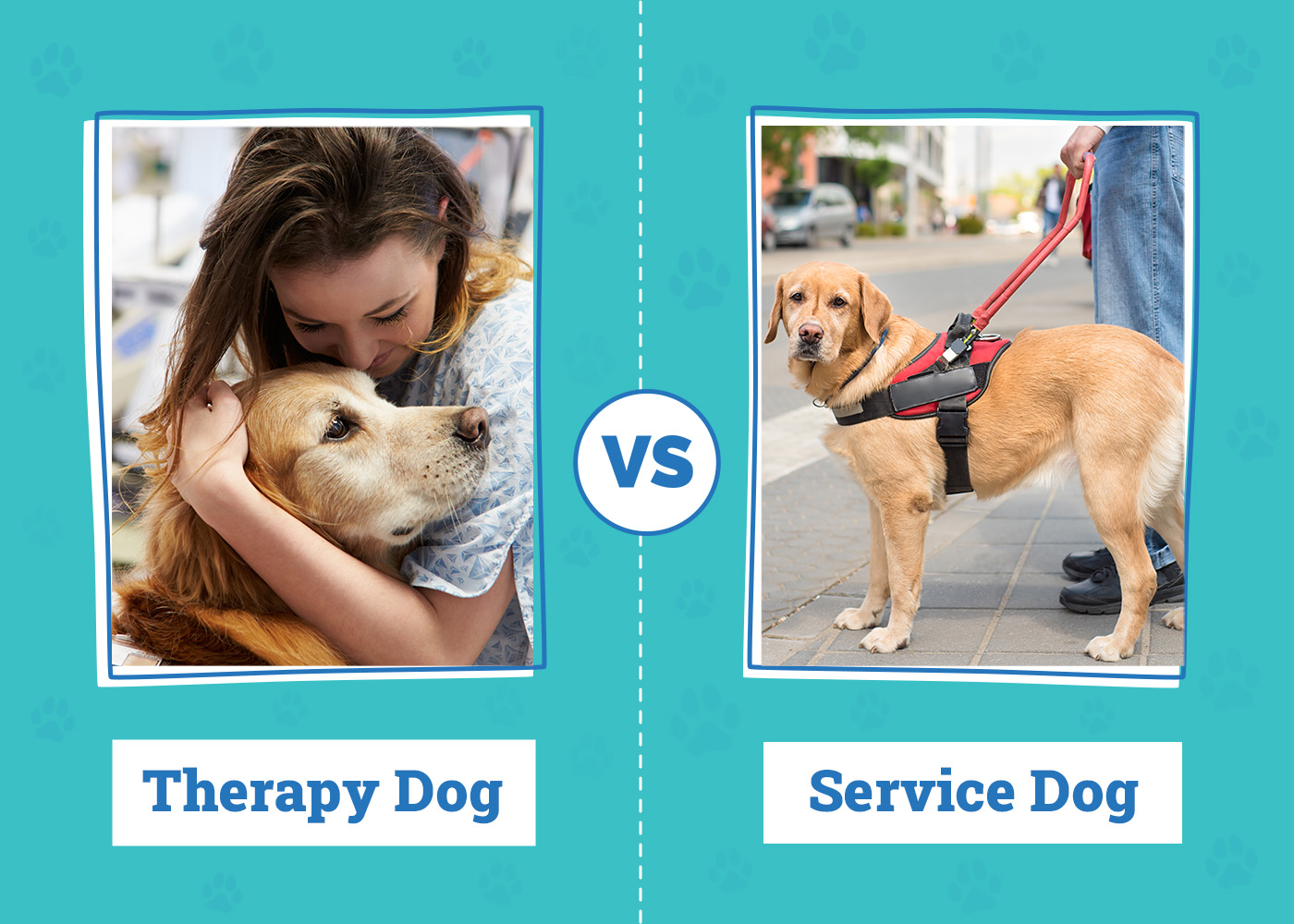
Dogs have been aiding and working alongside humans since the dawn of time. Service dogs, emotional support animals, therapy dogs, and working dogs all have important roles to play, but despite being used that way sometimes, these terms are not interchangeable. These dogs perform very different tasks, serve different communities of people, and require different training. Read on to learn more.

Visual Difference
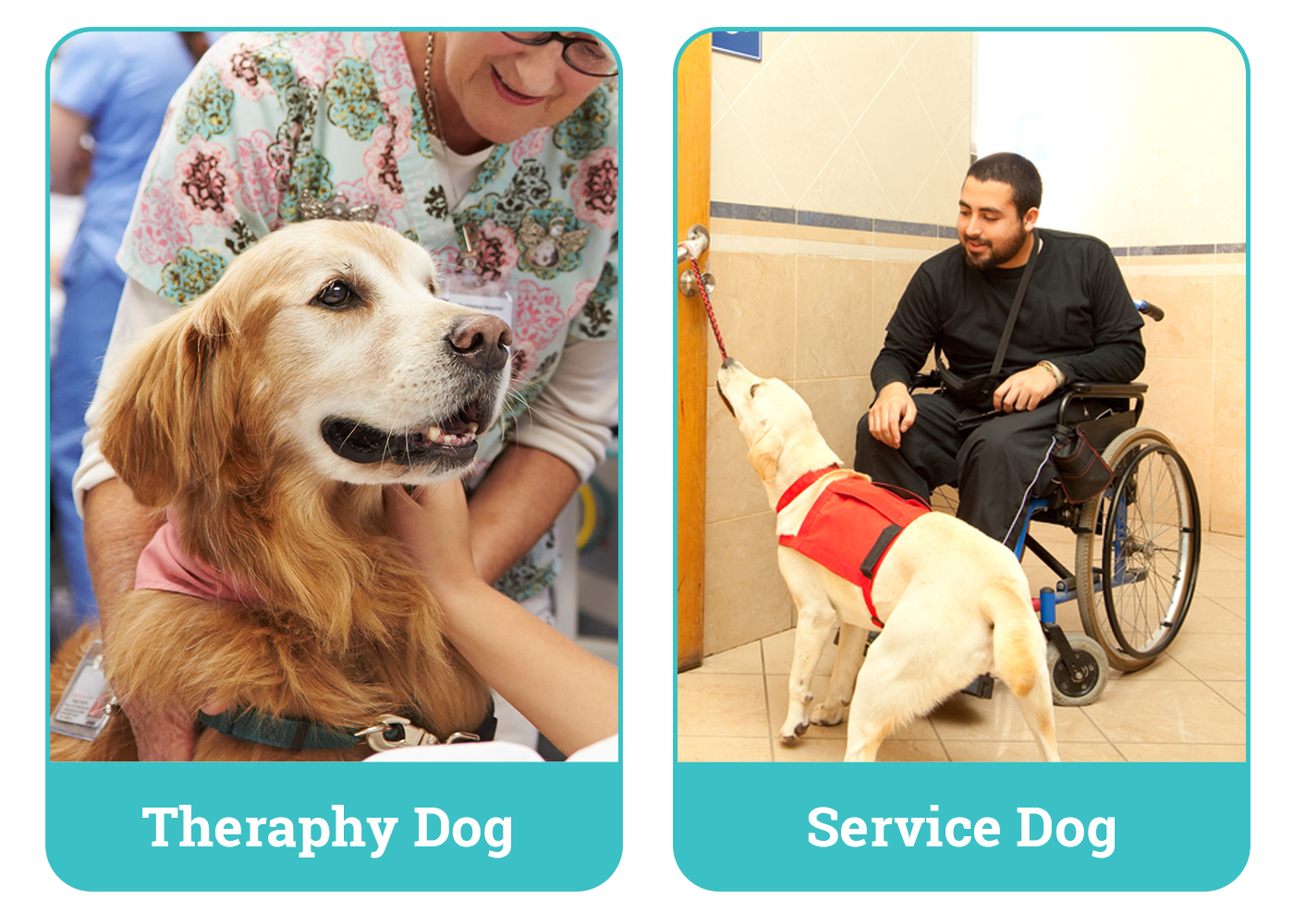
At A Glance
- Legally permitted to accompany their handler in almost any public place
- Trained to perform tasks for individuals with disabilities
- Targeted to assist people with disabilities or health conditions
- Several laws exist about these dogs and their handlers
- Can go into public places if animals are allowed
- Trained to provide animal-assisted therapy as a form of treatment
- Targeted to assist various individuals in therapeutic settings
- Not protected by the law at all
Overview of Therapy Dogs
Therapy dogs receive training to provide physiological or psychological therapy to people who are not their handlers. These dogs require very specific personality traits and temperaments to succeed in doing this work.

Jobs of a Therapy Dog
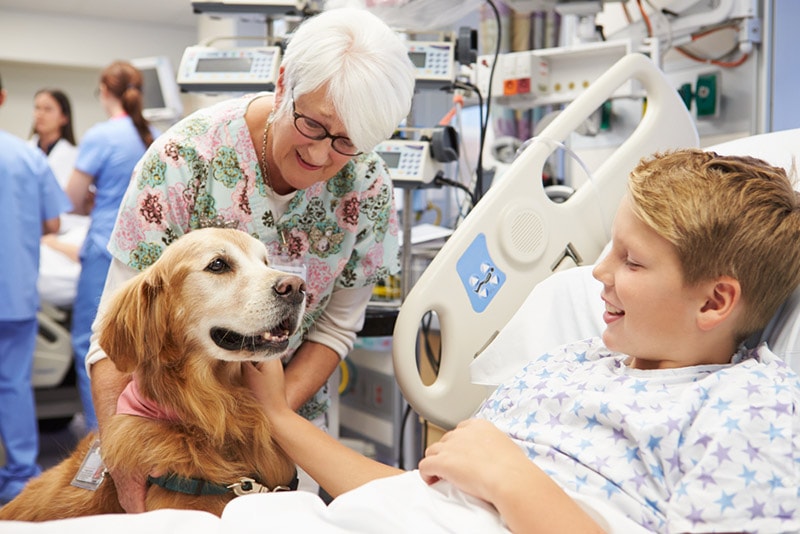
Therapy dogs travel alongside their handler to various community settings, such as schools, hospices, nursing homes, and disaster areas. Unlike service dogs, which are trained to perform specific tasks, a therapy dog’s main job is to interact with all types of people. They work as volunteers to provide comfort, affection and love to communities of people who need it most.
Rights of a Therapy Dog
Therapy dogs do not have the same rights as a service dog. If a facility has a “No Animals” policy, a therapy dog cannot accompany their handler there.
Therapy Dog Training
For a dog to be considered a good candidate as a therapy dog, they need a specific temperament. They need to be calm and social. They should be adaptable to many different types of environments and not quick to react to loud noises or sudden, unexpected movements. The perfect therapy dog has a sweet demeanor and can provide unconditional love.
Therapy dogs go through extensive training and must be certified to be able to work. They can be trained by just about anyone to do the work required of them, but they need to meet specific standards to receive certification and registration to work as therapy dogs.
Best Therapy Dog Breeds
Nearly any dog can become a therapy dog with some training. The most commonly seen breeds include Golden Retrievers, Standard Poodles, and St. Bernards. However, not all people are comfortable with big dogs, and in those situations, a smaller therapy dog would be a smarter choice. Small breeds like Miniature Poodles and Pomeranians can make fantastic therapy dogs.
- Can enhance the lives of people in need
- Can increase morale in schools and nursing homes
- Provides comfort and affection
- Promotes positive moods
- Not everyone likes dogs
- May trigger allergies in some folks

Overview of Service Dogs
A service dog is trained to perform specific tasks to assist individuals with disabilities. The disabilities are defined under the Americans with Disabilities Act (ADA), and the duties that the service dog performs need to be specific to the disability. The term “disability” covers a broad range of conditions, including physical, sensory, psychiatric, or mental disabilities.
Jobs of a Service Dog
There are many different types of service dogs, each performing tasks directly related to their handler’s disability. Some examples include:
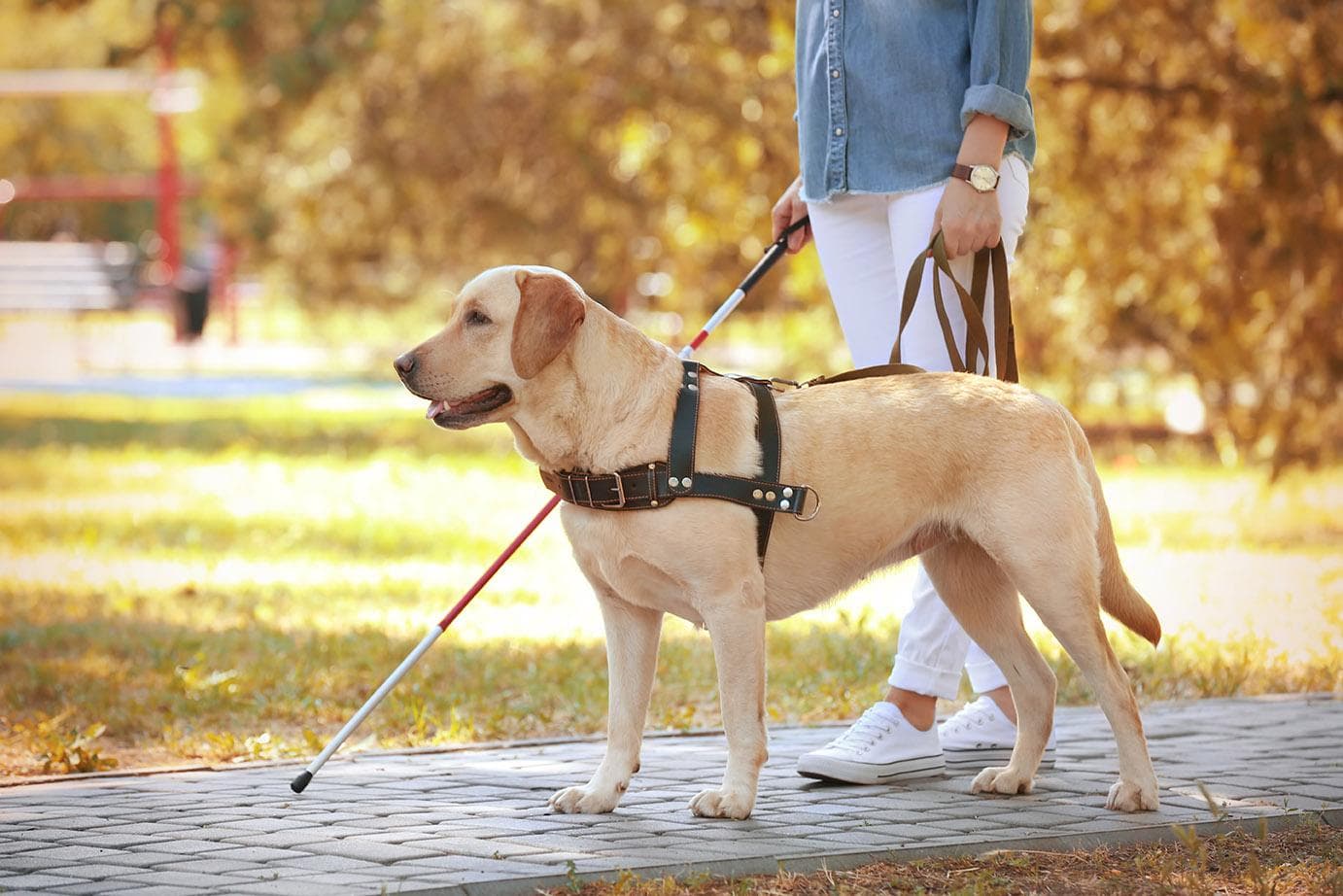
- Guide dogs help low-vision or blind individuals navigate the world by wearing a special harness with a handle.
- Hearing dogs assist hard-of-hearing or deaf individuals by alerting them to sounds, such as fire alarms or doorbells.
- Diabetic alert dogs assist their handlers with diabetes by alerting them to chemical changes in their blood that precede a hyperglycemic or hypoglycemic event.
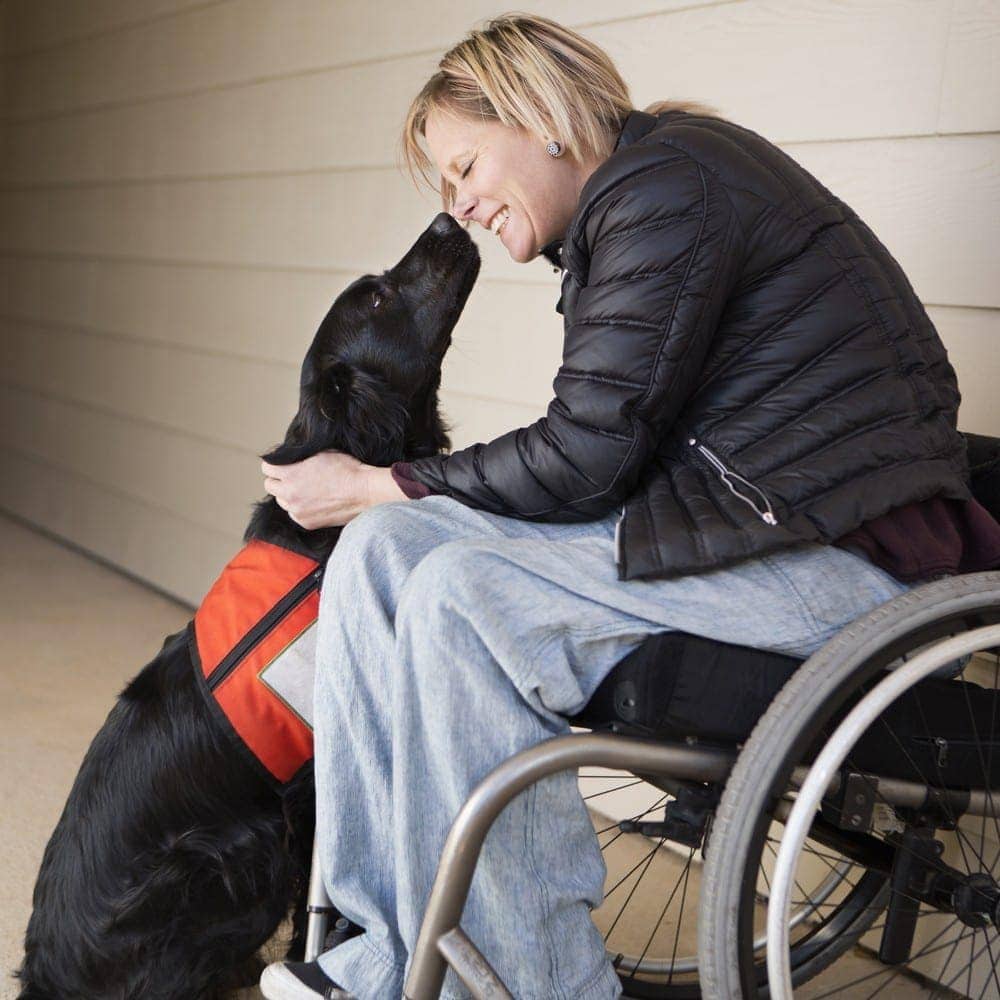
- Mobility assistance dogs assist individuals with physical disabilities.
- Psychiatric service dogs assist individuals suffering from conditions such as depression, post-traumatic stress disorder, and anxiety.
Rights of a Service Dog Owner
The ADA mandates that service animals can be with their person in any public place, even those that do not allow pets. For example, service dogs can accompany their handlers in restaurants, shopping malls, hospitals(except in sterile areas), and schools.
Other laws, such as the Fair Housing Act and the Air Carrier Access Act, protect the rights of people with disabilities so that their service dogs can accompany them in many different situations and circumstances under which the ADA may not be applicable.
Service Dog Training
The ADA does not require service dogs to be professionally trained, allowing handlers to train their dogs themselves. However, many organizations specialize in training dogs destined to do service work.
Acquiring a trained service dog can be very expensive. They can cost anywhere between $10,000 to $30,000 or more.
Best Service Dog Breeds
Many different breeds can make a good service dog. What matters most is their temperament. They need to be intelligent, easy to train, reliable, calm, and focused. Some of the most commonly seen service dog breeds include Labrador Retrievers, Golden Retrievers, German Shepherd Dogs, Poodles, and Bernese Mountain Dogs, as these breeds all typically have the temperament necessary to perform the tasks of a service dog well.
- Greater independence and security
- New possibilities and opportunities
- Promotes physical activity as all dogs need exercise
- Provides companionship and affection
- Trained to provide specific medical assistance
- Can be expensive to acquire a trained dog
- Significant financial commitment (e.g., food, veterinary care, etc.)
- May still encounter challenges with access

What Are Emotional Support Animals?
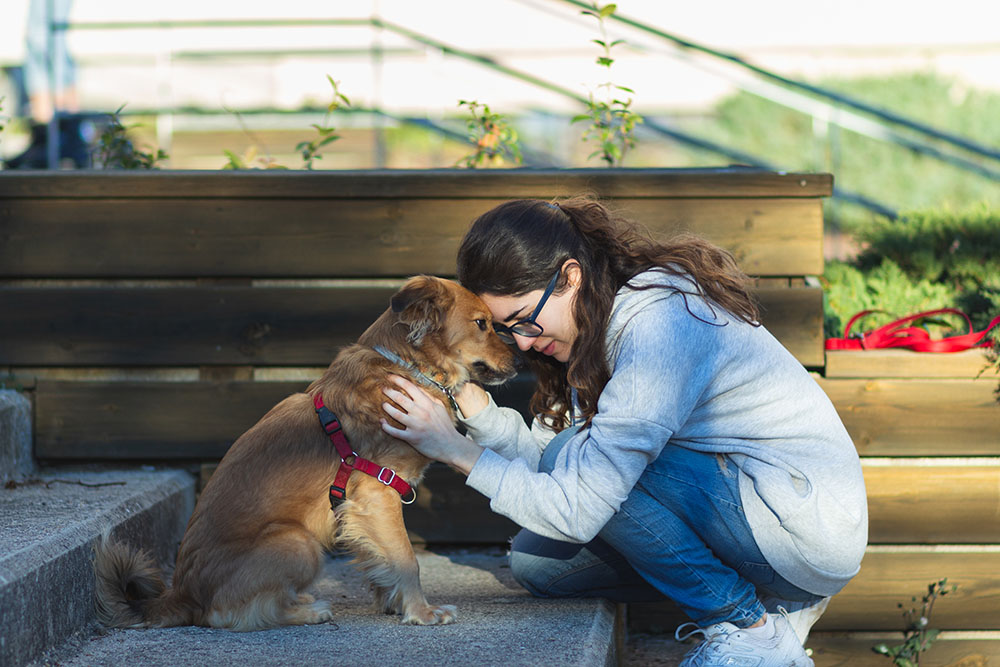
An emotional support animal (ESA) is not a service dog but, instead, a pet that provides emotional support and comfort to their owners with mental health or emotional conditions. These animals are critical for their owner’s ability to function normally day-to-day. ESAs need to be prescribed by a licensed mental health professional, such as a therapist or psychiatrist.
While they provide support through their companionship and may ease signs of conditions like anxiety, depression, and extreme phobias, they are not considered service dogs. As such, people with ESAs do not receive the same types of accommodations as service dog users.
What Are Working Dogs?
Another common term you may stumble across as you research therapy and service dogs is “working dogs.” The definition of “working dog” can vary, but the consensus is that it refers to any dog that has been trained and employed to do meaningful work.
Working dogs have very serious jobs that cater to their natural instincts. Service dogs are a kind of working dog, but there are other types you should know about, including:
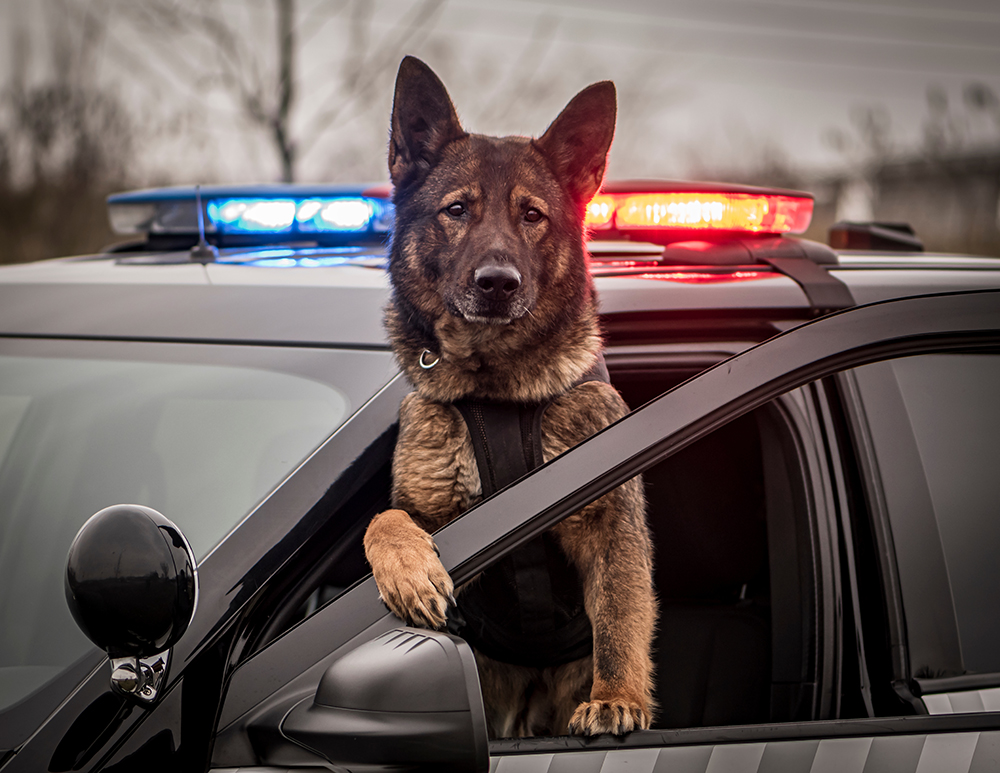
- Police dogs are also known as K-9s. These dogs assist law enforcement officers in the line of duty by protecting their handlers and chasing subjects.
- Military dogs are trained to assist military members with their operations. They perform a variety of tasks, including tracking, scouting, and detecting.
- Detection dogs have excellent scenting skills and are trained to sniff out drugs, human remains, and explosives.
- Search and rescue dogs can work in a variety of different settings, including avalanche rescue, finding people lost after a natural disaster, and even locating Alzheimer’s patients who have wandered away from home.
Conclusion
Despite the terms being used interchangeably, service, therapy, working, and emotional support dogs all provide different services for their handlers. Service dogs are trained to support their disabled handlers with specific tasks related to their disability. In contrast, therapy dogs are experts at volunteering in clinical or educational settings to provide comfort and affection to communities in need. Emotional support animals need to be prescribed by a licensed mental health professional, while the working dog umbrella includes dogs performing tasks that cater to their instincts, such as scent detection and offering protection.
Featured Image By: (L) Monkey Business Images, Shutterstock | (R) SasaStock, Shutterstock