Door charging is one of the most frustrating and irritating behaviors that dogs can exhibit. It can make social interactions awkward and stressful. If your dog is both obnoxious and aggressive when someone comes to the door, it can turn that person off from coming over or even make them fearful. The good news is that door charging and other aggressive behaviors that have to do with your front door can be corrected. It will take time and persistence, but any dog can learn to sit and be calm when there is a knock at the door.
These eight steps, along with tips and tricks, will help to stop your dog’s aggression when someone comes to the front door.

Preparation
Being uncontrollably excited or even aggressive when someone comes to the door (or “door charging”) is a behavior that can be corrected with appropriate training. Know that this is not an overnight process, and training a dog to be calm when someone comes to the door can take weeks or even months of consistent training.
Speaking to your vet or dog behaviorist can also be helpful and sometimes the only solution, depending on your dog’s degree of aggression and your possibilities for training them. Before you get started, you will need a few things, including treats and a buddy, to ensure success.
| What You Will Need: |
|
| Time: | A few weeks to a few months |
| Complexity: | Advanced |
The 8 Tips to Train a Dog to Not Be Aggressive When Someone Comes to the Door
1. Teach Your Dog to Stay
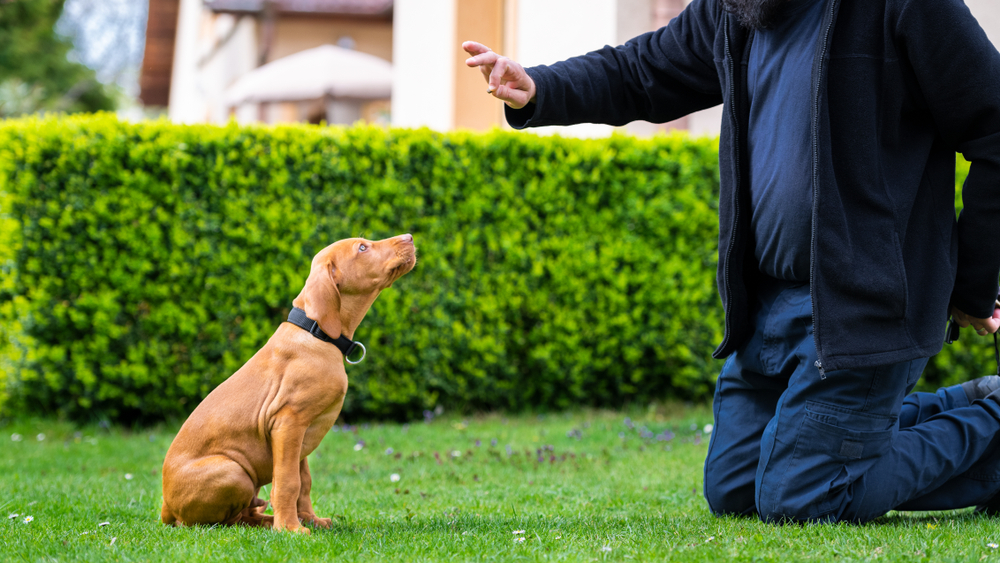
The first step to getting your dog to calm down when someone comes to the door is to train them to sit and stay in the entry area. You want your dog to be able to sit on the spot and not move once you give them the command. Some dogs do better with hand signals, like finger pointing down, rather than simple voice commands. You should be able to tell your dog to sit and stay and then walk away. Your dog should not move and they should remain calm. Instilling these basic building blocks of training is the foundation that you need to work from for the next steps.
2. Teach Your Dog to Remain Calm and Still When Sitting
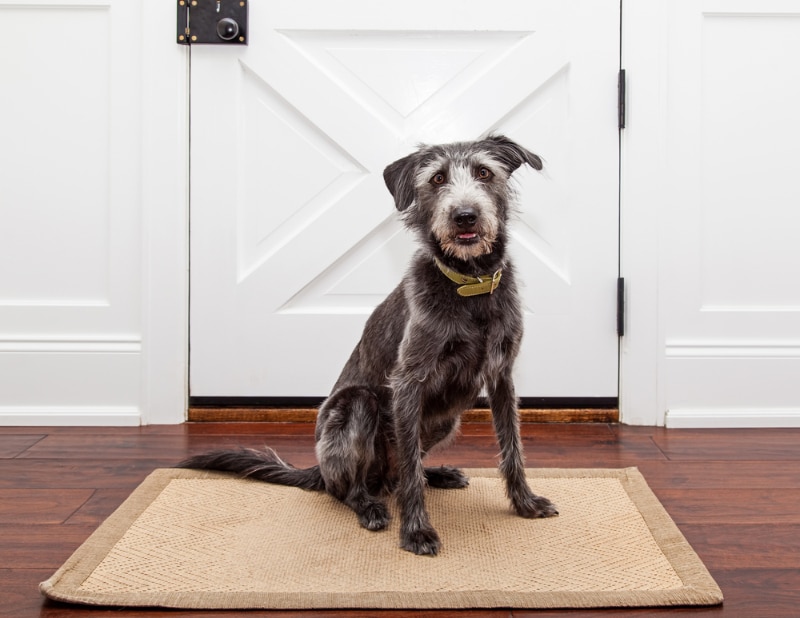
Once you can get your dog to sit and stay in the entry area, you need to be able to get them to sit still and be calm while doing so. Sitting should be a calm position. Designating a rug or a mat to maintain a relaxed sitting position can be helpful, especially since this marks a designated area and provides a “station” of sorts, making it clearer for your dog what they should do.
You can also practice this on walks or while they are playing in the backyard. When they sit, they need to remain calm and still and be completely focused on you.
Once your dog sits and calms down, reward them with a treat. If they are being particularly calm, give them two treats. Do this until your dog is able to remain calm and still when they are sitting by the door, and make sure that they are focused on you (or the treat you are offering them).
3. Practice Knocking
Next, you want to start practicing with your dog using the door. The goal of this step is to establish the knocking sound as the first signal, so you should introduce it right before asking your dog to go sit in the designated area. Once they do, reward them with a treat, which is the second signal. Your pup should eventually go to the mat as soon as they hear the knocking sound. Dogs like to take shortcuts in anticipation of getting those treats! Ensure that you reinforce them well for each positive response to the knock, and you can naturally fade out the second signal.
4. Introduce a Second Familiar Person
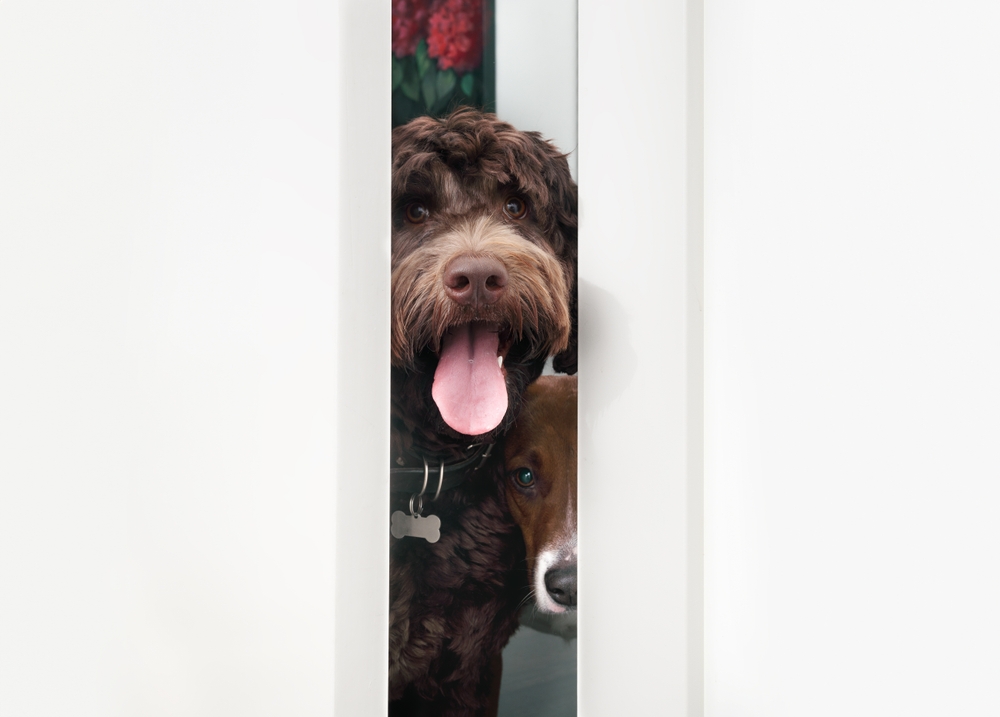
It’s time to test your dog’s new skills by introducing a second person, ideally one who is familiar to your dog. They should go outside and knock on the door, and you should stay inside with the dog. When the knock happens, ideally, your dog will respond to the cue and go sit in their spot. However, due to the change of scenario, it is more likely that your dog is going to get excited (or aggressive).
When your dog starts to get worked up, tell them to sit and stay. If they obey, reward them immediately. If they are not listening, get them to focus on you and calm down until they sit. Once they are sitting, reward them. This is a good step to practice with people your dog knows so the person who eventually comes through the door is a friendly face. Having a second familiar person cooperating and participating in training is useful for your dog to get as many opportunities and repetitions as needed to get the point.
5. Open the Door Frequently to Show Your Dog That No One Is There
During the training, you should also open the door from time to time when no one is there to show your dog that the door isn’t that exciting. Opening it and inviting your dog over when no one is there will start to build an association between your dog and the door that is mundane. The door isn’t exciting. In fact, it’s boring—unless there is a knock on the door, and then when they go to the designated area, they will get a treat! Basically, they should learn that there isn’t always someone at the door, and when there is, it’s a chance for a reward.
You can also practice opening the door when no one is around and randomly knocking on it to get your dog to sit and stay. Gradually change the reinforcement moment (the treat) to be after you open the door if your dog is still sitting. This will build a positive association and expectation that when there is a knock on the door and it opens, your dog should be sitting, and they will get rewarded. Eventually, your dog should hear the knock, go sit, and know that they can expect a treat for sitting calmly after the door opens. This behavior will start to override the urge to be aggressive or hyperactive. You can slowly work on increasing the time that they must remain sitting down.
6. Continue Practicing Knocking and Ringing Without Strangers
Before you can expect your dog to be perfectly well-behaved the next time you have someone over, you need to keep practicing. You should practice at least once or twice per day with your dog by either knocking on the door and reinforcing the sitting behavior or by opening the door and showing your dog that there is nothing interesting there. Remember to reward them with treats for good behavior. You should practice without strangers and keep being consistent with your training before you start having random people over.
Over time, you should see your dog’s behavior and attentiveness improve through practice. Once you are confident that your dog is obeying consistently and is not getting too worked up during training, it is time to see the results with actual strangers.

7. Put It All Together
Now it is time to start working with your dog when strangers come to the door. Theoretically, at this point, your dog should no longer know the difference between a stranger, a friend, you, or nothing being at the door. If your training has been successful so far, having anyone come to the door should yield better results when it comes to your dog’s behavior. One of the reasons that you must get to this point via the previous steps is to change your dog’s behavior by teaching them exactly how you expect them to behave at the door, So, the next time a stranger comes to the door, your dog should be able to stop, sit, wait, focus on you, and expect a treat rather than lose their mind.
8. Be Consistent
It is important to be consistent when pursuing any sort of dog training. You can’t have rules sometimes but not other times. Whenever someone comes to the door, whether they’re a stranger, a friend, or a family member, your dog needs to remain calm. Letting your dog get excited when your partner comes home will only make it more likely that they will continue to be aggressive when a stranger comes to the door. Training and expectations need to be consistent always.
Use a Crate, Leash, or Baby Gate If Necessary
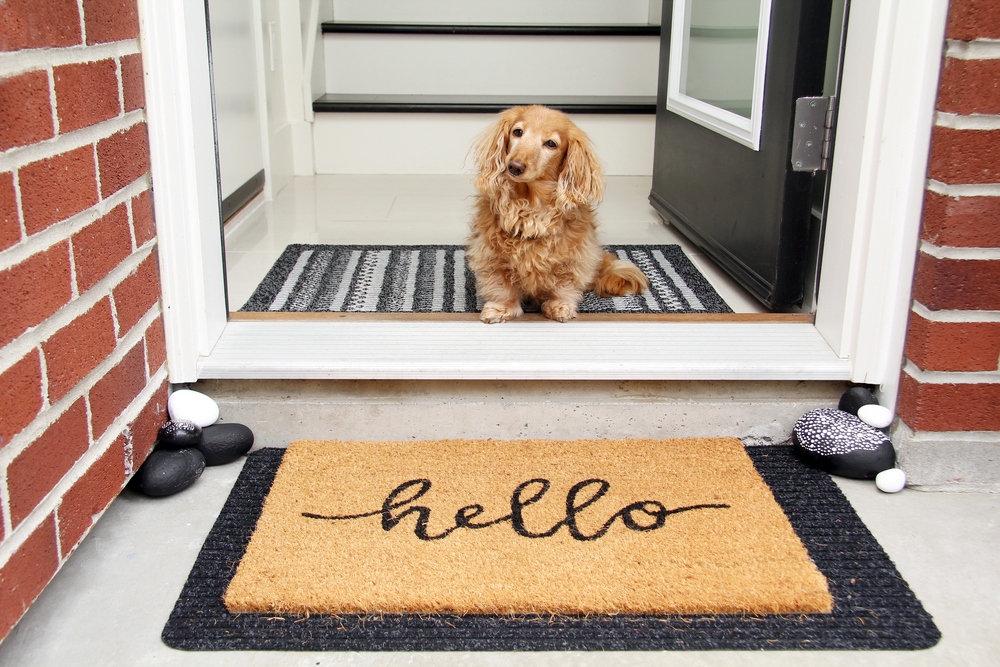
Sometimes, dogs have a thing about the door that can take longer to correct than people expect. If your dog simply doesn’t want to listen when a person comes to the door, no matter what you do, don’t hesitate to use a crate, leash, or baby gate to help control them better. However, if the dog perceives confinement as a punishment, it could end up doing more harm than good. You can also use a leash to help your dog sit, stay, and be calm when people come to the door.
The truth is, sometimes people are going to come to the door when you are in the middle of your training, and your dog is going to react badly. Some dogs are also much more reactive and aggressive when it comes to the door than others. They are going to take longer to train and require more effort to keep calm. Using tools like leashes and crates is totally valid in these situations.
If you are worried about your dogs behavior, we suggest speaking with a vet
If you need to speak with a vet but can't get to one, head over to PangoVet. It's our online service where you can talk to a vet online and get the advice you need for your pet — all at an affordable price!

Conclusion
These steps will help you ensure that your dog remains calm, cool, and collected the next time someone comes to the door. The key is to be consistent, constantly reward good behavior, teach your dog a different association with the door, and ensure that they can sit, stay, and be calm at the drop of a hat. Some dogs will take to this idea extremely well and will be trained in just a couple of weeks. Other dogs might take months to fully grasp the concept. Treats and consistency will go a long way toward ensuring success in this training endeavor.
Featured Image Credit: GoodFocused, Shutterstock