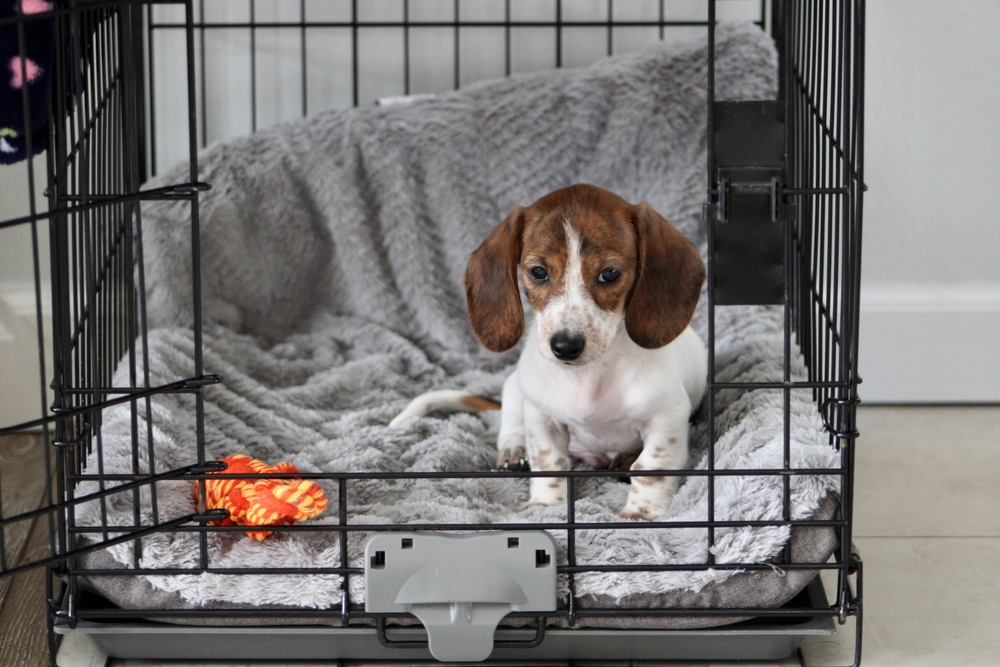
Whether you’re bringing home a new puppy, you have an old dog, or anything in between, we all know that finding ways to keep our dogs contained is necessary sometimes. Keeping your dog contained when you can’t watch them can keep them safe, especially if they’re prone to wandering or getting into things they shouldn’t.
Kennels and crates are the most common ways that people keep their dogs contained, but you may be struggling to choose between the two options. Here’s what you need to know about safely containing your pup and the differences between dog kennels and crates.

Visual Differences

At a Glance
- Can be indoor or outdoor
- Can offer lots of space
- Can be portable or permanent
- May be expensive
- Recommended for indoors only
- Great for housetraining
- Portable
- Typically more affordable

Overview of Dog Kennels

Although many people use the words “crate” and “kennel” interchangeably, a dog kennel can differ significantly from a crate. A kennel is an open area that keeps your dog contained, like an exercise pen or a dog run. They can be portable or permanent installations inside or outside of your home. Some people opt to have an outdoor dog kennel for their dog to have space to play or potty without getting into other parts of their yard. A kennel is also a good option when used indoors for keeping your dog contained to one particular part of the house while still giving them lots of space to move and play.
Since dog kennels can vary widely in size and design, the cost of them can also vary. While some smaller, more portable dog kennels may only cost $30–$50, a permanent dog kennel can run you hundreds or thousands of dollars, depending on the design.
When to Choose a Dog Kennel
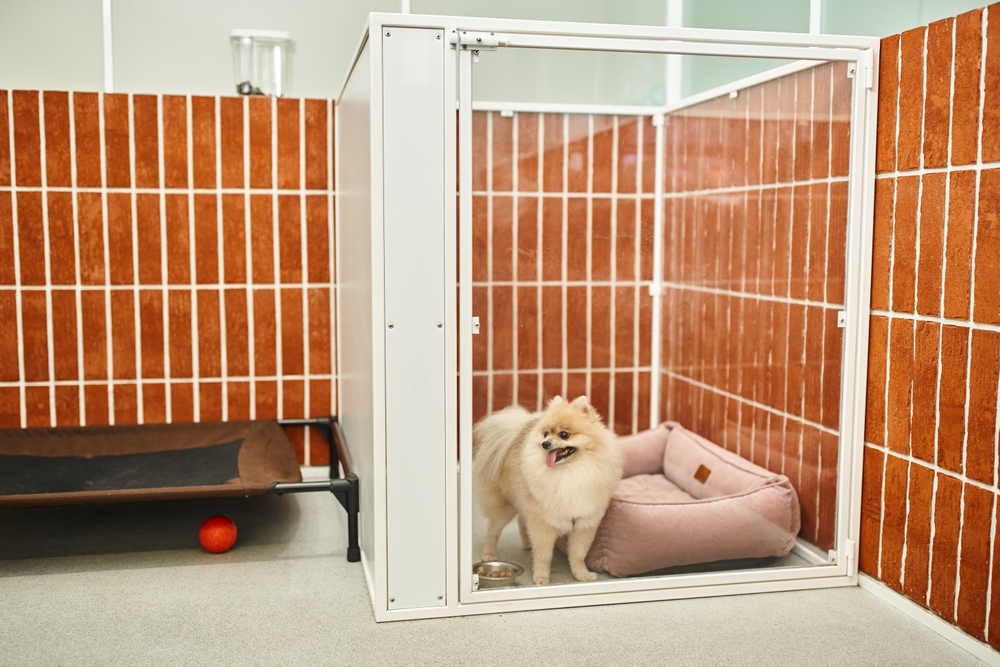
Dog kennels are a great option when you need to allow your dog space to move. They can be quite large and can be used indoors or outdoors. Outdoor dog kennels are an effective way to let your dog play outside if you don’t have a fenced yard. Portable indoor dog kennels are a safe way to keep your dog confined to one area or room in your home, giving them plenty of space to play and move without getting into places they shouldn’t.
Due to the extra space, you can usually leave your dog in a kennel for an extended period of time. You should always make sure the kennel is secure and free of escape routes, though. Make sure your dog has access to clean water and that they’re only left with toys and items that are safe for them to have without supervision. If they’re outdoors, it’s extremely important that you ensure that your dog has appropriate shelter from the elements.
Ease of Use
Depending on the complexity of your kennel, it may be easy or difficult to set up. Some dog kennels are made to “pop up” and can be set up in seconds, while others may require permanent installation in your yard or home. Portable dog kennels are usually easy to use and are a good option if you need something that can travel with you, but permanent dog kennels obviously provide less flexibility.
- Can be permanent or portable
- Can be used indoors or outdoors
- Keeps dog contained while providing space for movement
- Better for extended time periods
- Some are portable and easy to use
- May be expensive
- Can expose your dog to the elements
- May be permanent and non-portable

Overview of Dog Crates
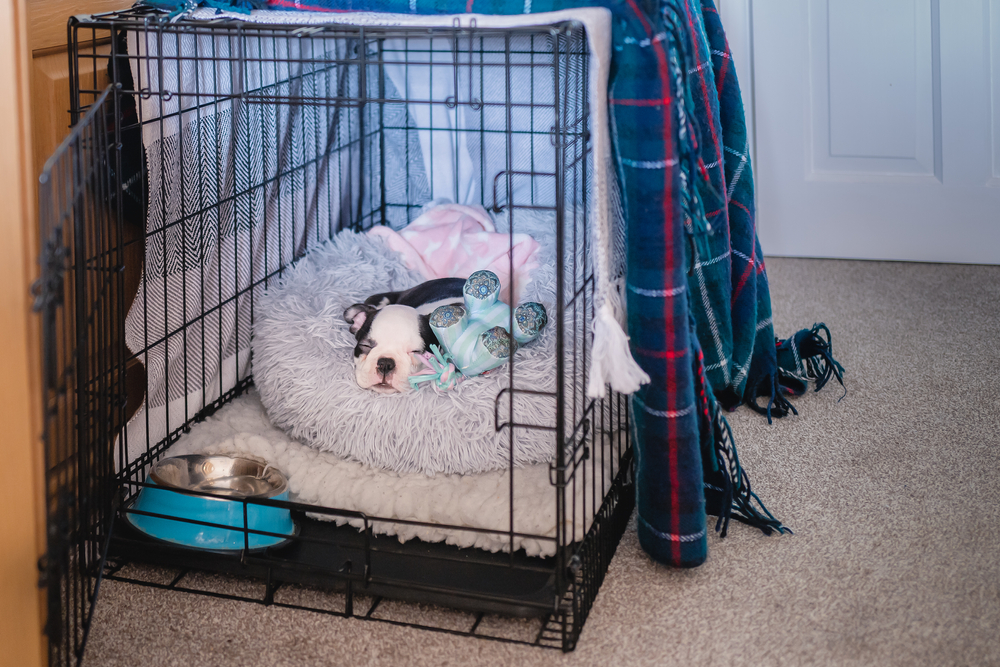
Unlike a dog kennel, a dog crate is a smaller, more enclosed space for your dog. Wire crates offer a 360-degree view of the room around your dog, while plastic crates typically offer less visibility. With the exception of a handful of specialty products, dog crates are made to be portable. Since they offer less space, crates often serve as a cave-like safe space for your dog. Many dogs consider their crate to be their “den” or the place they go when they need to decompress or sleep.
When to Choose a Dog Crate
Dog crates are ideal for housetraining because they offer limited space. They’re the best option for travel. Their portability makes them easy to pack and move, and some people even opt to use a dog crate inside of their vehicle to keep their dog contained while driving. If you’re flying with your dog, they’ll be required to be inside an airline-approved dog crate, with only a handful of exceptions, like service dogs.
A dog crate is also a fantastic way to contain your puppy at night. Teaching them to use their crate and to feel safe in it will make it much easier to get your pup to comply, but crate training does take time. Keeping your dog in a crate at night will ensure they aren’t getting into mischief or pottying in the house while you sleep.

Ease of Use
Since they’re made for portability, dog crates are usually quite easy to use. They come in tons of sizes and materials, with some even made extra strong for dogs with separation anxiety or escape artist tendencies. Wire crates are designed to fold up, while plastic crates can usually be taken apart and stacked inside of themselves for ease of travel, although some crate designs can be quite bulky. They’re typically relatively lightweight, making them ideal for just about anyone to use.
- Usually made to be portable
- Likely to take up less space than a kennel
- Provides a safe, cozy spot for a dog
- Ideal for training
- Usually cost effective
- Some types provide minimal visibility
- Not ideal for extended periods of time for some dogs

Which One Is Right for Your Dog?
Now that you better understand the differences between dog kennels and crates, it should be easier for you to identify which option is best for your dog. In many cases, a kennel and a crate can be used for a dog. Crates are the top pick for keeping your dog contained to a small area and providing them with a space of their own that feels safe and comfortable. A kennel is ideal for situations in which you want your dog to have space to move without having full freedom, allowing you to use kennels to contain your dog in spaces in your home or yard.
If you have the ability to invest in a dog kennel or a crate, a kennel may be the best option when leaving your dog home all day since it will provide them with space to move around. However, many people crate their dogs throughout the day, and this is an acceptable option if you need to keep your dog contained for their safety and comfort.
- Containing your dog to an area of your home
- Spending time outside
- If a permanent solution is needed
- Containing your dog for sleep or housetraining
- Staying indoors
- During travel

Conclusion
Dog kennels and crates are both good tools for dog owners to have in their arsenal since they can serve different purposes. For many people, crates are a more realistic and functional option within their home, while kennels require space. Generally speaking, dog crates are more affordable than kennels, especially if you’re considering installing a permanent outdoor kennel for your dog.
Featured Image Credit: (L) ABO PHOTOGRAPHY, Shutterstock | (R) Jagodka, Shutterstock