Medical Marijuana for Dogs: Our Vet Explains The Legality, Needs & Uses

In this article
The benefits of medicinal marijuana in human medicine seem numerous. As legality changes across the United States, access to cannabis, specifically marijuana, is increasing. Several ailments that respond positively to cannabis in humans can be found in animals too. So, is there a place for medicinal marijuana in veterinary medicine?
In theory, there may be a benefit of cannabis use in pets. However, its use has not been studied closely. Furthermore, veterinarians are unable to prescribe cannabis at this time, as it is a Schedule 1 controlled drug, meaning there is a high chance of substance abuse.

What Is Cannabis/Marijuana?
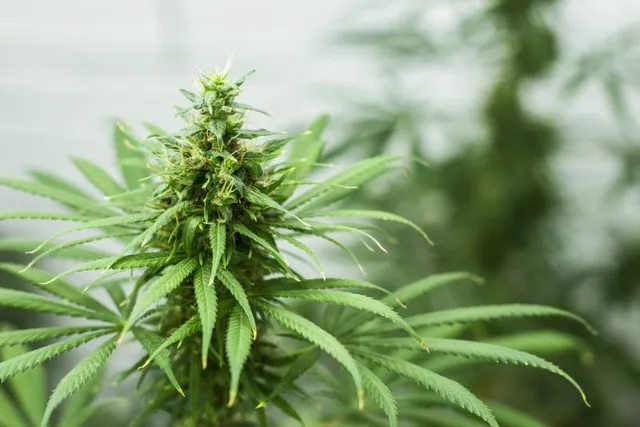
Cannabis sativa L. is a type of plant that marijuana and industrial hemp are derived from. The main differences between different types of Cannabis sativa L. are the amounts and types of active compounds found in the plant. Some compounds found in these plants may offer medicinal benefits. Hemp and marijuana differ mostly by the cannabinoid compounds found in the plants. Terminology regarding cannabis can be very confusing.
Cannabis classified as “hemp” is non-psychotropic and contains higher levels of CBD, or cannabidiol, and low levels of THC. CBD does not provide a high but potentially offers many therapeutic benefits in human medicine including control of chronic pain, reduction of inflammation, reducing signs of epilepsy, and potentially reducing anxiety. Industrial hemp is legal federally, as it contains less than 0.3% THC.
Cannabis classified as “marijuana” is psychotropic and has high levels of THC, or tetrahydrocannabinol. THC is responsible for giving its users a “high” feeling. Additionally, in human medicine, THC can provide relief from chronic pain, nausea, muscle spasms, and poor appetite. CBD can also be produced from this type of plant.
Medical marijuana use in people is growing in popularity. The term “medicinal marijuana” refers to the use of cannabis or its compounds, like THC and CBD, for therapeutic purposes. The use must be recommended by healthcare professionals.

The Legality of Marijuana and Its Compounds
This is a somewhat complicated topic, and federal and state laws may vary. US federal law does not approve of the use of any part of Cannabis sativa plants for any purpose. However, CBD products derived from the hemp plant are legal under federal law, as they contain incredibly low levels of THC.
On a state level, medical marijuana may be legal for therapeutic purposes. Interestingly, medical marijuana can be suggested by a healthcare provider but not prescribed, as it is still considered a Schedule 1 controlled substance.
Furthermore, rules and guidelines regarding medical marijuana and its compounds only extend to humans. This is not something that has been approved in veterinary medicine. If a veterinarian were to prescribe cannabis products, their license could be in jeopardy.
Veterinarians are not able to recommend cannabis products containing THC at higher levels to their patients, as, again, marijuana is considered a Schedule 1 controlled substance. If owners inquire about the use of CBD, veterinarians should discuss possible adverse effects, lack of scientific evidence for companion animal efficacy, and legality.

Possible Benefits of CBD in Dogs
Current studies are showing that CBD could be beneficial in treating seizures, osteoarthritis discomfort, and atopic dermatitis. It has been suggested that CBD may also reduce anxiety in canine companions.
CBD Veterinary Products
There are cannabis products containing CBD available to veterinary patients as supplements. It is critical to note that supplements are not FDA-approved. This means the ingredients within a product are not guaranteed or closely regulated. This does not guarantee efficacy.
Although these products exist, veterinarians are still unable to recommend their use. If clients inquire, veterinarians can advise owners on the possible adverse effects of CBD. CBD supplements are given to pets orally and are thought to be relatively safe.
There is no accepted CBD dose, as this has not been widely studied.

Potential Side Effects of Cannabis Products
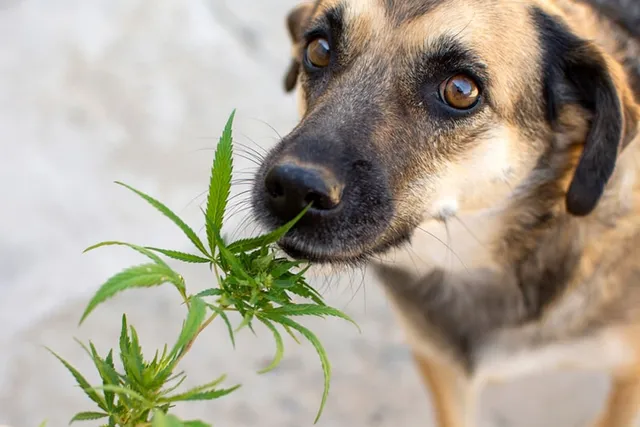
Although CBD products have little in the way of side effects, cannabis products containing THC can be detrimental to canine companions. Canines are especially sensitive to THC. CBD rarely results in clinical signs of overdose or exposure. However, when signs are present, they are usually signs of lethargy, staggering, depression, and agitation.
Canine exposure and overdose to THC and marijuana can result in:
- Staggering
- Urine dribbling
- Lethargy
- Depression
- Dilation of pupils
- Salivation
- Risk of heightened sensitivity to noise and movement
- Seizures
- Coma
Possible Adverse Effects of CBD
When discussing potentially adverse effects, we know that the use of CBD can increase certain liver values and may interfere with other medications.
Consulting a veterinarian is recommended for the best course of action.

Frequently Asked Questions (FAQ)
Is It Safe to Expose My Dog to Second-Hand Marijuana Smoke?
No, it is not recommended to expose your pet to marijuana smoke. Dogs are highly sensitive to THC, and smoke itself can be irritating and problematic.
Can a Dog Recover From Marijuana Toxicosis?
Fortunately, dogs can recover from marijuana toxicosis, which is rarely fatal. Hospitalization may be needed for monitoring and support.

Can OTC Urine Test Screen for Marijuana Ingestion in Dogs?
These over-the-counter tests are not reliable in dogs and should not be used to diagnose toxicosis.

Conclusion
Many owners may have questions regarding the efficacy of cannabis and related compounds in their companion pets. Although there may be medical benefits, this is not widely accepted or utilized, as research is still lacking. Some over-the-counter CBD products exist, but consumers must use caution when utilizing these in their companion animals, as they do not have FDA approval, which means they are not regulated. Any owner using cannabis products in the home must be aware of possible adverse reactions and be prepared to seek veterinary care.
See also: Amantadine for Dogs: Our Vet Explains the Dosage, Pain Management & Side Effects
Sources
VIN: Medical Marijuana: What Every Veterinarian Needs to Know
Premier Neurology and Wellness Center: CBD vs THC: Understanding the Differences and Benefits
Morris Animal Foundation: High Times-Marijuana, CBD, and Synthetic Cannabinoid Toxicity in Pets
Vet Cornell: CBD: What you need to know about its uses and efficacy
Featured Image Credit: 7raysmarketing, Pixabay
Expert dog care, straight to your inbox
Vet-reviewed advice, training tips, and the best of Dogster. Free, and you can unsubscribe anytime.
By signing up, you agree to our Terms & Conditions and Privacy & Cookies Policy.
How useful was this post?
Click a star to rate. You can leave written feedback afterwards. (We read all feedback.)
Dr. Marti Dudley DVM (Veterinarian)
Dr. Marti Dudley is a small animal veterinarian with a strong interest in preventative medicine and pet parent education. She enjoys being a resource for pet owners as she believes that having a team approach leads to the best possible care of pets. Dr. Dudley enjoys writing and has been able to use this skill as another avenue to educate pet owners outside of the traditional office setting.
Dr. Dudley has been practicing veterinary medicine since 2014. She has an interest in preventative care and emphasizes the importance of pet owner education. Dr. Dudley’s experience in veterinary medicine is broad, as she has worked as a general practitioner, which has allowed her to see and treat many different types of conditions.
Dr. Dudley received her bachelor’s degree in biology from Longwood University in Virginia. She earned her Doctor of Veterinary Medicine (DVM) degree from Ross University.