How to Teach a Dog to Stay in 8 Vet-Approved Steps


In this article
“Stay” is a powerful word that can save your dog from a lot of trouble. It tells your dog that they need to remain in the same position while you leave them to go and do something. Understanding this word ensures that your dog won’t wander off, which keeps them safe. Teaching your dog to stay will take some time, patience, and consistency. However, you can teach them to stay in just a few simple steps. Remember to praise and treat your dog when they obey and practice the exercise regularly.

The Difference Between Wait and Stay
Although commands “wait” and “stay” are similar because they’re both used to communicate to your dog that they need to remain in one place. “Wait” informs your dog that they will only need to hold their position temporarily, while “stay” communicates that they are to remain in one spot, that you’re going to leave, and that you’re also going to come back. When you do return, give them your release word so they know they can move out of their position.

Don’t Forget the Release Word
A command tells a dog to do something, like wait or stay, but how will they know when to break from that command? A release word is important to let your dog know that they are free to move out of position. It allows your dog to clearly understand what you expect from them without having to push boundaries or leave room for any guesswork. A release word doesn’t have to be complicated. It should be a simple word that is comfortable to use often and easy for your dog to understand. A few examples are “good”, “break”, “okay”, “free”, or “done.”
Preparation
There are a few things you’ll need in order to train your dog effectively. Make sure you get these supplies before you start so that the training session isn’t interrupted. The less distractions your dog has, the better they’ll be able to absorb the information you’re teaching them. You’ll need:
- A quiet room or garden to train your dog
- Treats
- At least 15 minutes each day
- Patience

The 8 Steps to Teach a Dog to Stay
1. Go to a Quiet Space
It doesn’t matter whether you train your dog indoors or outdoors as long as the space you pick is quiet and free of distractions. This will help your dog focus and grasp the training. Don’t worry; once your dog starts to get confident with the stay command, you can progress to new environments with a few more distractions.
2. Start with Sitting
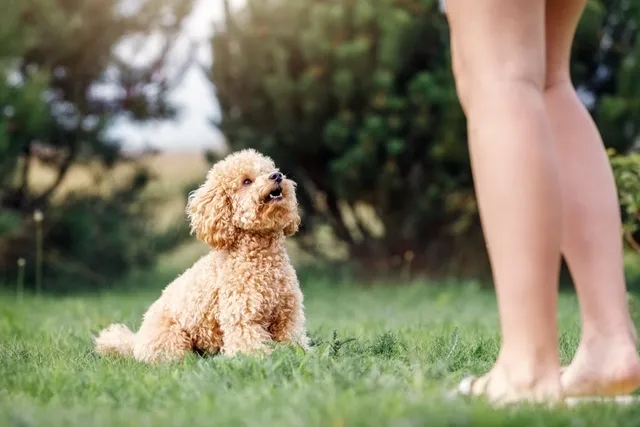
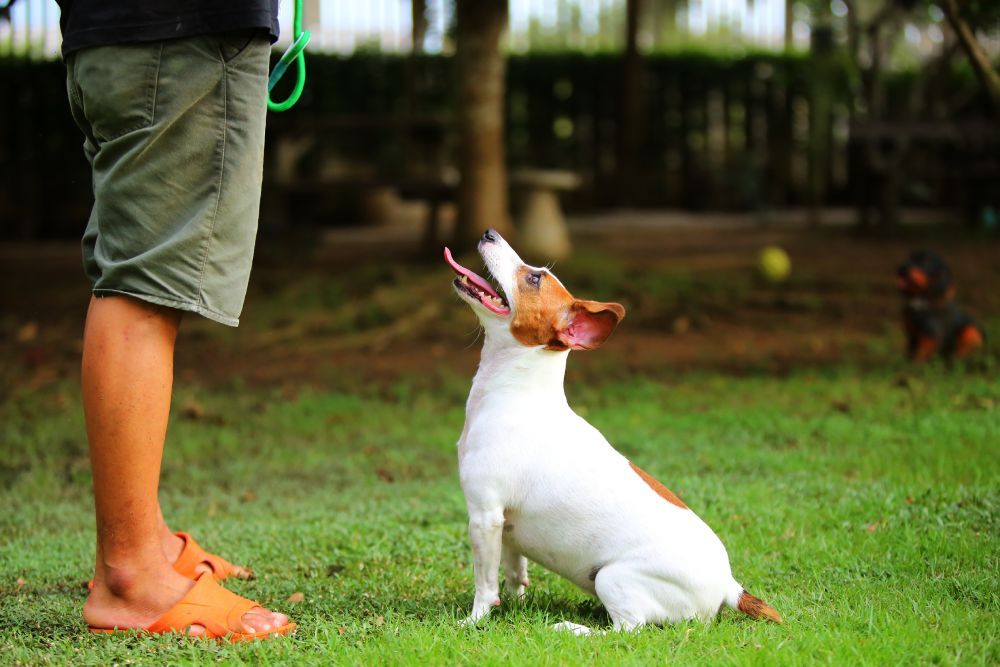
Start your training off with the command your dog does know—“sit.” It’s important that your dog knows this command before trying to teach them to stay as it forms the foundation of this next command. If your dog does understand “sit,” you can progress from there.

3. Offer a Reward
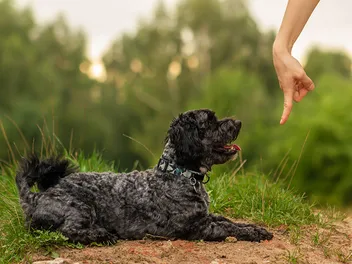
You’re going to be handing out plenty of treats throughout your training session, so make sure you have many. They can be dog treats, chopped-up chicken pieces, or any other small, easy-to-swallow treats that your dog enjoys. After your dog has been sitting for a few seconds, praise your dog verbally and with a treat, and say your release word. If they stand up immediately, repeat your command and reward them once they remain sitting for a few seconds. Once you’ve said your release word, encourage your dog to break position by walking away or patting your knees.
4. Stretch It Out
Repeat what you have just done by asking your dog to sit again. However, this step requires you to wait a bit longer before giving your dog a treat and saying your release word. Continue to repeat this step, waiting a few seconds longer each time you do it.

5. Introduce Stay
Once your dog can remain in their sitting position for 15 seconds, you can introduce the “stay” command. When using the command, always command your dog to sit first. Once they are sitting, confidently and clearly say, “Stay.” Offer several treats throughout the stay and remember to release your dog and encourage them to move out of their position before repeating the process.
6. Add Distractions
Once your dog can successfully remain in the same spot for 30 seconds, start adding in a few distractions. Your dog may not hold their position as long as they did before you introduced distractions, but that’s okay. Distractions can include clapping your hands, coughing, or squeaking a toy. Once they are able to hold their position through the distraction, you can work on increasing the stay duration.

7. Distance Yourself
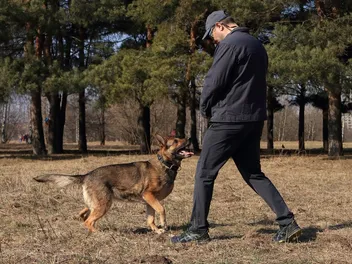
The next step is to add some distance between you and your dog after you have given the stay command. Take a step away from your dog and then go back to them with a treat for staying and say your release word. Continue to repeat this step but take more steps away from your dog each time. Be sure to always walk back to your dog to reward and release them instead of shouting it from a distance.
8. Practice In Different Environments
Once your dog can hold their position through distractions and distance, practice the stay command in different environments, such as in the yard, around other people, on walks, and in the park. Don’t expect your dog to be a pro at “stay” after a few training sessions, as it takes daily practice. For the best results, put aside 15–30 minutes every day to work on this new command with your dog. Even if the training session didn’t go as well as you hoped, always end it on a positive note.

Conclusion
Although it takes time, patience, and consistency, teaching your dog to stay can be done in a few simple steps. You’ll need to train your dog in a quiet space and give them plenty of rewards when they obey a command. Although you’re training your dog to stay, you will need to start when off with the sit command and only introduce “stay” once they can remain in their sitting position for 15 seconds. When your dog becomes confident with the stay command, introduce a few distractions and start to take a few steps away from them. Always end the stay command by rewarding your dog and saying your release word. See also:
How to Teach a Dog to Roll Over: Vet-Approved Step-by-Step Guide
How to Keep Your Dog from Distracting You When Working From Home: 7 Helpful Tips
Sources
Featured Image Credit: Wasitt Hemwarapornchai, Shutterstock
Expert dog care, straight to your inbox
News, insights, expert advice, and everything dog.

No spam — unsubscribe anytime.
By signing up, you agree to our Terms & Conditions and Privacy & Cookies Policy.
How useful was this post?
Click a star to rate. You can leave written feedback afterwards. (We read all feedback.)
Keri-Beth is a freelance writer from South African who specializes in animals. She has grown up with a range of pets, volunteered at many shelters, and is highly passionate about pet care. Currently, Keri-Beth is raising two dogs - Benji, the Golden Cocker Spaniel, and Gracie, the Boerboel. With so much information out there, Keri-Beth has made it her questo to make pet care as easy and straightforward as possible for any pet parent in the world.
In her spare time, Keri-Beth enjoys photography, camping, and spending time with her husband, who is a professional drummer.