Can Dogs Have Aspirin? Our Vet Discusses Safety Facts

In this article
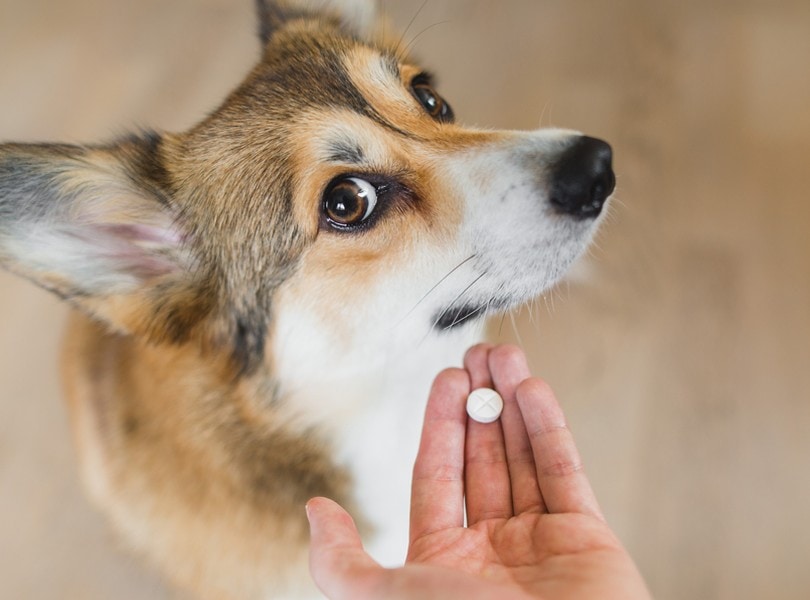
Since people can pick up over-the-counter pain relief medication for themselves, you might be tempted to think the same is true for our pets. The truth is that human over-the-counter pain relief options are not ideal for our pets. Most of these medications fall under the class of drugs known as NSAIDs or “non-steroidal anti-inflammatories,” and the US Food and Drug Administration (FDA) has not approved any over-the-counter NSAIDs for use in dogs.1 That being said, veterinarians may prescribe aspirin off-label at the correct doses if your dog is a good candidate for the medication.

Can Dogs Have Aspirin?
Aspirin is an NSAID medication and blood thinner. The NSAID part of the medication refers to aspirin’s role in reducing fever, pain, and inflammation through the inhibition of compounds called prostaglandins. It also inhibits thromboxane, which is involved in blood clotting, hence the blood thinning effects.
In veterinary medicine, aspirin has largely been replaced by other NSAIDs and anticoagulants. There is a “safe” dose of aspirin for some dogs. However, dogs may be more sensitive to the adverse effects of aspirin than people are, and there are plenty of reasons why aspirin should not be used in certain dogs.

Is Aspirin Harmful to Dogs?
Depending on the amount of aspirin given, the weight of the dog, and any underlying health conditions, aspirin can have some adverse effects—the most common of these being gastrointestinal upset.
Stomach ulcers and intestinal bleeding can occur because certain gut-protecting prostaglandins are suppressed by aspirin. Another role of prostaglandins in the body is to maintain kidney blood flow, so side effects related to the kidneys are not uncommon.
The use of NSAIDs tends to be avoided in patients with pre-existing kidney problems. Once in the body, it’s mostly cleared by the liver, so dogs with certain liver diseases need to have lower doses to avoid accidental overdose. Since aspirin is an anticoagulant, its use in dogs with clotting disorders or on other similar medication is inadvisable.
Aspirin should never be used in combination with other NSAIDs or prednisolone. It should be used cautiously with diuretics, like furosemide, and other heart medications. Other drugs and even supplements like glucosamine and omega fatty acids can interfere with aspirin use. Since there are so many drug interactions, knowledgeable use is needed to avoid adverse events in your dogs.
If your pet has been prescribed aspirin, you will need to monitor for the following signs and reach out to a vet if they occur:
- Vomiting
- Reduced appetite
- Lethargy
- “Coffee ground” vomit (caused by gastric bleeding)
- Black tarry stools (caused by gastric bleeding)
- Diarrhea
- Abnormal bleeding or bruising
- Increase thirst
- Increased or absent urination

If aspirin is accidentally overdosed (like your dog got into a pack of aspirin, for example), they can be at serious risk of severe side effects, even death. And if they already have a clotting disorder, kidney disease, or liver disease, they are at even higher risk. Signs of a serious overdose include:
- Pale gums
- Increased respiratory rate
- Hyperthermia
- Wobbly gait
- Tremors
- Seizures
- Coma
- Bleeding
- Death
My Dog Got Into My Aspirin, What Do I Do?
If your dog has gotten into some of your aspirin by accident, immediately contact a veterinarian or the Pet Poison Helpline (855) 764-7661 or ASPCA Animal Poison Control (888) 426-4435.
Be prepared when you call to answer a few questions about your situation, like:
If your pet has been overdosed, the information will let the experts make the best decision based on your situation. Sometimes, decontamination procedures like making your pet vomit and giving toxin binders are possible. In other cases, supportive care in a veterinary hospital might be needed to mitigate the adverse effects of the medication.
Extreme cases can be fatal or result in ongoing liver and kidney damage. Uncontrolled bleeding is another risk. If the gastric ulceration is severe, the stomach lining can be perforated, which allows gastric contents to leak into the abdomen. This is a life-threatening circumstance that causes septic peritonitis.
If you need urgent veterinary advice, consult a vet online.
Why Can’t I Give My Dog Over-the-Counter Medication?
There are a few reasons why you should never give your dog over-the-counter pain relief without the specific direction of a veterinarian. Firstly, these medications are designed with humans in mind and provide a dose for people. Because of their different biology, the human and dog dose rates for medication are different on a per pound of body weight basis. Even if the drug is safe for dogs, dogs are usually much smaller than people, and the human doses are often much too big for an average dog. Not only that but what is safe for one dog may not be safe for another since the size difference between dog breeds can be extreme.
Some over-the-counter medications are very toxic to animals. For example, cats cannot tolerate any dose of acetaminophen, and ibuprofen has a very narrow safe window in dogs (and is almost never used by veterinarians). Certain products have other ingredients, like caffeine, which are harmful to dogs. In addition, certain health conditions may mean that your pet should never take a specific medication. And if your pet is on other types of medications, it may be a contraindication too.
All medication has side effects that a veterinarian is aware of. They know the ins and outs of prescribing medication to animals of different species and with different health conditions. There is so much to know that you will very likely give the wrong amount, give a medication that is toxic to dogs, or give a medication that is contraindicated for your specific pet. If you do, the vet bills to treat the toxicity will likely be higher than what they were to treat your pet in the first place.

What Should I Do if My Dog Is in Pain?
If your dog is in pain, they need to be seen by a veterinarian who can diagnose what is going on and prescribe safe and effective pain relief for your dog. Veterinary visits are part of responsible pet ownership. Pet insurance can sometimes help you cover some of the financial costs associated with veterinary visits. If the veterinarian is not open, there is likely an after-hours clinic in the area where your dog can be treated. If not, the veterinarian should have some other after-hours options.
If you have a close veterinarian-client relationship with your local veterinarian and have been seen there recently, they may have your pet’s recent weight and bloodwork on file. This can help them make decisions about what should be done for your dog. If you are receiving pain relief for a chronic condition, you can talk to a veterinary team on the phone about next steps.
Conclusion
While aspirin is occasionally used for pain relief by veterinarians, it has some risks, side effects, and a host of contraindications. Never give human medications to your dog unless it has been specifically prescribed by a vet. Keep your human pain relief medication away from your dog to avoid them accidentally being poisoned, but if they have gotten into some, call Animal Poison Control, Pet Poison Helpline, or a veterinarian.
Also see:
Sources
Featured Image Credit: Irin Fierce, Shutterstock
Expert dog care, straight to your inbox
Vet-reviewed advice, training tips, and the best of Dogster. Free, and you can unsubscribe anytime.
By signing up, you agree to our Terms & Conditions and Privacy & Cookies Policy.
Dr. Ashley Darby BVSc (Veterinarian)
Dr. Ashley has worked in mixed and small animal emergency clinics and general practice ever since 2017 after studying Sydney University. She grew up in South Africa and England before moving to Australia, and her passion for animals came from many childhood safaris in the Kruger National Park.
Ash lives with her husband, two happy Springer Spaniels, and one very patient black cat. She also competes in equestrian sports with her horse, Atlas.
Join the conversation
Ask a question, share your story, or send private feedback.