Albino Dogs vs. White Dogs: Vet Explained Differences
In this article
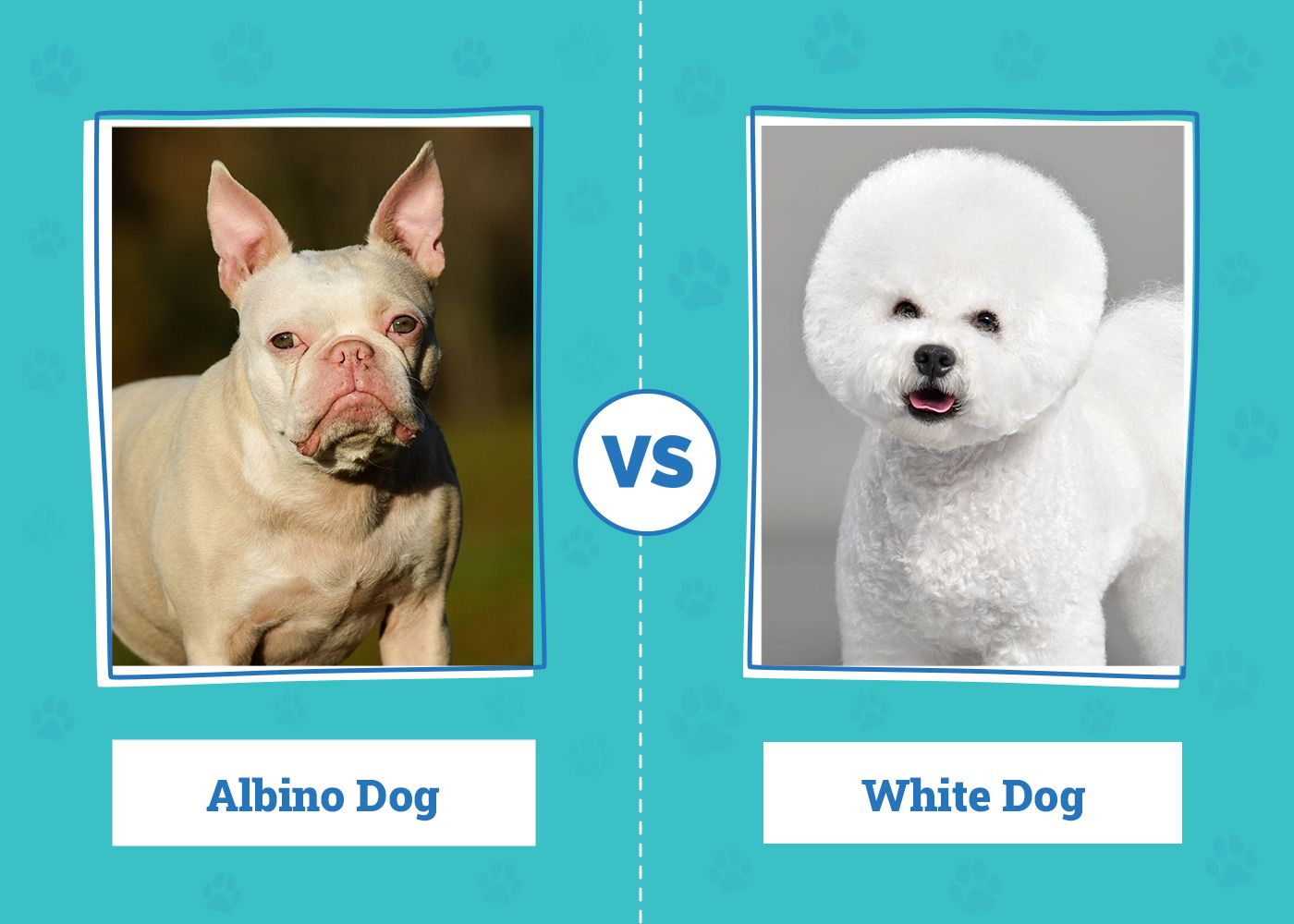
Our canine companions can be adorned with many coat colors and patterns, from the red Irish Setter to the spotted Dalmatian and the striking merle Australian Shepherd. When you think about this diversity, one thing should be obvious: coat color genetics are far from simple. With that in mind, our article will delve into the differences between albino and white dogs.
Albinism in dogs occurs with mutations in a single gene, whereas in white dogs, it occurs due to the interaction of multiple genes. Albinism is rare, and most experienced and ethical breeders are against the intentional breeding of these dogs because the solid-colored ones appear to have fewer health problems.
| Albino: single gene trait, rare. | White: polygenic trait, common. |

At a Glance
Genotype vs Phenotype
Genotype refers to the specific sequence of an individual’s DNA code. Your genotype will be different from everyone else unless you are an identical twin. The same goes for your dog. For every gene, they will have one copy from their sire (father) and another from their dam (mother).
Thousands of genes are included in each of the dogs' 39 pairs of chromosomes. Combined with environmental factors, these genes determine a dog’s appearance and traits. Traits, such as blue eyes or white hair, can be referred to as the dog’s “phenotype.”
So, while albino dogs and white dogs have a similar phenotype, their genotype is very different. In some cases, they can look almost identical, and it can be hard to differentiate them. Even among white dogs, genotypes will be very different. This is important to understand because the genetics involved can change the health issues your pup is prone to.


Overview of Albino Dogs
We will start simply with an overview of albino dogs. Known causes of albinism in dogs hinge on a single gene called the SLC45A2 gene, which codes for a protein used in making the pigment melanin.1 Regardless of other coat color genetics, problems here result in something called oculocutaneous albinism, which is the lack of pigment in the hair, skin, and eyes. Humans and gorillas can also have this form of albinism.
The lack of pigment makes albino dogs’ skin sensitive to sunlight and prone to sunburn and skin cancer. One study showed an increased incidence of skin, lip, eyelid, and iris tumors in albino Doberman Pinschers.2 If you have an albino dog, you should avoid walking them in full sunlight and use sun protection like clothes or Emmy's Best Pet Products Sun Skin Protector Dog Spray.
One thing you might associate with white dogs is congenital hearing loss or deafness. While these links are known, they don’t actually apply to albino dogs. This is because the cells that produce melanin, melanocytes, are present and otherwise still function well. We will get into this more later.
Lhasa Apso Albinism
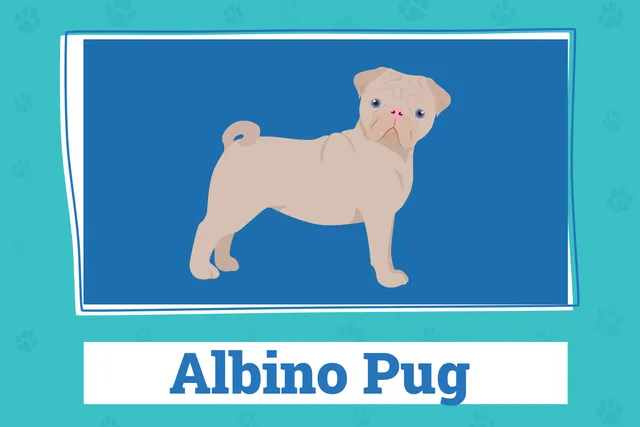
Lhasa Apso Albinism, or LAA, is caused by a substitution mutation in the genetic code of the SLC45A2 gene. It is a bit of a misnomer as other breeds such as the Pomeranian, Pekingese, French Bulldog, and Pug have been noted to have this exact mutation. It can also be referred to as “small-breed variety” albinism.
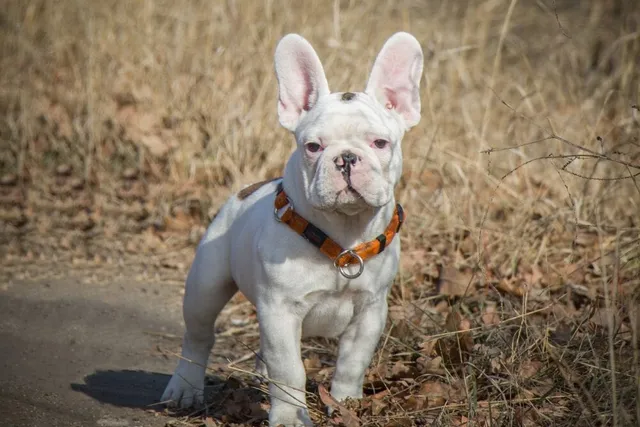
The gene is recessive, and if your dog has just one copy of the gene, they won’t have albinism, but if they inherit a copy from each parent, they will be albino. They will have a white to off-white coat and blue/gray eyes.
Some laboratories can test your dog’s DNA for this specific mutation, including simply carrying one albino gene. Visit the UC Davis Veterinary Genetics Laboratory, Orivet, or Animal Genetics for more information.

Doberman Pinscher Albinism
This form of albinism is found exclusively in Doberman Pinschers and is caused by a mutated SLC45A2 gene with a substantial amount of code deleted. It is also a recessive trait, so albino Dobermans have two copies of the mutated gene. This particular albinism results in blue/gray eyes, pink skin, and coat color dilution; since they can produce a little pigment in their hair, they have an off-white coat. They are also sometimes called “white” Dobermans.
The Doberman Pinscher Club of America does not condone breeding these dogs since they are sensitive to light and appear to have visual problems in bright sunlight. Additional eye problems haven’t been scientifically confirmed in dogs but are possible since this form of albinism can cause structural and functional eye problems in people.3 Some people put tinted goggles on their dogs to protect their eyes.
White Dobermans and breeding stock can be tested for this mutation through the UC Davis Veterinary Genetics Laboratory, Neogen Paw Print Genetics, or Animal Genetics. It can be traced back to a famous Doberman Pinscher called Sheba, who was born in 1976 and bred with other Dobermans. Dogs that descend from Sheba have “WZ” before their American Kennel Club registration numbers.
Other Types of Albinism
In the Bullmastiff, a single deletion in the SLC45A2 gene code can also cause albinism. There could be more causes of albinism in dogs, but they are unknown. In humans, several genes can cause oculocutaneous albinism so it’s not unreasonable to think more than one gene could contribute to the condition in dogs.4 Anecdotally, albinism is also common in Shih Tzus, Beagles, and Dachshunds.
Pros
- No hearing loss with the condition
- Genetic testing available
- Generally healthy
Cons
- Prone to sunburn and skin cancer
- Eyes sensitive to bright light
- Possible vision problems
Overview of White Dogs
Complicated coat color genetics influence a dog being white and there are different ways the color can occur. You should also know that much remains unknown about canine coat color inheritance. Breeds that are commonly white include the Bichon Frisé, Samoyed, Japanese Spitz, Maltese, West Highland White Terrier, Coton de Tulear, Poodle, and Bull Terrier.
You already know that melanocytes produce melanin, which pigments the skin, eyes, and hair. More melanin means a deeper, richer color. There are two kinds of melanin: eumelanin, which produces brown, black, and gray hues, and pheomelanin, which creates red, gold, cream, tan, or yellow coats.
White hair happens when there is no pigment at all, and the same goes for pink skin and blue eyes. White dogs tend to have a lot of pink skin and need extra sun protection in the same way as albino dogs.

Genes Known to Cause White Coat Color
A gene can reduce or remove pigment in a certain pattern—for example, the MFSD12 gene codes for the intensity of pheomelanin. A recessive gene can lead to a pale, even white coat.
A PMEL17 or Silver (SILV) gene mutation causes a merle pattern with patches of dilute eumelanin; however, if a dog possesses two copies of the merle gene, they can have mostly unpigmented coats and skin, which can look very similar to albino.
A double merle pup also has a high risk for eye, heart, skeletal, and reproductive abnormalities. Two copies of a recessive MITF gene for piebald spotting can result in a white coat.
Deafness in White Dogs
Deafness in white dogs happens because melanocytes maintain a healthy inner ear. Without melanocytes, the organs responsible for hearing degenerate, and the pup becomes deaf weeks after birth. Melanocytes arise in the embryo from the same tissue that forms all nerve cells in the body, the neural crest. This is why there are other links between white dogs and neurological diseases.
Merle and white spotting genes are known to suppress melanocytes. Dogs with double merle genes or genes for extreme white spotting have a higher risk of deafness. Breeds that can have a merle gene include Great Danes, Australian Shepherds, and Border Collies, among others.
Dalmatians have a gene for extreme piebald spotting. Because of melanocyte suppression, deaf pups are also more likely to have blue eyes. Over 80 dog breeds have some congenital deafness reported.
Dalmatians are by far the most common, but white Bull Terriers, English Setters, Cocker Spaniels, and Australian Cattle Dogs also have high rates of deafness.
Pros
- Some traits can be genetically tested for
- Most dogs are perfectly healthy
Cons
- Prone to sunburn and skin cancer
- Risk of deafness with extreme piebald and double merle
- Other potential health problems with double merle


Conclusion
White and albino dogs can look very similar, especially if the dog is white due to extreme white spotting genes. However, the genetics involved in these coat patterns are very different and the health problems that come with the coat color can be very different, too.
Luckily there are usually subtle external differences that can give you a clue as to what is going on in your dog’s DNA. If in doubt, you could always talk to your vet about genetic testing for your pup.
If you are thinking about adopting an albino or white dog, you should ensure they aren’t carrying two merle genes. You can still take in a double merle dog, but you should be prepared for further health issues if you do.
Whether you’ve found your dog is albino or white, please take steps to protect them from the sun as they are prone to sunburn and skin cancers. Otherwise, in most cases, these pups will be perfectly healthy and live a normal lifespan with the excellent care we know you will provide!
Sources
https://www.petmd.com/dog/general-health/albino-dogs-interesting-facts-you-should-know
https://vcahospitals.com/know-your-pet/genetics-basics-coat-color-genetics-in-dogs
https://www.akc.org/expert-advice/health/can-dogs-be-albino/
https://journals.plos.org/plosone/article?id=10.1371/journal.pone.0223995
https://www.msdvetmanual.com/ear-disorders/deafness/deafness-in-animals
https://animalgenetics.com/dog-tests/canine-disorder-tests/61-oca/
Featured Image Credit: (L) everydoghasastory, Shutterstock | (R) Natallia Yaumenenka, Shutterstock
Expert dog care, straight to your inbox
Vet-reviewed advice, training tips, and the best of Dogster. Free, and you can unsubscribe anytime.
By signing up, you agree to our Terms & Conditions and Privacy & Cookies Policy.
Dr. Ashley Darby BVSc (Veterinarian)
Dr. Ashley has worked in mixed and small animal emergency clinics and general practice ever since 2017 after studying Sydney University. She grew up in South Africa and England before moving to Australia, and her passion for animals came from many childhood safaris in the Kruger National Park.
Ash lives with her husband, two happy Springer Spaniels, and one very patient black cat. She also competes in equestrian sports with her horse, Atlas.
Join the conversation
Ask a question, share your story, or send private feedback.