Dogs usually have a lot of energy, but what do you do if your pup is downright hyperactive? Hyper dogs jump up on you and others in their eagerness to show affection, exuberantly lick your face, or generally just run around constantly and cause chaos in the house. While a dog’s joie de vivre is sometimes adorable, too much can be overwhelming.
If you have a hyper dog on your hands, you need to find ways to calm them down. But how do you calm a hyper dog?
Below, you’ll discover 10 proven ways to get an overexuberant canine to calm down. Utilizing these will help calm your pup down while allowing you to have a bit less chaos in your life!

Why Are Some Dogs So Hyper?
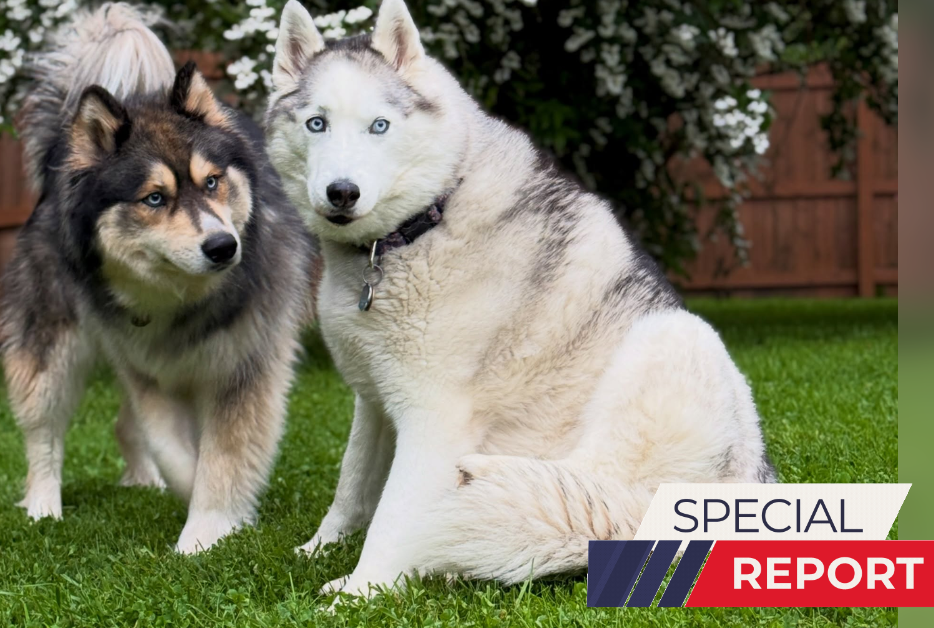
A dog can be high energy and destructive for a number of reasons, and pet parents might be quick to label their dog as hyperactive. In fact, true hyperactivity, known as hyperkinesis in dogs, is rare. More commonly, dogs with presumed hyperactivity aren’t having their physical, social and mental needs met. Some dog breeds just have more energy than others, like the Border Collie, Australian Shepherd, and Golden Retriever. These breeds often tend to be working dogs, so they’ve inherited a burning need to stay active and constantly do something, which can lead to hyperactive behavior, particularly if their exercise needs aren’t met.
Another reason a dog may behave in a way that owners describe as “hyper” is because they didn’t receive the proper attention during puppyhood. They may not have been trained on basic commands or weren’t properly socialized. Whatever the case, these dogs didn’t learn essential lessons like how to react appropriately to other dogs or other people, and may be reactive to things that we don’t want them to be reactive to. They may not have been taught to sit, lie down or stay, and therefore they can wreak havoc when they get excited or over-stimulated.
If a dog doesn’t receive enough mental and physical stimulation each day, it can have lots of pent up energy that it releases with a bout of high energy activity, biting, barking, jumping about or chewing. Dogs need a lot of physical exercise, as well as mental stimulation each day, to keep them busy, healthy, and happy. Without enough stimulation and activity, pups get bored, which can lead to negative behaviors, such as being “hyper”.

The 10 Proven Ways to Calm a Hyper Dog
If you’re struggling with a hyper pup, use these proven ways to calm them down!
1. Set a routine
Everyone can do better with a set routine, including your hyper pup! Having a consistent daily routine will help calm their hyperactivity, as it teaches them there are set times for rest and play. Plus, hyperactivity can sometimes come from an unpredictable routine because your dog never knows what to expect, which can be stressful.
So, put together a daily routine that works for you and stick to it. It doesn’t need to be complicated; you can just set certain times of the day for play, walks, and rest. This structure can go a long way in helping your four-legged friend stay calmer.
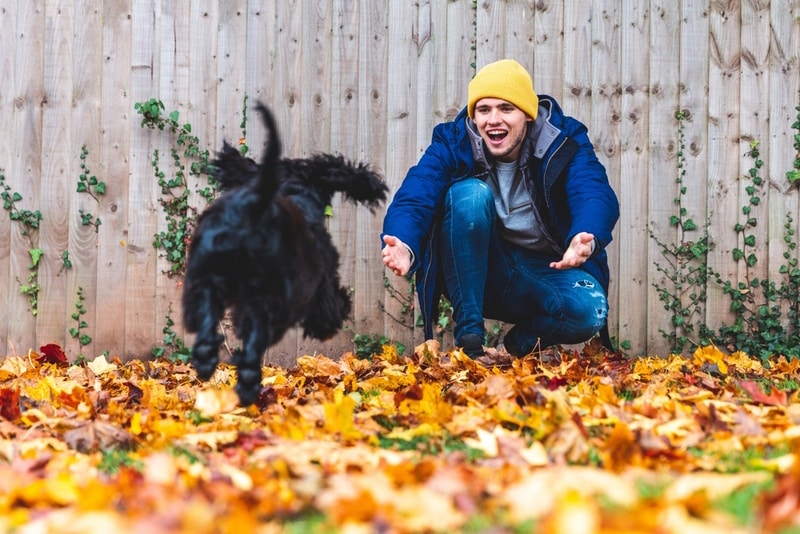
2. Crate train your dog
Some people aren’t fans of crate training, but crate training your canine is an excellent way to help them stay calm. Starting with crate training is simple enough; you just need to get a quality crate for your pup which is big enough for them to sit, stand, and turn around. Some pups may not want to go near a crate initially, but you can make it more enticing by placing a bed, blankets, and toys inside.
Once your pet’s crate is all set up, reward your pup for going near the crate. Some pups will go straight into the crate to investigate it, while others will be more fearful of it. It is a good idea to feed your dog its meals in its crate so that it starts to associate good things with the crate. Once they are content sitting and eating in the crate, begin putting them in it for short periods several times a day while you’re still at home. This will help them get used to it and let them know that the crate isn’t a punishment. When your pup becomes comfortable with their crate, you can begin leaving them in it when you leave the house, and because your pet will feel safer having their own little den, they should be infinitely calmer.
3. Teach your pup basic commands
All dogs should be taught basic commands, such as “sit” or “come”, but did you know these commands can also help with hyperactivity? Learning basic commands teaches your dog to have better manners and will aid in keeping them out of trouble. There’s a reason such a big deal is made out of obedience training during puppyhood!
Basic commands include “sit”, “come”, “down”, and “stay”, all of which let you have more control over your dog’s behavior once they’ve learned them. Not only will it be beneficial to teach your dog to sit and stay when needed, but these basic commands can also keep your pet much safer. Your life will be much simpler when your dog has learned these!
Remember, though, that training takes time. Have patience with your pup, and don’t yell at them if they get something wrong. Instead, stick with positive reinforcement, and training will go a lot better.
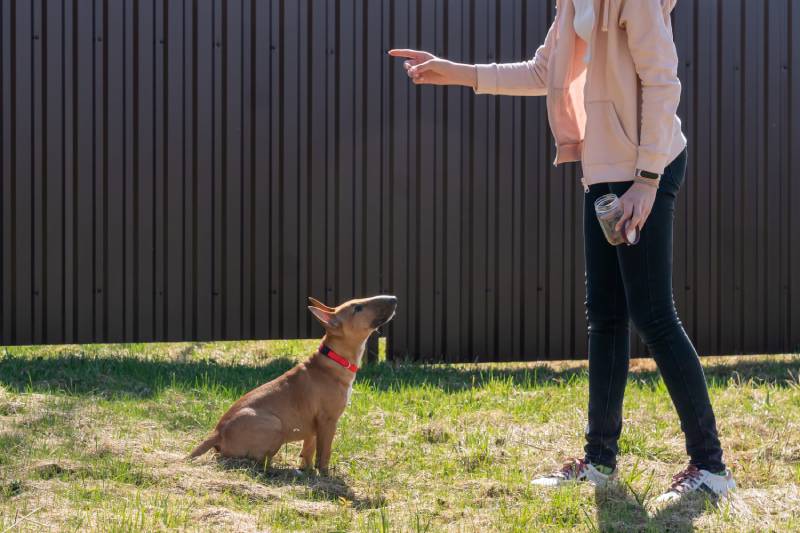
4. Train them on impulse control
Once your dog has learned basic commands and can sit, stay, come, or lay like a champ, take some time to train them on impulse control. Impulse control is sometimes difficult for humans, so imagine how much more challenging it must be for your pup! But learning impulse control can help your pet live in a calmer state. After all, once your pup has been taught not to snatch up dropped food, chase every small animal they see, or jump on everyone, life will be a lot more rewarding, and rewarded..
Impulse control training can be a bit harder than basic command training, so it will probably take more time and a whole lot more patience. The nice part of teaching your pet some impulse control is that you can do so by playing games with them, so you and your pup will have fun together while they’re learning!
5. Feed your pet a nutritious diet
It is vital that you feed your dog a nutritious and quality dog food. You’ve heard the saying, “You are what you eat,” and that applies to your pet, too. What your pup eats can directly impact their behavior—food with more calories than your dog needs will provide them with extra energy that they need to burn off somehow; this might be unwanted, frantic behavior. Foods with simple carbs instead of complex carbs can lead to hyperactivity due to glucose spikes and crashes. And if your pup isn’t getting all the nutrients they need, it can lead to nutritional deficiencies, which can cause changes in behavior. So, be sure you’re feeding your dog a complete, balanced diet that gives them all the protein, calories, and nutrients they require, and make sure you’re giving them the correct amount for their ideal weight and activity level.

6. Engage your dog in daily physical exercise
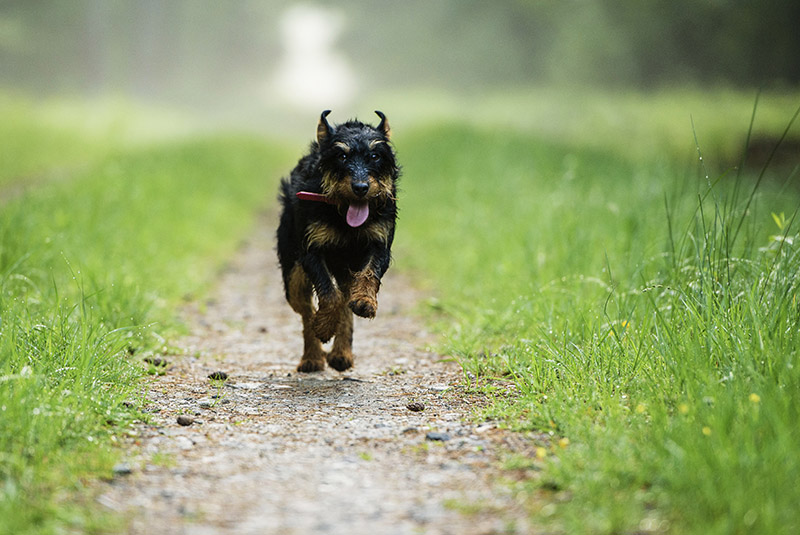
You know how kids who don’t run around enough and burn off their energy can get hyper at the most inopportune times? Your dog is similar. If your pup isn’t getting enough physical exercise each day, then they’re going to have too much energy. Dogs need to run around, go for walks, and play to burn off all their energy!
Take your pup for walks or go to a dog park. Play fetch in the backyard. Go swimming at a dog-friendly beach or in a pool. Not only will doing this ensure your pet is too tired to be hyper, but it also keeps them in good health so they live their best life.
7. Ensure your pup gets mental exercise each day, too
It isn’t only physical exercise that your pup should be getting each day. They also need plenty of mental exercise to keep them from getting bored. This holds especially true if your dog is highly intelligent or has been bred to be a working dog. You can do plenty of things for your pet to ensure they’re receiving enough mental stimulation, though, even when you aren’t home to entertain them.
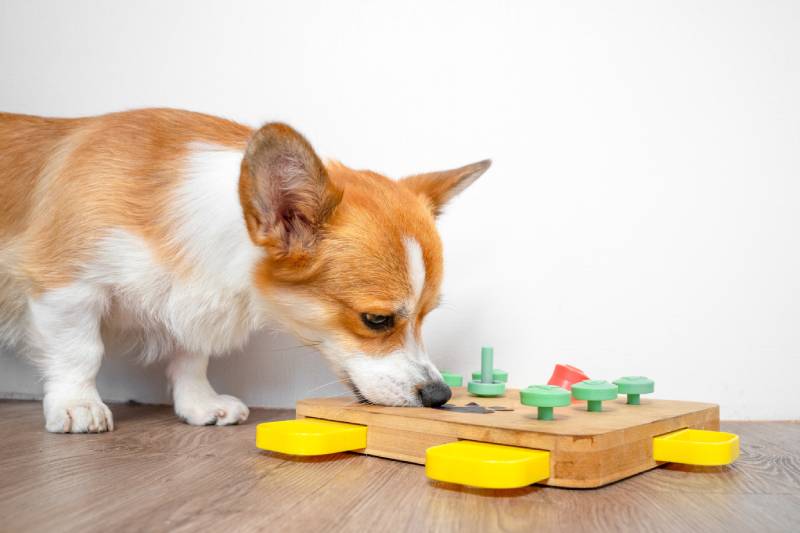
Invest in toys that dole out treats when your pet knocks them around or puzzle toys that challenge their mind. Hide treats around the room, or toys around the yard and ask your dog to find them.
8. Invest in some calming treats
You might not have known, but there are dog treats on the market that claim they will help your furry friend calm down. These usually come in sticks or chews and contain all-natural ingredients, like hemp, valerian root, and chamomile, that work to calm. So, your pup gets a delicious snack while also getting calming relief.
However, some dogs can be allergic to the ingredients in these treats, so look over the list of what’s in a treat and speak with a vet before giving it to your dog. Also, know that the calming effects of these sorts of treats can take many weeks to show and there is limited scientific research on the effectiveness of many of the ingredients in these products on anxiety. Some people see great results in their dog whereas others don’t see any difference at all.
9. Check the energy of your home and yourself
The energy of your home and your own energy will affect your dog’s energy levels. If you have kids running around all the time, playing and screaming, your pup is absolutely going to join in on the chaos. If you’re constantly running around your home doing things while blasting music, your four-legged pal will be right there with you.
Dogs have been shown to be capable of emotional contagion, a primitive form of empathy, and they actively respond to their human’s emotions. If a dog sees their human crying, they often go and lick them and nuzzle their faces. If an owner is in a stressed state, their dog may well mirror this stress, which may result in hyperactive behavior.

10. Have a chat with a vet
If nothing you’re doing is working to calm your dog’s hyperactivity, then it’s probably time for a chat with a vet. Although rare in dogs, hyperthyroidism can show up as hyperactive behavior, but there will likely be other signs of illness if this is the case. The vet will be able to rule out medical causes of the hyperactive behavior and will be best placed to direct you to somebody to help you to help your dog.
If you need to speak with a vet but can't get to one, head over to PangoVet. It's our online service where you can talk to a vet online and get the advice you need for your pet — all at an affordable price!

Conclusion
Having an overly hyper dog in the home can be overwhelming at times, but there are ways you can help your four-legged friend calm down. Whether you use calming treats, a set routine, or a mix of the above, you can usually help remedy your pup’s hyperactive behavior. Just keep in mind that it will probably take some time for your dog to lose some of that hyperactivity, so remain patient!
See also:
- Can Dogs Get High? Vet-Approved Marijuana Toxicity Facts & FAQ
- How to Calm a Dog During Fireworks: 12 Vet-Approved Tips
Featured Image Credit: Snowboy, Shutterstock
 Why Are Some Dogs So Hyper?