COVID Sniffing Dogs — Accuracy, Training, and Who Uses Them

In this article
By now, most of us are aware of the miraculous capabilities of our beloved canines. From police dogs to guide dogs, rescue, medical alert dogs, therapy dogs, and more, dogs have much more to bring to the table than just being our tail-wagging companions. They truly are men’s, women’s, and children’s best friends.
In the wake of the COVID-19 pandemic that has plagued our world, dogs have once again shown just how amazing they truly are. Here, we will go over the ins and outs of the COVID-19 sniffing dogs that are helping out around the world.

The Beginning of COVID Sniffing Dogs
As reported, on December 12, 2019, several patients in Wuhan, Hubei Province in China, began to experience shortness of breath and fever. By the beginning of 2020, the virus known as SARS-CoV2 began spreading across the world and changing life as we know it.
Dogs are known for their keen sense of smell and how they assist us in our daily lives. Dogs can smell up to 100,000 times better than humans. That is why they were quickly enlisted to help us battle the pandemic in the hopes of saving lives and containing the spread of the virus.
Types of Detection Dogs
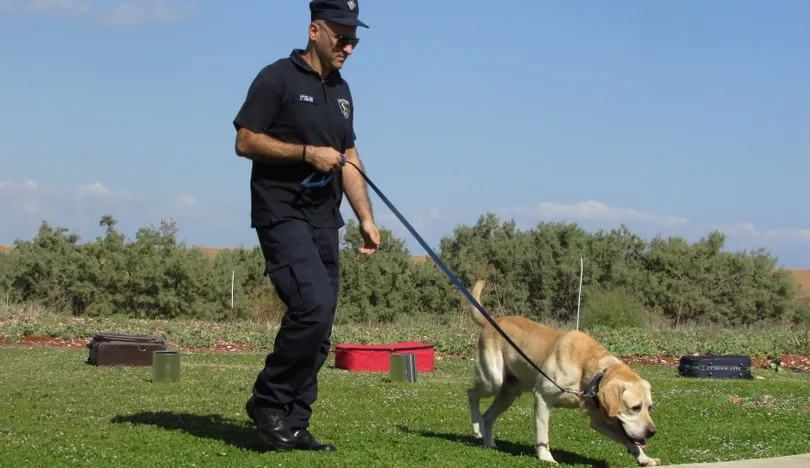
We have been using our dog’s incredible sense of smell to help us out in various areas. Detection dogs are trained to use their senses to detect substances, while medical detection dogs are trained experimentally to sniff out diseases and ailments by picking up on the changes in chemical compounds within the body.
Different Scent Functions Used in Detection Dogs
Detection dogs are trained to recognize the scent of many animate and inanimate objects, including but not limited to:
- Drugs
- Explosives
- Fire accelerants
- Firearms
- Currency
- Ivory
- Mobile phones, SIM cards, USB drives
- Endangered species
- Invasive species
- Certain plants
- Wildlife scat
- Mold
- Fungi
- Bed bugs
- Termites
- Human remains
- Live humans
- Cancer
- Diabetes
- Parkinson's Disease
- Seizures
COVID-19
Medical detection dogs can detect volatile organic compounds, or VOCs, which are emitted through the skin, breath, and bodily fluids. Respiratory infections can be viral or bacterial in origin. Regardless of the origin, the invasion of the pathogen results in the production and release of various volatile organic compounds.
It would only make sense that dogs would naturally have the capability to detect SARS-CoV2, the virus that leads to COVID-19, but this type of detection has never been used in the wake of a global pandemic.
The established knowledge of the capabilities of detection dogs led Penn researchers and veterinarians at the National Veterinary School of Alfort in France to begin training dogs to sniff out this novel virus in the spring of 2020 by using samples of urine and saliva. By November 2020, they started training the dogs to detect the virus through sweat.
Accuracy of SARS-CoV2 Detection Dogs
Studies are being conducted worldwide on the accuracy of dogs in detecting SARS-CoV2. While many studies have suggested dogs effectively sniff out SARS-CoV2, the FDA has not approved this as a diagnostic tool for mass screening of the virus. Most of these findings have not yet been peer-reviewed or published, making it hard for the wider scientific community to evaluate the claims.
Studies From The United States
Department of Defense
Scientists with the Army Combat Capabilities Development Command Chemical Biological Center partnered with the University of Pennsylvania and various canine training facilities to aid in the fight against this novel virus.
This study involved participants being tested for COVID-19 and sending in the T-shirts they had worn overnight. Eight dogs from ages 2 to 7 were chosen to participate in the study due to their motivation and ability to focus. Seven dogs were Labrador Retrievers, and the other was a Belgian Malinois.
Interestingly, these incredible dogs could detect a COVID-positive person days before the rapid test was possible. A research scientist in the study, Jenna Gadberry, was quoted as saying, “So far, the levels they have been able to detect have been astounding.”
Florida International University
Florida International University performed a double-blind study using four trained dogs, which ultimately showed a 97.5% accuracy in detecting the virus by sniffing people and different types of surfaces.
Studies from France
A study conducted by the French researchers suggests that trained dogs could detect the presence of the virus with a 97% accuracy. It was also revealed they were able to detect COVID-19 in patients who had the virus for as long as a year and a half, which was also noted in studies that were conducted in the United States, Germany, and the United Kingdom.
According to a preprint of this study, which has not been peer-reviewed yet, these trained dogs had an accuracy rate of 51.1%, detecting 23 out of 45 using only samples of armpit sweat from long-term COVID patients who had never been hospitalized due to the virus. No false positives were detected out of 188 control samples presented in that portion of the study.
Studies from the United Kingdom
The United Kingdom has presented data from studies conducted by the London School of Hygiene and Tropical Medicine that collaborated with the charity Medical Detection Dogs and Durham University. The studies showed an 82% to 94% success rate in trained dogs detecting COVID-19.
Studies from Germany
Studies conducted in Germany using detection dogs yielded an overall average detection rate of 94% in the presentation of 1,012 randomized samples. In addition, these dogs were able to discriminate between samples of infected individuals (those yielding a positive test result) and non-infected individuals (those yielding a negative result) with an average diagnostic sensitivity of 82.63%.
Training 🎾
Selection
Before the training process begins for the detection of COVID-19 or any other type of scent detection, dogs must be selected for the training. Not all dogs are appropriate for scent detection, regardless of their breed. Each dog must be evaluated individually to determine whether they are suitable for this work.
It is essential that a dog not only has a superior sense of smell but also exhibits a high level of focus, motivation, and drive to hunt. Those selected love searching and hunting for toys, a telltale sign they have what it takes.
Obedience
Obedience should begin for any dog in early puppyhood. Those selected for scent training are typically evaluated at a very early age. This provides the most thorough training regime and solid foundation for proper obedience and scent detection training.
Scent Training
The length of time to train a scent detection dog varies depending on several factors, including the odor they are being trained to detect, the sample types being used, and the dog’s personality and learning style. Like humans, dogs learn at different paces and require a personalized learning style.
The training process is reward-based and begins by introducing the dogs to samples of the scent and then rewarding them with treats, praise, and sometimes play. For SARS-CoV2 detection, this means presenting positive samples, whether sweat, saliva, or urine. Once the dog has picked up on this particular scent, both positive and negative samples will be presented for further training.
Since human scent varies, medical detection dogs, including COVID-19 sniffing dogs, must be trained using samples from many different people with varying ages, genders, ethnicities, diets, and concurrent illnesses. Training protocols can vary among different programs, dogs, and trainers.
Who Uses COVID Sniffing Dogs?
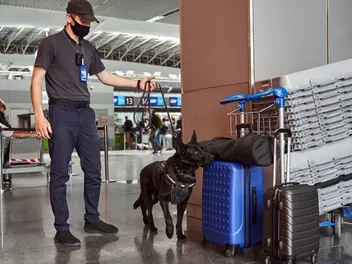
While COVID sniffing dogs have had incredible success in detecting SARS-CoV2, they have not been approved as an official medical diagnostic tool. They can, however, provide an initial screening that could later be confirmed with a test. This would help those who have been potentially infected take proper precautions early on. Thus far, these dogs have been used in a variety of settings.
Conclusion
It should be no surprise that in these unprecedented times, our beloved canines are coming to the rescue once again. Their incredible senses and capabilities are always leaving us in awe. These COVID-19 sniffing dogs and all other detection and service dogs are true blessings to humanity. It’s hard to tell what the future holds, but we are always grateful for our dogs.
See also:
Featured Image Credit: Ryan Brix, Shutterstock
Expert dog care, straight to your inbox
News, insights, expert advice, and everything dog.

No spam — unsubscribe anytime.
By signing up, you agree to our Terms & Conditions and Privacy & Cookies Policy.
How useful was this post?
Click a star to rate. You can leave written feedback afterwards. (We read all feedback.)
I am a wife, mother, nature enthusiast, animal lover, and business major. I was born and raised in Ohio but now live in Tulsa, Oklahoma. We share our home with a German Shepherd, several snakes, tarantulas, and a couple rescue cats.
My husband and I enjoy traveling the US with our kids and photographing wildlife. My passion is to educate others on the importance of proper animal care, with an emphasis on reptiles and exotics since their care requirements can be much more complex. I am also a huge advocate for bully breeds. I feel most at home in the forest either on horseback or in hiking boots.