Can Dogs Eat Bones? Vet-Approved Health & Safety Guide


In this article
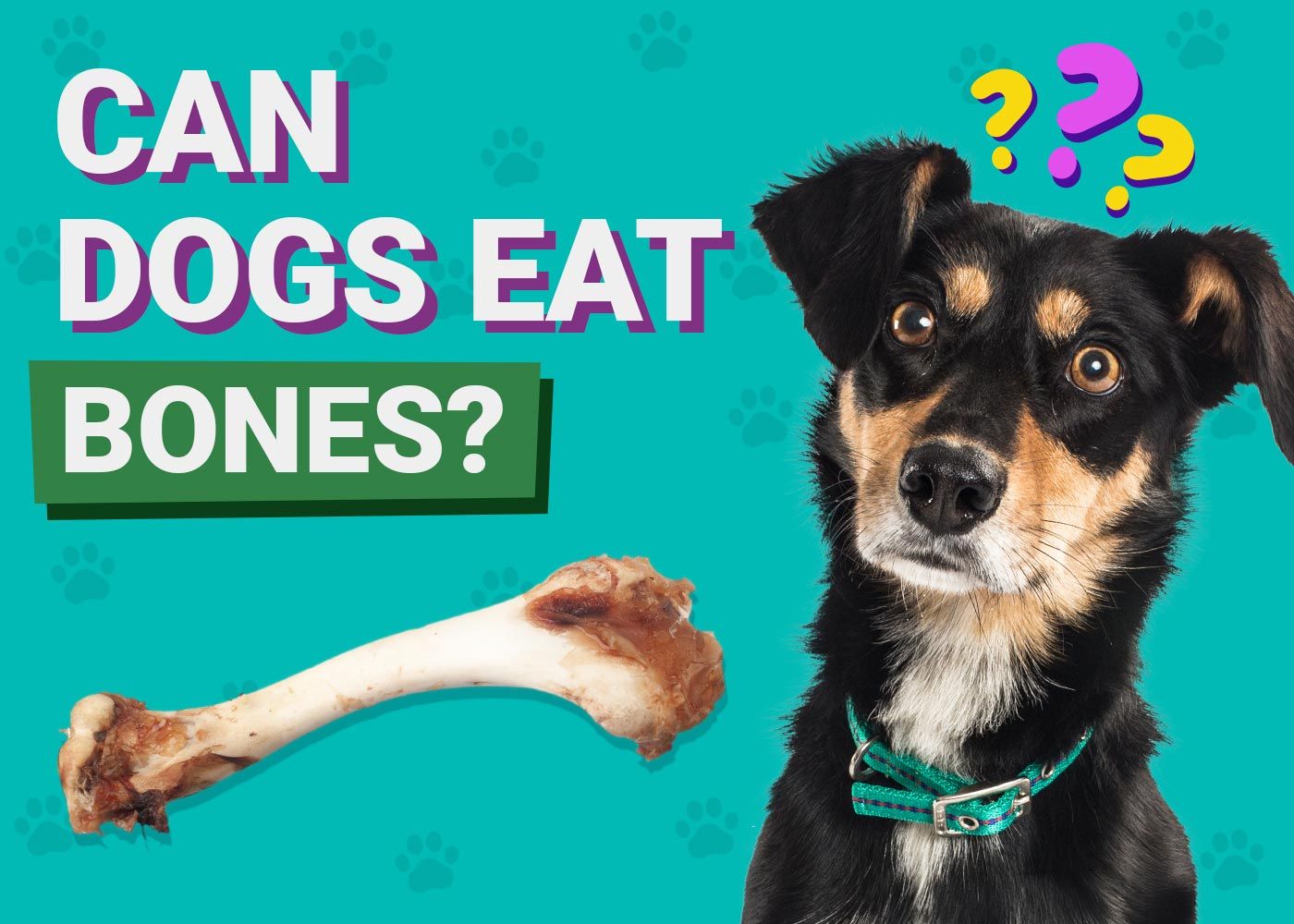
Dogs and bones seem to go together like peanut butter and jelly, but is it actually safe or healthy to offer a bone to your dog? While bones can be a good source of minerals and nutrients and clean the teeth, bones also pose serious and even life-threatening health risks to dogs. Most experts do not recommend that owners offer bones to their dogs at all. Read on to learn more.

The 7 Reasons That Dogs Shouldn't Eat Bones
1. They Can Cause Broken Teeth
Bones can be very hard, damaging your dog’s teeth and leading to expensive vet visits if they chew too vigorously. Bones can also chip, fracture, or even break your pup’s teeth, causing pain and even putting them at risk of developing jaw infections. Harder bones, like those for weight-bearing in large animals, are particularly risky.
2. They Are Sharp
Bones, especially those that are cooked, can splinter and break into small, sharp fragments, which can pose a serious hazard. These bone shards can cause penetrating injuries to your dog’s mouth, throat, and digestive system, leading to a serious and potentially life-threatening emergency. In some cases, the fragments can penetrate the stomach or intestinal wall, causing intestinal contents to leak into your dog’s abdomen. This causes peritonitis, a serious and often fatal abdominal inflammation, with mortality ranging from 50% to 70% of cases.1 Keep in mind that this doesn’t only apply to cooked bones. For example, a chicken drumstick contains a sharp “splint bone” (the fibula), which is dangerous even when raw.
3. They Are a Choking Hazard
If your dog tends to consume food without chewing, they could end up choking on the bone. Bones are hard, sharp, and difficult to dislodge from a dog’s throat. Not only can they obstruct the airway, but they can also get stuck in the esophagus, making it difficult for your dog to eat.

4. They Are Indigestible
If your dog ingests pieces of bone, they will pass through their digestive tract relatively unchanged. Large bones can become stuck, leading to an intestinal blockage. Small pieces of bone can also aggregate, leading to intestinal obstruction or constipation as the digestive tract struggles to move them. Untreated, the blockage can lead to further complications, such as dehydration, electrolyte imbalances, intestinal wall damage, peritonitis, sepsis, and death.
5. They Can Cause Jaw Entrapment
Bones, especially those that are round, can get looped around a dog’s lower jaw behind their canine teeth. This can be a terrifying and traumatic experience, and most dogs will require sedation at the veterinary clinic to have the bone cut out. There are cases of bones getting lodged within the upper jaw too.
6. They Can Cause Contamination
Raw bones can be contaminated with numerous pathogens, including E. coli and Salmonella. These may or may not make your dog sick, but they do pose a significant risk to your own health if you handle them. Bones can also carry parasites like Toxoplasma gondii and worms.
7. They May Lead to Digestive Issues
Eating bones can cause gastrointestinal issues like diarrhea and constipation. Some bones, especially ones like pork rib bones, are extremely high in fat. Dogs are not designed to handle this much fat, which can cause pancreatitis in some situations. This inflammation of the pancreas can be mild or severe, but the signs are typically gastrointestinal in nature, including diarrhea, vomiting, and loss of appetite. Serious cases of pancreatitis can be life-threatening, so it’s important to seek veterinary care as soon as possible if you suspect your pup may have it.
What About Raw vs. Cooked Bones?
If you decide to offer bones to your dog despite the associated risks, raw options are safer. Cooked bones for dogs can become brittle and splinter easily, breaking into shards that can do a lot of damage. Never feed cooked bones to your dog.
However, even raw bones can present health hazards. If you must give one to your dog, choose a bone that’s around the size of their head. This will allow your pup to gnaw on it while reducing the likelihood of the bone breaking off and your dog swallowing a chunk of it.
Note: You must supervise your dog anytime they’re chewing bones. Unrestricted access to bones, even the raw ones, can cause irreversible and even life-threatening results.
Do Dogs Need to Chew Bones?
It’s a common misconception that dogs need to chew bones. Chewing is indeed a natural behavior in dogs, but there are many safer alternatives for you to offer in place of bones. You can provide your pup with toys made from twisted rope fibers or dense rubber instead.

Final Thoughts
Most veterinary clinics and experts recommend that you do not feed your dog bones at all, cooked or raw. Once you weigh the benefits and risks of bones, you’ll see that there are plenty of safer alternatives to satisfy your dog’s need to chew. If you are still on the fence about whether offering a bone to your pup to chew is right for them, we highly recommend reaching out to your veterinary team. They can provide professional insight and help you weigh the pros and cons.
Sources
Featured Image Credit: Apirakthanakorn, Shutterstock
Expert dog care, straight to your inbox
Vet-reviewed advice, training tips, and the best of Dogster. Free, and you can unsubscribe anytime.
By signing up, you agree to our Terms & Conditions and Privacy & Cookies Policy.
Chantelle is passionate about two things in her life – writing and animals. She grew up on the prairies of Canada surrounded by animals and as an adult, she choose to share her home with five cats, two guinea pigs, and a bearded dragon. Chantelle, her husband, and their child take great pride in being great animal parents- the ones who spend a thousand dollars on wall-mounted cat shelves so that their cats can have an indoor jungle gym all year round. When Chantelle isn’t snuggling her cats on the couch or taking pictures of them being funny, she’s outside exploring in the Rocky Mountains, binging the same shows on Netflix over and over, and reading about whatever random topic pops into her brain.
Join the conversation
Ask a question, share your story, or send private feedback.