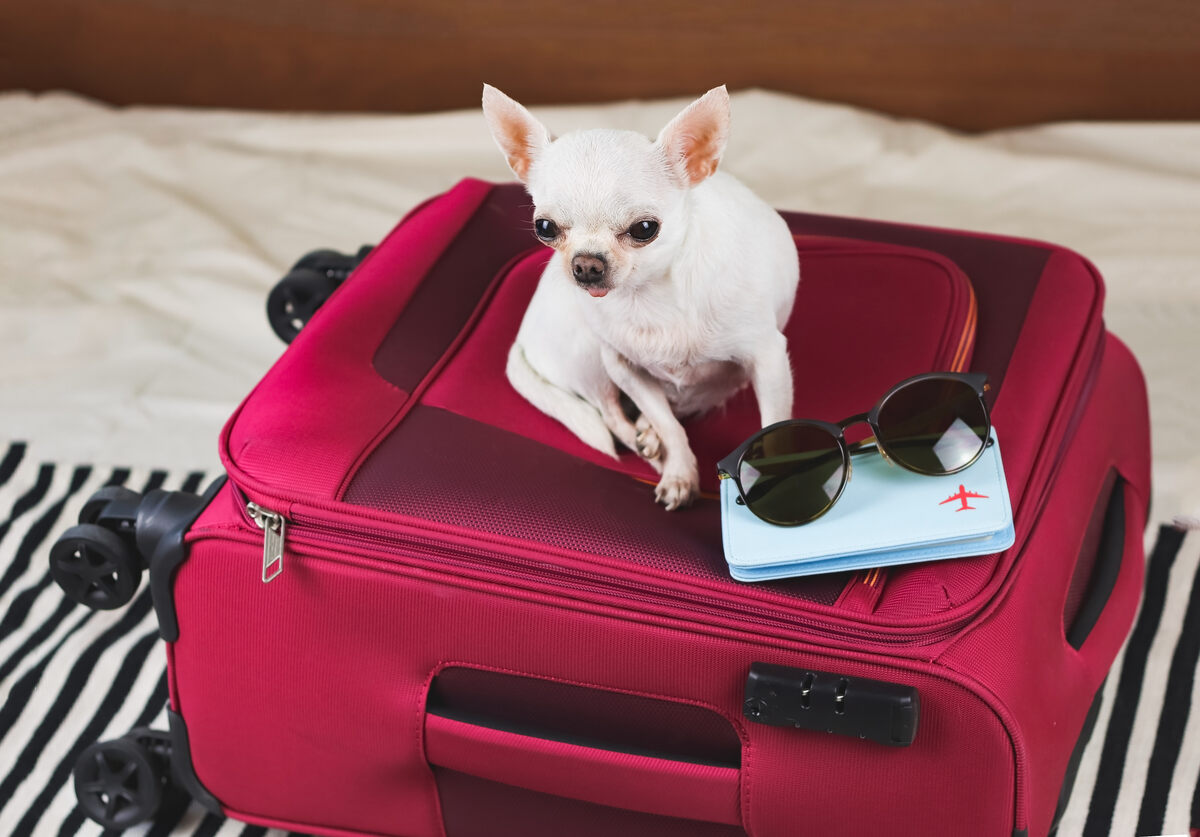
Flying by itself can be a stressful experience with a strict schedule and many restrictions. Flying with an animal can be even more stressful. The good news is that people manage this seemingly impossible feat daily and, if you start getting ready early, you stand a better chance of everything going smoothly.
In this guide, we’ll share some top tips for flying with your dog in as stress-free a manner as possible.

The 13 Tips For Flying With a Dog
1. Prepare Well in Advance
We can’t emphasize this first point enough—do yourself a big favor and start preparing as early as you possibly can. Some countries have very strict rules on importing animals, meaning it can take several months to prepare a dog for travel.
Your dog may need to have certain tests (a rabies test is a common requirement) conducted before they can travel, and the results for some tests can take a while to come through. Some countries may even require pets to quarantine upon arrival. This is why it’s essential to check the requirements carefully for the country you plan to travel to well in advance.
You should also start checking out airlines that welcome pets on board (or in the hold if they’re too big to go in the cabin) early on.
2. See a Vet
Another essential step is to arrange a checkup with a vet to make sure your dog is in good health and to discuss the other formalities, like any health certificates or tests that are required for travel. A vet can also give your dog any up-to-date vaccines that are necessary.
The vet will have no doubt helped countless people prepare to fly with their dog, so keeping them in the loop will also help you to feel more at ease about the whole experience.
Did you know you can speak to a veterinarian without having to travel? Just head over to PangoVet. It's our online service where you can talk to a vet online and get the advice you need for your pet — all at an affordable price!

3. Organize Paperwork
It may sound simple, but getting a folder to organize all your dog’s travel paperwork not only helps you keep track of important documents, but it gives you a sense of reassurance that you’ve got the situation in hand! Having a folder of the documents also helps make airport check-in go more smoothly as the last thing you want is to be fumbling around in your bag at the last minute.
4. Book the Flight Early
Airlines have a limit on the number of animals per flight, so call your airline in advance to make sure your dog gets a spot on your chosen flight. In addition, some airlines don’t allow dogs of certain breeds (often brachycephalic breeds like French Bulldogs) to fly for safety reasons, so confirm whether or not your dog’s breed is permitted on board.

5. Purchase an Airline-Approved Carrier
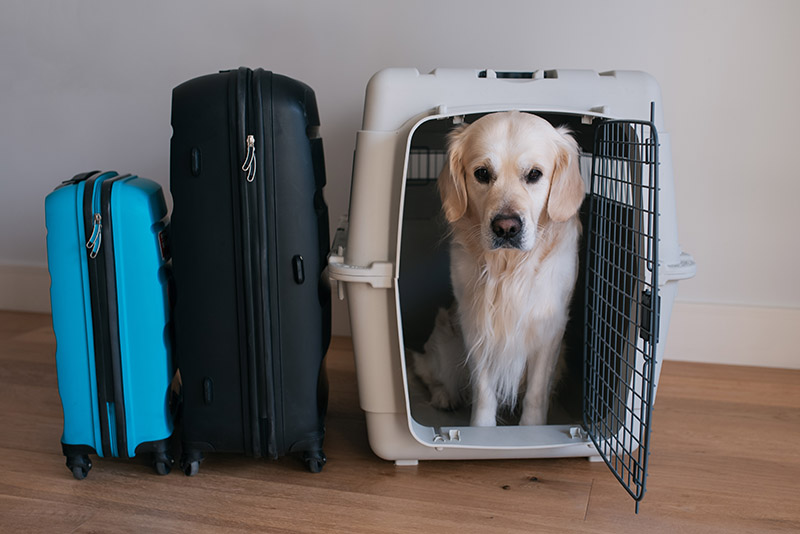
If the dog is small and light enough, some airlines will allow them to travel with you in the cabin. If the dog is over a certain weight or is too big for a carrier that can fit under the seat, they’ll need to travel in the hold.
Whatever the case, airlines have specific requirements as to the type of crate or carrier your dog travels in (unless they’re a service dog—service dogs can often travel in the cabin and do not have to be created if space permits).
For example, a basic requirement is that dogs in the hold must be in a hard-sided, well-ventilated kennel large enough for them to comfortably stand up and turn around in, but the specifics are more detailed, so check with your airline. Soft carriers are only permitted in the cabin for safety reasons.
6. Try to Book a Direct Flight
Flying direct will help reduce stress for both you and your dog because it eliminates worry about connecting flights. It’s also a good idea to book your flight for a non-busy period (like a weekday) and consider what time of day would be most comfortable for your dog to fly temperature-wise.
For example, if it’s the summer, flying early in the morning or in the evening will help keep your dog more comfortable.
7. Get Your Dog Used to the Carrier
If your dog doesn’t usually travel in a carrier, start creating positive associations with it in advance to make it a place where your dog enjoys hanging out. Leave the carrier open at home and let your dog snooze in it whenever they want to.
If your dog is more hesitant, reward them with treats whenever they approach the carrier, sniff it, or are brave enough to venture inside. Avoid shutting the door right away—only start practicing this when your dog is comfortable and happy spending time inside the carrier.
Once your dog is happy spending time in the carrier at home, try a few practice journeys by taking your dog for a drive. This helps them get used to the feeling of traveling in the carrier.
8. Carry Hygiene Essentials
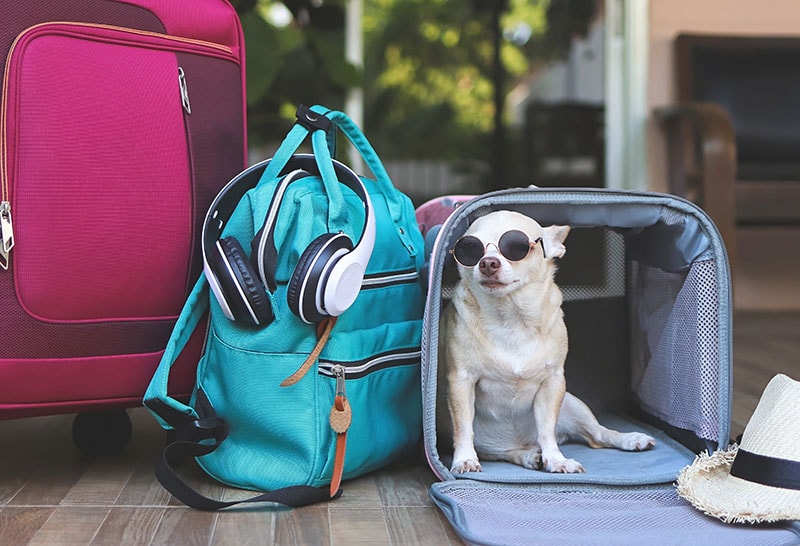
Bear in mind that you probably won’t be allowed to take your dog out of the carrier during the flight (check with the airline), so giving them plenty of opportunities to use the bathroom before you board is ideal.
Giving your dog a little extra time to do their business before you enter the airport is a great idea, but it doesn’t entirely eliminate the risk of “accidents”. Prepare poop bags, paper towels, and dog wipes just in case you need to conduct an emergency cleanup operation at the airport. A puppy pad in the crate can also be useful.
If you are looking for the perfect product to clean your dog's sensitive areas, Hepper's Wash Wipes are our recommendation, plus it's a great on-the-go option. These premium wipes are thick and durable enough for the toughest of paw messes, while still being soft enough to use on your dog's ears or eyes. Formulated with pet-friendly, hypoallergenic ingredients they are the ideal product for all dogs of all ages, skin conditions, or sensitivities.
At Dogster, we’ve admired Hepper for many years and decided to take a controlling ownership interest so that we could benefit from the outstanding designs of this cool pet company! 
9. ID Tag Your Dog & the Carrier
Make sure your dog’s microchip information is up to date. They should also wear an ID tag and the carrier or crate should be clearly labeled with their name as well as your name and contact details. Ideally, you’ll want to include an emergency number, too, in case you can’t be reached.
If your dog is traveling in the hold, write “live animal” on the crate in large, bold letters.
10. Feed in Advance
It’s not a good idea to feed your dog just before you fly as this could increase the chance of them vomiting or pooping during the flight. Instead, feed your dog around four hours in advance. For longer flights, clip a food bowl inside the crate if your dog is traveling in the hold and tape a bag of kibble to the outside so airline staff can provide food if necessary. Ask your airline about this.
11. Keep Your Dog Hydrated
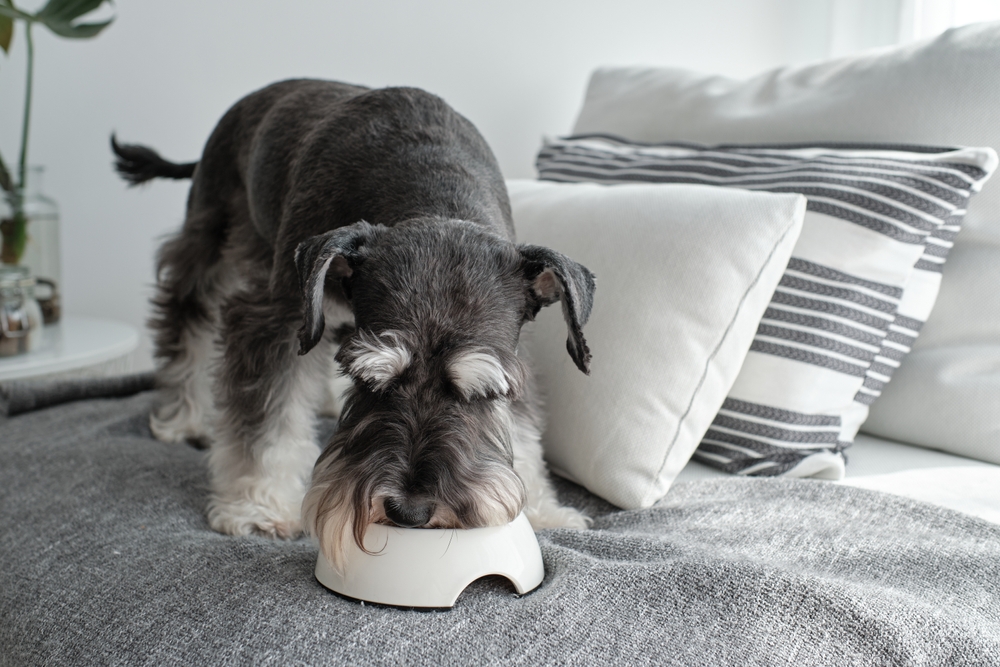
Provide water up until you get on the plane. For dogs traveling in crates, you can freeze water the night before in a clip-on bottle that can be attached to the crate. If you use one of these bottles, get your dog used to drinking from it in advance. When you land at your destination, continue to give your dog water to get them rehydrated.
12. Remain Calm
Flying with a dog can feel very overwhelming, but dogs pick up on our emotions, so the more stressed we are, the more stressed they may be. Throughout the journey, try to stay calm and talk to your dog in a happy, upbeat voice to reduce their stress.
13. Don’t Sedate
In most cases, the American Veterinary Medical Association does not recommend sedating pets to fly because this may be dangerous. Furthermore, airlines typically do not allow animals to be sedated. As for tranquilizers, the AVMA advises going with a vet’s advice on whether or not this would be a good idea for your particular dog.
Final Thoughts
Planning in advance and avoiding leaving things to chance are key when flying with a dog. Not preparing properly is a recipe for stress—both for you and your dog—and disappointment. Always reach out to a vet for advice as their support will be invaluable during this time and speak to your airline by phone to make the necessary arrangements and ask any questions you may have.
See Also:
Featured Image Credit: Phuttharak, Shutterstock
 The 13 Tips For Flying With a Dog