Get

In Your Inbox

Dogster is reader-supported. When you buy via links on our site, we may earn an affiliate commission at no cost to you. Learn more.

Hip Dysplasia in Dogs: Signs, Treatment & Prevention

Share

Dog Hip Dysplasia

Is your dog hesitant to climb stairs? Does she have a hard time getting up? She might just be “slowing down” due to age, or she might suffer from canine hip dysplasia. Canine hip dysplasia is a genetic, progressive disease associated with abnormal joint structure, causing laxity of the muscles, connective tissue, and ligaments that normally support the hip joint and keep it in place. Approximately 25 percent to 30 percent of all dogs in the United States suffer from the condition, which results in pain, lameness and loss of mobility.

divider dog paws 2 oct 2024

Signs

Signs of canine hip dysplasia include:

• Difficulty getting up and down from a lying position
• Reluctance to walk, run, climb, and descend stairs, and to jump or play
• Frequent sitting during long walks
• “Bunny hopping”
• Reluctance to extend rear legs
• Inability to stretch
• Shifting weight
• Vocalization on handling
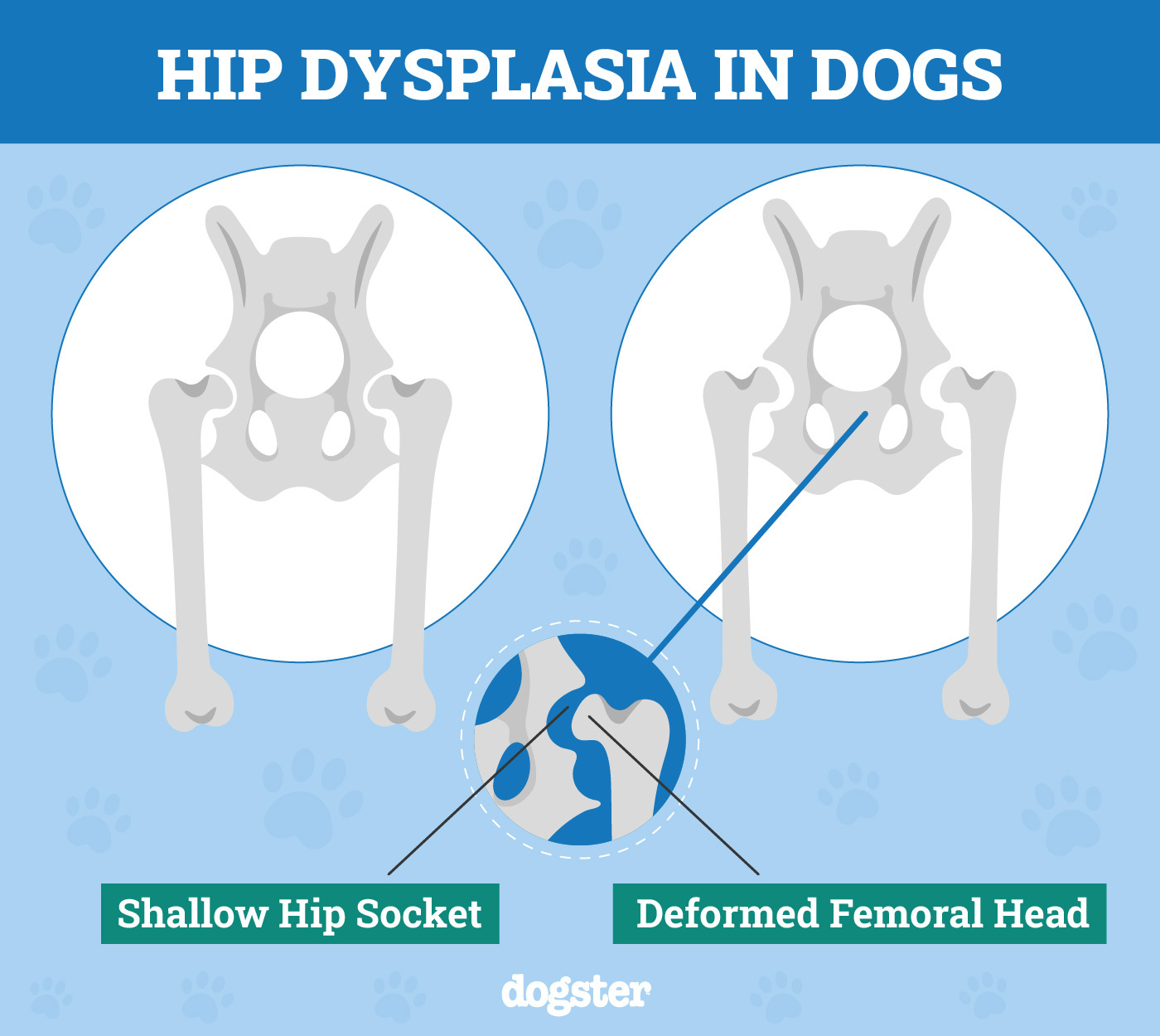
hip dysplasia in dogs
You are free to use this image but we do require you to link back to Dogster.com for credit.

Diagnosis

Canine hip dysplasia is diagnosed by observation, physical examination, and X-ray.

“Owners should watch for changes in their dog’s mobility and schedule a veterinary visit at the first sign of a problem,” says Babette Gladstein, VMD, owner of Animal Acupuncture in New York City.

New radiographic screening methods, such as the Penn HIP model developed by the University of Pennsylvania, can determine the potential for hip dysplasia in dogs as young as 16 weeks.

Risk Factors

Large and giant breed dogs are the most susceptible to canine hip dysplasia, but certain small breeds such as English Bulldogs, French Bulldogs, and Shih Tzus are also vulnerable. Obesity is a major risk factor.

If you’re concerned about your pet’s health, you should contact a vet.

If you need to speak with a vet but can't get to one, head over to PangoVet. It's our online service where you can talk to a vet online and get the advice you need for your dog — all at an affordable price!

PangoVet_Mention-in-Content Savings V1

divider dog paws 2 oct 2024

Treatment

Treatments include conservative approaches such as controlled exercise and conditioning, weight control, heat therapy. and nutritional therapy. More involved treatments include surgical procedures such as total hip replacement, femoral head osteotomy, and double and triple pelvic osteotomy.

Prolotherapy is an increasingly popular, noninvasive surgical alternative that involves injecting dextrose or vitamin B12, combined with lidocaine, into the affected tendons or ligaments where they attach to the bone. The procedure stimulates the body’s immune system to rebuild new tendons or ligaments at the injection site.

“Prolotherapy is far less risky and invasive than surgery, and is a fraction of the cost,” says Gladstein.

Prevention

Because canine hip dysplasia is a progressive disease, by the time a dog shows symptoms later in life, it is too late to prevent joint degeneration.

“Early screening of at-risk breeds and lifestyle measures such as calorie controlled diets are the best methods to minimize future problems,” says Gladstein.

Schnauzer puppy dog eating tasty dry food from bowl
Image Credit: Maximilian100, Shutterstock

Check-up list

To ensure your dog gets the most out of her annual (or semi-annual) wellness exam, follow this checklist from Mark Stickney, DVM, director of general surgery services at Texas A&M University College of Veterinary Medicine and Biomedical Sciences:

• Review medical, surgical, and environmental history since last visit
• Complete physical examination: eyes, ears, nose, skin and haircoat, muscles, bones, lymph nodes, heart, lungs, pulse, nervous system
• Review vaccination requirements and administer necessary vaccines
• Yearly heartworm test
• Yearly fecal flotation exam
• Bloodwork and urinalysis every year beginning at age 7
• Bloodwork every six months if on long-term medication

Diana Laverdure is an award-winning dog healthcare writer. Her 2011 book, The Canine Thyroid Epidemic: Answers You Need for Your Dog (with W. Jean Dodds, DVM), was named Best Care/Health Book of 2011 by the Dog Writers Association of America and received the 2011 Eukanuba Canine Health Award. She has just finished her second book, Nutrigenomics: Foods that Heal Your Dog (also with Dodds), to be released later this year She lives with her rescued Shepherd mix, Chase.

Editor’s note: This article first appeared in Dog Fancy. It is being republished here with permission.


Featured Image Credit: Pressmaster, Shutterstock

Want content like this delivered to you?

Sign Up For Our Newsletter

News, insights, expert advice, and everything dog

* By submitting, you agree to our Terms & Conditions and Privacy & Cookies Policy.


How useful was this post?

Click on a star to rate (you can leave written feedback after clicking submit)

Help us improve Dogster for pet parents!

Your feedback really matters.

What did you like about this post? Also how can we improve it?

Join the conversation

Leave a Reply

You’re very welcome to leave a comment or question. Please know that all comments must meet our community guidelines, and your email address will NOT be published. Let’s have a positive and constructive conversation.


Talk With A Vet Online

Peace of mind,
anywhere, anytime

Affordable vet advice

Dog Won’t Poop Outside? 8 Vet-Reviewed Reasons & What to Do

Finding yourself asking “Why won’t my dog poop outside?!” This is a more common question than you’d think. There are all kinds of...

49 Dog Friendly Places in Virginia: Spots to Visit with Your Pup

If you’re bringing your pooch along on your trip to Virginia, you’re going to want all sorts of dog friendly activities, including hotels...

National Australian Shepherd Day 2026: What Is It & How to Celebrate

The Australian Shepherd is the farmer’s herding dog of choice. They are highly intelligent, energetic, and devoted companions; if you have ever owned...

Why Do Puppies Get Hiccups? 10 Possible Reasons & What to Do (Vet Answer)

Watching a puppy make that first hiccup noise while contracting their belly and having that “I have no idea what’s going on” look...

More related

Is Rawhide Dangerous for Dogs? Vet-Approved Risks, Benefits & Alternatives

Rawhide chews are extremely popular, and you can purchase them almost anywhere, including pet stores, so it can be a surprise to learn...

50 Popular Poodle Mixes & Doodle Cross Breeds (With Info & Pictures)

You are probably familiar with the Poodle, France’s national dog. But have you ever considered bringing home a Poodle mix? Poodles are known...

10 Dog-Friendly Beaches in Florida in 2026: Off-Leash & On-Leash Places to Visit

The state of Florida has some of the most beautiful beaches in the world. Here you’ll find soft, sugar-white sand, as well as...

Shepadoodle (German Shepherd & Poodle Mix): Info, Pictures, Care & More

This mixed breed is a cross between a German Shepherd and a Poodle. They are extremely intelligent, active dogs. They can make great...

Keep reading

Are Ancient Grains Good for Dogs? Vet-Approved Health & Nutrition Advice

There has been information swirling around in recent years telling us that certain grains, like white rice, aren’t the healthiest starch options for people or dogs. So, many pet parents have started to wonder if ancient grains would be a...

Golden Retriever Dog in wheat field

Member’s Mark Dog Food Review 2026: Pros, Cons, Recalls, & FAQ

Review Summary Member’s Mark is the brand of Sam’s Club. Named after its founder, Sam Walton, Sam’s Club is owned by Walmart. The Member’s Mark dog food is sold in large bags for a bargain price, appealing to dog owners...

Dogster_Member’s Mark Dog Food Review

Can Dogs Eat Salmon Skin? Vet-Approved Facts & FAQ

If you pay attention to dog food labels, you might know that salmon is a common protein source, especially in limited-ingredient diets. Knowing this, you can assume that salmon is safe for dogs to eat, but what about the skin...

Can Dogs Eat Salmon Skin

10 Best Dog Foods for Aussiedoodles in 2026 – Reviews & Top Picks

Congrats on your Aussiedoodle! They’re very intelligent dogs with an eye for detail and a passion for people. If you’re wondering about what kind of food to feed your special dog, you’ve come to the right place. While there aren’t...

Merle Aussiedoodle

Purina Beneful Dog Food Review 2026: Pros, Cons, Recalls & FAQ

Review Summary Purina is one of the largest dog food manufacturers out there today. They were actually one of the first to create dry dog food and remain one of the most popular options today. In fact, the history of...

Dogster_Purina Beneful Dog Food Review

10 Best Dog Foods for Greyhounds in 2026 – Reviews & Top Picks

Greyhounds might not be the most popular breed, but they have a loyal following of enthusiasts who appreciate the dogs’ unique characteristics, particularly their speed. As you may expect, this pup is high energy with equally demanding exercise needs. It’s...

Italian Greyhound dog eating from bowl at home

10 Best Dog Foods for Medium Dogs in 2026 – Reviews & Top Picks

There are so many options for dog food on the market nowadays that it’s easy to feel overwhelmed by all the choices. The good news about the many varieties of food is that dogs that suffer from allergies can find...

beagle dog eating from bowl

Pedialyte for Dogs: Is It Safe? Vet-Approved Health & Safety Guide

The most common way to treat dehydration in children and adults is with Pedialyte. It’s an over-the-counter, drinkable electrolyte solution that replaces electrolytes and minerals lost by dehydration. In small quantities, unflavored Pedialyte is safe for most dogs, but it’s...

electrolyte beverage in bottles

Love Dogs? So Do We! Join the Dogster Community

Stay informed with expert pet care insights delivered straight to your inbox! Discover professional guidance on animal behavior, feeding tips, trusted product picks, and much more.


Sign up for the Dogster Email Newsletter