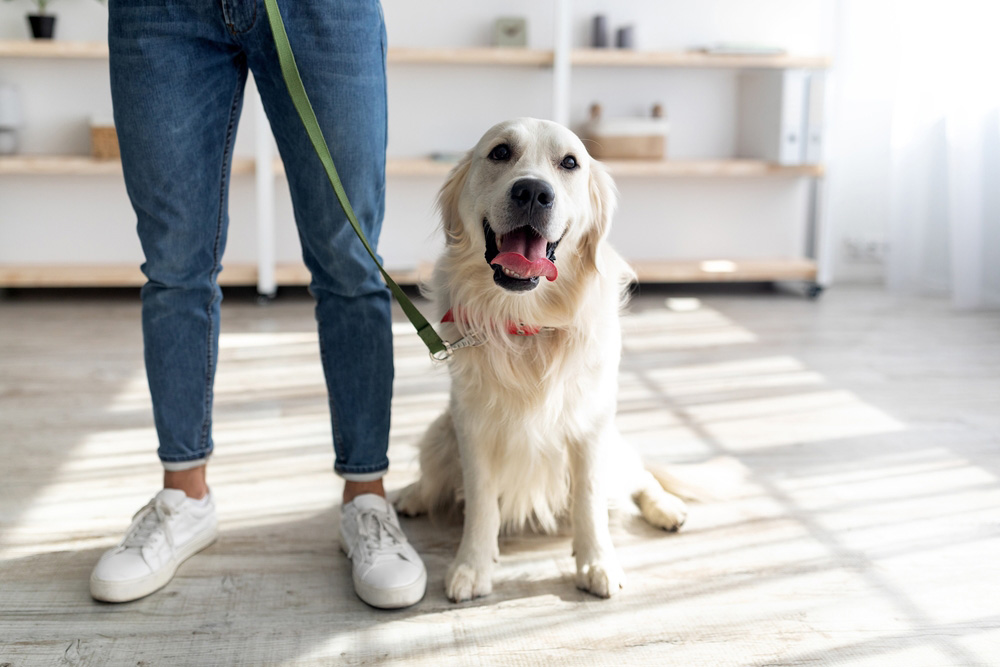
Have you just adopted an adult dog only to discover they aren’t house-trained? They might say you can’t teach old dogs new tricks, but that isn’t true. You can absolutely teach an adult dog something they should have learned earlier by finding the best method of training for them.
When it comes to house training, many find the umbilical cord method to work extremely well. Not familiar with the umbilical cord method? No worries! We’ve put everything you need to know about using this method to house-train your adult dog below in a handy step-by-step guide.

Before You Begin
You only need a few items before you begin training with the umbilical cord method.
- A leash (preferably 6-feet) and collar
- Training treats
- Odor-neutralizing cleaner for accidents
- Crate (if crate training)

How to House-Train an Adult Dog Using the Umbilical Cord Method
What is the umbilical cord method, and how do you use it? Here’s a step-by-step guide that teaches you exactly what to do.
1. Establish a routine.

Before you start anything else, set up a firm routine with your dog. Feed them at the same times each day, walk them at the same times, and so on. This gives your pet a schedule to follow so they know what to expect and when.
2. Introduce them to a collar and leash.
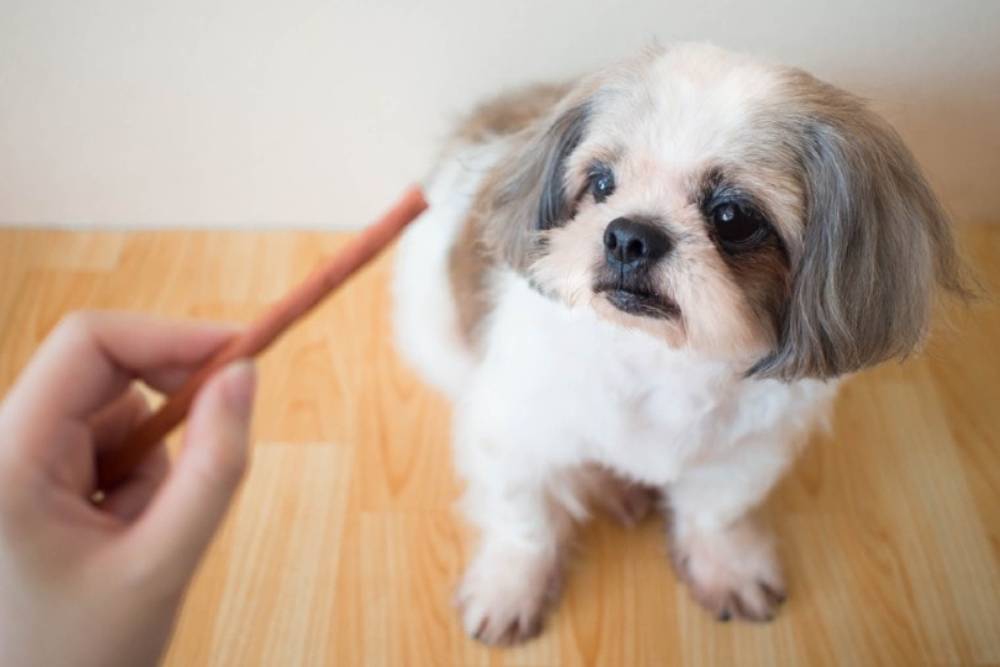
If your dog isn’t used to wearing a collar and leash, you’ll need to get them used to that first. Choose a lightweight collar and leash first. Place the collar on for 5 minutes only at the start, then remove it. Keep putting the collar on for short periods and slowly increase the time that the dog is wearing the collar while offering positive reinforcement in the form of delicious treats. You can add the leash when your dog is comfortable with its collar.
3. After they are used the collar and leash, begin training.
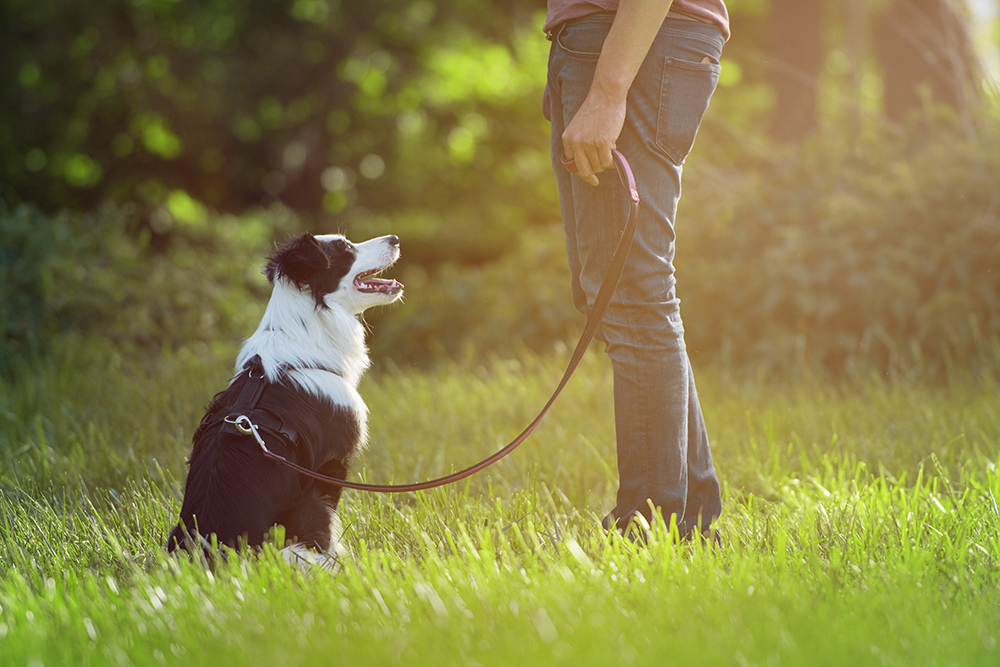
Once your pup is used to wearing the collar and leash, it’s time to begin house training them with the umbilical cord method. Now is when you attach their leash to yourself. Wrap it around your waist or thread it through a loop on your jeans; just make sure the two of you are connected. (Don’t put the leash around your ankle, though. Depending on your dog’s size, that could be a recipe for disaster!) The leash should be about 6ft long to give the dog room to move about but not enough room that they can sneak off and pee on the carpet without your noticing.
4. Proceed with your day as usual.
Once you and your dog are attached at the hip, carry on with your day as normal. Your pup will now be within eyesight at all times. Why is this important? Because you’ll be able to notice the signs that they need to go to the bathroom, which can help reduce the number of accidents that occur.
5. Watch for signs that your dog needs to “go”.
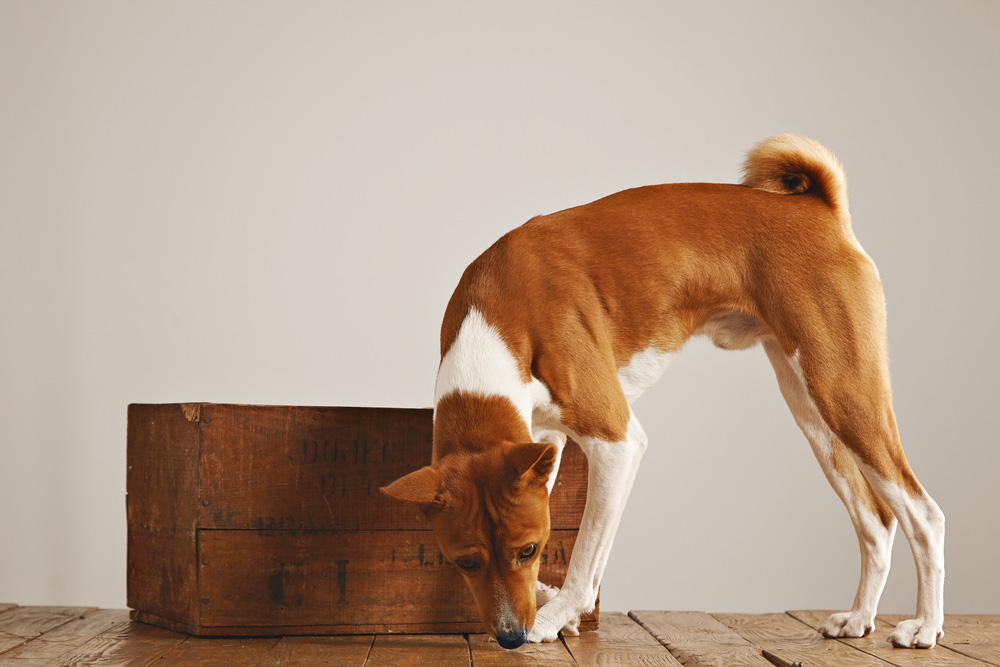
Watch for your dog to start going around in circles, sniffing the floor, or trying to get away from you. When you see these signs, immediately take your dog to where they’re supposed to use the bathroom. Once they’ve gone where they should, praise them and give them treats. Don’t only watch for signs of needing to go to the bathroom, though. You’ll still want to take your dog out regularly!
6. Be consistent but kind.
If your dog starts to use the bathroom in the house, take them to where they are supposed to go to the bathroom. If you get them there in time, and they go where they should, reward them. Being attached to your dog means you catch mistakes immediately and can correct them, preventing bad habits from forming.
7. Let your dog spend enough time outside when you take them out.

Sometimes, it just takes our canine friends a while to go to the bathroom. If you only keep them out for a few minutes, they may not have time to do what they need, which can lead to an accident when you go back inside.
8. If they did not relieve themselves yet, keep watching them.
If you spend a while outside with your pup and they still haven’t gone (but you know they need to), keep an extra close eye on them when you go back inside. Be prepared to grab them and take them back outdoors the second you notice they’re preparing to relieve themselves.
9. Be patient.
Umbilical cord training can take about two weeks (though every dog is different). However, after your pup has successfully relieved themselves outside several times in a row, you can begin giving them a bit more freedom to see how they do. Take them off the leash briefly before attaching yourself to them again. Do keep your eye on them during this time, though! The time your pup spends off-leash should increase as they do better with not having accidents until, eventually, they’re house-trained and free to roam!
10. Consider crating or pee pads.
In instances where you can’t be attached to your dog (such as needing to shower or having to leave the house), put your dog in their crate (or at least confine them to a single room). If you aren’t using a crate, you can try placing puppy pads down where you’re keeping them, but be sure to have that odor-neutralizing cleaner on hand!
If you're looking for an all-in-one, pet-friendly, enzyme cleaner, we highly recommend the Hepper Advanced Bio-Enzyme Pet Stain & Odor Eliminator Spray.

- ADVANCED ENZYMATIC CLEANER - Penetrates the most stubborn smells and stains at the deepest molecular...
- FOR ANY MESS, ON ANY SURFACE - This pet odor eliminator cleans your carpets, floors, furniture,...
- FRESH, NATURAL ODOR - Our unique formulation doesn't rely on dangerous or unpleasant chemical...
It eliminates tough stains and odors easily and is excellent for accident prevention. Plus, it comes with a 100% satisfaction guarantee! Click here to order now.
At Dogster, we’ve admired Hepper for many years, and decided to take a controlling ownership interest so that we could benefit from the outstanding products of this cool pet company!
Final Thoughts
House training an adult dog isn’t more difficult than training a puppy; you just need to find the right method to train them. The umbilical cord method is a training method that many people prefer because it allows you to keep a constant eye on your pup, which helps to prevent accidents and bad habits from forming. This training method tends to take a couple of weeks, so be prepared to spend all your time with your pet (this is an excellent time for bonding!) Remember to be patient with your pup and keep things positive!
Featured Image Credit: Prostock-studio, Shutterstock
 Before You Begin