In this article
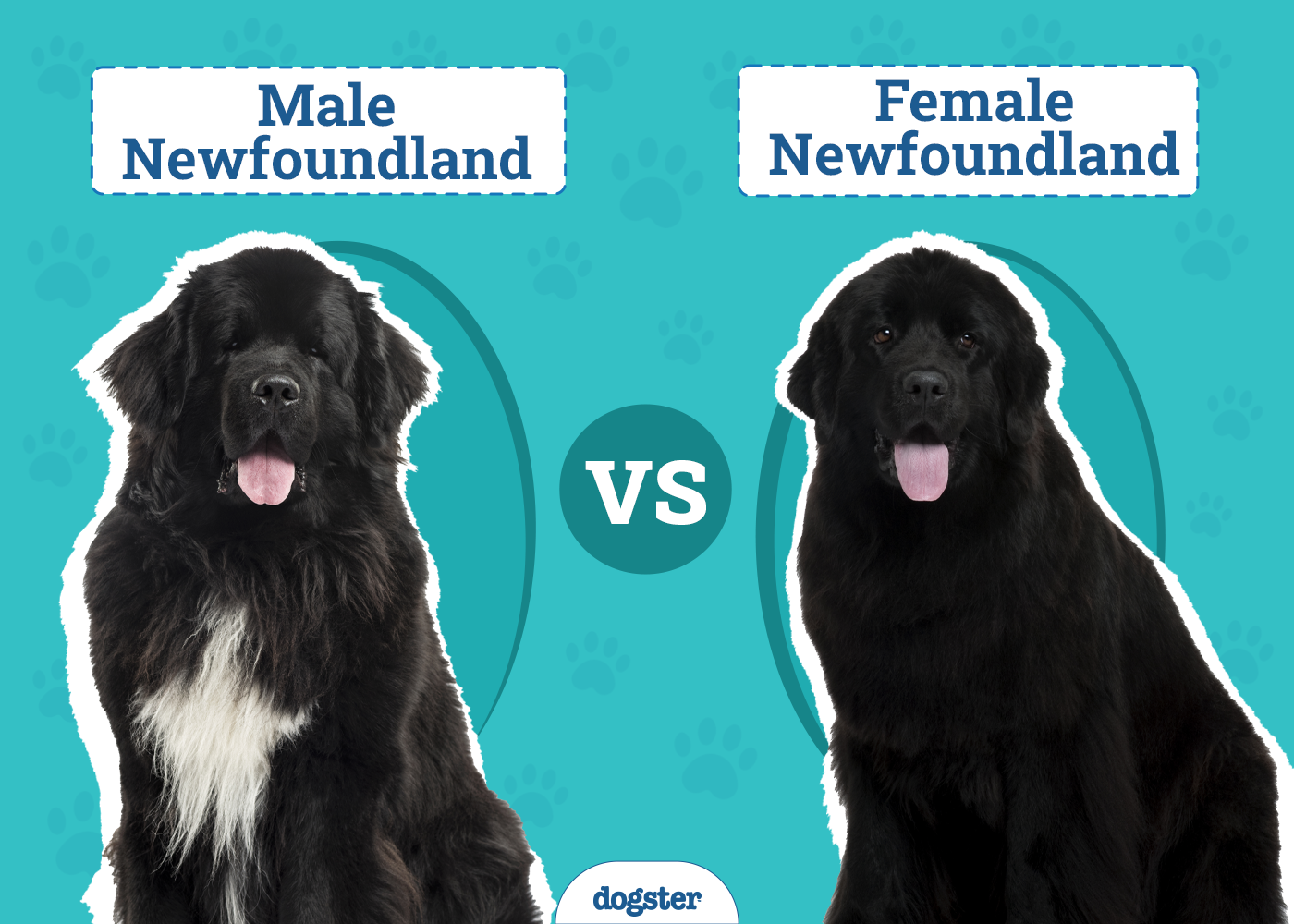
Newfoundlands are the lovable gentle giants of the pet world, so it’s no wonder that they’re so popular. But if you are looking to get a Newfoundland, one area that you need to pay special attention to is their sex.
Male and female Newfoundlands have different tendencies, and it is up to you to decide what’s best for you and your family. That’s where this guide comes into play. We walk you through everything that you need to know and help you find the best possible match.

Visual Differences
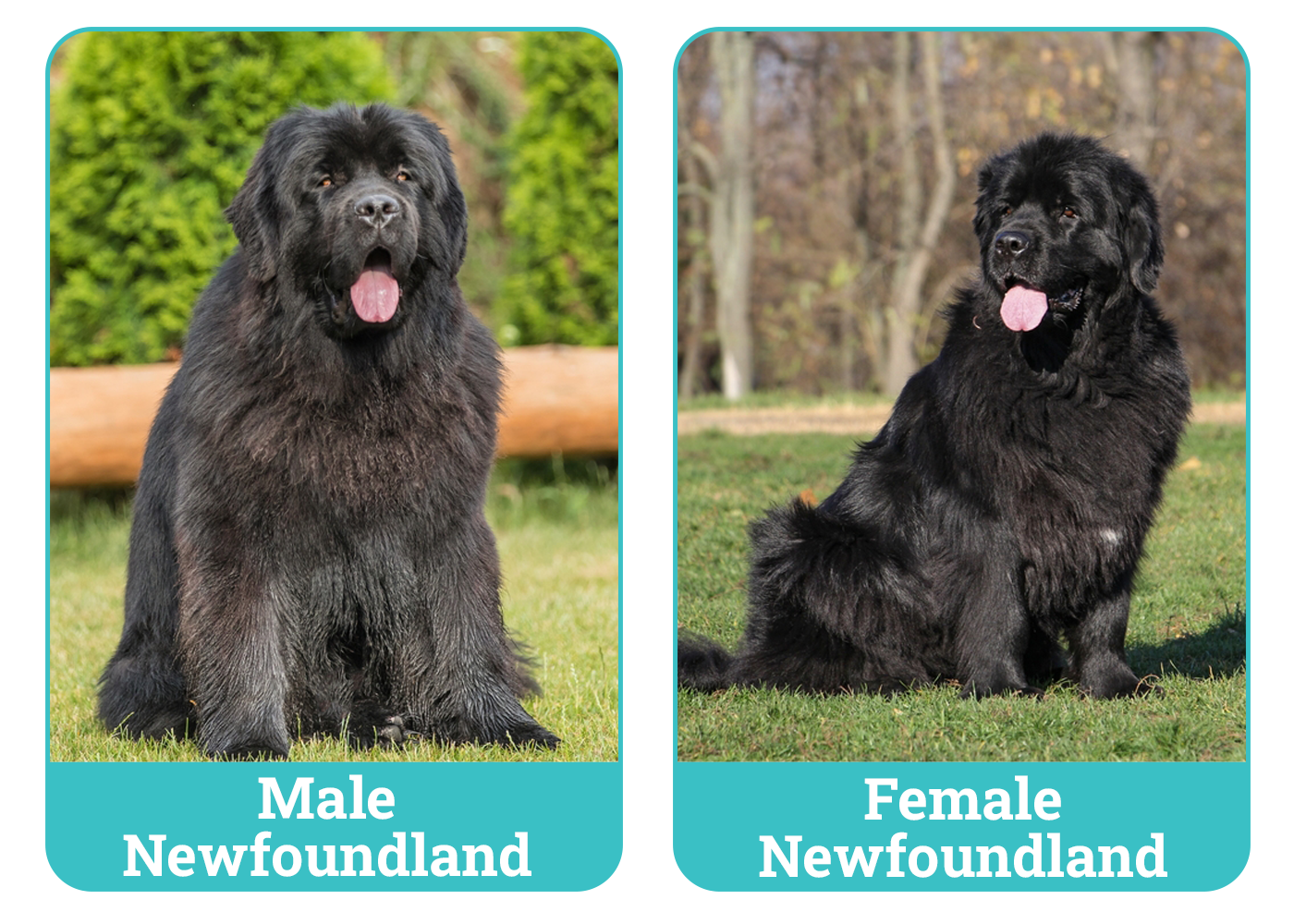
Outside of their physical difference in size, you likely won’t be able to tell the difference between a male and female Newfoundland without checking out your pup’s underside. The rest of their physical appearance is near identical and doesn’t have a thing to do with sex.
At a Glance
- Average height (adult): 27–29 inches
- Average weight (adult): 130–150 pounds
- Exercise: 30+ minutes/day
- Family-friendly: Yes but clumsy
- Temperament: Protective, loyal, and loving
- Average height (adult): 25–27 inches
- Average weight (adult): 100–120 pounds
- Exercise: 30+ minutes/day
- Family-friendly: Yes but bonds to one person
- Temperament: Loyal, loving, and independent
Newfoundland 101
There’s no denying either the Newfoundland’s size or beauty. They are undoubtedly massive dogs, but they’re also beautiful with their long flowing coats.
They’re known for their affectionate and gentle demeanor, which is particularly important and impressive because of their size.
Since they’re working dogs, you’ll likely find that your Newfoundland is extremely trainable and intelligent. They do great around other dog breeds, but you need to ensure that you’re giving them plenty of attention and keeping them busy.
While they’re not the most active dogs of the bunch, they’re still prone to destructive boredom behaviors if you don’t stimulate them physically and intellectually. Ensure that before you bring a Newfoundland home, you have plenty of time to spend with them.
They’re especially prone to separation anxiety and don’t do well in environments where their owners leave them by themselves for long periods. They’re the epitome of the big dog that thinks that they’re a lapdog. They’re lovable, gentle giants, and it’s not hard to see why they’re so popular.
Male Newfoundland Overview

Personality / Character
Like many male dogs, the male Newfoundland has a protective and territorial streak. While they’re far from aggressive, if they mistake the situation, it can lead to problems.
But for the most part, they’re goofballs that actively seek out and demand your attention. They also tend to be a bit clumsy, so keep that in mind around smaller kids.
Training
Male Newfoundland dogs are extremely loving and loyal, and they love to please their owners. Therefore, they’re relatively easy to train. Experts regard Newfoundland dogs as one of the most intelligent dog breeds out there.
This means you can train them to complete just about any task, and convincing them to do it is far easier than it is with other dogs, even female Newfoundlands.

Health & Care
While the Newfoundland is a relatively healthy breed, you need to ensure that they meet their daily exercise requirements to keep them healthy and happy. For males, this means providing them with a large yard that they can roam to keep moving.
But like many pups, they are prone to serious health conditions that include epilepsy, bloat, and hip dysplasia. If you suspect any of these conditions, take them to a vet as soon as possible.
The most notable difference between caring for a male and female Newfoundland is how much you need to feed them. Since the males are larger, they eat far more food! Consult a veterinarian so they can help you come up with the perfect feeding schedule for your dog.
If you need to speak with a vet but can't get to one, head over to PangoVet. It's our online service where you can talk to a vet online and get the personalized advice you need for your pet — all at an affordable price!

Breeding
Like with many species looking to breed, it’s far easier for the male. The tradeoff is that the female gets the puppies. But all you need to do to breed a male is to put them around a female in heat for an extended period. Your male Newfoundland knows what to do from there! When you’re breeding a male dog, there’s no limit to how many females they can breed, but they need a few days between mating sessions to fully recover and get their sperm count back up.
- More protective
- Bonds better with the entire family
- More willing to please you
- Likes extra attention
- Can be a bit more aggressive
- They are a bit clumsier
- Requires more attention

Female Newfoundland Overview
Personality / Character
Female pups tend to be a little more independent, and the Newfoundland is no different. They still need attention, but they expect you to go more out of your way to give it to them. Females also tend to bond stronger with one person in the family.
While they’ll love upon everyone, they’ll respond more to their person of choice. Females also tend to be a little less protective and playful. Still, they’re patient, loyal, and loving dogs, and they’ll still find ways to brighten your day!
Training
While you can certainly train a female Newfoundland, there’s no doubt that it’s more of a challenge compared to training males. While males simply want to please their owners, the female’s independent streak means you need to convince them it’s something that they want to do.
Still, they’re extremely intelligent, and with a little persistence, there’s no reason that you can’t train your female Newfoundland to do whatever you want them to do.
But keep in mind that training sessions will always go better with the person whom they bonded with. Other owners simply won’t get the same level of results, no matter how much you train.

Health & Care
When it comes to health and care requirements for a female Newfoundland, they’re not much different than when it comes to caring for a male Newfoundland. They suffer from all the same major genetic problems, including epilepsy, bloat, and hip dysplasia.
The only real differences are the occasional health concerns that involve the reproductive organs. When it comes to different care requirements, the only thing that you need to do differently for a male and female is adjust their food intake to their size!
Breeding
When it comes to breeding Newfoundland dogs, all the work falls to the female. After copulation, it’s the female that carries the puppies to birth and cares for them after they’re born.
Females generally go into heat about once every 6 months, and they can have litters of one to five puppies. Keep in mind that pregnancy can be hard on the female’s body, so it’s best to consult a vet before breeding your female Newfoundland.
- Less protective
- Requires less attention
- Bonds more with one owner
- More cautious around kids
- Less clumsy
- More challenging to train
- They don’t bond with everyone as much
- Needs less attention
Which Sex Is Right for You?
It depends on what you’re looking for. If you have smaller children, we highly recommend a female because they’re less clumsy and more cautious around kids. But if you have older children, a male might be the way to go, as there should be fewer jealousy issues because they bond with everyone.
Finally, if you’re looking for an easy-to-train pup, a male is the way to go. But they also require a bit more attention. In the end, there’s no wrong choice, there’s only a better choice for you. That’s why it’s a decision that you need to make after taking in all the information out there.
Featured Image Credit: Top – Eric Isselee, Shutterstock | Bottom – Pandas, Shutterstock