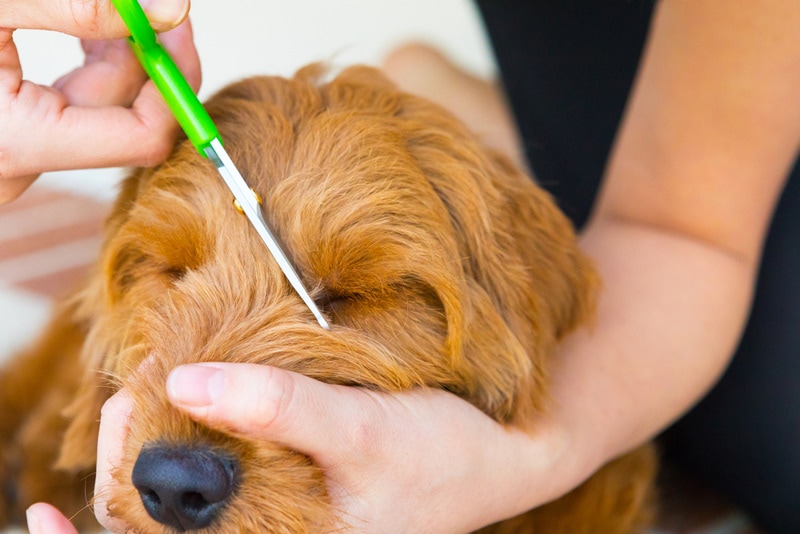
Goldendoodles make amazing pets and even better family members. While you may want to spend all your time playing and interacting with these gorgeous dogs, there is a bit of maintenance required to keep them looking and feeling their best.
When your pooch is in between grooming sessions, knowing how to trim your Goldendoodle’s face yourself is crucial. That’s what this step-by-step guide is for. Here, we’ll walk you through trimming your Goldendoodle’s face with tips every owner should know.

Before You Begin
Before jumping into trimming your Goldendoodle’s face, there are a few things you need to understand about this dog breed. Goldendoodles are a hybrid dog breed. This means they are created by mixing two breeds. In the case of Goldendoodles, the parent breeds are the Golden Retriever and the Poodle.
This means your dog can inherit the coat of either of their parent breeds. A Goldendoodle’s coat can be curly, straight, flat, or wavy. All coat types for this breed require regular upkeep. To do this properly, identifying their coat type is imperative. Once you’ve done this, you’ll be able to trim your pet’s hair and keep mats at bay.
Knowing what type of coat your Goldendoodle has will also help you choose the right tools for grooming. In most situations you will need the following:
- Clippers with guard combs
- Blunt tipped scissors
- Thinning shears
- Slicker brush
- Comb
- Styptic powder or cornstarch (in the event of accidental knicks)
You may find grooming kits that have all of these supplies inside. If not, take the time to find good quality tools that you feel safe and comfortable using on your precious fur baby.
The 10 Tips on How to Trim a Goldendoodle’s Face
1. Choose a Spot and Gather Your Tools
When you’re ready to start grooming, choose a spot in your home or outside that is comfortable for you and your pet then make sure the area is clean. Once this is done, have your tools clean and ready. Dirty tools can be a health risk for your pup and should be avoided. It also can’t hurt to have dog shampoo and towels handy as well.
Make sure your pup is relaxed and calm. They shouldn’t be worried or anxious or you will have a hard time keeping them still which will increase the chance of injuring them. Enlist the help of others to hold and help quiet your dog if necessary.

2. Choose a Style
Before you start trimming, choose the style of cut you want for your Goldendoodle. There are several popular cuts out there to try. The teddy bear cut, puppy cut, or lamb cut could be perfect for your pooch. Then again, you may have a special look in mind.
Either way, have your preferences ready for your Goldendoodle’s face so you aren’t spending more time than necessary.
3. Give Your Goldendoodle’s Coat a Brush
Now, before the scissors are even in your hand, take the time to give your pooch’s face a good gentle brushing. This helps ensure there is no hidden debris, mats, or tangles in your Goldendoodle’s hair. This will improve the trim and keep the hair even.
You also need to ensure there are no stains or dirt on your dog’s face before trimming.

4. Facial Design
Every dog has a unique look. This means their facial landmarks are located in certain areas. You’ll need to make note of your dog’s eyes, mouth, and nose. Even your Goldendoodle’s ears are important during trimming to provide the right look and avoid uneven cuts.
5. Use the Scissors First
When you’re ready, you’ll begin by using the blunt scissors. The areas around your Goldendoodle’s ears and muzzle should be trimmed slightly first. It’s best to avoid trimming around the eyes until you’re ready for styling. Once those areas are trimmed, begin with the bangs and areas to the side of the eyes. Then, move toward the muzzle and mouth area. Finally, you’ll trim the area around your Goldendoodle’s ears.
While trimming, always keep the scissors parallel to your dog’s face. This will keep the length consistent and keep the ends of the scissors away from your dog’s face. Be sure you don’t trim too close to your dog’s skin. This will help keep accidental cuts at bay. Finally, trim away any stray hairs for a clean, polished look.

6. Thinning Things Out
Now it’s time for the thinning shears. These are used to blend the cut and work away the blunt look that using the scissors causes. Thinning shears are ideal for making the transition of hair lengths look more natural.
To achieve this, run the shears through areas that feel flat or blunt. This is often the top of the head and the sides of the face.
7. Clippers Are Optional
If you’ve ever taken your dog to the groomer, you’ve seen that they use clippers. In general, clippers are used for larger areas. If you’re unsure of how you’ll do with scissors or simply prefer clippers, they can be used. The key is to gradually trim with clippers against the direction of hair growth.
Using the guard combs makes achieving the right length easier. It’s always best to begin with the largest guard comb and work your way down. This keeps you from cutting too much hair accidentally.

8. Be Gentle with Sensitive Areas
None of us fully trust someone with scissors around our eyes and ears. Your pooch is the same way. This is why you should be extra careful around these areas. You’ll also want to be considerate of their mouth. Before you start trimming, try to help your dog by being reassuring and helping them calm down as much as possible.
9. Perfection Takes Time
One thing to remember about trimming the hair around your Goldendoodle’s face is that perfection takes time. Don’t rush through the job. Do a bit at a time, rest, and check out your progress. This will help you determine if you’re keeping the look even.
It will also let you check in on your dog and see that they are doing well with the experience. Offer breaks as needed. This is especially helpful if grooming is new to either of you.

10. Stick to Grooming Schedules
Trimming up your Goldendoodle’s face in between grooming sessions can be beneficial for both you and your pet. To make the most of this, however, you should stick to a routine grooming schedule. If you provide your pet with all their grooming needs, stay consistent.
If you use a professional groomer, book your appointments every 4 to 6 weeks and do small face trimmings in between. This will help keep your Goldendoodle looking amazing at all times.
Final Thoughts
If you have a Goldendoodle at home, using this step-by-step guide can make trimming their face easier and more enjoyable. Not only will you be proud of what you’ve accomplished, but you’ll also have the sharpest Goldendoodle in town to show off to all of your friends and family.
Related reads:
Featured Image Credit: Kathy images, Shutterstock
 Before You Begin