Get

In Your Inbox

Dogster is reader-supported. When you buy via links on our site, we may earn an affiliate commission at no cost to you. Learn more.

How Passive-Aggressive Is Your Dog? 7 Signs to Look Out For

Share

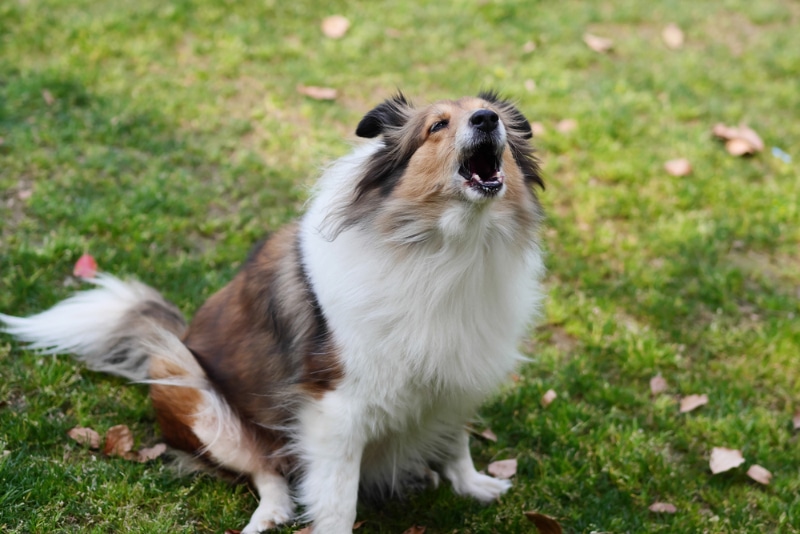
Shetland Sheepdog barking outdoor

Dogs can display various behavioral traits, such as aggression and reactivity. There are various types of dog aggression, and some dog owners wonder if passive aggression is one of them.

There is not much scientific evidence to back up whether dogs can truly be passive-aggressive or not. However, dog owners usually use this term to describe a dog that is bossy or assertive. It’s generally used loosely for dogs that have comical behaviors that might come off as passive-aggressive if they were human.

Let’s go over the signs to look out for in “passive-aggressive” dogs.

divider single dog paw oct 2024

The 7 Signs of Passive-Aggressiveness in Your Dog

1. Having Selective Hearing

Dogs with selective hearing seem to only respond to your words when it is something they want to hear. They might come running to you if you say you want to give them a treat or go on a walk but ignore you when you tell them to stop digging. Their selective hearing can make it seem like they purposefully only want to do things that make them happy and ignore you otherwise.

Some dogs may also procrastinate when they hear you say something they don’t like. If they hear you say that you want to clip their nails or place them in their crate, they might act like they didn’t hear you at all. However, they are quick to come running if they hear the treat jar open.

small dog lying on wooden floor
Image Credit: eva_blanco, Shutterstock

2. Sighing Loudly to Get Your Attention

Dogs can sigh just like humans can. Although dogs can sigh for various reasons, many dog owners believe they do it to sometimes get our attention. Dogs know that a loud sigh is guaranteed to make us look at or feel sorry for them.

Some dog owners even find that their dog sighs loudly after they are told off for doing something they weren’t supposed to. It’s like their way of sulking when things don’t go their way. Perhaps you had to take your dog’s chew toy away, and they resort to lying on the floor and letting out a sigh.


3. Interrupting You

Dogs can become feisty when they want something and start interrupting you to get you to respond. If you have been spending time reading a book or scrolling on your phone, your dog might find a way to interrupt you. They could do this by pawing at you or the object or whining till you notice them.

Some dogs are displeased when other things have our attention and don’t seem to feel bad for interrupting us.

yorkshire terrier dog looking at its owner seeking attention
Image Credit: seeshooteatrepeat, Shutterstock

4. Blocking the Television

Another way for dogs to interrupt something that has our attention is by blocking the television. You sit down to relax to your favorite show, only to have your passive-aggressive dog block it. This can be viewed as their way of stopping us from looking at something that is preventing them from getting our attention.

Dogs seem to find many creative ways to get our attention, and blocking the television is a common one.


5. Whining at You

Dogs can become vocal when they want something or want to communicate with us. It’s not unusual for some passive-aggressive dogs to whine when they don’t seem to be getting their way. You could be telling your dog that it isn’t feeding time yet, and they whine to interrupt you while you are speaking.

This seems to be common in dog breeds like Huskies and Alaskan Malamutes.
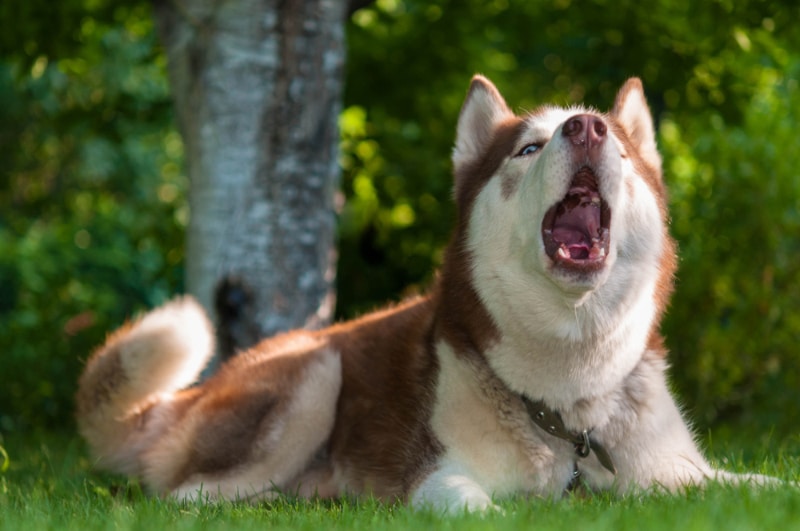
siberian husky dog lying on grass and howling
Image Credit: Ekaterina Sopelnik, Shutterstock

6. Pawing at You Until You Give Them Attention

Passive-aggressive dogs will stop at nothing to get your attention, even if it means they need to paw at you. Dogs usually do this because they know that pawing at you will get them what they want, whether it’s attention, affection, or communication. If you are on your phone or reading a book, they might try to paw at it so you will lose focus and pay attention to them instead.


7. Taking Over Your Spot on the Bed or Couch

If getting out of bed or your seat means risking it being taken over by your dog, it could be a sign of passive-aggression. This adorable yet sometimes frustrating behavior often has you begging for your spot back, only to be met with a selective-hearing dog that won’t budge.

You will probably need to give up ever trying to win your spot back, as most dogs will quickly get themselves comfortable so you don’t try to move them.


golden retriever dog sitting on sofa at home
Image Credit: Africa Studio, Shutterstock

divider dog paws 3 oct 2024

Conclusion

Passive aggression is not well understood in dogs. Therefore, it is mainly used as a light-hearted way to describe stubborn, bossy, or assertive dogs. Passive-aggressive dogs won’t hesitate to show you who’s boss around the house and seem to know that you won’t get upset over their comical behavior and adorable mannerisms.


Featured Image Credit: atiger, Shutterstock

Want content like this delivered to you?

Sign Up For Our Newsletter

News, insights, expert advice, and everything dog

* By submitting, you agree to our Terms & Conditions and Privacy & Cookies Policy.


How useful was this post?

Click on a star to rate (you can leave written feedback after clicking submit)

Help us improve Dogster for pet parents!

Your feedback really matters.

What did you like about this post? Also how can we improve it?

Join the conversation

Leave a Reply

You’re very welcome to leave a comment or question. Please know that all comments must meet our community guidelines, and your email address will NOT be published. Let’s have a positive and constructive conversation.


Talk With A Vet Online

Peace of mind,
anywhere, anytime

Affordable vet advice

Can a Relationship Work When One Person Doesn’t Like Dogs? Tips & When to Walk Away

For dog owners, a partner who doesn’t like dogs isn’t a minor quirk to overlook. Dogs aren’t a hobby you can scale back...

Good Luck or Bad Luck? The 13th Floor Rescue of a Dog Trapped on a Balcony for Two Days

In many cultures, the number 13 is considered bad luck, and while most people don’t put much stock in superstitions these days, there...

Ask Dr. Paola- Help! My Dog is Really Thin! (May 4, 2026)

Welcome to our “Ask Dr. Paola” series, where every Monday we bring expert advice straight from Dr. Paola Cuevas (MVZ) to help our...

Saying Yes When It Matters Most: Coco’s Heart Dog Rescue

In the world of animal rescue, some organizations focus on one species, one type of care, or one specific mission. Coco’s Heart Dog...

More related

Do Dogs Need Vitamin E? Vet-Verified Benefits & Risks

Dogs need vitamin E, as it’s an essential nutrient that provides antioxidants that protect against free radical damage. Free radicals are negatively charged...

Why Does My Dog Steal My Spot? 7 Possible Reasons & What to Do

Most dog owners have had the experience of getting out of a comfy spot on the couch for a quick trip to the...

Can a Dog Recover From a Torn ACL? Our Vet Answers

When a dog suddenly starts limping on one of their hind legs, it may have torn an important ligament in its knee called...

Bloodhound Rottweiler Mix: Info, Pictures, Care & More

Imagine a canine companion that embodies strength, loyalty, and intelligence and has an uncanny sense of smell. The Bloodhound Rottweiler Mix, a beautiful...

Keep reading

Can Dogs Eat Artichokes? Vet-Verified Nutrition Facts & FAQ

Artichokes are large thistle-like perennials grown for their edible flower buds. Their leaves, stems, and roots are often used to make extracts for medicines, but the plant can also be used in recipes like dips and side dishes. The plant...

Can Dogs Eat Artichokes

Can Dogs Eat Hot Pockets? Vet-Verified Facts & Safety Guide

Hot Pockets are convenient snacks that come in a variety of flavors. While humans can enjoy eating all the different kinds of Hot Pocket recipes, none of the recipes are recommended for dogs to eat. It’s unlikely for dogs to...

Can Dogs Eat Hot Pockets

Can Dogs Eat Jicama? Vet-Verified Facts

As a dog owner, you know that canines will eat just about anything that they can get ahold of, even if it is not healthy or safe for them. Food scraps, garbage, and even poop are typically considered delicacies by...

Can Dogs Eat_jicama

Are Bully Sticks Safe for Puppies? Vet-Reviewed Nutrition & Safety Facts

We all love to give our pets treats, and there are plenty of options out there. Some will be better than others, so we must be vigilant about watching ingredients and other factors to make sure the treats are healthy...

Dogster_Are Bully Sticks Safe for Dogs

7 Best Low-Fat Dog Foods in 2026 – Reviews & Top Picks

Getting an overweight dog to shed some pounds can be challenging, but it’s the best thing for them. Obesity can lead to other health issues, like high blood pressure, heart disease, and diabetes. As much as we love our pups...

Ginger dog eating

Can Dogs Eat Tortillas? Vet-Verfied Nutrition Facts & Better Alternatives

If you occasionally feed your dog from your plate or your pup is sneaky and gets into any food left out for more than two seconds, you’re not alone. Many of our canine companions eat people food every now and...

Dogster-Can-Dogs-Eat-Tortillas

Can Dogs Eat Wasabi? Vet-Verified Nutrition Facts & FAQ

Wasabi is known for its strong, spicy flavor and is enjoyed for its powerful kick. Typically served as a paste, wasabi comes from the underground stem of the wasabi plant (Eutrema japonicum), which is often referred to as Japanese horseradish...

Can Dogs Eat Wasabi

Can Dogs Eat Salmon Skin? Vet-Approved Facts & FAQ

If you pay attention to dog food labels, you might know that salmon is a common protein source, especially in limited-ingredient diets. Knowing this, you can assume that salmon is safe for dogs to eat, but what about the skin...

Can Dogs Eat Salmon Skin

Love Dogs? So Do We! Join the Dogster Community

Stay informed with expert pet care insights delivered straight to your inbox! Discover professional guidance on animal behavior, feeding tips, trusted product picks, and much more.


Sign up for the Dogster Email Newsletter