Get

In Your Inbox

Dogster is reader-supported. When you buy via links on our site, we may earn an affiliate commission at no cost to you. Learn more.

Is It True That Dogs Only See in Black and White? Facts & FAQ

Dog Eyes

As children, we’re told things by family members and friends that we instantly believe as fact. Some of these tales reveal themselves over time as falsehoods or stories our parents use to make us listen better.

One of the most common misconceptions people have is about our furry four-legged companion, the dog. People are always asking their veterinarian, neighbor, or even parents, if is it true that dogs only see in black and white? For years, that answer was yes. Most people, even veterinarians, believed dogs could only see black, white, and a few shades of grey. Now, we know better.

Turns out dogs can see certain colors, but not as well as we do. Let’s take a look at the world through a dog’s eyes and learn more about the spectrum of colors they see as they navigate through our lives.

Dogster divider_v2_NEW_MAY_24_

How Colors Are Seen

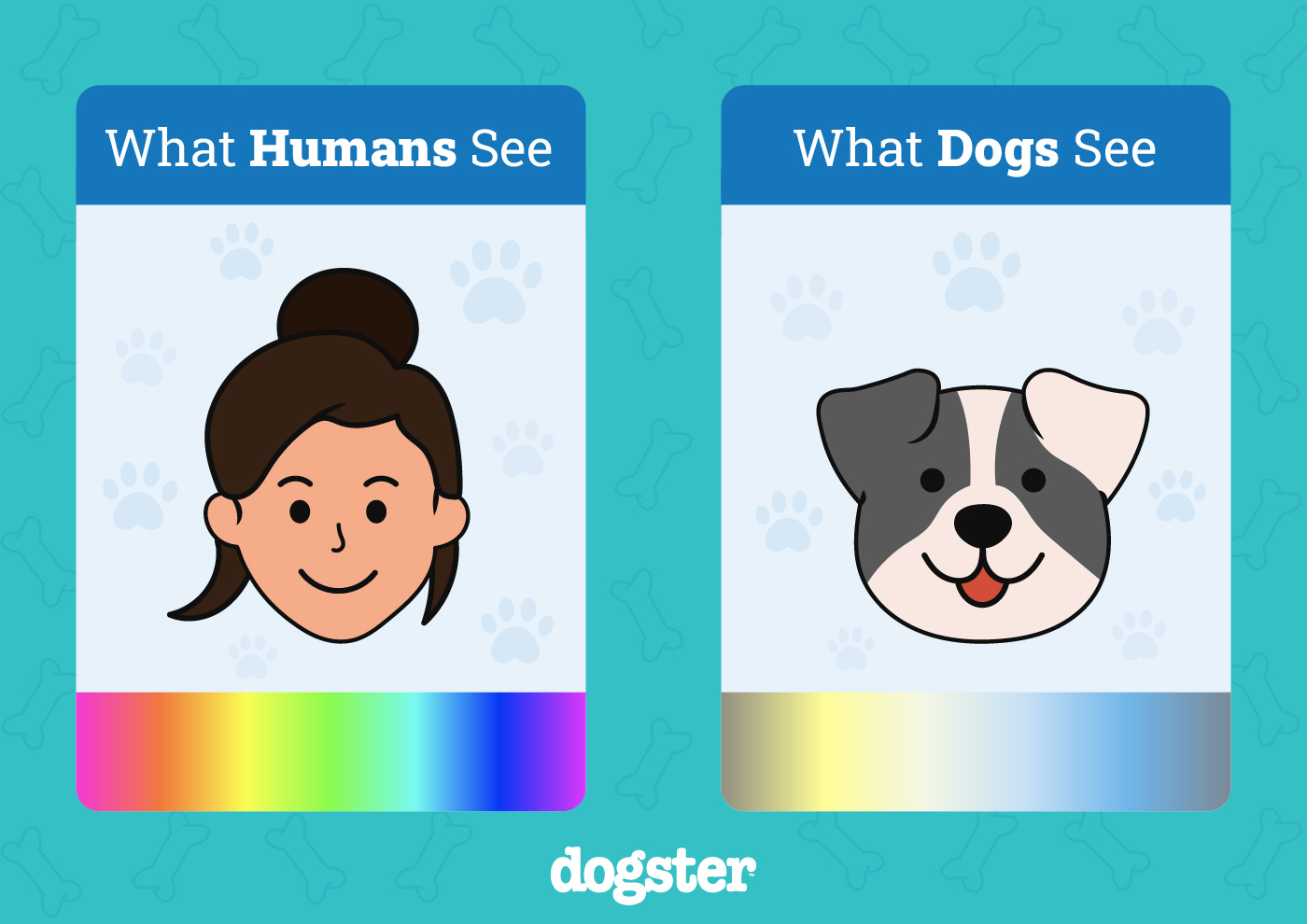
Dogs vs Human Sight Color
You are free to use this image, but please give credit back to Dogster.com

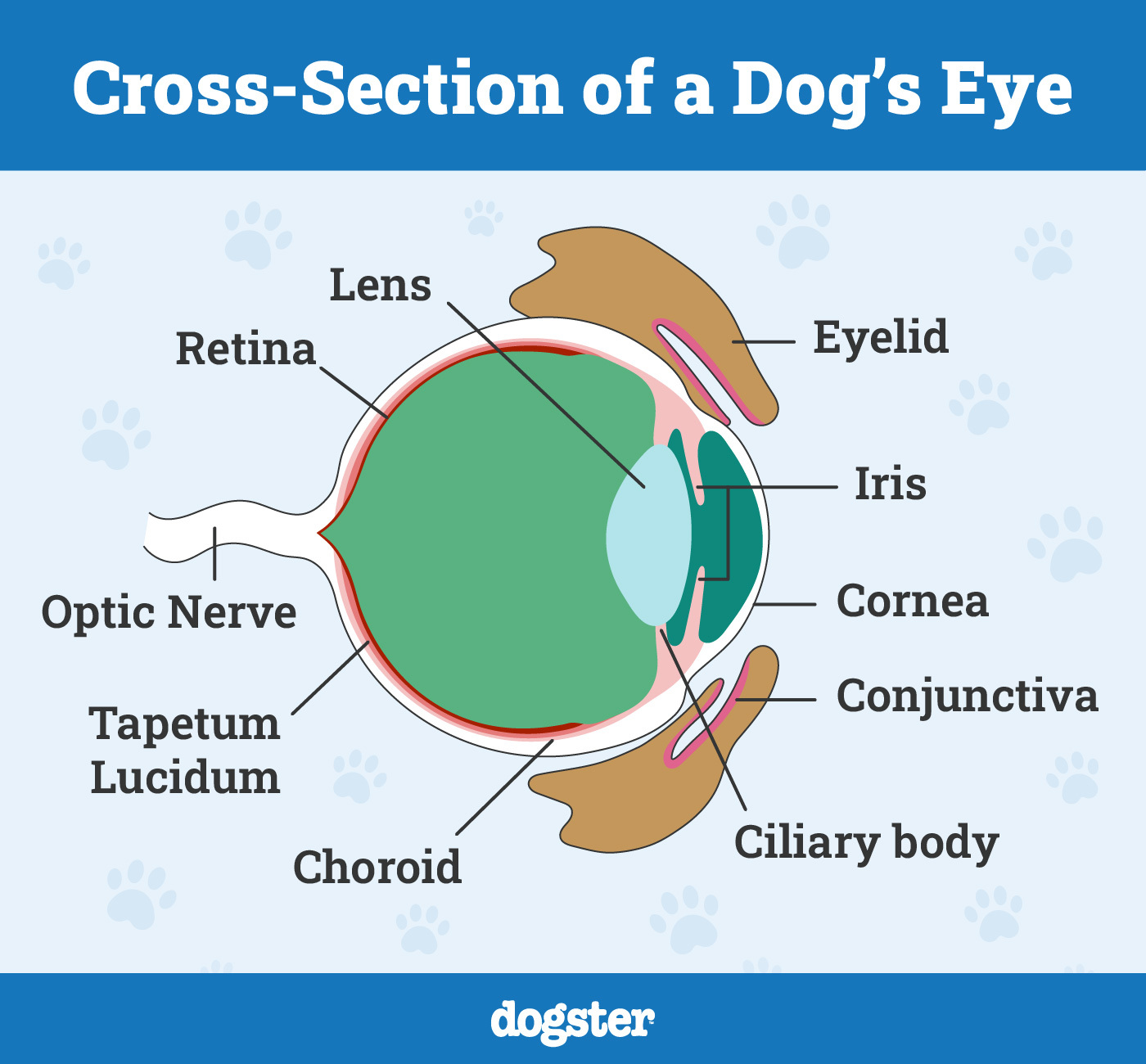
To understand what a dog is looking at, it’s important to understand how humans, and dogs, see the colors around them. Both people and dogs see color using the nerve cells found in their eyes. Inside the eye’s retina are two types of these cells known as rods and cones. Rods are used to detect motion and light. Cones are used to distinguish between colors. The human eye has three types of cones.

This allows us to recognize the colors red, blue, and green along with their combinations. Dogs, however, only have two types of cones. This allows them to see yellow and blue colors and is called dichromatic vision.

While dogs may not be able to see all the colors we can, that doesn’t mean they have bad eyesight. On the contrary, a dog’s eye has more rods than the human eye. This gives our pooches the advantage when it comes to seeing in the dark and detecting moving objects. This ability, along with their loyalty and love for their families, is another reason why canines make such great watchdogs.

Understanding Colorblindness

Yes, dogs have a degree of colorblindness but that doesn’t mean they are completely unable to distinguish colors. Colorblindness is a hindrance to the ability to see color. For humans, these inabilities are known as red-green colorblindness and yellow-blue colorblindness.

Dogs have red-green colorblindness. If you buy them a new red toy, they may struggle to see it immediately or may run past it. Eventually, however, they will realize it’s there. If the toy is yellow or blue, however, you may notice a completely different reaction from your pup considering they can pick up on those colors easier.

Dogster_Website dividers_v1_Jan 18 2025-01-TEST

How Do Dogs See Colors?

saint bernard great pyrenees mixed breed dog
Image Credit: audreyelizabeth, Shutterstock

You may be wondering if they don’t have access to the full spectrum of colors, and how dogs see. They may not see colors the same way we do, but they do see something. Remember the new red toy? For a dog, that toy may appear more black, grey, or brownish. Other colors like orange and green look mostly yellow while purple looks the same as blue.

With dogs having these types of issues with colors, you may wonder why they still play with the red toy or fetch the green ball. That answer is simple. Dogs don’t necessarily need to see an object’s true color to recognize what it is. Often, a familiar shape is enough to kick in their playful nature but don’t forget about those incredible noses. If a dog smells its favorite toy, it’ll be ready for a major game of fetch.

A Dog’s Visual Benefits

You may think dogs are at a disadvantage due to their inability to see colors properly, but this isn’t the case. Our canine pals have better peripheral vision than we humans do. Having eyes that are set more to the side of their head, they can see what’s happening around them better than we can.

As we mentioned above, dogs have more rods in their eyes. This helps them detect motion and see in dim light better than we can. This is also thanks in part to their shiny eyes. Our pup’s pupils dilate fully. This along with a reflective cell under their retina makes them capture more light. This makes moving around in lower light easier for them.
You’re welcome to use our images, but we require you link directly to this site for credit (ex. Image from Dogster)

Dogster divider_v2_NEW_MAY_24_

Summary

While the myth of dogs seeing in only black and white may be debunked, pet parents need to understand the range of colors they can see. This will help you choose the right toys, bowls, and other accessories for your pup’s needs. But even if you don’t choose yellow and blue for everything, rest assured that your furry friend can see colors in some form.

See Also: 


Featured Image Credit: Rebecca Campbell, Unsplash

Want content like this delivered to you?

Sign Up For Our Newsletter

News, insights, expert advice, and everything dog

* By submitting, you agree to our Terms & Conditions and Privacy & Cookies Policy.

How useful was this post?

Click on a star to rate (you can leave written feedback after clicking submit)

Help us improve Dogster for pet parents!

Your feedback really matters.

What did you like about this post? Also how can we improve it?

Join the conversation

2 Responses

    1. Hello Patricia,

      thank you for your question. There are many reasons the dogs may bark at a person. These are usually unfamiliarity, body language, scent or these reasons can be also visual.
      So if your dog is barking at the dark-skinned person, it may be either because of a new scent or, as claimed by some sources, because dogs may perceive dark-colored animals (and humans) as a bigger threat. This is, however, just an assumption.

Leave a Reply

You’re very welcome to leave a comment or question. Please know that all comments must meet our community guidelines, and your email address will NOT be published. Let’s have a positive and constructive conversation.

Talk With A Vet Online

Peace of mind,
anywhere, anytime

Affordable vet advice

When Is the Best Time to Spay or Neuter Your Dog? Vet-Approved Timeline

Spaying and neutering have a laundry list of benefits that definitely outweigh the disadvantages. So, for many pet parents, it’s not a matter...

White Border Collie: Info, Pictures, History & Facts

The saying goes that from little acorns grow big oak trees, and the same is true for the White Border Collie. Although they...

How to Introduce Dogs in 9 Vet-Approved Steps

Some dogs can meet all other canines, tails wagging and sniffers going 100 miles an hour. Others will react in a more standoffish...

Why Does My Dog Follow Me Everywhere? 6 Likely Reasons

One of the most beautiful aspects of the human-canine relationship is the loyalty and love our dogs have for us. Despite this, it...

More related

Are Rottweilers Banned in Some States? Facts & FAQ

Rottweilers are often characterized as being aggressive. If you have a Rottie, you know how untrue that is. Unfortunately, though, some places still...

Why Is My Dog Acting Weird After Vacation? 7 Vet-Reviewed Possible Reasons

Has your dog suddenly gotten extra clingy since you got back from vacation? Or perhaps, after being your travel companion on that vacation,...

Is Lemon Essential Oil Safe for Dogs? Vet-Approved Health Facts

You’ve probably noticed the surge in the use of essential oils in the past decade or so. You might even use essential oils...

11 Common Guide Dog Breeds: Info, Pictures & Facts

Guide dogs play a vital role in the lives of their handlers. Beyond providing companionship, they give their owners the independence they need...

Keep reading

15 Foods With Vitamin E for Dogs: Vet-Approved Options

Vitamin E is an essential vitamin for canines. It is an antioxidant that helps clear free radicals from your dog’s body, supports vision, promotes healthy bone growth, helps the reproductive system function, and supports the immune system. Their food should...

english bulldog eating pumpkin

How Much Calcium Do Dogs Need? 6 Best Sources

We tell our children that if they want to grow big and strong, they better drink their milk. Dogs need calcium as we do, and having the right amount in their systems gives them stronger teeth, nails, bones, and coats....

Boxer with a bone

Freeze-Dried Dog Food: 8 Vet-Verified Pros & Cons

Freeze-dried raw dog foods are becoming a popular option because of their high palatability and ability to provide a raw diet rich in vital nutrients. These diets also take the guesswork out of feeding a raw diet, ensuring your dog’s...

Freeze Dried Cat or Dog Food

Can Dogs Eat Anise Seed? Vet-Approved Benefits & Risks

Dogs can eat anise seed, and the strong-smelling spice is known to be the canine version of catnip. It can be used as a fun, stimulating treat for training or as a natural remedy. Before feeding anise seed to your...

Can Dogs Eat Anise Seed

Can Dogs Eat Froot Loops? Vet-Reviewed Nutrition Facts

Many of us grew up eating cereal in front of the television while watching cartoons. Of the many cereal choices on the market, one of the most popular is Fruit Loops. These colorful loops are certainly tasty but not very...

Can Dogs Eat Froot Loops

11 Best Canned & Wet Dog Foods for Senior Dogs in 2025 – Reviews & Top Picks

As dogs age, their nutritional needs may change, just like in humans. While the Association of American Feed Control Officials (AAFCO) does not officially recognize a “senior” life stage as a separate entity in terms of nutritional requirements, many pet...

Senior dog eating dog food

Can Dogs Eat Parsley? Vet-Verified Facts & FAQ

You might be familiar with parsley as a common ingredient in cooking, but the herb also offers many health benefits and is considered a superfood for humans1. As dog owners, we want our pets to stay healthy, but is parsley...

Can Dogs Eat Parsley

Can Dogs Eat Poppy Seeds? Vet-Approved Risks & FAQ

In the world of pet ownership, it’s essential to know what foods are safe for your dogs and which ones are not. Poppy seeds are a common ingredient in muffins, bagels, and salads, for example. One question that often pops...

Can Dogs Eat Poppy Seeds