Get

In Your Inbox

Dogster is reader-supported. When you buy via links on our site, we may earn an affiliate commission at no cost to you. Learn more.

Can Changing Dog Food Cause Vomiting? Vet-Reviewed Facts & Advice

Share

Dog vomit in the living room on the floor

Few things will wake a pet parent up faster than the tell-tale sound of their dog getting ready to vomit in the middle of the night. If you’ve recently changed your dog’s food, you might wonder if it is behind your pup’s sick stomach. Changing food can indeed cause vomiting and other digestive signs in some dogs.

However, vomiting can also have other causes, some of them serious. In this article, you’ll learn why changing your dog’s food can sometimes cause vomiting, plus tips for switching food in a tummy-friendly manner. We’ll also cover some other possible causes of vomiting and when you should worry about your dog’s stomach issues.

dogster face divider

Why Does Changing Dog Food Cause Vomiting?

Like people, every dog is different, and some may tolerate even quick diet changes with no vomiting or other unpleasant side effects. Generally, there are two primary reasons why dogs may develop vomiting after a food change.

First, it is commonly thought that introducing any new food, even one formulated for dogs, has the potential to irritate and inflame your dog’s digestive tract. Officially called gastroenteritis, this condition can result in vomiting, among other signs.

A new food may also cause your dog to vomit if they have an allergy or intolerance to one or more ingredients in the diet. In these cases, your dog’s immune system overreacts to the presence of the ingredients by producing antibodies to attack them. The result can be physical signs, including vomiting.

The most common culprits that trigger food intolerance in dogs are beef, chicken, dairy, soy, wheat, and eggs. If your dog starts vomiting after a food change, compare the ingredients in the new and old diets to see if any of these are present. Other signs that your dog has food allergies include diarrhea, skin irritation, ear problems, and itchy paws.
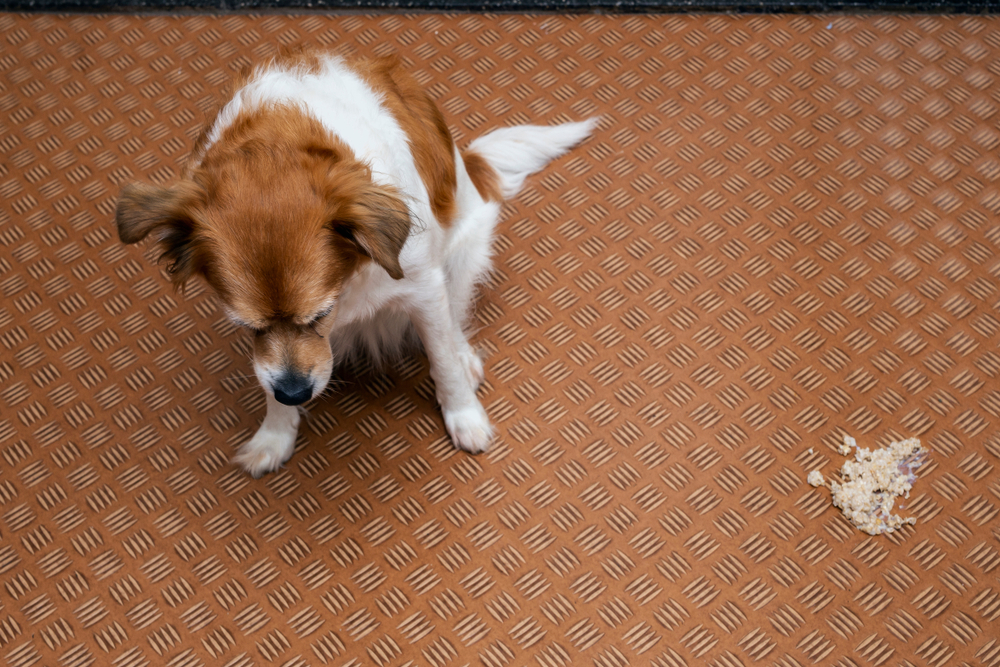
Dog vomit in the living room on the floor_A-photographyy_Shutterstock
Image Credit: A-photographyy, Shutterstock

How to Change Your Dog’s Food and (Hopefully) Avoid Vomiting

While you may not be able to avoid issues when you change your dog’s food completely, here are some tips to help you minimize the chances of vomiting during a food switch.

Stick with the Same Brand

If possible, try to choose a new food made by the same brand your dog is used to eating. Although the ingredients may differ, the manufacturing process and ingredient sources should be similar. The fewer changes that happen during your food change, the better the chances that your dog tolerates it without vomiting.
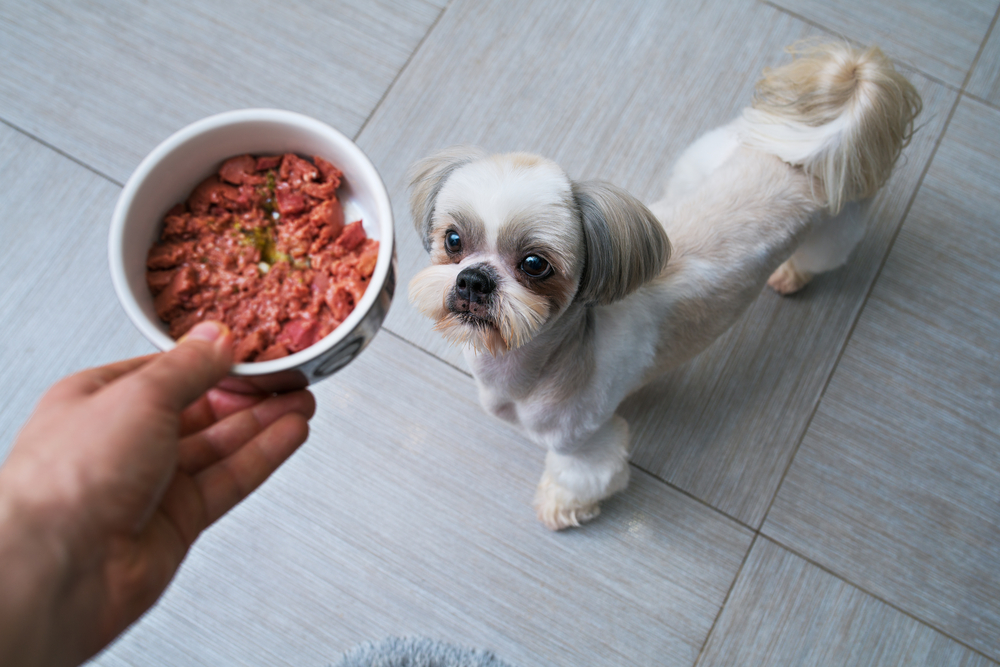
owner feeding shih tzu with dog food
Image Credit: chaossart, Shutterstock

Choose Similar Formulas

Most commercial dog food contains one or more protein and carbohydrate sources. If your dog is used to one protein, such as chicken, they may be more likely to tolerate a switch to a food with the same source.

Also, if your dog is used to dry food, try to swap it for another kibble rather than canned food, and vice versa. Of course, if you’re changing the food for health reasons, this may not be possible.

Change Food Gradually

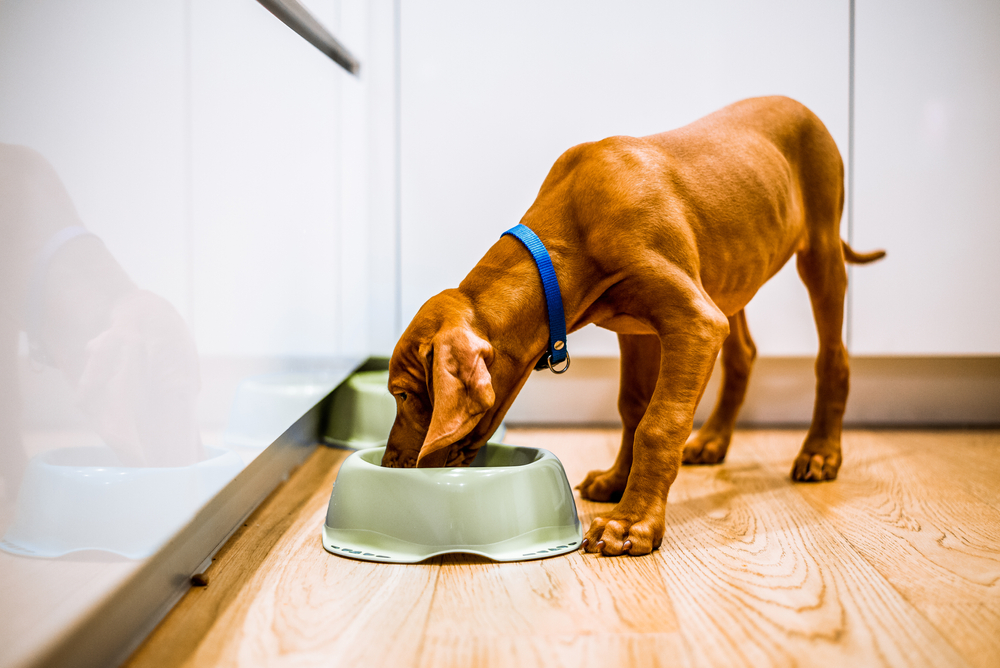
Probably the most important step you can take to help your dog’s food change go smoothly is to make the switch gradually. Typically, it’s thought best to take at least a few days or more to transition to a new diet. Start by serving the old diet and swapping a small percentage of the new food.

Each day, gradually decrease the amount of the old diet and increase the new until the transition is complete. If your dog has a history of a sensitive stomach, you may want to take even longer to change diets.

Young brown puppy dog eating from a green bowl in a white kitchen
Image Credit: Janis Petranis, Shutterstock

dogster paw divider

Other Causes of Vomiting

While a food change can certainly cause vomiting, there are numerous other reasons your dog could have an upset stomach. Vomiting is classified as a non-specific medical sign, meaning it can indicate multiple health issues. Here are just a few other causes of vomiting in dogs:

  • Dietary indiscretion
  • Intestinal blockage
  • Pancreatitis
  • Parasites
  • Cancer

Anytime your dog is vomiting, it’s worth contacting your veterinarian, especially if you notice additional issues such as blood in the vomit or loss of appetite. If you’ve recently changed your dog’s food, make sure to inform your vet when you talk to them, too.

If you need to speak with a vet but can't get to one, head over to PangoVet. It's our online service where you can talk to a vet online and get the advice you need for your pet — all at an affordable price!

PangoVet_Mention-in-Content Savings V1

dogster face divider

Conclusion

Changing your dog’s food can be necessary for several reasons, including to help manage medical conditions. Whatever the reason, check with your vet before you start the transition. Changing dog food can cause GI signs, including vomiting, diarrhea, and gas, but there are ways to make the switch easier for your dog’s digestive system. Following the tips in this article can help you avoid middle-of-the-night carpet cleaning sessions the next time you need to change your dog’s food.


Featured Image Credit: cunaplus, Shutterstock

Want content like this delivered to you?

Sign Up For Our Newsletter

News, insights, expert advice, and everything dog

* By submitting, you agree to our Terms & Conditions and Privacy & Cookies Policy.


How useful was this post?

Click on a star to rate (you can leave written feedback after clicking submit)


Help us improve Dogster for pet parents!

Your feedback really matters.

What did you like about this post? Also how can we improve it?

Join the conversation

Leave a Reply

You’re very welcome to leave a comment or question. Please know that all comments must meet our community guidelines, and your email address will NOT be published. Let’s have a positive and constructive conversation.


Talk With A Vet Online

Peace of mind,
anywhere, anytime

Affordable vet advice

Dogster’s Weekly Photo Contest Winners: The Cutest Puppy (April 2, 2026)

Every week our team gets the privilege of sorting through our readers photos to choose what dogs will win this weeks contest! See...

The Hidden Risk in Tall Grass That Most Dog Owners Ignore

Finding a tick on your dog can look like a lot of things, depending on when you catch it. Some are engorged and...

America’s Most Popular Dog Breed Is Also One of the Unhealthiest

We’re now 3 for 3 in the category of disappointing canine accolades with the French Bulldog being announced as America’s most popular dog...

Ask Dr. Paola- Help! My Dog Keeps Barking at the TV! (March 30, 2026)

Welcome to our “Ask Dr. Paola” series, where every Monday we bring expert advice straight from Dr. Paola Cuevas (MVZ) to help our...

More related

Dog Foods for Brain Health: Throughout All Life Stages

Whether you have a young puppy just beginning its journey or a senior dog that is starting to slow down, it’s essential to...

24 Unique & Rare Dog Breeds You’ll Want to Know About: Info & Pictures

Whether you are looking for a new family dog that stands out from the crowd or you’re just a canine lover, you’ve come...

How to Report Dog Abuse: 6 Things You Can Do to Help

It’s very disturbing and heartbreaking when you encounter dog abuse, like if you see your neighbor hitting their dog or know a malnourished...

Can Dogs Eat Brownies? Vet-Approved Facts, Risks & FAQ

Brownies have long been an American favorite for those who love sweets. They are gooey, sweet, and filled with chocolaty heaven. For dog...

Keep reading

Can Dogs Eat Falafel? Vet Reviewed Facts & FAQ

Falafel is a typically vegan-friendly Middle Eastern dish made of chickpeas or fava beans, spices, herbs, garlic, and onions and that is often served up with pita bread, tahini sauce, and with a side of salad. Now, falafel is an...

Can Dogs Eat_falafel

Can Dogs Eat Onions? Vet-Verified Toxicity & Safety Tips

Dogs are often indiscriminate about what they eat, so we have to be careful with what types of snacks and table scraps we feed them, as they may contain ingredients that are harmful to dogs. One common food to avoid...

Can Dogs Eat Onions

Can Dogs Eat Syrup? Vet-Verified Nutrition Facts & Info

Our canine companions are pros at begging our food off us, and they aren’t picky either. Our pups are more than interested in eating everything we eat. But not all people foods are healthy for dogs; in fact, some foods...

Dogster-Can-Dogs-Eat-Syrup

9 Best Affordable Dog Foods for Pit Bulls in 2026 – Reviews & Top Picks

If you’re a Pit Bull parent, you know how strong and muscular these dogs are. They have a lot of energy, and because of their strong physique, they need food rich in protein, carbs, and omega fatty acids. Pit Bulls...

pitbull eating

8 Best Natural Dog Foods in 2026 – Reviews & Top Picks

As the pet food industry changes, so do the recipes that you see on shelves. Many contain artificial ingredients that could cause significant health problems for your dog later. Many pet owners are alarmed to learn that some of the...

Beagle eating from a bowl

Can I Feed My Dog Store-Bought Kibble? Vet-Approved Nutrition Facts

As owners humanize their dogs and the pet industry pushes innovation, dog food has diversified significantly in recent years. Fresh, freeze-dried, and homemade meals now enjoy more attention, prompting many long-time pet parents to ask, “Whatever happened to good ol’...

dog food in plastic container

Can Dogs Eat Tahini? Vet-Verified Facts & FAQ

Tahini is delicious, rich, and wholesome! You can find sesame seed paste in many cuisines worldwide, like those in the Middle East, Israel, China, Africa, Japan, Turkey, Iran, and Korea. In addition to providing several vitamins and minerals, tahini is...

Can Dogs Eat Tahini

Green Lipped Mussels for Dogs: Vet-Verified Facts & FAQ

You may have never heard of green-lipped mussels (GLMs), but these particular shellfish are nutrient-rich mollusks that have many health benefits. They are great for humans, but what about dogs? Are GLMs healthy for dogs? Yes, and they can even...

mussels on a plate

Love Dogs? So Do We! Join the Dogster Community

Stay informed with expert pet care insights delivered straight to your inbox! Discover professional guidance on animal behavior, feeding tips, trusted product picks, and much more.


Sign up for the Dogster Email Newsletter