Fred's Reverse Sneezing: Why He Does It & Why I'm Not Worried (with Video)

Hi, I’m Dr. Karyn! Read my introduction to learn more about me and my five funny dogs, Poppy, Bailey, Kodah, Ned, and Fred.
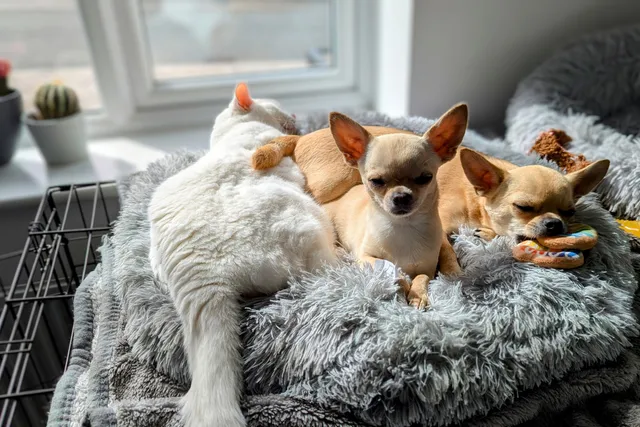
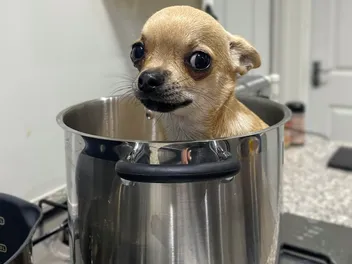
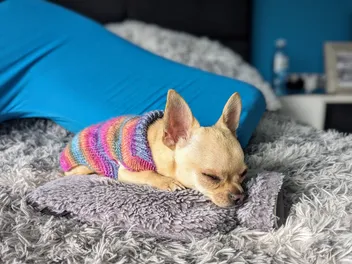
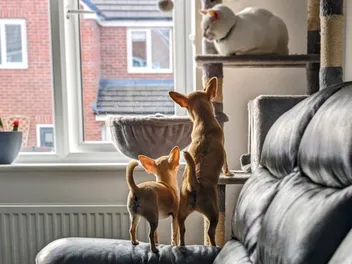
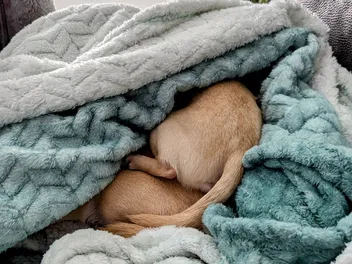
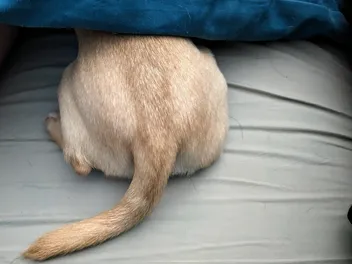
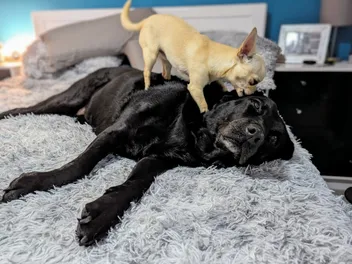
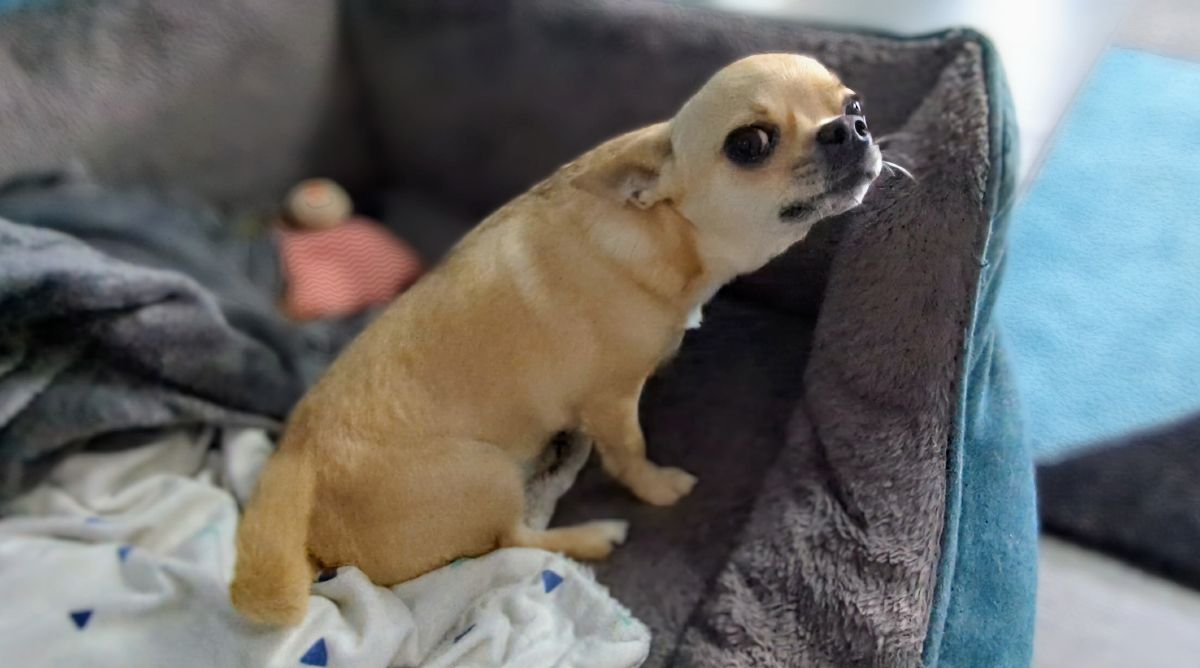
Fred, one of two adorable Chihuahuas who light up my life on a daily basis, has some pretty strange habits. His obsession with his toy donuts, his paralysis when picked up, and his apparent anxiety when he is the center of attention, are the quirks that make him one of the most ‘special’ dogs I’ve ever known. Another of his little peculiarities is his reverse sneezing.
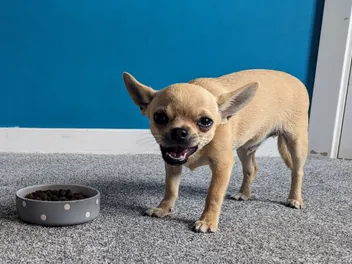
It can happen when he gets excited (usually over food), when he runs around like a maniac, or when it’s really cold outside. But despite how horrific it sounds, I’m actually not too worried about it. Much like a dog whose bark is worse than its bite, the sound of Fred’s reverse sneezing is far worse than the problem itself.
Hang on, what is reverse sneezing?

Reverse sneezing isn’t all that uncommon, particularly for dogs of Fred’s size, and it is, essentially, exactly what the name suggests. Instead of a violent nasal exhale, it is a forceful nasal inhale.
A sneeze occurs in response to something irritating the nasal passages, triggering a sharp intake of air as the diaphragm pulls back, like the rubber band of a slingshot. The diaphragm contracts, releasing the slingshot of air out through the nose in an attempt to expel whatever caused the irritation.
With a reverse sneeze, the irritation happens on the internal side of the sinuses, so a normal sneeze would not be effective in dislodging the problem. Instead, the diaphragm expands rapidly, creating a vacuum that draws air into the nose, effectively sneezing in, rather than out, so that whatever triggered the reaction can be swallowed.
Why does Fred (and other dogs) reverse sneeze?
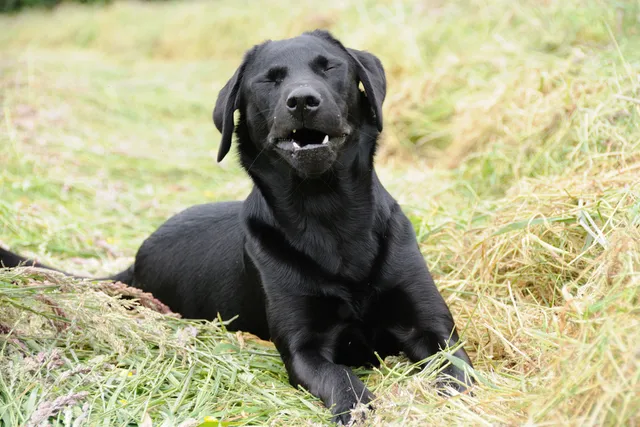
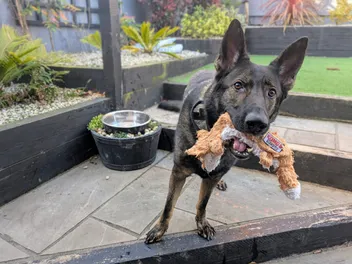

A reverse sneeze can be caused by a physical contaminant, but in dogs, it is most often linked to their anatomy around the oropharynx, which is where the mouth meets the trachea (wind pipe). In a perfectly proportioned dog like Kodah, the soft palate, tongue, epiglottis and trachea are all the right size and shape to work as nature intended. Dogs like Ned and Fred, whose selective breeding has resulted in a miniaturization of their features, are operating somewhat outside evolution’s design.
The problem is to do with proportions, and the fact that as their bodies got smaller and muzzles got shorter, their internal structures did not all condense in proportion to their shrinking size. The result is a soft palate that’s a little too long, a tongue that's a bit too large, and a trachea that is slightly too narrow.
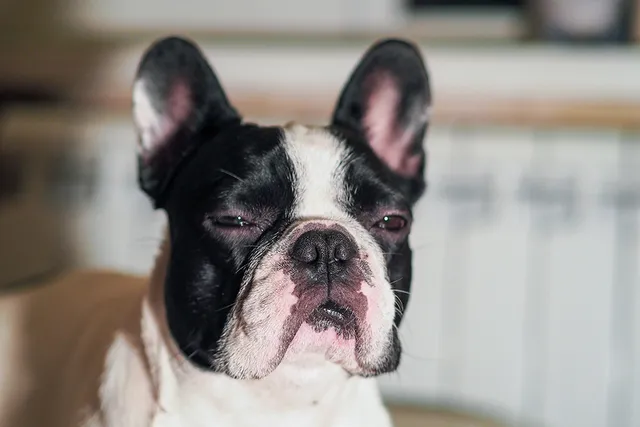
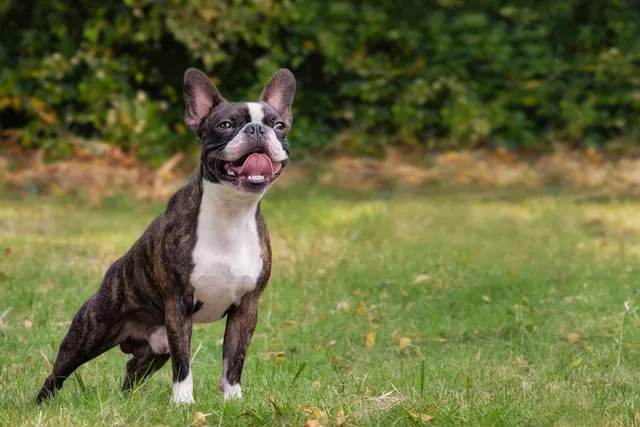
When you consider brachycephalic breeds like French Bulldogs, Pugs, Shih Tzus, Bulldogs, and Cavalier King Charles Spaniels, we are looking at a lot of soft tissue crammed into a very small space, so it’s a bit like breathing through a scrunched-up wet sock with one of those eco-friendly, but otherwise useless, cardboard drinking straws. That’s why these dogs tend to pant noisily, snore loudly, and drop dead of heat stroke in summer. This is also the case with particularly short-faced Chihuahuas. Fortunately, Fred’s facial features aren’t overly compressed, but he still has to deal with the consequences of his disproportionately miniaturized anatomy.
Instead of being triggered by dust or debris, Fred’s reverse sneezing is set off when his soft palate or tongue, both being a smidge too long for his head, irritate the epiglottis or obstruct the opening of the trachea. The reverse sneeze is the body’s attempt to shift these pesky structures out of the way, but this can actually pull them against the epiglottis, exacerbating the problem until the airway finally opens up again. This is why you rarely hear a single reverse sneeze; they tend to come in multiples.

Why on earth aren’t I worried?
I know that all sounds pretty horrific and terrifying, and it is. For some dogs, the look of sheer terror in their eyes as they struggle to draw breath is horrifying to witness, and I can only imagine how scary it is to experience. In these cases, where the episodes are severe and frequent, corrective surgery should be considered. This can involve a number of procedures, including trimming the soft palate to stop it from obstructing the oropharynx.
For many dogs, Fred included, these episodes of reverse sneezing are fairly infrequent, and, based on their behavior during and after them, do not appear to be causing any significant stress or panic. His mismatched anatomy does not cause snoring, panting, or noisy breathing, so the severity of his condition is not enough to warrant surgical intervention.
How I help Fred with his reverse sneezing

There are two ways in which I help Fred cope with his condition.
1. Actively helping him when he is reverse sneezing

Most of the time, Freddie’s sneezing fits are shortlived, but if they go on for more than a few seconds, I try to help him out by
squeezing and massaging his larynx - this helps move the structures causing the problem
doing coupage on his chest - this forces air up out of the lungs, opening up the larynx
2. Reducing his risks for the future
Any increase in the amount of soft tissue in this area will make this problem worse, so I need to be careful that Fred does not put on too much weight. Given his greedy appetite and slower metabolism, this is one area that will need constant attention.
If you think your dog might suffer from reverse sneezing, the best thing to do is speak to your vet and rule out any other issues. If you can, try to get a video of your dog in action, as they rarely do it when you want them to (ie. at the vet!).
Check out the video to see how you can help your dog when they are reverse sneezing.

This article is a part of Dr. Karyn's series with her five dogs.
Expert dog care, straight to your inbox
News, insights, expert advice, and everything dog.

No spam — unsubscribe anytime.
By signing up, you agree to our Terms & Conditions and Privacy & Cookies Policy.
How useful was this post?
Click a star to rate. You can leave written feedback afterwards. (We read all feedback.)
Dr. Karyn Kanowski, BVSc MRCVS (Vet)
Dr. Karyn is originally from Queensland, Australia, and has resided in the UK for the past 10 years. She graduated from The University of Queensland School of Veterinary Science in 2010, and also holds a Bachelor’s degree in Zoology. Karyn is passionate about using experience, evidence, and working with pet owners to provide the best solutions for pets. She also believes in making reliable information about animal health accessible to everyone. 5 cats and 4 dogs let her share their home with her and her husband, and when she is not practising as a veterinary surgeon, she spends her time writing, gardening, and cleaning up pet hair!