Get

In Your Inbox

Dogster is reader-supported. When you buy via links on our site, we may earn an affiliate commission at no cost to you. Learn more.

How to Train Your Dog to Wear Dog Boots: 5 Vet-Approved Tips

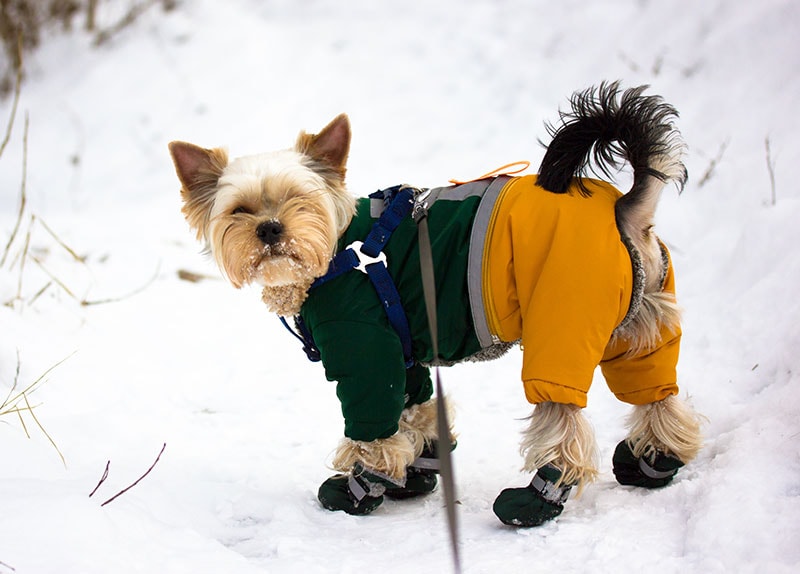
a yorkshire terrier dog wearing jumpsuit and boots walking in snow

Wintertime has several seasonal challenges that many dog owners living in colder climates can face. Cold temperatures, snow, and salted pavements can make walking dogs very difficult and cause damage to their paw pads.

One way to protect your dog’s paws is to use dog boots. However, many dogs aren’t used to the feeling of boots on their feet and may resist wearing them. It’s impossible to verbally explain to your dog why it needs to wear boots, but it’s possible to train them to get used to them.

So, before you put your dog’s boots on all its paws, make sure to expose them and train them to wear them properly.

divider single dog paw oct 2024

The 5 Tips to Train Your Dog to Wear Dog Boots

1. Build a Positive Association with Boots

pomeranian wearing dog boots on a winter walk
Image Credit: Pencil case, Shutterstock

Start with building a positive association with the boots. Lay the boots on the ground and encourage your dog to approach them without being forceful. Every time your dog sniffs the boots or comes in contact with them, give it a treat and a lot of praise.

Once your dog gets used to seeing the boots, you can tap the boot lightly on top of its paw and immediately give it a treat. Keep doing this until your dog is completely comfortable being around the boots and starts anticipating a reward every time its paws touch the boot.


2. Put on One Boot with Dog Laying Down

Have your dog lie down and tap a boot against its paw. Reward it every time it doesn’t resist touching the boot. Once your dog is comfortable with the boot touching its paw, you can start to work on gradually increasing the contact time to put one boot on its paw.

Undo all the straps and let the boot open as wide as possible. Then slip your dog’s paw through the boot and immediately take it back out. Reward your dog with a treat and praise. Keep doing this until your dog is completely calm whenever you slip on the boot.


3. Gradually Increase the Amount of Time the Boots Are On

close up of dog wearing dog boots outdoors
Image Credit: otsphoto, Shutterstock

Continue to stick with one paw and one boot and increase the amount of time the boot stays on the paw. You can start with 1 second and increase the time to 3 seconds. Keep working in increments until your dog becomes comfortable with wearing the boot for at least a minute.

Once your dog can wear a boot for about a minute, start tightening the straps. Keep rewarding your dog whenever it’s staying still. Once your dog is able to wear the boot with the straps tightened, you can add another boot to another paw.

Keep working in steps until your dog is comfortable with wearing the boots while lying down.


4. Let Your Dog Walk Around Indoors in Boots
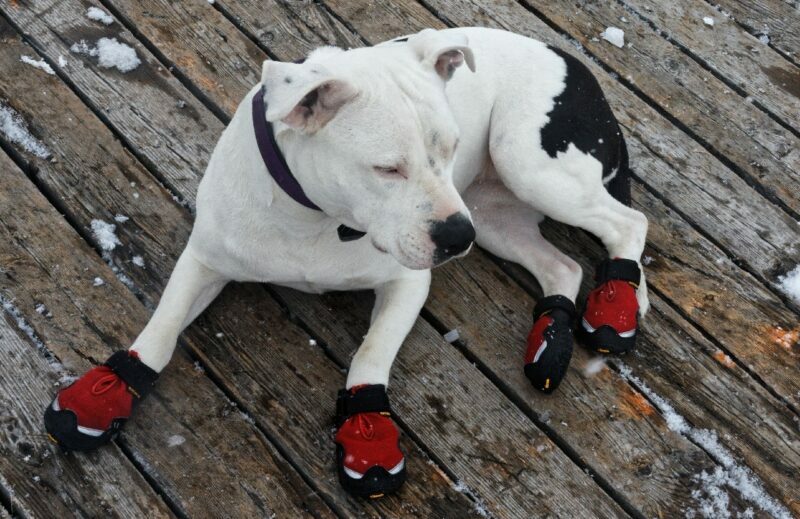
white dog wearing dog boots
Image Credit: Jumpstory

Next, let your dog stand up and get used to wearing the boots. Sometimes, it’s helpful to have your dog sit first rather than walk around. Reward your dog for staying calm and don’t react to any moments that your dog resists wearing the boots.

It can take several tries for your dog to get used to the boots. You may need to backtrack and have your dog wear boots on just its front paws and let it get used to this arrangement before wearing all the boots at once.


5. Go on Short Walks with Your Dog

Once your dog gets used to wearing the boots indoors, you can move forward with walking outside with the boots on. Make sure to bring some treats with you on your walk. Start by just walking around the front of your house.

Encourage and praise your dog after walking several steps and give it some treats. Then, increase the distance of your walk as your dog feels more comfortable with the boots.

divider dog paws 3 oct 2024

Additional Ways to Keep Your Dog’s Paws Healthy and Safe

Boots are a great way to create a barrier between your dog’s paws and cold surfaces, snow, and salt. However, there are other things you can do to protect their paws.

Dogs that are especially resistant to boots may do better with paw wax instead. Some paw waxes are only meant to moisturize paw pads, but some have water-repellent formulas that provide some protection against snow and salt. Along with keeping the paws moisturized, many paw waxes can also repair mild to moderate cases of dry and cracked paw pads.

It’s also helpful to find safer exercise alternatives for extreme weather. Temperatures below 20°F are unsafe for most dogs to go outside for a walk. Smaller dogs and dogs with thin coats may feel too cold when temperatures fall below 45°F.

If daily walks are your dog’s main source of exercise, you may need to push walks to a later part of the day when the weather is warmest. Some neighborhoods have indoor dog parks where your dog can let loose. You can also sign your dog up for a dog daycare program to help it get some exercise.

divider dog faces oct 2024

Conclusion

Boots can protect your dog’s paws during the winter. When training your dog to wear boots, it’s important to work in increments that your dog is comfortable with so that you can build and maintain a positive association with the boots.

With a bit of time and patience, your dog can learn to appreciate its boots and enjoy safer walks during the wintertime.

See also:


Featured Image Credit: Al More, Shutterstock

Want content like this delivered to you?

Sign Up For Our Newsletter

News, insights, expert advice, and everything dog

* By submitting, you agree to our Terms & Conditions and Privacy & Cookies Policy.

How useful was this post?

Click on a star to rate (you can leave written feedback after clicking submit)

Help us improve Dogster for pet parents!

Your feedback really matters.

What did you like about this post? Also how can we improve it?

Join the conversation

Leave a Reply

You’re very welcome to leave a comment or question. Please know that all comments must meet our community guidelines, and your email address will NOT be published. Let’s have a positive and constructive conversation.

Talk With A Vet Online

Peace of mind,
anywhere, anytime

Affordable vet advice

Dog Stomach Ulcers: Our Vet Explains the Signs, Causes & Care

Stomach (gastric) ulcers in dogs occur when the protective lining of the stomach, known as the mucosal barrier, becomes damaged. The purpose of...

Rainbow Bridge Remembrance Day 2026: What It Is & When It’s Celebrated

Whether your pet is feathered, furry, scaled, or slimy and uncommon, their death is a deeply felt emotion that may linger longer than...

How Long Do Corgis Live? Average Lifespan, Data & Care

Corgis are strong, athletic, and affectionate Welsh dogs. Originally used as herding dogs, they make loving family pets who are happiest when they...

Can Dogs Eat Tapioca? Vet-Verified Facts, Pros & Cons

We see various ingredients on the back of commercial dog food labels, on our own food, and otherwise. It’s hard to track exactly...

More related

8 Best Dog Foods for Gassy Dogs in 2026: Reviews & Top Picks

Your dog is unique from head to tail, and that includes their gut! While many dogs can chow down on just about anything,...

5 Fun Off-Leash Dog Parks in Savannah, GA (2026 Update)

Savannah, GA, is well-known for its rich history, ghost stories, gorgeous architecture, and Southern hospitality. It’s also known as a premier city for...

11 Most Popular Dog Breeds in Mexico in 2026 (With Info & Pictures)

Like in many countries, dogs are extremely popular in Mexico. Many people have dogs, although in some economically-struggling areas. these dogs often lack...

Why Do Dogs Lick Themselves? Vet-Verified Reasons & When Its a Concern

Dogs lick themselves; it’s just a fact of life. But why do they lick themselves so much? After all, it’s a bit of...

Keep reading

6 Eating Problems That Can Affect Dogs: Signs & Treatment

You’re probably familiar with the most common eating disorders in humans, such as anorexia and bulimia. You might not know that dogs can also have eating disorders, but they do not have the same complex mental concerns that plague these...

dog not eating its food

10 Best Canned Dog Foods for Picky Eaters in 2026: Reviews & Top Picks

While it can be a mystery as to why some dogs are picky, finding dog food that a picky dog enjoys can feel like an even greater mystery to solve. Many dog owners have found solutions with meal toppers and...

shih tzu dog getting wet food from owner at kitchen

Wild Earth Dog Food Review 2026: Our Expert’s Opinion

Wild Earth is a newer brand of vegan dog food on the market. We know what you are thinking—vegan dog food? While we were a bit skeptical about the product, using the product with our own dogs and looking at...

Dogster_Wild Earth Dog Food Review

Eukanuba Dog Food Review 2026: Pros, Cons & Recalls

Eukanuba Dog Food Review Summary Giving your dog all the nutrients that they need for a healthy and active life is the number-one goal of any dog owner. There are countless dog food brands on the market, making finding the...

Dogster_Eukanuba Dog Food Review

My Dog Ate Fudge: What Should I Do? (Vet-Reviewed)

Below are some other V-Day gifts that your lovesick pup might eat, so take precautions....
Fudge-with-nuts-on-a-white-background

11 Best Dog Foods for Mini Goldendoodles in 2026 – Reviews & Top Picks

As a dog owner, pet nutrition is something you’re likely taking pretty seriously. As pet nutrition continues to develop and improve, the focus has turned to what nourishment will eliminate health issues and create a long and full life for...

Goldendoodle sitting near the pier

8 Amazing Benefits of Bone Broth for Dogs & Why We Love It (Vet Approved)

We want our pups to be as healthy as possible, so we make sure they eat nutritious dog food and exercise daily. But is there more we can do to ensure our dogs’ health and well-being? There is! One great...

bone broth bouillon in stainless steel pot

Can Dogs Eat Gourds? Vet-Verified Facts & FAQ

Gourds are often used for decorative displays in autumn, both in the home and the garden. They’re all part of the Cucurbita family, which includes pumpkins and squash. Gourds are generally safe for dogs in small quantities. Still, there are...

Can Dogs Eat Gourds