

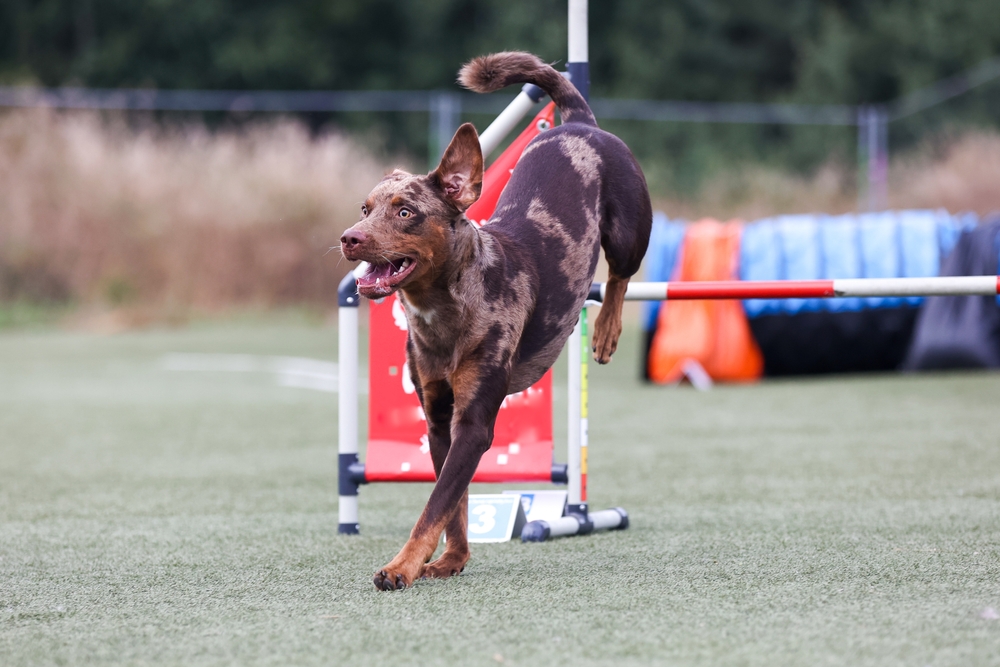
Catahoula Leopard Dogs are an exotic-sounding breed with muddled ancestry, but most believe they’re descended from Bloodhounds, Greyhounds, Wolfhounds, and possibly Mastiffs. With a serious demeanor and work ethic, Catahoula Leopard Dogs require serious training to manage. Without it, they can run roughshod over unprepared or novice dog owners! Let’s break down how to tackle the key areas when training your Catahoula Leopard Dog below.

The 7 Tips for Training a Catahoula Leopard Dog
1. Prioritize Early Socialization
Catahoula Leopard Dogs generally get along well with other animals, but they can have a domineering and territorial streak. This makes ample socialization from puppyhood essential to help them get exposed to all sorts of unfamiliar sights, sounds, people, and animals in a controlled way.
Socialization is immensely beneficial to helping your dog navigate new experiences without being unduly afraid. It is important to ensure that your puppy has received at least their first round of vaccines and to wait 7 days before enrolling them for puppy classes. A week after they have completed their full schedule, they can also meet other dogs.
2. Teach Them to Remain Calm
Although Catahoula Leopard puppies grow very fast, they are not fully mature until they are about two years old. This is when your pup will calm down and start to settle into their mature adult character. Besides early socialization, plenty of physical and mental stimulation is crucial, especially during those first two years when behaviors can easily develop into habits.
With adult dogs who bark at everything, you can get started by leashing up and going on a walk outside. If your Catahoula Leopard Dog barks at people or other animals, immediately stop what you’re doing and ignore them until they stop barking.
Rather, try building positive associations by rewarding calm behavior. If your dog likes to bark at birds, take them near some birds and wait for them to stop barking. When they do, even for a few seconds, reward them with praise, a toy, or the opportunity to keep exploring. This will take many repetitions, but over time, your dog will be able to be calm for longer than before.
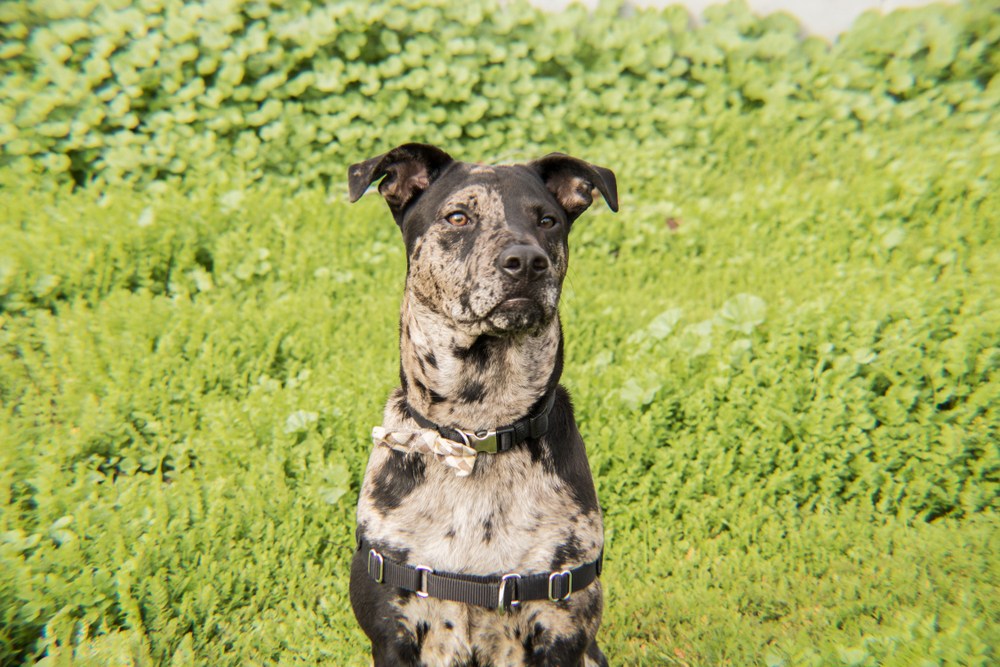
3. Housebreak Your Catahoula Leopard Dog
Housebreaking is imperative early on to keep your Leopard Dog from developing bad potty habits. You can liberally plaster puppy pads inside at first, but the real work happens outside. Every 20–30 minutes after your dog eats and drinks, take them outside on the leash to your desired potty zone. Use a trigger phrase like, “Go potty,” and let them do their thing.
If your dog’s a clown that jumps for your attention or stares at you, ignore them. They’ll get bored and sniff around to do their business if they need to go, given time. We suggest waiting for 15 minutes before giving up and taking your dog inside. Leash yourself to your Catahoula Leopard Dog and take them outside every 15 minutes afterward until they go.
Here’s the important part: When they go outside, feel free to jump up and down, clap, and praise them as the bestest boy or girl ever. Then give them a delicious high-value treat to seal the deal. This helps positively reinforce your dog for going potty outside and not indoors.
4. Leash Train Early
This breed has a strong prey drive from years of hunting, so you’ll want to leash train them early. Most Catahoula Leopard Dogs are very trainable if you’re consistent with them, but some can have a devilish stubborn streak. To start, leash your dog up and take them on a walk outside. It’s OK if they don’t walk on the leash well yet.
When your dog pulls on the leash, stand still and wait for them to stop pulling. This sends the message that tugging doesn’t get them any farther, but it bears repeating. Your Leopard Dog will test you a lot in the beginning, especially when they notice an intriguing new scent trail with their superbly sharp sniffer. Keep your composure—your dog will notice any agitation.

5. Adopt an Exercise Routine
Catahoula Leopard Dogs are highly active dogs that need at least an hour of vigorous exercise per day. Some more energetic dogs may need up to 2 hours per day. You can break this into two 30-minute walks, three 20-minute walks, or whatever you desire so long as your dog is performing physical exercise. A brisk walk is better than a leisurely stroll, for reference.
You can also play games to break things up and provide variety. Leopard Dogs are great at games with clear-cut rules like fetch or tug-of-war. More advanced dogs can try their paw at agility courses or hunting exercises, both of which the breed has a knack for.
6. Use Consistent Positive Reinforcement
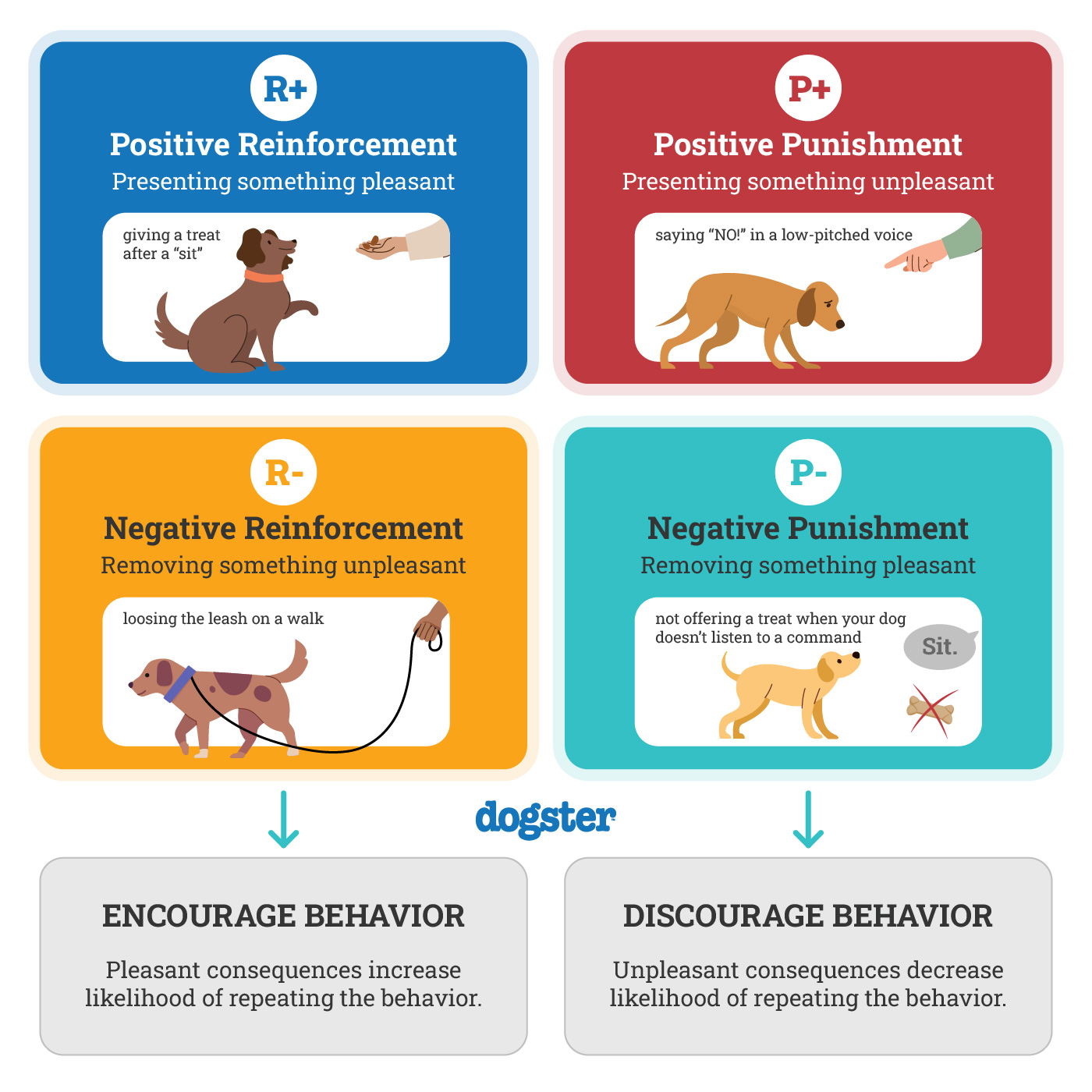
As the foundation for any successful dog training, positive reinforcement means building positive associations with desirable behavior. For example, you can help your Catahoula Leopard Dog learn a command by giving them a treat after they perform the command. They learn and positively reinforce the behavior through repetition when they notice a pattern. “Sit = treat,” for example, or “Go potty = treat.” Treats are gradually lessened over time, but the positive associations remain.
Conversely, bad or unwanted behavior should be ignored and not punished or reprimanded. Scolding your dog has no effect and, in fact, increases their anxiety and fear. For instance, scolding a dog that pees in the house can make them hide to pee inside in the future. Not only is so-called positive punishment ineffective, but it’s just plain cruel.
7. Give Them a Job
Catahoulas were originally bred to work in unforgiving Louisiana swamps as scent hounds, so they thrive and are happiest with a strenuous job. Otherwise, they can get frustrated and anxious, leading to destructive behavior like chewing or digging. Leopard Dogs are great at not just scent work but agility and hunting too. Even if these aren’t possible, you can help tucker your dog out by providing them with enough quality exercise.

Conclusion
Catahoula Leopard Dogs may look exotic and difficult, but they’re anything but! Affectionate and goofy, these dogs just need early socialization and consistency to help them work through basics like housetraining. Oh, and plenty of strenuous exercise too! This is definitely a breed for active people, so keep that in mind before bringing one home.
Featured Image Credit: Lisjatina, Shutterstock
 The 7 Tips for Training a Catahoula Leopard Dog


























4 Responses
Good info. Thanks I am researching for my rescue dog. Just turned 1 and I believe he has had a tightly kenneled life. He has an acre to run in and an Aussie to run with now Half breed Catahola and Dutchy. They share many of the same traits it seems that the ball is his. He will chase it but not return it. He is Gangly and tripping over his own feet on the porch stairs with narrow hips . Shepards also have this trait but would be outgrowing it by now. I am not sure what the time frame to out grow it is with the catahoola. Can you advise?
Hello there,
thank you for your message. It is great to hear that your dogs have such a big are to run, however I understand that dealing with behavioral issues, especially with rescue dogs, can be difficult. Since this is rather a specific and vet-related question, I would suggest you to book an online video-call appointment with one of our veterinarians from www.PangoVet.com. In 20-minute video call you can talk through all your questions and our vets will give you their opinion and some great tips.
Hope this helps.
Loved your article! We have a 14 year old Catahoula and now a new catahoula puppy. It bears refreshing the memory about key aspects of early training. Thank you!
Hello Stacy,
thank you very much for your kind words! We are happy that you enjoyed the article.