In this article
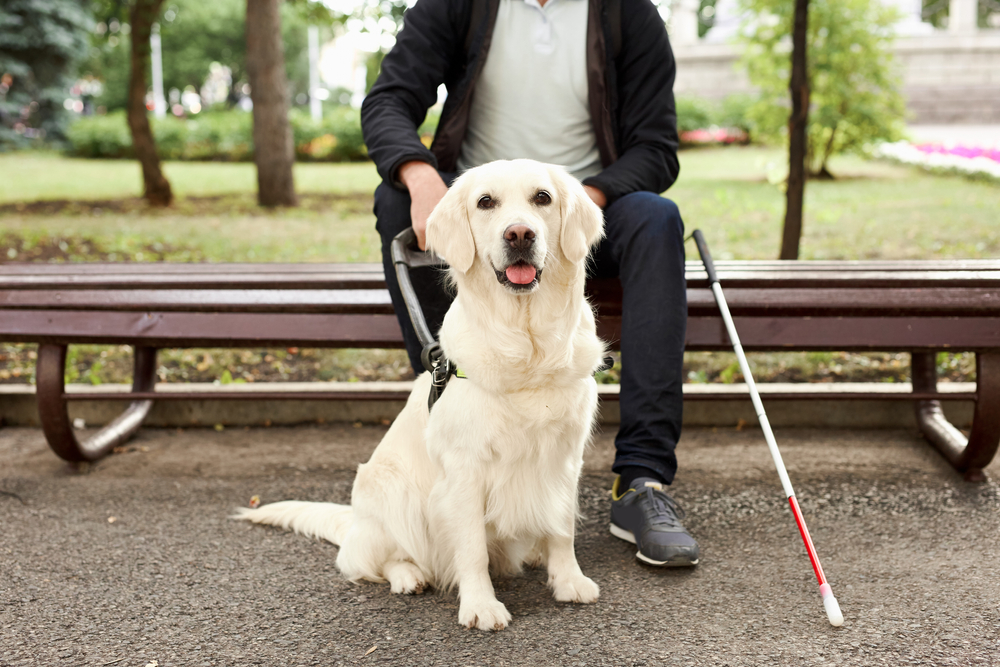
It takes a special temperament and devoted training for a dog to master guide work. Guide dogs are responsible for restoring their handlers’ independence and ability to navigate various environments. They must be dependable in their decision-making, know how to respond in different situations, and even when to ignore commands if it means keeping everyone safe.
As you can imagine, that level of trust doesn’t come easy. Training starts when the dog is only a few weeks old and takes up to 18 months before they’re ready for a life of reliable work. If you’re wondering what’s involved in the process, we’ll explore how guide dog training works from start to finish.

The 6 Tips on How to Train a Guide Dog From a Puppy
Guide dogs begin life with a puppy raiser. Service dog organizations use volunteers who take in prospective service dogs at around 8 weeks old. Puppy raisers provide the essential positive reinforcement training and socialization that set the foundation for the guide dog training they’ll receive later.
At around 12–14 months, the dogs enter formal guide dog training to learn the skills for helping their handlers move about safely and efficiently. Training at this stage generally takes 5–8 months before the dog graduates and gets matched with a handler based on their temperament and upbringing.
1. Socialization
Puppy raisers socialize their dogs as soon as they receive them to develop them into well-behaved canine citizens. Young dogs need as much exposure as possible to various animals and people of different races, genders, ages, and builds.
Their raisers introduce them to unique situations while rewarding calm behavior to desensitize them and reduce reactivity. Dogs should be comfortable in crowds, on city streets, and in public buildings while not yielding to the urge to go after nearby animals, people, or food.

2. Training Manners
Puppy raisers must potty train their dogs while enforcing boundaries and manners to ensure pleasant interactions and prevent damage. Dogs should know to stay off furniture, leave shoes and other items alone, and keep their paws on the ground when meeting people.
Rewarding respectful behaviors continues outside the home. Guide dogs need discipline in demanding situations, like noisy shopping centers, cramped public buses, and cafes full of tasty aromas. Introduce your guide dog to as many public environments as possible, offering rewards and praise when they show calm behavior, stay by your side, and give you attention.
3. Obedience and Leash Training
Guide dog puppies must learn basic obedience commands, including sit, down, stay, touch, and recall, to make them more cooperative and develop impulse control. They must also receive loose-leash training, learning to walk a path without reacting to stimuli.
Your guide dog should be comfortable putting on their harness and having you grab it. They must learn not to pull on the leash in response to triggers or slow down and wander to explore a scent on the ground.
Consider pursuing the AKC’s Canine Good Citizen certification, an excellent framework for training essential skills dogs need to succeed as a guide dog. Likewise, the NSAR Public Access Test provides a helpful guide outlining areas of focus for public access training, like having your dog lie quietly under the table at restaurants or heel in public buildings.

4. Training Guide Dog Skills
Once your dog is well-socialized and has a solid grasp on obedience and manners, they can work on skills specific to guide work. Dogs are often ready for this at around 12 months.
- Leading their handler in a straight line between two points
- Stopping at all elevation changes, such as curbs or staircases
- Stopping for obstacles and walking around them
- Halting for traffic
- Walking on the sides of roads without sidewalks
- Settling quietly when their handler comes to a rest
5. Allowing Intelligent Disobedience
Intelligent disobedience refers to a dog’s ability to make critical decisions that ignore their handler’s command. It’s a crucial skill that can save a life, as it keeps dogs from proceeding into obstacles or oncoming hazards even if their handler tells them to go.
When a guide dog is versed in moving with their handler’s “forward” cue, they can learn to stop when an obstacle won’t let their handler pass. To train this, you’ll typically set up an obstacle course with areas that only your dog can move through and paths that accommodate both of you.
- Stop at the obstacle that won’t fit you, and tell your dog to move forward.
- Before your dog can move, give them a click or say your marker word, and offer a treat.
- Touch the obstacle in front of you, and praise your dog, creating a connection between the praise and the action of not moving when there’s an obstruction.
As you train this, you can add more time between your dog refusing your command and when you give them a treat, showing that there are times to ignore your command if it will cause problems for you.
Eventually, they’ll learn not to respond to repeated “forward” cues or pressure on the harness when they’re at an obstacle. This is a common occurrence when the handler doesn’t know why their dog is refusing their commands. With intelligent disobedience, the dog learns to respond to certain environmental cues and put them before following the normal cues that they usually respond to.
What Dogs Make the Best Guide Dogs?
Successful guide dogs have the ideal personality traits to operate reliably. They’re calm, hardworking, intelligent, outgoing, and even-tempered, without any fear or aggressive tendencies holding them back.
At the same time, dogs need health testing and physical evaluations to ensure they’re fit to perform. Underlying issues may limit mobility or cause distracting discomfort. Guide dogs are also typically spayed or neutered to further improve their behavior.
Since early life experiences have lifelong implications, setting a dog on the path to guide work begins at a young age. Older dogs may successfully become guide animals, but training good manners and eliminating problem behaviors is significantly more challenging.
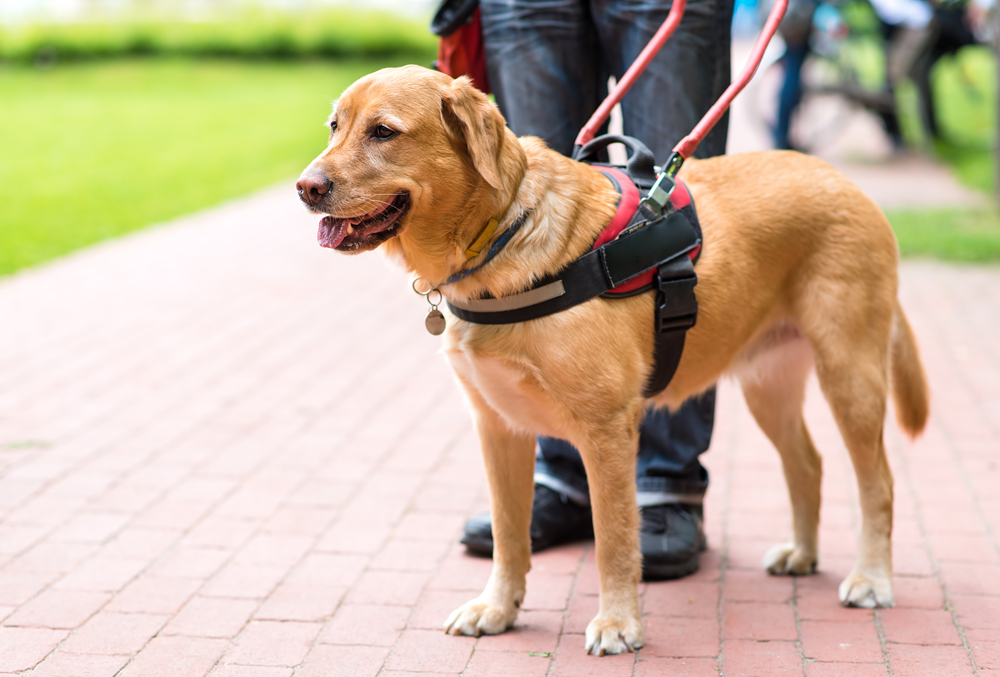
Best Guide Dog Breeds
Guide dog training organizations usually look for particular breeds based on their intelligence, adaptability, sociability, calm temperaments, focus, trainability, and physical capability. Working dogs that operate close to their handlers are generally the most successful.
What Happens If a Dog Doesn’t Pass Guide Dog Training?
Not all dogs that enter guide dog training programs are fit for the line of work. For those who don’t graduate, other lines of service work may be up their alley, or they may go up for adoption.
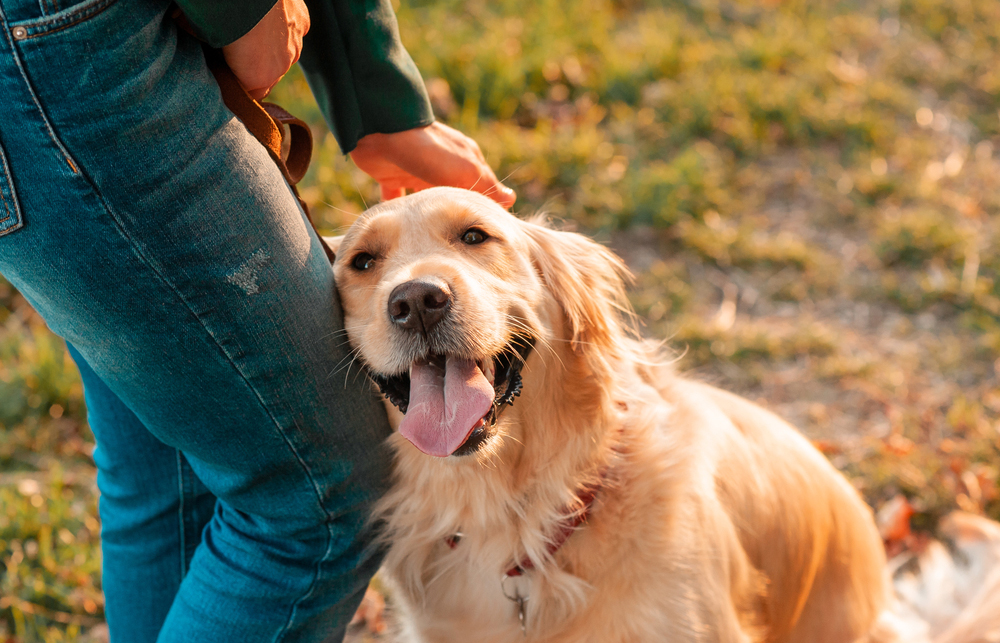
Most of the dogs are exceptionally well-behaved, social, and expertly trained, making them some of the most desirable companion animals for loving families.
Can You Train Your Guide Dog by Yourself?
The Americans with Disabilities Act doesn’t restrict who can train a service dog as long as they can perform a specific task. In some countries, guide dogs don’t need certification or registration proving professional training, though it’s rarely a feat you can accomplish without expert help. Canada and other countries do require guide dogs to be certified and registered, which might involve passing a test or graduating from a professional service dog training program.
Nevertheless, if you train your dog to perform guide duties competently, they’ll still receive the same access to public spaces that any other service dog enjoys.
How Long Do Guide Dogs Work?
Most guide dogs work for 8–10 years before retiring. Age slows a dog down, makes them more hesitant or error-prone, and creates challenges in performing their duties. They need extra care and attention, often more than their handler can offer. A guide dog may retire even earlier if they develop health issues or their handler’s needs change.
Final Thoughts
Guide dogs offer newfound independence and promote personal growth in ways that can transform their handlers’ lives. Given the vital role they play in keeping their people safe and comfortable, you can’t take a guide dog’s responsibility or their training lightly. It takes effort, patience, and often professional assistance, but following this outline on training a guide dog will give you the perfect foundation for turning your dog into a successful service animal.
Featured Image Credit: Roman Chazov, Shutterstock