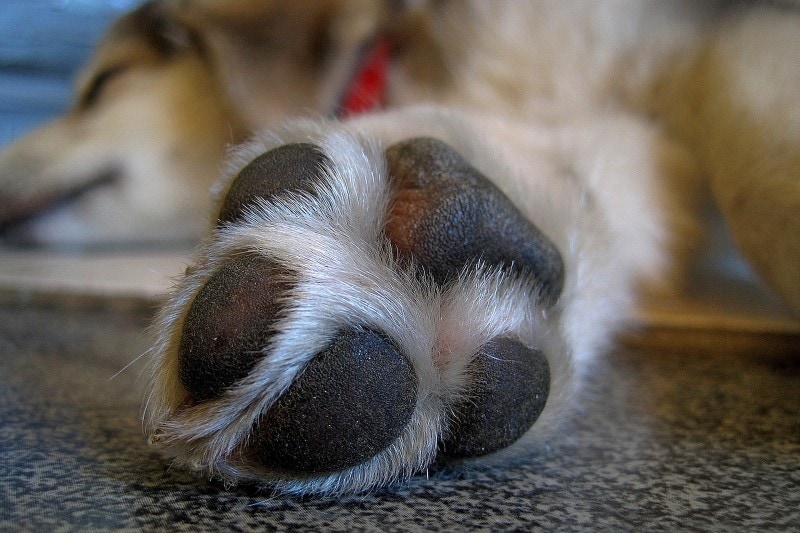
We all know that dog paws are seriously cute, but there’s a lot more to them than simple beany cuteness. The paws contribute greatly to many things your dog can do and are much tougher than they appear.
They’re also made up of several parts, with each part performing an important function to help dogs navigate a variety of terrains and survive in the wild. In this post, we’ll explore in more depth 10 fascinating facts about your dog’s incredible paws!

The 10 Fascinating Facts About Your Dog’s Paws
1. Dog Paws Have Five Parts
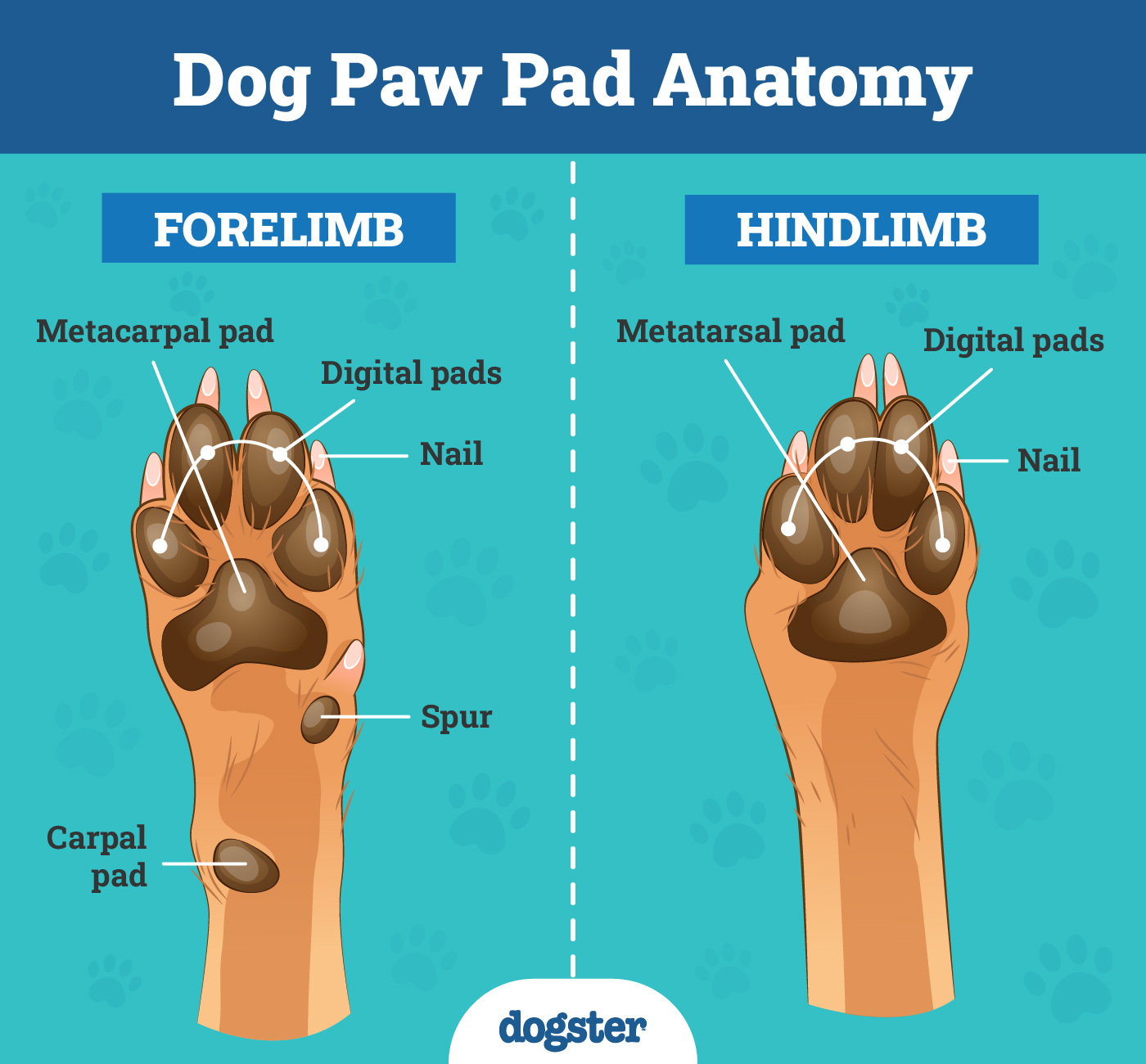
Those various black pads on your dog’s paws each serve different and important functions. There are the claws, a collection of digital pads, a metacarpal pad, a dewclaw, and a carpal pad.
Here’s how each part works:
- Digital and metacarpal pads: These pads absorb shocks, thereby helping to protect the foot bones and joints.
- Carpal pad: These function as a sort of brake, which helps dogs stay upright on slippery surfaces.
- Dewclaw: These are a bit like a dog’s thumbs and big toes. They provide support when a dog is making turns at high speeds to help prevent them from twisting their lower legs. They are sometimes used to hold onto things and climb up on things.
2. Dogs Use Their Toes to Walk
Dogs are digitigrades, which means that they walk on their toes with their feet lifted. The toes support the dog’s body weight, whereas, in humans, it’s the heel that takes the weight. Cats and hyenas are also digitigrades.
3. There’s a Reason Dog Paws Smell Cheesy
If your dog’s paws have a “cheesy” smell, you’re not alone! This is completely normal. Because your dog’s paws are always touching the ground, bacteria, fungi, and other microorganisms get attached to them. Licking adds more bacteria, as does sweating, altogether creating a recipe that’s simply bound to smell of cheese! Some people refer to it as more like a Frito smell.
All that said, if you notice that your dog’s paws start to smell really gross or you spot redness, pus, inflammation, dryness, or scaling, this is not normal, and the dog should be seen by a vet.
If you need to speak with a vet but can't get to one, head over to PangoVet. It's our online service where you can talk to a vet online and get the advice you need for your dog — all at an affordable price!

4. Dogs Sweat Through Their Paws
There are sweat merocrine sweat glands in dog paws. When the weather is hot, or a dog is nervous, for example, when they’re at the veterinary clinic, their paws may start to sweat. Dog sweat glands are few in number, so dogs rely mostly on other mechanisms, such as panting and the dilation of their vessels, to control their body temperature.
5. Some Dogs Are Polydactyls
Some dog breeds are polydactyls, which means a dog is born with more toes than the usual number. There could be six toes or even more in some cases. Polydactyly is more common in certain breeds, including the Norwegian Lundehund, the Akita, the Rottweiler, and the Great Pyrenees.

6. The Paws and the Brain Are Linked
The paws serve an important function in your dog’s sensory system and body awareness—they indicate to the brain the temperature and changes in temperature and pressure and send messages about the new and varied sensations the dog may encounter. This helps your dog make quick decisions.
7. Webbed Feet Indicate a Strong Swimmer
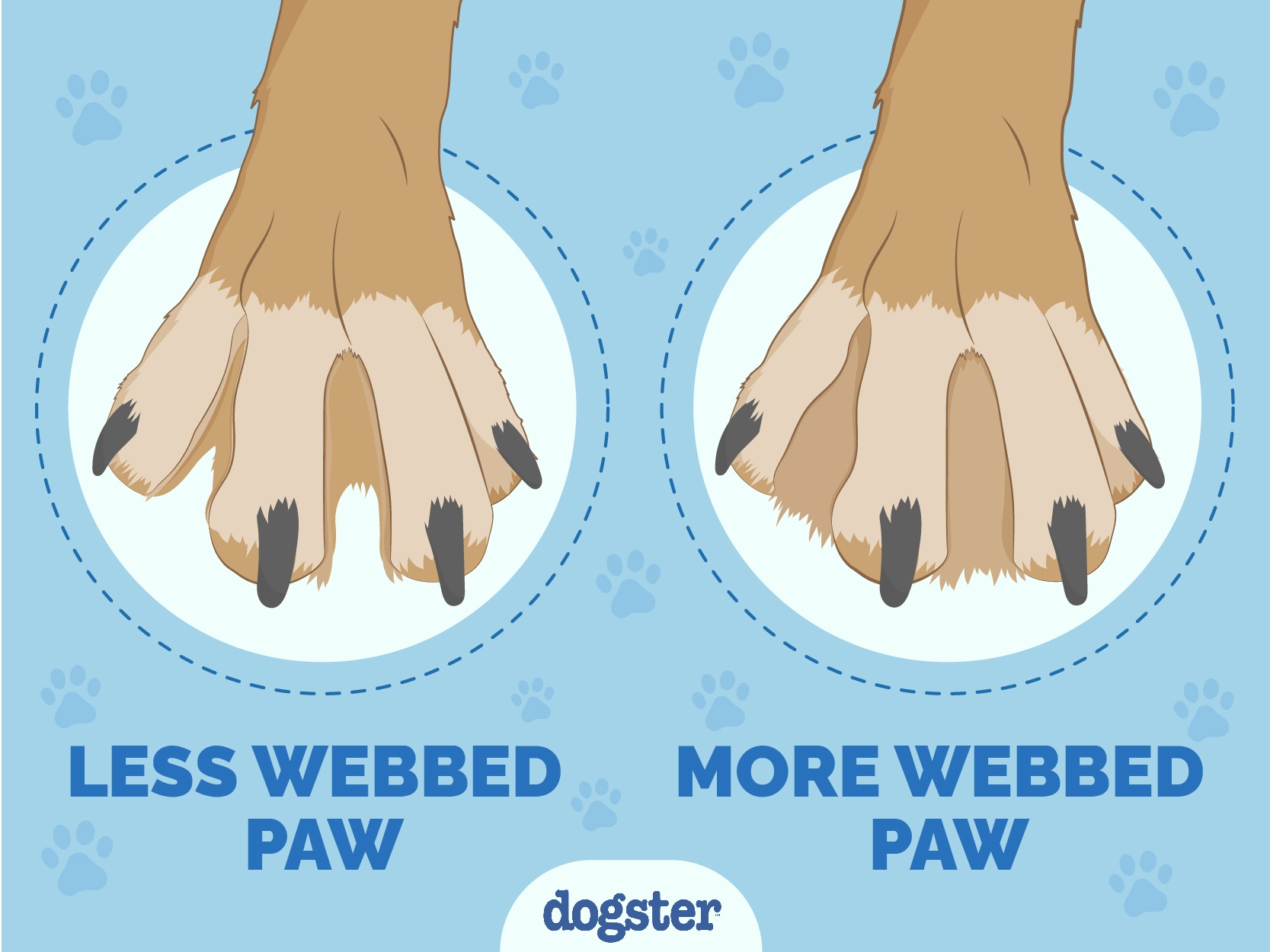
All dogs have some webbing between their toes, but some dogs have more prominently webbed feet, which indicates that the breed was originally developed as a water hunter. Webbed feet helped these dogs navigate water smoothly and retrieve waterfowl for their owners.
Breeds with more webbing on their feet include the Newfoundland, the American Water Spaniel, the Portuguese Water Dog, and the Labrador Retriever.
8. Hot Surfaces Are Very Bad for Your Dog’s Paws
Though paws are adapted to help dogs navigate rough terrain and—particularly for breeds that originated in cold environments—cold, slippery surfaces, no dog has paws built for hot surfaces. Hot sidewalks can cause a dog’s feet to blister, not to mention the risk of heat stroke caused by hot weather, so always be cautious—especially in the summer months.
9. There Are Many Types of Paws
Paws come in a variety of shapes and sizes. Some dogs have cat-like feet. All toes are of equal length, forming a half-circle around the central pad ( This gives the paw a similar look to a cat’s paw. Breeds with “cat paws” include Akitas and Doberman Pinschers. Their feet are designed for improved grip on uneven surfaces.
In addition to “cat feet”, some dogs have “hare feet”, which are feet with long middle toes that make them look like a hare’s feet. Dogs that originated in cold environments, like the Saint Bernard and Newfoundland, have large and wide paws because they provided more grip and support on slippery, cold surfaces.

10. Paw Fat Helps Keep Dogs’ Feet From Freezing
There’s a layer of fat inside dog paws that helps prevent the feet from freezing, which is why they can endure walking on cold surfaces like snow. That said, it’s important to be careful because dogs can still get frostbite and dried-out, chapped pads from snow and ice. For this reason, avoid letting your dog play in the snow or out in the cold for too long.

Conclusion
It can be surprising to learn just how intricate a dog’s paws really are! A complex system of nerves, blood vessels, and a collection of pads serving various functions, all of which contribute to a dog’s agility, ability to break when running or turning at high speeds, and capability to navigate a variety of terrains. There’s much more to those cute little feet than meets the eye.
See also:
- Can I Put Vaseline on My Dog’s Paw? Plus Tips For Usage
- Why Are My Dog’s Paws Pink and Black? 7 Possible Reasons
Featured Image Credit: Tiinuska, Pixabay
 The 10 Fascinating Facts About Your Dog’s Paws