In this article
Each dog needs something different from their food, and it isn’t just about their size but also their age and breed. Their dietary needs go beyond how much kibble you put in the bowl. It sounds complicated, especially when you walk into a store and see a wall of dog food promising you the best nutrition a dog can get.
When searching for the best food, select a high-quality recipe and ensure you use the correct amount according to your dog’s size. Too much dog food can lead to obesity, and too little can result in malnutrition, which can cause expensive health problems in the future.
You don’t want to get it wrong when it comes to nutrition. We’ve collected everything you’ll need to make an informed decision, whether your dog is small, medium, or large.

At a Glance

Let’s look at the critical aspects of each product.
- Perfect kibble size
- Health benefits
- Health risks for other breeds
- Perfect for “mid-size” breeds
- Health benefits
- Health risks for other breeds
- Nutritionally supportive of rapid growth
- Supports healthy weight
- Health risks for other breeds

Overview of Small Dog Food

Dog food for small dogs increases the calories without increasing the amount of food in their bowls by maintaining a higher fat-to-protein ratio. Kibble sizes are smaller for tiny mouths, and even the wet food for small pups is more finely ground. According to the American Kennel Club, there’s a risk of hypoglycemia in smaller puppies.
This is because they have low body fat and are very active. Tiny dogs need a rich diet to provide energy, and most large-breed meals are unsuitable. The signs to look out for in your pup that may indicate hypoglycemia are weakness, lethargy, muscle tremors, and seizures.
Small breed recipes are unsuitable for larger breeds that need to eat larger quantities of food that are not as nutritionally dense. If a larger canine were to eat food for smaller breeds, they could overeat since they would need more of the smaller kibble to fill up.
- High-calorie count
- Small kibble sizes
- Nutritionally rich without increasing food intake
- Too nutritionally dense for larger breeds
- Larger breeds would have to overeat to fill up
Overview of Regular Dog Food

Dog food formulated for medium-sized breeds contains the ideal amount of nutrients and calories for dogs without dietary restrictions. Medium-breed dogs are the most common in the U.S., but they sometimes fall into other size brackets. For example, adult dogs between 20 and 50 pounds can be described as “mid-size,” but a 30-pound difference is a large one.
Some small or large dogs can also fall into the medium category, especially if they are mixed breeds. Beagles and basset hounds are examples of this scenario, depending on their weight. This means medium-sized dogs would, in a way, have their pick of the menu, depending on their nutritional needs.
For a smaller breed, the kibble size would be too large. You could crush the kibble, making it easier for your smaller pup to eat. However, you would have to put more food in the bowl since regular food is not as nutritionally dense.
The kibble size wouldn’t be a problem for a large breed, and they could safely eat regular dog food. However, a bigger dog benefits from the nutritional content of large-breed meals that regular food lacks.
- Nutritionally and size perfect for a medium-sized breed
- Depending on weight, some small and large breeds could eat this food
- Nutritionally deficient for much larger dogs
- Small dog at risk of overeating on this diet
Overview of Large Dog Food

A common misconception about larger breeds is that a bigger body means more food, but that isn’t necessarily true. A common problem with larger breeds is overfeeding, and it’s estimated that obesity can take as much as 2 years off of your pet’s life.
Bigger dogs grow much faster than smaller breeds, with some weighing over 100 pounds in under a year! This means that larger breeds have certain risks that you need to consider, which an owner of a smaller dog won’t need to.
Recipes for larger breeds have been formulated to keep the dogs at a healthy weight. When contemplating which brand to buy, choose a high-quality diet with lean proteins and a mix of vegetables, vitamins, and minerals. Improper nutrition can lead to severe health conditions, like low bone development.
- Supports the nutrition a large breed requires
- Less likely to overeat
- Food formulated to support healthy growth and development
- Choking hazard to smaller breeds
- Nutritionally unsupportive of a smaller breed’s needs
What Are the Differences Between Them?
When picking food for your dog or puppy, you need high-quality recipes, but what does that mean?
How to Read a Dog Food Label
One of the first things you’ll examine as a conscientious owner is the dog food’s nutrition label. While it’s essential to read, sometimes it can feel pointless because the information isn’t always easy to interpret. Here are a few things to look for on the label:
- You want to see “complete and balanced”
- Life stages (puppy, adult, etc.)
- Check ingredients for anything your dog is allergic to
When it comes to “complete and balanced,” it means the food contains the minimum amount of nutrients, vitamins, and minerals necessary to ensure nutrient efficiency. If you’re ever unsure about the quality of a dog food brand, contact your veterinarian. They can give you an idea if the formula is made from quality ingredients such as meats, grains, vegetables, and fruits. You can also contact the manufacturer or visit their website to make an informed decision.

Other questions you will want to ask when visiting the manufacturer’s website are:
- Do they follow AAFCO feeding trials?
- How many calories are in their servings?
- Where do they source their ingredients?
- Do they manufacture in-house or outsource?
Determining how much you should spend on food can be challenging, but it’s wise to stay away from the cheapest option. Expensive products can make you wince, but you get what you pay for with dog food.
However, the most expensive option does not always indicate the best quality, either. By talking to your vet, you should be able to find a brand that won’t break the bank or sacrifice nutrition.

Summary
Each dog needs something different from their food because they develop in different ways. Choosing the best food for your canine is daunting because the diet is vital in preventative healthcare. Arguably, the best resource you have is your vet. We recommend getting professional advice if you are unsure which formula to select.
- Related Reads: Small vs Medium Dog: The Main Differences Explained
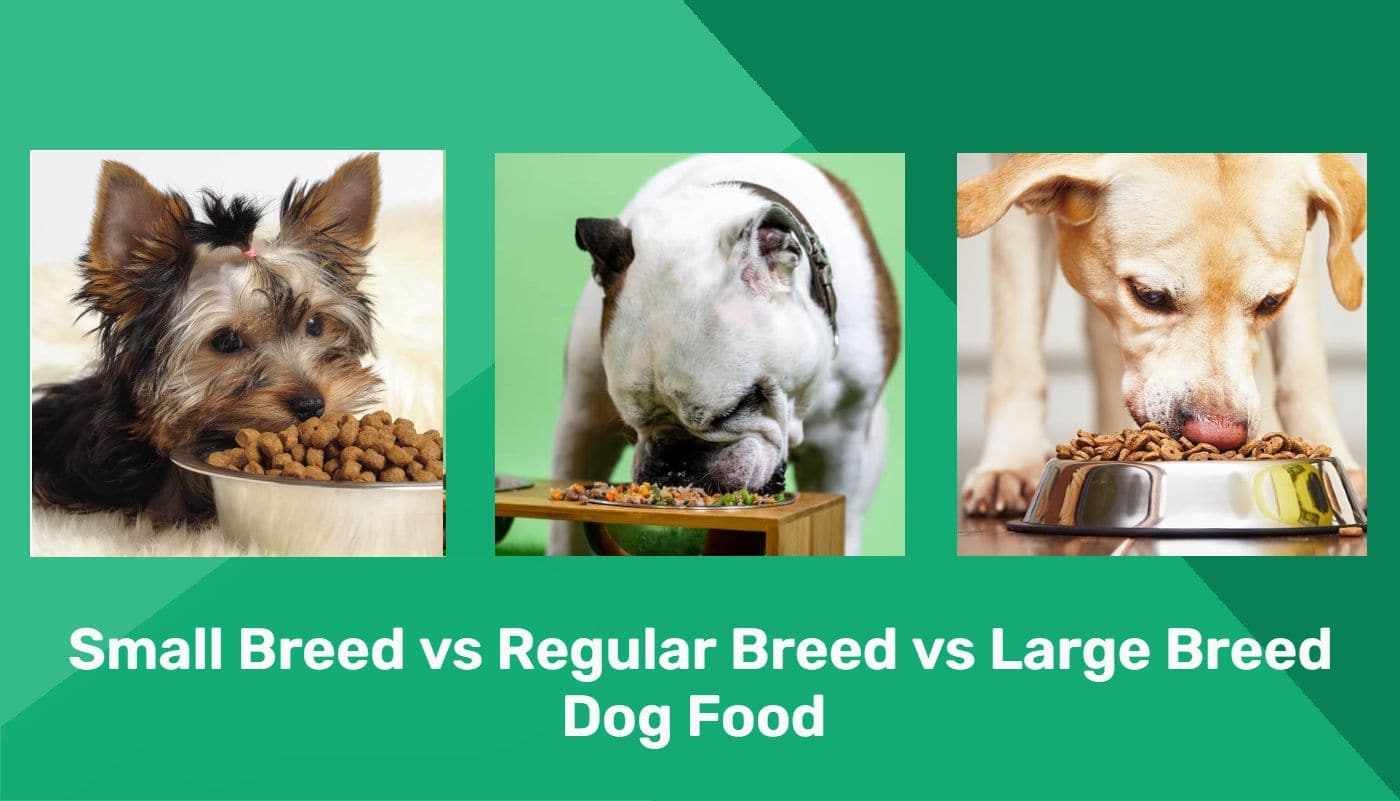
Featured Image Credit: Left: Small Dog Eating (Image Credit: Scorpp, Shutterstock) Middle: Regular Dog Eating (Image Credit: Kabo, Unsplash) Right: Large Dog Eating Image Credit: Jaromir Chalabala, Shutterstock