In this article
View 4 More +Bloat, or GDV (Gastric Dilatation-Volvulus), is a serious, life-threatening emergency commonly seen in middle-aged to older dogs. However, this condition can occur in any age, breed, and size of dog, though any age “deep-chested” dog is more prone to the condition. Bloat is a medical emergency that needs to be taken seriously. If you own a deep-chested dog, bloat is something you need to be aware of, and have a plan in place in case it happens to your dog one day.

What Is Bloat?
Bloat is the lay term for gastric dilatation-volvulus. This is when the stomach of the dog rapidly expands and dilates, then turns (twists) on itself. The dilation can be caused just by gas, and other times it can occur with rapid ingestion of water and/or food and then gas. The stomach will become severely enlarged and then turn 180 degrees on itself. Once it turns on itself, the dilation continues. In rare cases, the stomach can turn 360 degrees with the same effect.
The combination of the severe expansion and turning of the stomach can have significant consequences including abnormal blood return to the heart from the abdomen, abnormal blood flow to the stomach and/or spleen, and compression of the major vessels within the abdomen causing lack of blood flow to other organs. As the stomach continues to expand, this will put pressure onto the diaphragm, lungs, and chest, causing your dog to also have difficulty expanding their lungs and breathing. The stomach may even rupture, or open up from the expansion, spilling toxic bacteria and contents into the abdomen.
Eventually, this condition will cause death if not treated quickly and professionally. Your dog can die from lack of blood flow, the rupture of the stomach, cardiac arrhythmias from the pain and abnormal blood flow, and/or multi-organ shut down from the lack of blood flow and oxygen to the cells. This death is imminent and will occur unless your dog is treated.
What Are the Signs of Bloat?
Classic signs of bloat include an acutely distended abdomen. When you tap on the distension, it will actually “ping” and have a tympanic sound like a drum. Your dog will often be pacing and/or won’t lie down as it’s extremely uncomfortable to do so with the stomach distended. Dogs will retch, gag, and act like they are attempting to vomit but nothing comes out. If they produce anything while retching, it’s usually just saliva or foam from the esophagus and trachea. This is because when the stomach turns on itself, nothing can enter and/or leave the stomach – it is essentially twisted shut.
You may also notice your dog panting and breathing heavily, having very pale gums and acting extremely uncomfortable. The longer the bloat goes on, the weaker your dog will become. A sign of progressive disease is collapse, severe weakness, and your dog having complete inability to get up, walk, or even move.
As mentioned above, bloat is fatal if not treated. Unfortunately, some people may be gone and come home to find their dog has already died from this disease. If your dog’s abdomen has a tympanic distension as described above, they may have passed away from bloat.
Seek veterinary advice if you’re concerned about your pet’s well-being.
If you need to speak with a vet but can't get to one, head over to PangoVet. It's our online service where you can talk to a vet online and get the advice you need for your dog — all at an affordable price!
What Are the Causes of Bloat?
There have been several studies attempting to pin down exact causes of GDV. The fact of the matter is that while there are certain risk factors, it can occur to any dog at any time. Personally I’ve seen dogs get bloat in the middle of the night while they are sleeping, or when owners arrive home and their dog has been kept in a crate all day. Sometimes we just don’t have a rhyme or reason for why bloat occurs.
Risk factors that have been identified over the course of studies almost all include a deep-chested dog. In other words, dogs who have a very deep and broad chest as compared to their abdomen. Think about a Great Dane or even a Labrador Retriever, and how deep their chest is as compared to their abdomen. We can also see smaller dogs such as Basset Hounds and Dachshunds have deep chests, putting them at risk for bloat.
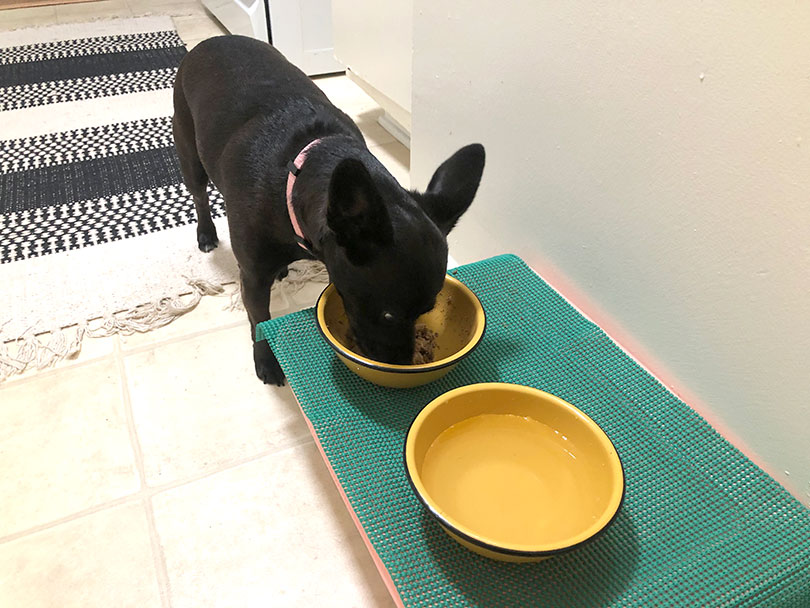
Bloat is frequently associated with dogs who only eat once a day, or who will acutely eat a large meal and/or ingest a large amount of water in a single sitting. This will make the stomach expand rapidly, potentially putting it at risk for GDV. This is also a concern with dogs who frequently swim, or chase a ball that is thrown into water for them to fetch. The dog is running, panting, and swallowing air which will naturally expand their stomach. If they then ingest water while fetching and/or swimming, this may then acutely expand their stomach even more.
While bloat can be seen in any age dog, we do tend to see it more frequently in middle-aged to older dogs. It can also be more common in dogs who have an elevated feeder; the theory is that they may be ingesting more air while eating than dogs who eat out of a bowl on the floor.
How Do I Care for a Dog With Bloat?
If you suspect your dog has bloat, you need to get them to the nearest emergency clinic as fast as possible. The emergency veterinarian will take a radiograph to determine if your dog has bloat or not. There is a very signature appearance of the stomach in dogs who have GDV. Emergency surgery is then needed to appropriately treat and save your dog. There is absolutely nothing you can do for your dog at home in this situation.
Unfortunately, without surgery, your dog will likely pass away from bloat. Because the surgery is an emergency and can be difficult to perform, it’s also not an inexpensive undertaking. We’re talking typically in the thousands of dollars to treat. The veterinarian performing the surgery needs to open up the abdomen of your dog, de-rotate the stomach, and potentially remove any dead tissue that is present. They will then typically tack your dog’s stomach to the side of their body to help decrease bloat occurring again. Once out of surgery, your dog is still at risk for post-op complications for days as the blood flow returns to their other organs.
Many people are unable to pursue surgery for bloat due to the cost. In these cases, some veterinarians are able to decompress the stomach by passing a tube from the mouth into the stomach under anesthesia to release the gas. Once the gas has been removed, the stomach may turn back to the normal position. The problem with this treatment is that often a tube cannot be passed into the stomach because it has been twisted so tight that nothing can come or go. In addition, even if the tube can be passed, there is no guarantee that the stomach will turn back to the normal position once decompressed. The veterinarian is also not able to visualize if there is any dead tissue present from the damage. Unless surgery is completed to manually turn and tack the stomach, you will just be hoping everything will normalize.
Frequently Asked Questions (FAQ)
Can Bloat Be Prevented?
If you have a deep-chested dog, some veterinarians recommend performing a gastropexy when they are neutered or spayed. This is a surgical procedure that will tack the stomach to the side of the abdominal cavity with the hope that it won’t turn on itself. While this surgery is effective, it is not fool-proof. It’s never recommended to only feed your dog once a day, and never feed them from an elevated feeder unless they have an underlying neck pain issue. There is no way to completely prevent bloat, but there are things you can do to decrease the risk.
What If I Cannot Afford Surgery?
Humane euthanasia is typically recommended to pet parents who cannot afford the surgery for bloat. This isn’t due to veterinarians being cruel; it’s because unless surgery is performed, your dog will suffer an excruciating, painful, and uncomfortable death. Even with surgery, your dog may succumb to the post-op risks associated with the disease. In addition, not all veterinarians perform this surgery due to its emergent nature.
What About Insurance?
If you own a medium to large breed dog, and definitely if you own a giant breed dog, we recommend getting pet health insurance when your dog is young. Animal health insurance often covers a number of emergency situations, such as surgery for bloat. While you will be responsible for the cost of the surgery up front, your insurance company may reimburse you for a portion or all costs associated with the surgery. People will then use the repayment to pay off the credit card they used for surgery. All insurance companies are different and a lot of online comparisons are needed to determine the best coverage for you and your family.
Conclusion
Bloat is one of the few, true surgical emergencies that we see in veterinary medicine. It’s most common in deep-chested dogs, but any dogs of any age and breed can be affected. You may notice your dog starting to have a distended abdomen, have trouble breathing, develop pale gums, and be attempting to vomit but not producing anything. You should bring your dog to the closest emergency veterinarian immediately should you notice any of these signs.
Your veterinarian will take radiographs to rule in/out bloat, and then recommend emergency surgery. Without any type of medical or surgical intervention, bloat (or GDV), is a fatal disease. Even with surgery, there are risks associated both in surgery and after. Insurance on any deep-chested dog and prophylactic gastropexy at the time of a spay or neuter are recommended to try and reduce your dog’s risk. Even with these, GDV may still occur at any time.
Featured Image Credit: Lucky Business, Shutterstock