It’s 6 AM on a Saturday, and your dog is at the window, barking at absolutely nothing you can see. Or maybe it’s a person walking by three houses down. Or a leaf. The point is, the barking won’t stop, your neighbors are probably awake now, too, and you’re wondering if you’ll ever experience silence again.
Dogs bark. It’s how they communicate with us and everything around them. But when barking becomes excessive, it stops being communication and starts being a problem that needs solving. The good news? You can train your dog to bark less without turning into the yelling, frustrated person you swore you’d never become.

Why Your Dog Is Actually Barking
Before you can fix the barking, you need to understand what’s driving it. Dogs don’t bark to annoy you, even though it feels that way at 6 AM. They bark because something is triggering that response.
- Territorial barking happens when animals or people enter what your dog considers their space.
- Attention-seeking barking is your dog’s way of demanding food, treats, playtime, or just your focus.
- Alarm barking is a response to sounds and sights, not necessarily a territorial thing, just “Hey! Something’s happening!”
- Greeting barking is your dog saying hello, typically accompanied by a wagging tail and relaxed body language.
- Then there’s frustration-induced barking, which happens when your dog is confined or separated from something they want to reach.
- Compulsive barking involves repetitive barking often paired with repetitive behaviors like pacing.
- And finally, socially facilitated barking is when one dog starts barking and yours joins in because, well, everyone else is doing it.
Figuring out which category your dog falls into gives you the roadmap for actually fixing the problem.

What Actually Works
1. Start by Identifying the Trigger
This is the most important step and the one people skip most often. What sets your dog off? Boredom? People at the door? Other dogs walking by? Once you know the trigger, you can either remove it or reduce its impact. A bored dog needs more physical and mental exercise. A territorial dog needs their view blocked. You can’t train away barking if you’re not addressing the root cause.
2. Stop Accidentally Rewarding the Barking
Your dog barks. You feed them to quiet them down. Congratulations, you’ve just taught your dog that barking gets them food. If your dog is barking for attention, the most effective response is to ignore them completely. Turn your back and walk away. They’ll eventually learn that barking doesn’t work, and you can reward them for being quiet instead.
3. Teach Alternative Ways to Get Attention
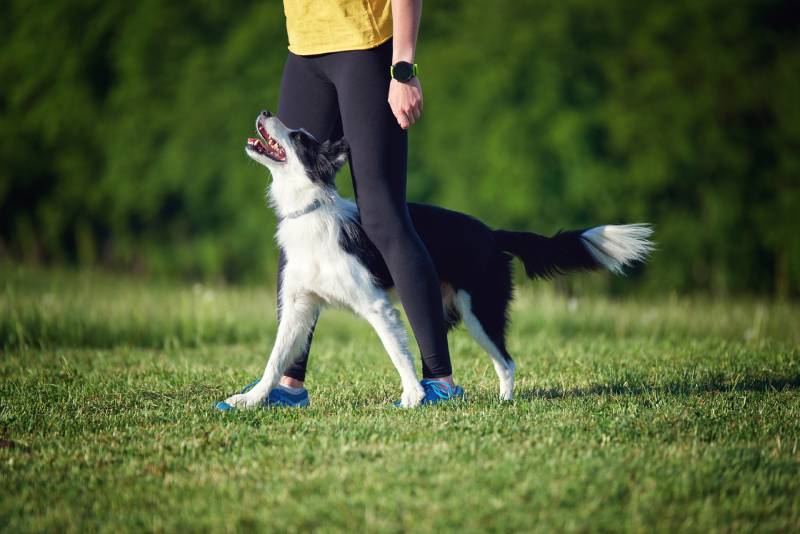
Once you’ve stopped responding to barking, you need to give your dog a different method to get what they want. Teach them a quieter behavior, like sitting at your feet and making eye contact. Only reward this quiet behavior, and ignore the barking. Your dog will figure out which approach actually works.

4. Train the “Quiet” Command
This builds on the previous tip but adds a verbal cue. When your dog is barking and then stops, even for just a moment, give them a high-value treat. That split second of silence gets rewarded. Each time they bark and stop, wait a little longer before treating. As you start anticipating when they’re about to stop, introduce a command like “quiet” or “settle.” Treat them when they stay quiet. Eventually, your dog will learn to stop barking on cue.
5. Don’t Leave Them Alone for Hours
Dogs are social animals who need companionship. Dogs left alone for extended periods, whether outside unsupervised or indoors while you’re at work for 10 hours, often resort to barking. They’re bored, lonely, or both. Keep your dog occupied and engaged. They need exercise and playtime with you, not to be tied up in the yard, which isn’t exercise anyway.
6. Build Self-Control Through Training
Some dogs bark because they can’t handle impatience and frustration. Obedience training helps your dog feel like they have more control over their environment. Commands like “leave it” or “watch me” teach patience and show your dog that waiting has rewards. They don’t need to resort to barking to get what they want.
7. Create a “Go to Place” Spot
Designate a calm, comfortable spot as your dog’s retreat. This could be their bed or crate, as long as they enjoy it and associate it with peace and quiet. Train your dog to “go to place” when something triggers their barking, like visitors arriving. This removes them from the triggering situation and gives them a job to do instead of barking.

8. Keep Your Dog Away From the Door
If people arriving sets off your dog, whether from excitement or anxiety, don’t let them greet guests at the door. Use the “go to place” command, or set up a baby gate or pen as a barrier from the entryway. Once your dog calms down, you can bring them in to socialize. This prevents the barking from starting in the first place.
9. Block Their View of the Outside World
Territorial dogs love watching the neighborhood from windows. They bark at everyone passing by, including the mail carrier, and the behavior becomes self-reinforcing. The dog walker leaves after your dog barks, so your dog believes they successfully scared them off. The simplest fix? Block the view. Invest in thick curtains or bottom-up blinds that block the view while still letting in light.
10. Get Professional Help When You Need It
Sometimes you need backup. Professional dog trainers and behaviorists who use positive reinforcement can provide personalized guidance. Additionally, some health issues like hearing loss, contribute to barking, and extreme separation anxiety requires veterinary help. Don’t struggle alone if the problem is beyond your ability to solve.
What Not to Do
Never use punishment to stop barking. Punishment creates fear and anxiety, which leads to worse behavioral issues down the line. Don’t invest in electronic shock collars, which are inhumane and ineffective. Don’t consider debarking surgery, which involves cutting your dog’s vocal cords. These are cruel solutions to a problem that can be solved with patience and proper training.
Dogs have legitimate reasons to bark sometimes. While training takes time and consistency, it’s the most effective method and will strengthen your bond while creating a more well-adjusted dog.

The Real Work
Addressing excessive barking isn’t a quick fix. It requires understanding why your dog barks, staying consistent with your training approach, and providing the love and support your dog needs to learn when barking is appropriate and when it’s not.
Your neighbors will thank you. Your sanity will thank you. And your dog will be happier too, because excessive barking often stems from stress, boredom, or frustration. Solving the barking problem usually means solving an underlying issue that was making your dog unhappy anyway.
Start by identifying the trigger. Remove or reduce it when possible. Train alternative behaviors. Stay consistent. Be patient. And remember that your dog isn’t barking to ruin your Saturday morning. They’re communicating the only way they know how. Your job is to teach them a better way.
Feature Image Credit: atiger, Shutterstock
Did You Know?
 Why Your Dog Is Actually Barking