In this article
It’s mealtime, and your dog excitedly runs to their bowl. They devour their food, and then, a few minutes later, you hear the all-too-familiar sound of them vomiting. How often does this happen in your home? If your dog throws up often after eating, you’re probably concerned and curious about what could be causing this behavior. Several causes could be to blame for your dog’s post-meal emesis.1
Keep reading to find nine potential reasons your dog throws up after eating.

The 9 Reasons Why Your Dog Throws Up After Eating
1. You’re Transitioning Them to a New Dog Food
If you’ve recently changed your dog’s food, they might be dealing with gastrointestinal upset. This is especially true if you transitioned them to a new food too fast. It should take 7 to 10 days to transition a pet to a new diet fully. If you do it too quickly, their stomach can become upset, and that’s when they start throwing up after their meals. By transitioning them slowly, you can see how their body reacts to the new food and if it agrees with their stomach.
2. They Ate or Drank Too Much
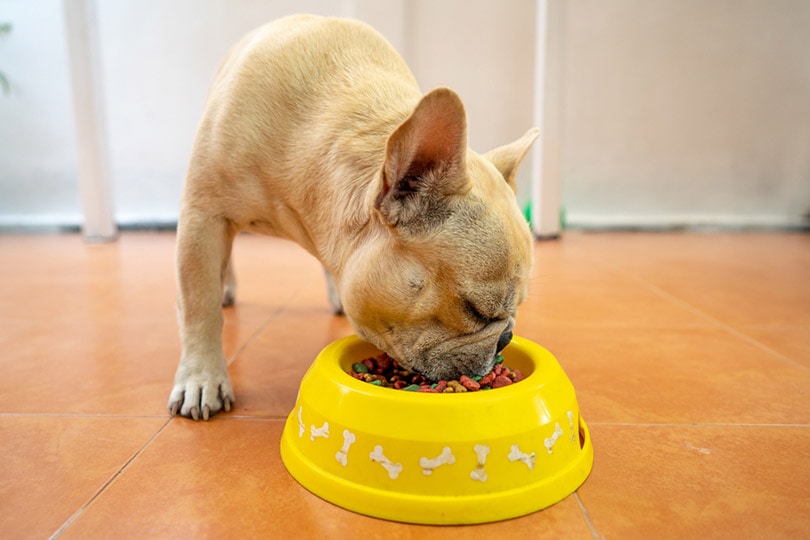
Just like when we eat or drink too much, dogs can throw up after big meals. Some dogs are very food-motivated and get very excited about mealtime. They might inhale their food within minutes or swallow it whole without chewing it. There’s only so much room in your dog’s stomach, and if it fills up too fast, your pup could throw everything back up.
If you know that your dog likes to eat more than they should at one time, you can use a slow feeder bowl to prevent them from scarfing down their food.
3. They Ate or Drank Too Fast
A telltale sign that your dog has eaten or drank too fast is when they throw up near their food bowl, and it looks like it has food in it with liquid. This is a common problem in multi-dog households when one dog eats their food and then moves to the other dog’s bowl to eat theirs. If this is the case, you might consider feeding your dogs in separate rooms so they can take their time eating their meals.

4. They Ate Something They Shouldn’t Have
Every pet owner has, at some point in time, said the words, “What are you eating?” as they frantically run over to their pet to see what they have in their mouth. It could be that your dog is throwing up after eating because he’s eaten something he shouldn’t have.
Some dogs have an eating disorder called pica, where they eat inedible items. Some dogs will eat wood, plastic, or even rocks. Others will develop coprophagia, a condition where they eat feces. This is more common in puppies, but it can carry over into adulthood if it’s not treated when they’re puppies.
Sometimes, dogs can get into trouble in their backyard and house. If they eat a toxic plant or flower, they might start vomiting to rid their bodies of the toxins. Here’s a comprehensive list of poisonous plants for dogs that you should read through to ensure your plants and trees aren’t accidentally hurting your pup.
When your dog eats something inedible, their body is unable to break down the item in their digestive tract. Their stomach muscles will start to contract to expel the foreign body from their cycle via vomiting.
5. They Ate Grass
Dogs sometimes eat grass when they’re out playing in the yard. Eating grass is another form of pica and can often cause vomiting. Dogs will eat grass for a wide variety of reasons. Some might gnaw on the greenery to make themselves vomit if they’re not feeling well. Others might eat grass to improve their digestion, treat their intestinal worms, or in an attempt to fulfill a nutritional need they’re not meeting.

6. Their Food Doesn’t Agree With Them
Sometimes vomiting after eating happens because the food they have eaten just doesn’t agree with their stomach. If their food has dyes, preservatives, and additives in it, they could be throwing up because of these components.
The best way to rule out if their food is causing their vomiting is to educate yourself on how to read and decipher dog food nutrition labels.
7. They Ate Their Dog Bone
Many dogs love to chew things like bones and sticks. When they chew on them, some of the bone or wood will get into their digestive system, eventually causing gastrointestinal upset and vomiting.
There are two main factors to consider before buying a commercially-made dog bone to ensure they get the healthiest and safest variety. The bone’s ingredients should always be all-natural. You don’t want your dog to gnaw on something made with preservatives or artificial flavoring. The next factor to consider is the bone’s size.
You shouldn’t get one that’s too big or too small for them, as bones that are too big can break teeth, and ones that are too small can cause choking.

8. They Have a Health Condition
Several health conditions include vomiting as a sign. Though these conditions may not happen right after your dog eats, it is worth having your dog seen by the vet to rule them out.
- Pancreatitis
- Pancreatic tumors
- Kidney failure
- Liver failure
- Bladder obstruction
If you’re concerned about your pet’s well-being, we recommend you contact a veterinarian.
If you need to speak with a vet but can't get to one, head over to PangoVet. It's our online service where you can talk to a vet online and get the advice you need for your pet — all at an affordable price!

9. They Are Stressed or Anxious
Stomach aches are common when humans feel stressed or anxious; the same is true with dogs. If you’ve recently adopted your dog, you might see vomiting more often as they become accustomed to their new environment. If that is the case, be patient and keep your vet informed about the behaviors you’re seeing. It could just be that being in a new home is stressful and anxiety-inducing, and your dog just needs time to get used to the environment.


What Should I Do If My Dog Throws Up After Eating?
If your dog throws up one after mealtime and is acting normal and like themselves, their vomiting might not be much of a concern. It could be a one-time occurrence. If you notice them throwing up after meals often or if their vomit is bloody and they are not acting like themselves, you should make an appointment with your vet to rule out any severe health conditions.
Your vet will do a physical examination that may or may not include laboratory examinations afterward. They will look at your dog’s heart and respiration levels and check their mouth and abdomen. If they deem it necessary, the vet might also request a complete blood count and chemistry profile to get a better idea of your dog’s overall health.

How Can I Prevent My Dog From Vomiting After Meals?
You should take your dog to the vet if they vomit after meals frequently so the vet can rule out any potential health conditions. However, there are some things you can do to ensure your dog stays in tip-top shape if you notice they occasionally vomit after eating.
It’s vital to provide a well-rounded and nutritious diet. High-quality food will ensure your dog gets the nutrients and vitamins they need to live a healthy life. Exercise is another essential component of a healthy lifestyle. Daily exercise will help your dog maintain a healthy weight.
Annual visits to the vet are essential in staying healthy and staving off disease. You might also consider examining your backyard for hazards. Does your dog spend a lot of unsupervised time there? Are there things back there that they could get into that cause vomiting, such as unattended garbage?

Conclusion
It’s nerve-wracking to see your dog uncomfortable after meals, especially if they’re vomiting. If your dog is throwing up after eating but acting normal, the cause may be something harmless, like a meal eaten too fast. If you’re unsure of the cause of your dog’s vomiting, you should take them to the vet to ensure they don’t have a serious health condition.
See also:
- Why Do Dogs Eat Their Vomit? Vet-Reviewed Reasons & What to Do
- Why Is My Dog Throwing Up Bile? Vet-Reviewed Causes & Treatments
Featured Image Credit: Lindsay Helms, Shutterstock