Get

In Your Inbox

Dogster is reader-supported. When you buy via links on our site, we may earn an affiliate commission at no cost to you. Learn more.

Pancreatitis in Dogs: Our Vet Explains Signs, Causes & Care Guide

Share

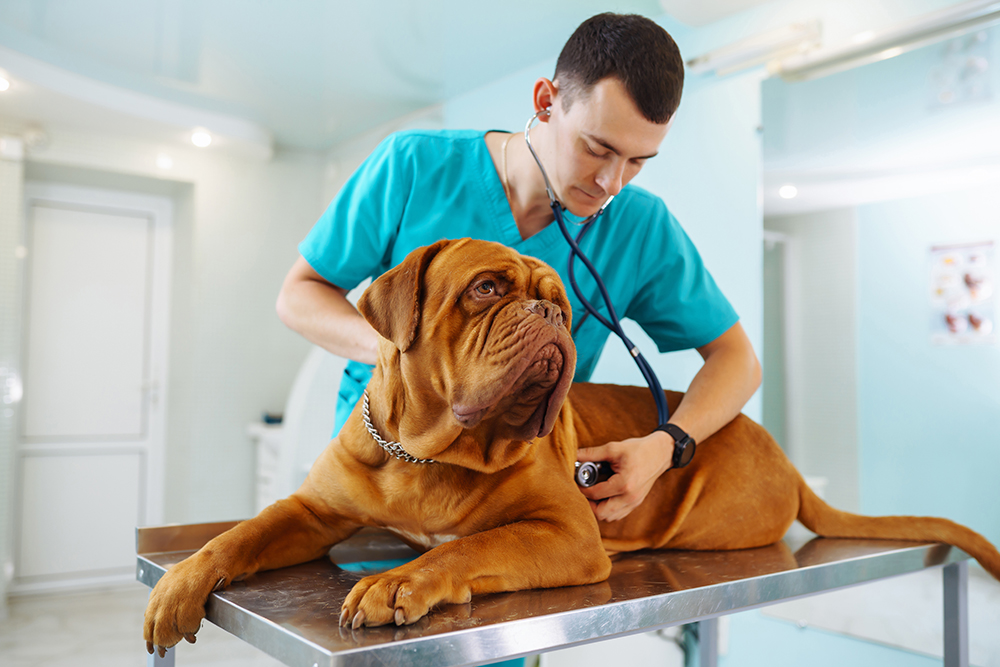
veterinarian checking up on dogue de bordeaux dog

Pancreatitis in dogs is up there with the most serious forms of “tummy ache”. The pancreas is an organ in the abdomen responsible for producing hormones such as insulin, and enzymes that aid in the digestion of food. Pancreatitis refers to an inflamed, angry pancreas, and the cause of this disease is not fully understood.

The signs of pancreatitis can be vague or “non-specific”, and although the condition usually arises very quickly, it can become an ongoing or chronic problem too. This article will explore everything you need to know about canine pancreatitis, what to watch for, and how vets go about treating it.

divider dog paws 2 oct 2024

What Is Pancreatitis?

Pancreatitis refers to inflammation of the pancreas. Understanding pancreatitis requires a basic understanding of the pancreas itself.

The pancreas is an organ near the stomach with several very important functions. One of these functions is the production of insulin, which maintains blood sugar levels in a tight range—not too high, and not too low. Another function of the pancreas, more pertinent to the pancreatitis disease process, is the production of enzymes that help break down food. These enzymes are released from the pancreas into the intestines after your dog eats a meal, in order to aid digestion.

Pancreatitis occurs when these enzymes are released prematurely, and thus the enzymes start to “eat away” at the pancreas itself, as opposed to food. This results in inflammation, and inflammation results in pain. The pancreas itself becomes swollen and angry; in more severe forms, it may even start to be destroyed.

sick-beagle-dog-lying-on-the-floor
Image Credit: Elena Loza, Shutterstock

divider dog paws 2 oct 2024

What Are the Signs of Pancreatitis in Dogs?

The signs of pancreatitis in dogs often occur very quickly; your dog may be fine one day, and very unwell the next. Additionally, the signs are fairly “non-specific”; this means that these same signs are seen with other diseases too, such as gastroenteritis or foreign body blockages.

Common signs include:
  • Reduced appetite
  • Lethargy
  • Vomiting and diarrhea
  • Abdominal pain
  • Adopting a “prayer position”
  • Excessive drooling or lip-licking
  • Dehydration
  • Collapse

A vet will be able to advise you on the best course of action to ensure the well-being of your pet.

If you need to speak with a vet but can't get to one, head over to PangoVet. It's our online service where you can talk to a vet online and get the advice you need for your pet — all at an affordable price!

PangoVet_Mention-in-Content Savings V1

What Are the Causes of Pancreatitis in Dogs?

Unfortunately, the cause of pancreatitis in dogs remains largely unknown. It is believed that pancreatitis is often linked to ingestion of a highly-fatty food. For example, if a dog is fed some fatty meat, bacon, or fish skin, they may be at risk of developing pancreatitis.

However, pancreatitis can also develop spontaneously, without being fed fatty food. Certain medications have also been linked to pancreatitis.

dachshund sick dog vet
Image Credit: SeventyFour, Shutterstock

divider dog paws 2 oct 2024

How Do I Care for a Dog with Pancreatitis?

Pancreatitis requires prompt and aggressive veterinary treatment. Most cases of pancreatitis cannot be managed at home, due to the seriousness of the condition and the risk of deterioration (though this may be appropriate in mild or chronic cases).

The vast majority of dogs will need to be admitted to a veterinary hospital for diagnostic tests and treatment.

Treatment of pancreatitis in dogs usually involves:
  • Fluids via a drip (“intravenous fluid therapy”) to manage hydration
  • Injectable pain-relief medications
  • Anti-nausea medications
  • Frequent feeds of bland low fat food
  • Occasionally, stomach protectants

In severe cases, in which sepsis is occurring (overwhelming infection), dogs may be started on antibiotics. If dogs have not eaten for several days, feeding tubes may need to be placed to ensure these patients are receiving nutrition. Most dogs will stay in the hospital for at least 24 hours and often longer.

divider dog paws 2 oct 2024

Frequently Asked Questions

How Is Pancreatitis Diagnosed?

Pancreatitis is diagnosed using a combination of history-taking, physical examination findings, and diagnostic tests. These tests include screening blood and urine tests, as well as specific pancreatic-lipase tests and imaging. Though in people, CAT scans are commonly used to diagnose pancreatitis, this is not the case in dogs. Abdominal ultrasound is a very useful tool to visualize the pancreas, as well as the intestines, gallbladder, and other abdominal organs.

While technically speaking the only way to definitively diagnose pancreatitis is via surgical biopsies, this is rarely used as it is highly invasive, and the other tests give us a good enough idea that pancreatitis is there.
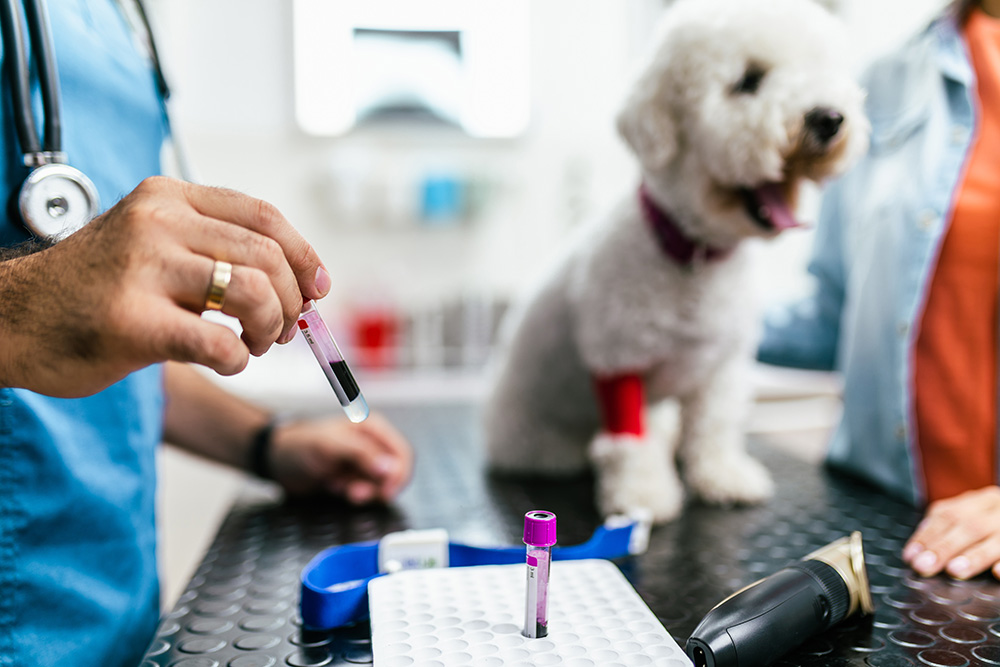
blood samples of a dog for lab testing
Image Credit: hedgehog94, Shutterstock

How Do I Care for My Dog Once They Are Home?

The simple answer here is rest, TLC, and easily digestible low fat food. Your vet will give you instructions on any medications you need to give, signs to watch for and when to return for a check up. Minimize activity levels and strenuous exercise for at least one week, though short gentle leash walks are generally fine. Ensure your dog has access to fresh water and is drinking to stay hydrated.

Vets may recommend special foods that are designed to be easily digestible; this reduces the amount of “work” the recovering pancreas has to perform. Boiled chicken and rice may be a suitable alternative.

What Is the Prognosis for Dogs with Pancreatitis?

The prognosis for mild cases of pancreatitis is good, though the prognosis for severe cases is guarded. In one study of 109 dogs presenting with acute (sudden) pancreatitis, 75% survived. Early and aggressive treatment is important.

Some dogs develop a chronic form of pancreatitis which “flares up” occasionally. This form of pancreatitis generally carries a better prognosis.

divider dog paws 2 oct 2024

Conclusion

Canine pancreatitis is a serious, potentially life threatening and painful condition of the digestive system. While the cause may be a mystery, we do know that early veterinary intervention is crucial. Refraining from feeding table scraps and fatty foods may reduce the risk of pancreatitis.


Featured Image Credit: maxbelchenko, Shutterstock

Want content like this delivered to you?

Sign Up For Our Newsletter

News, insights, expert advice, and everything dog

* By submitting, you agree to our Terms & Conditions and Privacy & Cookies Policy.


How useful was this post?

Click on a star to rate (you can leave written feedback after clicking submit)

Help us improve Dogster for pet parents!

Your feedback really matters.

What did you like about this post? Also how can we improve it?

Join the conversation

Leave a Reply

You’re very welcome to leave a comment or question. Please know that all comments must meet our community guidelines, and your email address will NOT be published. Let’s have a positive and constructive conversation.


Talk With A Vet Online

Peace of mind,
anywhere, anytime

Affordable vet advice

Dogster’s Weekly Photo Contest Winners: Best Easter Photo (April 9, 2026)

Every week our team gets the privilege of sorting through our readers photos to choose what dogs will win this weeks contest! See...

We Didn’t Just Add a Dog to Our Life – We Built a Life With Him

“We didn’t just bring a dog home—we built a life together.” Most people are quietly taught a version of pet ownership that looks...

What Most Airlines Won’t Let You Do With Your Dog (Even If You Pay Extra)

Airline pet policies are notoriously hard to navigate. The information is scattered across different pages, buried in FAQ sections, and often contradicts what...

Designer Breeds: Best of Both? New Study Says No

“I’ll take a highly trainable, low-shedding lapdog, hold the heart disease and anxiety!” Something I always found amusing was when people would point...

More related

7 Vet-Approved Benefits of Regular Dog Grooming: Important Care Facts

When most people think about dog grooming, there is usually one of two things that they picture in their mind’s eye: a vision...

Hospice Therapy Dogs: Vet-Reviewed Benefits for Patients

Going through the final stages of life can be frightening. No matter how strong one’s mental foundation is, dying isn’t something that most...

The Farmer’s Dog vs Spot & Tango: Our 2026 In-Depth Comparison

It’s easy to get lost when venturing through the pet food jungle. With our dogs being part of the family, we want only...

Can Dogs Eat Alfalfa? Vet-Verified Facts to Know

Alfalfa is an important grazing plant that feeds livestock worldwide. Many people wonder, can dogs can eat alfalfa? The short answer is yes,...

Keep reading

14 Best Large Breed Puppy Foods in 2026 – Reviews & Top Picks

All humans may be created equal, but not all puppies grow at equal rates or end up the same size when they are done growing. If you have lost your heart to a large or giant breed puppy, there are...

german shepherd puppy eating dry food outdoors

Can Dogs Have Stevia? Vet-Verified Nutrition Facts & Info

Most of us know that sugar is only allowable for dogs in small quantities, but the diverse sugar substitutes available today can leave many unsure about which sweet additives are safe. Since they’re low- or no-calorie alternatives that don’t affect...

Dogster-Can-Dogs-Have-Stevia

4 Turmeric Recipes for Dogs – Quick, Safe & Healthy (Vet Approved)

Turmeric is a root that is related to ginger, and its scientific name is Curcuma longa. Turmeric has been appreciated in traditional medicine for centuries, as it is known to have many benefits for people and their animals, including dogs....

Turmeric Recipes for Dogs

Can Dogs Eat Granola? Vet-Reviewed Health & Nutrition Info

Dogs technically can eat plain granola but only in moderation. It isn’t toxic in most cases, but it isn’t exactly healthy either. Granola can contain all sorts of ingredients, and some of these are not safe for dogs. For instance,...

Can Dogs Eat Granola

How Much Should a Dachshund Eat in a Day? Adult & Puppy Feeding Guide

Like every dog breed, the Dachshund requires proper nutrition to grow healthy and strong and to stay that way throughout their life. Poor nutrition could lead to serious health problems, lower quality of life, and even a shorter lifespan. Fortunately,...

Black Dachshund dog guarding and eating food

Essential and Non-Essential Amino Acids for Dogs: Vet-Verified Facts & FAQ

Amino acids are the building blocks of protein and, therefore, necessary for the synthesis of muscle and tissue. They also play a pivotal role in other metabolic processes in the cells. In nature, we can find 22 different types of...

Products rich in amino acids

11 Most Common Food Allergens for Dogs & How to Avoid Them (Vet-Reviewed)

Excessive scratching, recurring ear infections, and GI upset are all signs that your dog could have an allergy. While eliminating certain foods is the easiest way to start determining the culprit, a recent State of Pet Health Report by Banfield...

Golden Retriever dog eating

When to Switch to an Adult Dog Food? Vet-Approved Facts & FAQ

Enthusiastic, sweet and downright fun—puppies are simply wonderful. All it takes is one look from those adorable puppy eyes to hook most people to the point of no return. If you’ve recently been adopted by one of these perfect creatures,...

beagle puppy near food bowl

Love Dogs? So Do We! Join the Dogster Community

Stay informed with expert pet care insights delivered straight to your inbox! Discover professional guidance on animal behavior, feeding tips, trusted product picks, and much more.


Sign up for the Dogster Email Newsletter