Get

In Your Inbox

Dogster is reader-supported. When you buy via links on our site, we may earn an affiliate commission at no cost to you. Learn more.

How Long Will It Take for Dog Stitches to Dissolve? Vet-Verified Facts & FAQ

Share

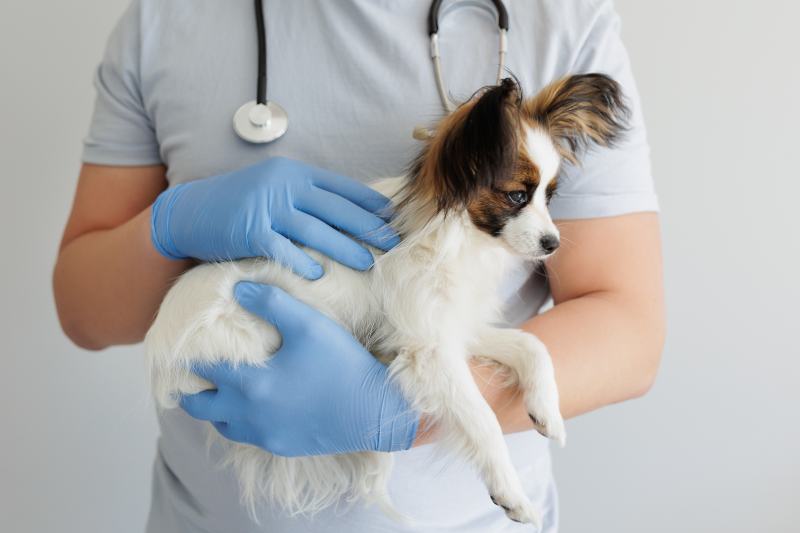
vet holding a papillon dog in his arms

If your dog is about to have surgery, such as a spay or neuter, they’ll have stitches to deal with after. And those stitches may be dissolvable, depending on what they are having done. What are those? Exactly what they sound like—stitches that dissolve and either fall out or get absorbed over time, meaning you don’t have to go back to have them removed.

If that’s what they’ll end up with, you’ll want to know how long it takes for these stitches to dissolve so you know whether things are healing as they should. In most cases, a dog’s stitches should dissolve anywhere from 1 to 4 months. That time range takes into account the type of dissolvable stitches used and how long it takes your dog to heal. Taking proper care of their incision site will help things along, though.

divider dog paws 2 oct 2024

How to Care for Your Dog’s Incision Site

If you’ve ever had surgery, you probably remember the directions you were given about keeping your incision site dry (at least for a few days after surgery). The same goes for your dog. That means no baths and not applying creams or disinfectants to the area (unless your vet specifically instructed it).

However, there’s a bit more to do than just keeping your dog’s incision site dry. You’ll also need to ensure your dog isn’t chewing or licking at the site (here’s where the cone of shame comes in handy!). Your pup’s activities will need to be restricted for a week or two; that means no running off-leash, long walks, jumping around, etc. Too much activity could cause the incision site to re-open, and neither of you wants that!

Other than that, if your dog’s stitches aren’t covered, you’ll want to check about twice a day to make sure they haven’t become infected or started bleeding.

Chihuahua with a cone
Image Credit: padu_foto, Shutterstock

What Is a Suture Reaction?

Sometimes dissolvable stitches get absorbed into the body rather than falling out. If that’s the case with your dog, there’s a chance that a suture reaction may occur. What exactly is that?

A suture reaction happens when a dog’s body rejects this foreign substance, which triggers an immune response such as inflammation. Your pet’s body will then try to get rid of the stitches by attempting to push them out, dissolve them, or break them down, which might lead to a bump (or bumps) appearing along the incision site.

If you think a suture reaction has occurred in your dog, you’ll want to take them to the vet, as they might need to remove the stitches.

If you need to speak with a vet but can't get to one, head over to PangoVet. It's our online service where you can talk to a vet online and get the advice you need for your dog — all at an affordable price!

PangoVet_Mention-in-Content Savings V1

divider dog paws 2 oct 2024

Final Thoughts

If your four-legged friend is about to have or has just had surgery and ends up with dissolvable stitches, they should fall out or be absorbed within 1 to 4 months. It just depends on the material used and how long it takes your pup to heal. You can help your dog with healing, so things move along as they should. by keeping the incision site dry, restricting activity right after the surgery, and keeping them from chewing or licking at the stitches.

You’ll also want to check the incision site daily to ensure there’s no infection or suture reaction occurring. If you see inflammation or bumps, you’ll want to talk to your vet to see if the stitches should be removed or if antibiotics should be given.

See Also:


Featured Image Credit: Di Studio, Shutterstock

Want content like this delivered to you?

Sign Up For Our Newsletter

News, insights, expert advice, and everything dog

* By submitting, you agree to our Terms & Conditions and Privacy & Cookies Policy.


How useful was this post?

Click on a star to rate (you can leave written feedback after clicking submit)

Help us improve Dogster for pet parents!

Your feedback really matters.

What did you like about this post? Also how can we improve it?

Join the conversation

Leave a Reply

You’re very welcome to leave a comment or question. Please know that all comments must meet our community guidelines, and your email address will NOT be published. Let’s have a positive and constructive conversation.


Talk With A Vet Online

Peace of mind,
anywhere, anytime

Affordable vet advice

Marigold Shocks Her Owner By Delivering 17 Irish Doodle Puppies in a Single Day

The one question vets hate hearing as they ultrasound expectant canine mothers is “how many puppies are there?” The reason is that, on...

Dogster’s Weekly Photo Contest Winners: Out Adventuring (March 12, 2026)

Every week our team gets the privilege of sorting through our readers photos to choose what dogs will win this weeks contest! See...

Ask Dr. Paola- Help! My Dog Gets Reoccurring UTIs (March 9, 2026)

Welcome to our “Ask Dr. Paola” series, where every Monday we bring expert advice straight from Dr. Paola Cuevas (MVZ) to help our...

DIY Repellents for the Dog Who Thinks Everywhere Is His Toilet

Dog urine and everything nice have a complicated relationship. One thrives, the other suffers, and if you’re reading this, you already know which...

More related

How Protective Are Newfoundland Dogs? Vet-Verified Breed Temperament Facts

Newfoundland dogs are known for their massive size, gentle nature, and exceptional swimming abilities. While their friendly demeanor and gentle temperament are well-known,...

Neem Oil for Dogs: What Is It, Safety & Risks (Vet Approved)

Neem oil is an extract taken from the seeds of the neem tree (Azadirachta indica) native to India. It’s been used for decades...

Bichon Frise Colors & Patterns (With Info & Pictures)

Bichon Frises are known for their unique genetics and we’re going to uncover the secrets behind their mesmerizing coat patterns. From the classic...

Wheaten Terrier Husky Mix: Info, Pictures, Care & More

The Wheaten Terrier Husky mix combines the Soft-Haired Wheaten Terrier with the Siberian Husky. Both breeds are known for being loyal and loving...

Keep reading

Can Dogs Have Pumpkin Spice? Vet-Verified Health & Nutrition Guide

Fall brings with it the advent of pumpkin spice everything—pumpkin spice lattes, pumpkin spice cookies and bread, pumpkin spice scented candles, and more! There’s really no better way to get into the fall season than with some pumpkin spice. But...

pumpkin spice

10 Best Freeze-Dried Dog Treats in 2026 – Reviews & Top Picks

Dog owners everywhere know how important it is to feed their dogs the most high-quality and well-balanced diet possible. While dog food takes up the majority of a canine’s diet, it’s important to remember that treats are also fed regularly,...

dog owner giving her pet shih tzu a treat

6 Food High in Magnesium for Dogs: Vet-Reviewed Facts & FAQ

Like humans, dogs require essential minerals and vitamins to function. Magnesium, along with calcium, phosphorus, and potassium, is an essential macromineral. It’s important for bone formation, muscle, and nerve function. Magnesium must be included in the diet in sufficient amounts...

dog eating in a food bowl

Can Dogs Eat Pomegranates? Vet-Verified Nutrition Facts & Info

Pomegranate is widely billed as being a superfood for humans, thanks to the diverse range of vitamins and minerals it contains, and the concentration of them. They are particularly known for being high in fiber and potassium as well as...

Dogster-Can-Dogs-Eat-Pomegranates

10 Best Dog Foods for Toy Breeds in 2026 – Reviews & Top Picks

When it comes to dog food, one size does not fit all, and if you have a toy breed, you know what we mean. Kibble size is important because if it’s too big for small doggies, they will have a...

owner training her toy poodle dog

10 Best Dog Foods for Yorkies in 2026 – Reviews & Top Picks

Having a Yorkie in your home is the perfect way to bring added joy to your life. If you’re like most pet parents, however, finding the right dog food is always on your mind. Yorkies are small dogs, with big...

Yorkshire Terrier with a bowl of food

Can Dogs Eat Dried Apricots? Vet-Verified Nutrition Facts & Info

Our dogs are omnivorous creatures—just like us. That means they could enjoy a wide selection of meat, fruits, veggies, and grains! If you’ve been looking for a few different options, other than boring dog treats to get your dog’s appetite...

Dogster-Can-Dogs-Eat-Dried Apricot

Can Dogs Eat Fritos? Vet-Reviewed Facts & FAQ

Dogs aren’t well-known for their pickiness, and it’s up to owners to monitor the food they can access. Just as you wouldn’t eat a bowl of Purina, your pup shouldn’t be making a habit of feasting on the foods we...

Can Dogs Eat_fritos

Love Dogs? So Do We! Join the Dogster Community

Stay informed with expert pet care insights delivered straight to your inbox! Discover professional guidance on animal behavior, feeding tips, trusted product picks, and much more.


Sign up for the Dogster Email Newsletter