Get

In Your Inbox

Dogster is reader-supported. When you buy via links on our site, we may earn an affiliate commission at no cost to you. Learn more.

How Long Will It Take for Dog Hair to Grow Back? Vet-Verified Facts

Share

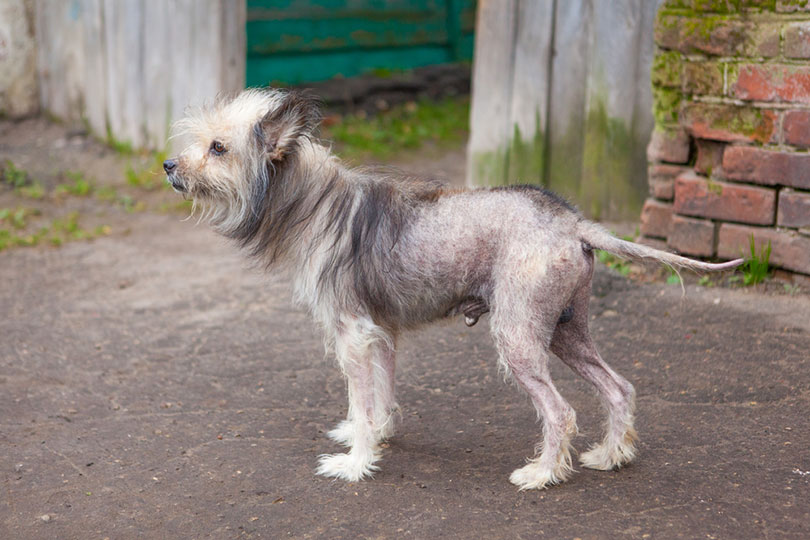
side view of a mongrel dog

Dogs come in all shapes and sizes, and depending on the breed, they can grow either short, medium, or long hair. They can grow one or two coats too. What may not be clear is how long it takes for a dog’s hair to grow back after being shaved or lost for some reason. There is no specific length of time for how long any dog’s hair will grow back to full length, but there are guidelines that we will cover in this article.

divider dog paws oct 2024

Why Dog Hair Is Important

Dogs grow hair to protect their skin from the outdoor elements, especially for temperature control. The hair helps to protect from injury to the skin and to express emotional state. Dog hair also protects the skin from being exposed to toxins and parasites. However, if your dog becomes ill, is exposed to an allergen, loses hair, or gets a bad haircut, they will have to wait until it grows back before they are fully protected again.

Hair Regrowth Depends on Many Things

The truth is that hair regrowth in dogs depends on many things, such as their age, breed, and health status. So, while there are estimates of how long it might take for your dog’s hair to grow back, you should consult with a veterinarian to get the most accurate estimate for your specific dog. However, keep in mind that the veterinarian still can’t absolutely guarantee any estimates that they provide you with. In general, hair should have started growing back within 4–6 weeks but will take longer to reach full length.

dog biting its tail
Image Credit: PixieMe, Shutterstock

Understanding a Dog’s Hair Growth Stages

Dogs go through multiple hair growth stages that play a part in dictating how long their hair takes to grow out after it has been lost or shaved. Here is a breakdown of those stages:

  • The Anagen Stage: This is when your dog’s hair most actively grows. The hair keeps growing until the length that has been predetermined by breed has been reached. This process can take anywhere from a minuscule 30 days to a whopping full year!
  • The Catagen Stage: This is when your dog’s hair stops growing and simply maintains its length. You won’t see any extra growth, and you shouldn’t see much shedding at this point.
  • The Telogen Stage: This is when your dog’s hair is in a resting stage, which means that no activity is happening at all. This paves the way for the shedding phase and can make your dog’s coat more vulnerable than during any other stage.
  • The Exogen Stage: This is when your dog’s hair starts to shed. This readies the coat for starting the anagen stage again and ensures that there is not already too much old hair still present when the new hair starts to grow in again.

These stages are important to understand because they are what ultimately determine how long it will take for your dog’s hair to grow back. Not all hair follicles will be in the same stage at the same time, and so for a full thick coat to grow back, all of the follicles will need to have had the opportunity to cycle and enter anagen.

How Long It Could Take for Your Dog’s Hair to Grow Back

According to the National Library of Medicine, after being shaved, the average Labrador Retriever grows back their hair to its normal length after 13.6—15.4 weeks. This is just one breed, though, so the time frame could be different for your dog. Generally, you can expect that it will take anywhere from about 30 days to 1 year for your dog’s hair to grow back in. A vet should be able to give you a clearer picture of what to expect from your dog.

You can also consult a vet online if you need quick and easy access to an expert’s opinion.

Did you know you can speak to a veterinarian without having to travel? Just head over to PangoVet. It's our online service where you can talk to a vet online and get the advice you need for your pet — all at an affordable price!

PangoVet_Mention-in-Content Savings V1

divider dog paws oct 2024

Final Thoughts

The amount of time that it takes your dog’s hair to grow back depends on factors such as their breed, their age, and the reason for their lost hair in the first place. Most dogs’ hair will have started growing back within 4 to 6 weeks. Make sure to check with a vet if you’re concerned about how long it is taking your dog to regrow their hair. Take the time to scout out any groomers that you’re considering hiring to cut your dog’s hair. Seeing a vet regularly and offering your dog proper amounts of food, water, and exercise can help ensure that they don’t succumb to health problems that result in lost hair.

See Also:


Featured Image Credit: Vasilii Nikitinskii, Shutterstock

Want content like this delivered to you?

Sign Up For Our Newsletter

News, insights, expert advice, and everything dog

* By submitting, you agree to our Terms & Conditions and Privacy & Cookies Policy.


How useful was this post?

Click on a star to rate (you can leave written feedback after clicking submit)

Help us improve Dogster for pet parents!

Your feedback really matters.

What did you like about this post? Also how can we improve it?

Join the conversation

Leave a Reply

You’re very welcome to leave a comment or question. Please know that all comments must meet our community guidelines, and your email address will NOT be published. Let’s have a positive and constructive conversation.


Talk With A Vet Online

Peace of mind,
anywhere, anytime

Affordable vet advice

Dogster’s Weekly Photo Contest Winners: The Cutest Puppy (April 2, 2026)

Every week our team gets the privilege of sorting through our readers photos to choose what dogs will win this weeks contest! See...

The Hidden Risk in Tall Grass That Most Dog Owners Ignore

Finding a tick on your dog can look like a lot of things, depending on when you catch it. Some are engorged and...

Ask Dr. Paola- Help! My Dog Keeps Barking at the TV! (March 30, 2026)

Welcome to our “Ask Dr. Paola” series, where every Monday we bring expert advice straight from Dr. Paola Cuevas (MVZ) to help our...

Dogster’s Weekly Photo Contest Winners: I’m a Messy Eater (March 26, 2026)

Every week our team gets the privilege of sorting through our readers photos to choose what dogs will win this weeks contest! See...

More related

Are Dogs Allowed in Kohl’s in 2026? Pet Policy & FAQ

Dog owners know how hard it is to find dog-friendly stores to take their furry friends to, and it’s not always clear what...

Do Miniature Schnauzers Like to Cuddle? Personality Traits & Facts

Miniature Schnauzers sure are cuties. Everything from their beard to their little wiggly tails tugs at your heartstrings. But when it comes to...

That’s My Bed! Poppy and I Go Head-to-Head

Hi, I’m Dr. Karyn! Read my introduction to learn more about me and my five funny dogs, Poppy, Bailey, Kodah, Ned, and Fred....

Hip Dysplasia in Dogs: Signs, Treatment & Prevention

Is your dog hesitant to climb stairs? Does she have a hard time getting up? She might just be “slowing down” due to...

Keep reading

7 Best Taste of the Wild Dog Foods in 2026 – Reviews & Top Picks

Dogs have always been known for their hearty appetites, and this is especially true of those that are bred to be active. Today, there is an abundance of different types of dog foods on the market, each with its own...

Maltese dog eating from a bowl

11 Best Dog Foods for Goldendoodles in 2026 – Reviews & Top Picks

With so many dog food choices out there, it can be hard to figure out if what you’re using is what’s best for your pup. That’s why we tracked down the ten best dog foods for your Goldendoodle and highlighted...

english goldendoodle puppy

Stock Up, Look Sharp, and Save While You Shop at PetSmart

When it comes to caring for our dogs, certain things simply come with the territory, like feeding, exercising, training, and grooming. We don’t expect to be paid for these responsibilities – a happy, healthy dog is its own reward! But...

PetSmart Grooming

Can Dogs Eat Cookies? Vet-Reviewed Nutrition Facts & Info

Cookies are often the first food we reach for when we crave something sweet or need comfort. So, if you find yourself whipping up a batch of grandma’s chocolate chip cookies this week, you might wonder if you can give...

Oatmeal Cookies on a plate

8 Foods for Dogs That Reduce Inflammation: Canine Health & Wellness

Inflammation is not always a bad thing. It happens when your dog’s body is trying to heal from an illness or injury. It is a crucial response that is meant to protect the body. But when inflammation becomes chronic and...

West Highland White Terrier dog at home eating

Can Dogs Eat Brussels Sprouts? Vet-Verified Nutrition Facts & Tips

When it comes to Brussels sprouts, it seems that you either love ‘em or you hate them, there is no in-between. There are people out there who adore this veggie and could eat them with every meal. Then again, some...

Can Dogs Eat Brussels Sprouts

Why Does My Dog Eat Tissues? 3 Vet Approved Reasons

Every time you turn, your dog is into something different. Maybe last week, they were ripping up the trim on your baseboards, and this week, they’re nose-deep into your Kleenex box. If your dog has recently taken a shine to...

Golden retriever playing with tissue on couch

Can Dogs Eat Cashews? Vet-Approved Nutrition Facts

Cashews are a much-loved snack and have great health benefits. The delicious nuts can be eaten all on their own or added to various dishes for a nutty flavor. But what about dogs? Your dog may adore cashews and other...

Can Dogs Eat Cashews

Love Dogs? So Do We! Join the Dogster Community

Stay informed with expert pet care insights delivered straight to your inbox! Discover professional guidance on animal behavior, feeding tips, trusted product picks, and much more.


Sign up for the Dogster Email Newsletter