In this article
Bringing a dog into our homes is a big commitment, and part of that commitment is being there to spend time with them, take them for walks, and allow them out to the toilet. It doesn’t mean you can never leave the house again, but it does mean that you need to factor them into your daily routine and consider your pet whenever you make plans to go somewhere.
Whether you’re heading to work for the day or spending time with friends, there are some things you need to keep in mind before leaving your dog at home, such as:
- Do they have plenty of water and enough food?
- Do they have a safe space to hide or chill out?
- Have they got toys/activities to keep them occupied?
- Is it warm/cool enough for them?
Just because you’re only popping out to the shops does not mean you don’t need to think about these things. After all, your dog doesn’t know how long you’ll be gone. I’ve had one dog completely destroy a sofa cushion within five minutes of me leaving the house!
If you have a Pug, you might be wondering if there are any specific requirements or considerations for leaving them alone. Essentially, the same basic rules apply to leaving your dog alone, no matter the breed, but there are some specific considerations you need to think about when it comes to leaving your Pug.
The first thing you’ll want to know is how long can pugs be left alone?
This will depend on the individual, but you can typically leave a dog at home alone for around 6-8 hours. However, this is something that needs to be planned and worked up to.
Let’s take a look at how to safely prepare and train your dog to spend some quality time alone.

How Long Can Pugs Be Left Alone?
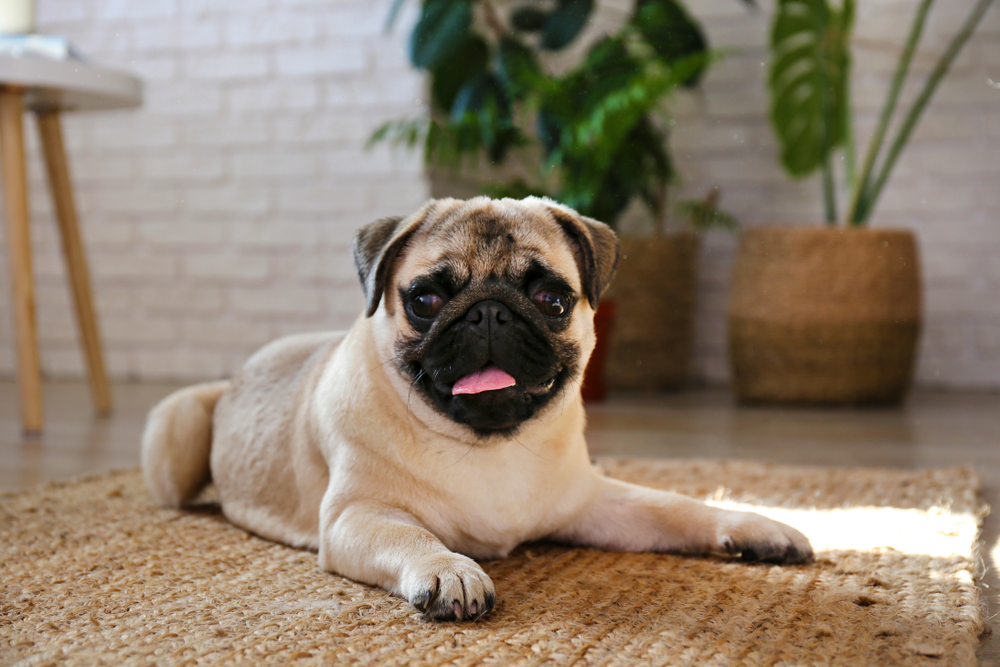
Pugs are very loving and affectionate dogs who just want to be wherever you are. They are also fairly lazy dogs, which can make them fairly amenable to being left alone. Like most dogs, a Pug can theoretically be left alone for around 6-8 hours, but this is dependent on a number of factors, namely:
- How long they can go between toilet breaks, or
- Do they have access to somewhere they can go to the toilet?
- Do they suffer from separation anxiety?
- Environmental factors such as temperature, humidity, noises
Getting your Pug used to being left alone should start within the first few weeks of them joining your family, even if you aren’t necessarily needing to leave them alone. Like all training, this is best started when they are puppies, but adults can absolutely be conditioned to being left alone, too. It’s all about slow, small steps.
Puppies under the age of 6 months should not be left alone for more than 1 hour at a time, but it is also important to make a point of leaving them alone on occasion. The length of time your puppy can be left alone will gradually increase alongside your confidence in their toilet training. By the time your Pug is 10-12 months old, they should be able to go 6-8 hours without needing the toilet. However, some dogs can’t wait more than 4-6 hours; this is something you will need to discover over time.

The 7 Tips for Preparing Your Home
Here are some helpful tips to take the stress out of leaving your Pug at home alone:
1. Provide plenty of water
Provide at least two water sources in case one gets spilled or soiled. If you’re using a crate, it’s a good idea to use heavy, ceramic water bowls.

2. Provide enough (but not too much) food
If you’re only going to be gone for a couple of hours, there is no need to provide a whole meal. A treat or a scattering of kibble are usually enough to keep any hunger at bay. Bear in mind that if they eat a whole meal while you are out, they are likely to need the toilet shortly after.
3. Keep them confined
When a dog is left alone, they will feel more compelled to monitor and guard the house, and the more space they have to protect, the more stressed and overwhelmed they may feel. By confining them to a smaller part of the home, you are reducing their ‘zone of responsibility,’ and therefore reducing their stress levels.
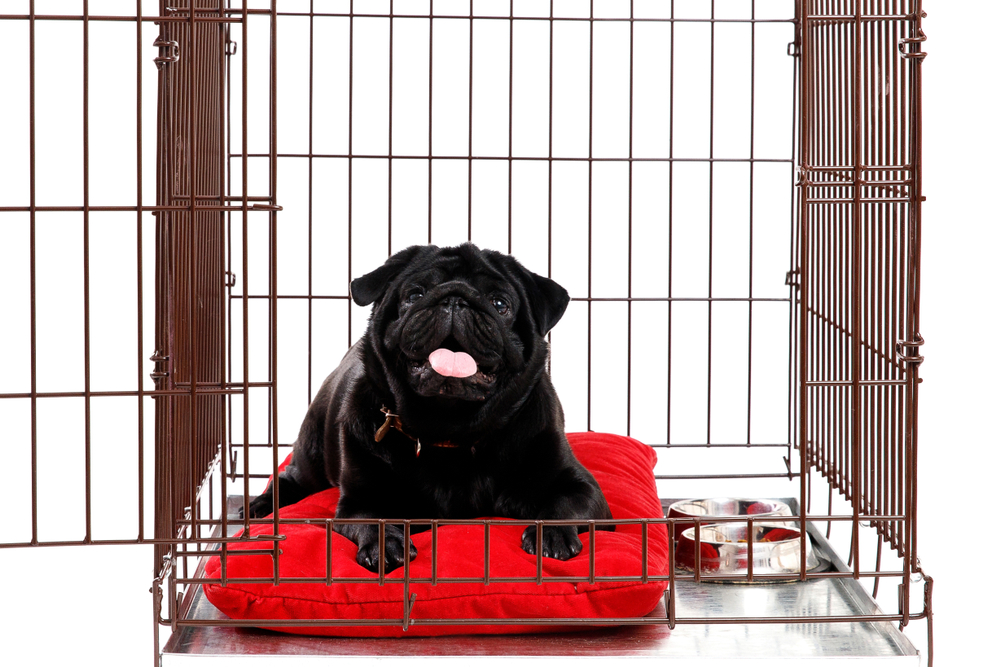
When you are getting your dog used to being left alone, whether it’s at bedtime or when you leave the house, using a crate will make the process SO much easier. Don’t think of it as a cage; think of it as a bedroom, somewhere that is just for them, where they feel safe and secure. Eventually, you may not need to close the door, but leaving the crate can provide them with much-needed security. The crate must be large enough to contain a bed plus space for them to walk around and play in.
4. Keep them away from the front of the house
This is important if you live in a busy area with lots of car or foot traffic. A lot of the time, “out of sight is out of mind” for our dogs, and what they can’t see, they won’t stress about (or bark at).
5. Check the weather forecast
If it’s going to be a hot or humid day, make sure your dog will be able to keep cool. Dogs rely on evaporative cooling through panting, so air movement is particularly important. Think about using a fan on warm, muggy days to ensure your Pug enjoys a breeze. Think about where the sun will be coming in through the windows over the day, particularly if you are using a crate.
On cold days, make sure your dog has plenty of blankets and warmth, but also ensure they can get away from the heat if they get too hot.
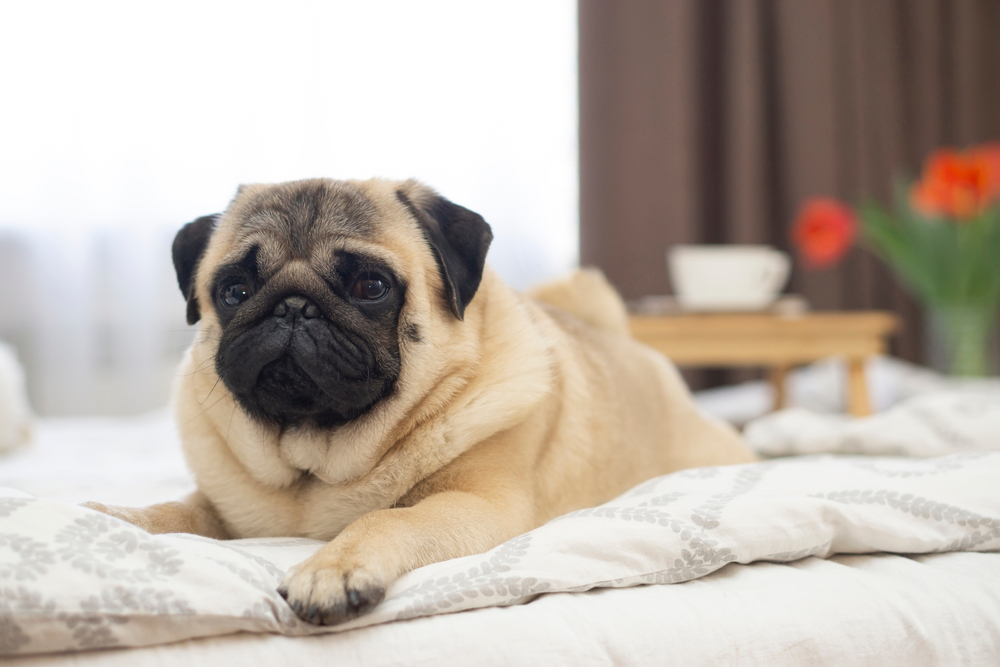
6. Think about noise
Although you can’t predict or prepare for every eventuality, if you are expecting any noisy construction, thunder, or fireworks, you might consider leaving a radio playing or using a sound machine.
7. Toys
You don’t want to overwhelm them by leaving a vast array of options, but you should provide a few different toys to keep your Pug occupied while you are out. This will help keep them distracted and less likely to destroy household items. Make sure you select toys that are tried and tested to not break into small pieces or pose a choking hazard.
How To Acclimatize Your Pug To Being Left Alone
The biggest mistake dog owners make when it comes to leaving their dog at home alone is the goodbye and greeting. It’s natural for us to want to make a fuss of our dogs as we leave the house, and hard to resist matching their excitement when we return. However, these rituals highlight your absence as a significant event, leaving many dogs to pine and stress until you finally make your long-awaited return home.
Once you have checked that your dog has everything they might need in your absence, the best thing to do is leave them with a toy or treat (being sure that it is something that does not pose a choking hazard), and casually leave without saying a word.
When you come back home – and this will be the hardest part – you should ignore your dog, particularly if they are going ballistic with excitement – and go about putting your bag or coat away. Once they are calm, you can say hello and give them a bit of a fuss, but don’t go overboard.
If you don’t make a big deal about going out, neither will they.
Build Up Slowly
Once your dog is over 6 months, it’s time to start leaving them alone for longer periods of time, even if you have to make special trips out to do it. Trust me, you don’t want to go from leaving them for 2 hours to 6 hours, only to find that their toilet limit was 4!
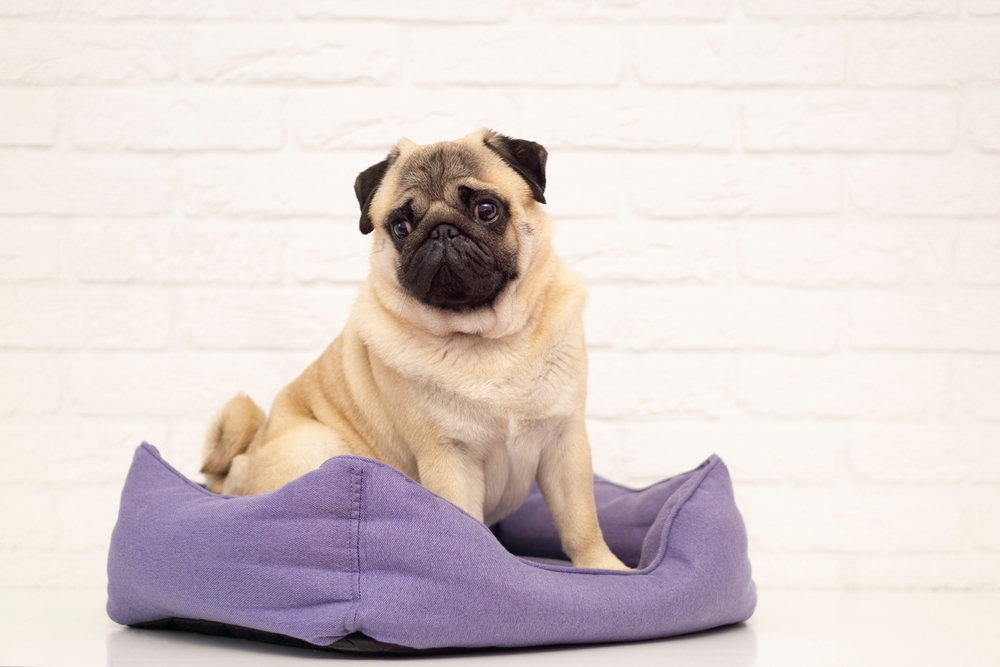
Considerations For A Brachycephalic Breed
The main factor we need to consider when leaving a Pug alone is those squishy faces. Brachycephalic dogs are at a significant disadvantage when it comes to breathing and cooling down, so stress and overheating can be dangerous.
Stress
If your Pug suffers from separation anxiety, or tends to get worked up easily, leaving them alone for extended periods is not a great idea. Acclimatizing them slowly using the advice above is the best way to minimize the risks of stress being an issue for your Pug.
If you do have a particularly anxious or stressy Pug, you can speak to your vet about options for keeping them calm in your absence.
Heat
As we mentioned above, dogs rely on evaporation of moisture from their tongues to cool them down, which is why dogs pant so much when it’s warm. Because of their compressed mouth and nose, brachycephalic dogs have a much harder time cooling down, making them more susceptible to heat stress, so it’s extremely important to make sure your Pug is able to keep cool when you are out of the house.
Final Thoughts
Since they are very loving, human-focused dogs, you might think that you could never leave a Pug alone for more than an hour or two, but with the right preparation and conditioning, there is no reason these velcro dogs can’t be left alone as long as any other dog breed.
Every dog is different, of course, and some will be more amenable to being left alone than others. Once you’ve double-checked that you are leaving them in a safe, secure, temperature-controlled space, the hardest part will be coming and going without any fanfare. The more of a fuss you make as you leave and come home, the more anxious your dog will be in your absence.
For brachycephalic breeds like the Pug, it is important to be particularly mindful of warm weather and stress, as those squishy faces may be cute, but they also have a negative impact on their oxygenation and cooling systems.
And if you’re worried about leaving them alone, you can always invest in a dog camera to keep an eye on them!
Featured Image Credit: evrymmnt, Shutterstock