What to Do If My Dog Is Choking? 4 Vet-Approved Steps


In this article
If your dog is choking, it is a medical emergency, and immediate action is required. It’s vital to know what to do if your dog is choking so that you can take the appropriate action immediately, as you may not have time to wait for a vet. However, try to remain calm. Hopefully, you have landed on this page to prepare for such an event, should it happen, rather than searching for answers while it’s happening. Being prepared is the best defense since dogs put many objects in their mouths.
While choking is rare, it can be fatal. We’ll cover what to do if your dog starts choking, and knowing this crucial information could save your dog’s life. Remember, your interventions at home may not be successful and you might need a vet to relieve the airway obstruction. Use your best judgment of how to help your dog and get to the vet at the same time.

The 4 Steps to Do If Your Dog Is Choking
1. Quickly Determine If Your Dog Is Choking
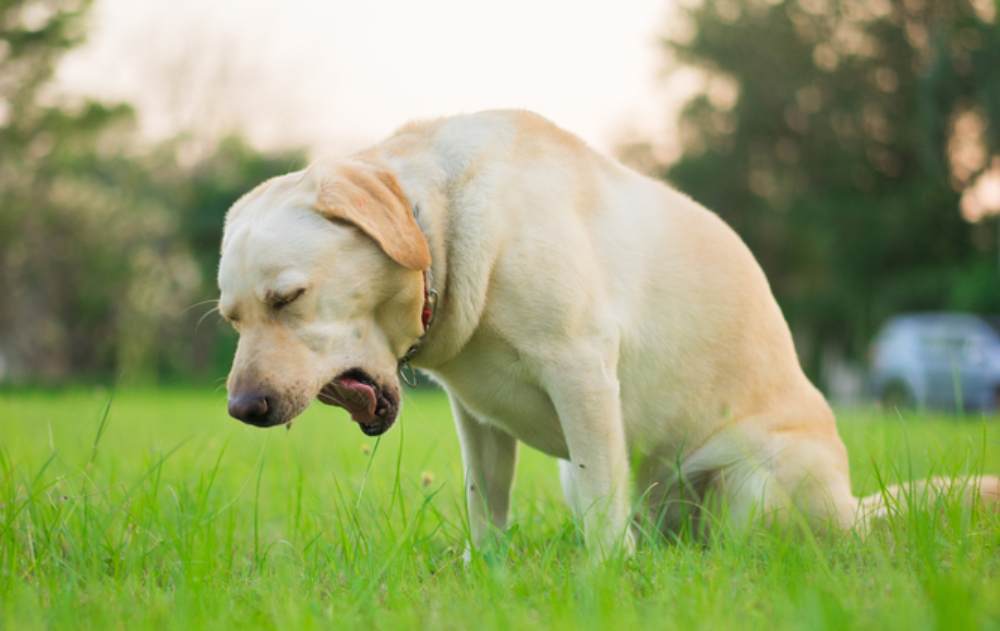
The first step is to determine if your dog is choking. Coughing is typically the first sign of choking, but it could be for different reasons, such as airway irritants or underlying medical issues. If something is lodged in their throat, coughing is a natural attempt to free the object.
Your dog may have trouble inhaling or is pawing at their mouth or head. They will likely appear panicked or may even become unconscious in severe cases. If you see any of these signs, your dog is likely choking, and immediate action is imperative.

2. Perform the Heimlich Maneuver
Your last resort may be to perform the Heimlich maneuver to free the object, but only attempt this if you have no other options. This maneuver requires little force, but you can easily injure your dog in the process. You should adjust the force used to suit the size of your dog.
Heimlich Maneuver for Smaller Dogs
Heimlich Maneuver for Medium to Large Dogs
3. Look Inside the Mouth
This next step must be done carefully but as swiftly as possible. Your dog will likely be panicked and may or may not try to bite out of fear. If you feel your dog will bite you, immediately take your dog to your local emergency vet. Carefully open their mouth by placing one hand on the upper jaw and one on the lower jaw. Fold your dog’s lips over the teeth and slowly pry the mouth open.
Grab a flashlight or even use the light on your phone for visibility. If you see food or an object, try to sweep it away with your finger, but be careful not to push on it. If it cannot be removed easily with your fingers, you might try grabbing the object with tweezers. If your dog has a bone or stick that is lodged enough to where you cannot simply remove it, do not pull it out, as this can cause damage to the throat.

4. Try the External Extraction Technique
The external extraction technique can be effective if your dog is choking on a soft, round, smooth object like a rubber ball. In that case, the object may be visible from the underside of the dog's neck as a bulge under the skin. Placing your dog on their back and pushing the ball toward their mouth can relieve the obstruction. This method will not work for sharp objects as you will cut the insides of your dog's throat, potentially even causing fatal bleeding.
If you need urgent veterinary advice, consult a vet online.

What to Do After Your Dog Stops Choking
If the object finally dislodges but your dog is not breathing, CPR is needed. CPR is performed similarly on a dog as it is a human.
CPR for Dogs
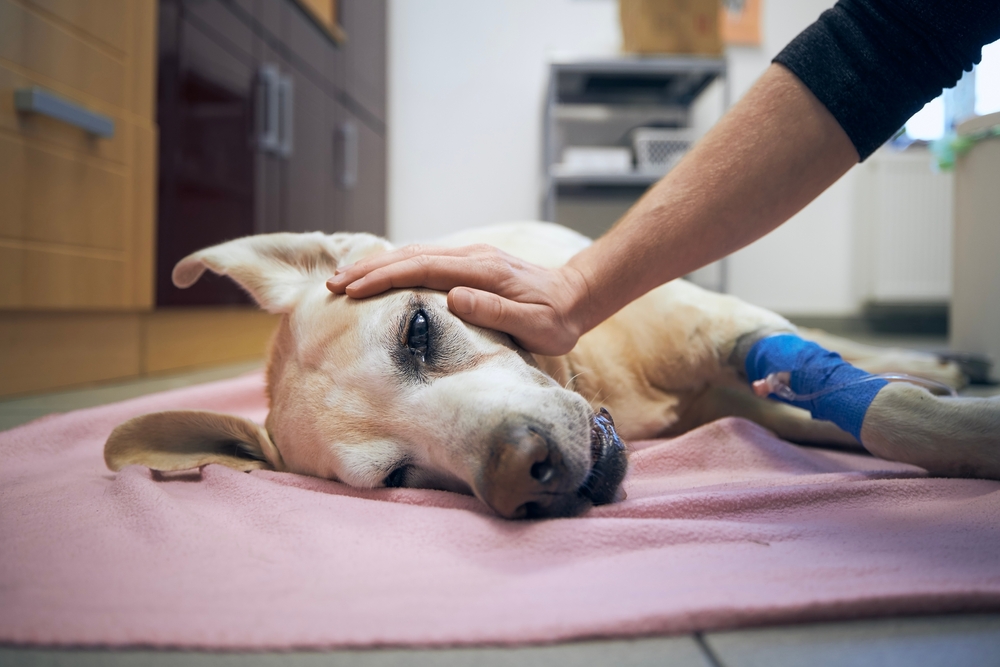
If your dog is breathing and seems to have recovered, you still need to have your dog checked by a vet to ensure no damage was done to the throat and that the airways are completely clear. A choking episode can lead to some secondary complications like aspiration pneumonia or pulmonary edema.

How to Prevent Future Choking in Dogs
The best way to prevent choking is to remove choking hazards from your home and yard. Let’s have a look at a few simple steps that could save your dog’s life
- Venetian blind cords can be death traps for dogs, and they can easily become tangled around their necks. To prevent this scenario, keep the cords out of reach from your dog at all times.
- Always provide toys that are size-appropriate for your dog. For example, refrain from giving a large dog a small ball to play with that is meant for smaller dogs. Small balls can easily get lodged in a larger dog’s throat.
- Ensure the kibble you feed is appropriate for your dog’s size.
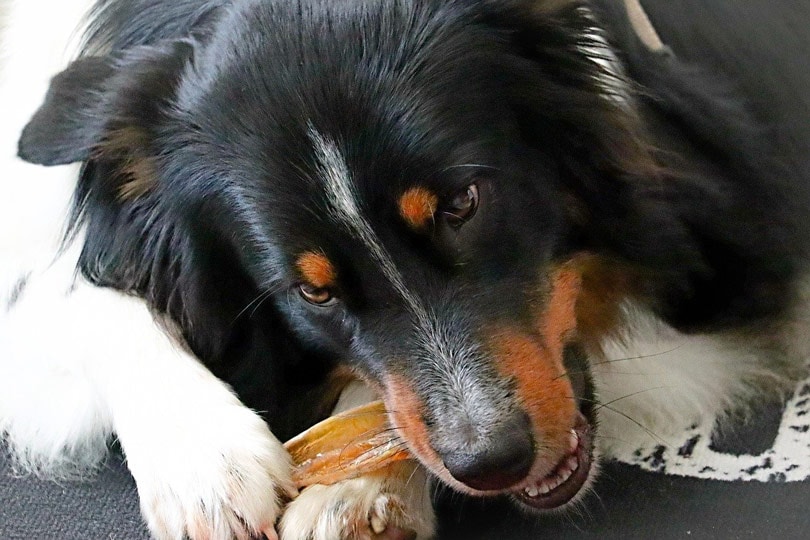
- Avoid giving your dog rawhides or access to any bones; they will sometimes attempt to swallow rawhide whole. It’s also a good idea to remove small sticks from your yard that can become lodged in the throat.
- Keep any potentially dangerous objects out of reach, such as children’s toys.
- Discard any dog toys chewed into pieces or have large chunks coming off.
- Know where your local emergency vet is located to save time in case you need to take your dog in to address the issue.
Conclusion
If your dog is choking, it will be a scary event; however, try to remain as calm as you possibly can. Remember to never push the object farther back into the throat; if dislodging the object fails, perform the Heimlich maneuver.
Keep your home and yard as safe as possible by removing dangerous objects, and always keep Venetian blind cords—or any cords, for that matter—out of reach. Provide appropriately sized toys, and never give your dog bones or rawhides, as they are potential choking hazards.
Sources
https://www.mooresvilleanimalhospital.com/site/blog/2022/03/15/choking-dog-heimlich-maneuver
https://www.petmd.com/dog/emergency/common-emergencies/e_dg_choking
https://veterinaryemergencygroup.com/blog/what-to-do-if-your-dog-is-choking/
https://www.petmd.com/dog/emergency/common-emergencies/e_dg_cardiopulmonary_resuscitation
https://veterinarypartner.vin.com/default.aspx?pid=19239&id=8871225
Featured Image Credit: McGraw, Shutterstock
Expert dog care, straight to your inbox
Vet-reviewed advice, training tips, and the best of Dogster. Free, and you can unsubscribe anytime.
By signing up, you agree to our Terms & Conditions and Privacy & Cookies Policy.
Rachel Giordano is a writer and musician living in Pensacola, Florida, with her partner and their two dogs, Aero, a Border Collie/Sheltie mix and Sophie, a Boston Terrier. Rachel holds a Bachelor of Arts degree in communication and loves writing about animals of all types. When she’s not writing about pets, she loves to write suspense/thriller novels. A musician by night and writer by day, she enjoys educating the public about the needs and requirements of animals, big and small.
Join the conversation
Ask a question, share your story, or send private feedback.