Dog Eye Discharge: What's Normal & What's Not (Vet Approved)


In this article
View 4 More +Spotting eye discharge can be concerning for dog parents and leave them wondering if it would be a good idea to seek veterinary advice. While some types of eye discharge are normal and harmless to your dog, others can indicate a more serious issue like an injury, infection, or another eye condition.
It is not always easy to tell what is normal and what isn't, so we have put together this guide to help you decide if a trip to the vet is necessary.

What Is Eye Discharge?
Eye discharge is made up of substances like mucus, tears, dead skin cells, oil, and dust, and it can be seen in or around the eye. There are several types of eye discharge varying in color and consistency, and the type your dog has can indicate whether or not there is a health issue at play.
For example, it's not unusual for dogs to have "eye boogers" just like humans do. Tears normally drain through the tear ducts in the corner of the eyes but sometimes a small amount of crusty or goopy material will accumulate and isn’t usually a sign that anything's wrong.
However, discharge that is excessive or an unusual color like yellow, green, or white-gray is indicative of an underlying problem such as an infection or other health condition and needs veterinary attention.

Did you know that you can speak with a real vet online about your dog's health?
To talk to a vet online, click on the image or button below:

What Are the Signs of Eye Discharge?
Eye discharge is not a condition itself, but rather, in some cases, a sign of a potential health condition or some kind of irritant that's bothering your dog. Nevertheless, since there are so many different types of eye discharge, it's important to know which types are not normal and the accompanying signs so you can seek treatment for your dog.
Signs that something could be wrong with your dog's eyes include:
What Are the Causes of Eye Discharge?
A small amount of eye discharge is not always a cause for concern, but many conditions could contribute to eye discharge in dogs, so let's break this down and take a closer look at normal and abnormal causes.
Normal Eye Discharge
1. Eye Boogers
This kind of discharge is related to tear drainage, as the eyes produce tears to clear out dirt and debris and keep the cornea healthy. Sometimes, dried tears and other substances like dust and mucus collect in the corners of the eyes, forming clear or reddish-brown discharge with a crusty or goopy consistency. The resulting eye boogers come off easily if you rub them gently with a damp, warm cloth.
As long as the amount remains consistent and there aren't any other signs that something is up, morning eye boogers are usually nothing to worry about.

2. Tear Staining
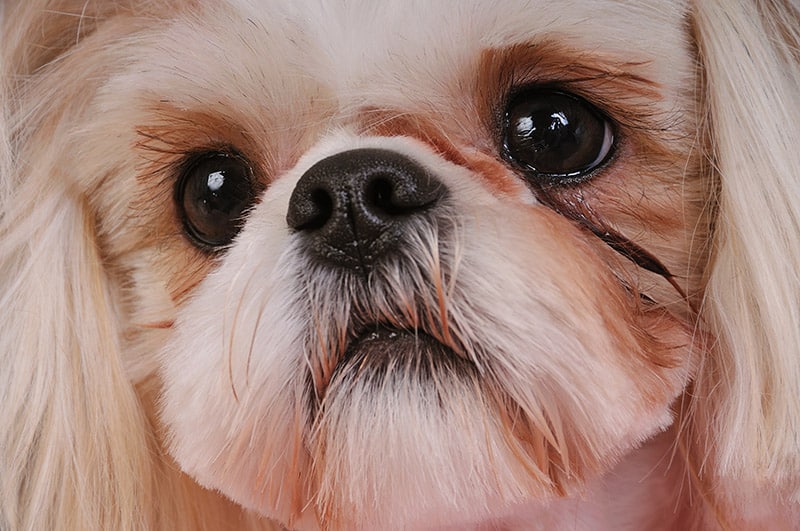
Tear stains are usually caused by the porphyrin pigment in tears that turns a rusty color when it comes into contact with the air. These reddish-brown stains are especially visible in white dogs like Westies, Bichon Frises, and Poodles, and they can be managed with daily wiping with a dog-safe cleaning solution and trimming the hair around the eyes.
Mild tear staining is often normal and doesn’t hurt your dog. However, if your dog starts to produce more tear stains, the color changes, or the eyes are red and sore, see a vet.

Abnormal Eye Discharge
1. Allergies & Irritants
Sometimes, eye discharge is caused by irritants like pollen, dust, smoke, and other pollutants and foreign bodies coming into contact with your dog's eye. This type of discharge is often clear and watery.
Your dog may experience this from time to time if something irritating blows into their eye, but dogs can suffer from allergic conjunctivitis. Allergic conjunctivitis is an inflammation of the eye usually caused by environmental allergens (like pollen), resulting in redness (often in both eyes) and discharge. See a vet if you suspect this condition.

2. Eye Infections
Yellow or green discharge, sometimes coupled with redness, is often a giveaway sign that a dog has an infection of the eye, eyelid, or tear glands. Bacterial, fungal, and viral infections can lead to various conditions like conjunctivitis (pink eye) and uveitis (inflammation inside the eye), resulting in symptoms like squinting, blinking, swelling, redness, and discharge.
Foreign bodies can also lead to eye infections.
3. Other/Underlying Health Conditions
Thick white-gray discharge is one of the signs of dry eye (keratoconjunctivitis sicca), a condition caused by a lack of tear production. The eyes become dry and inflamed with a sticky discharge. Affected dogs suffer from frequent eye infections and often corneal ulcers. Dry eye is usually immune-mediated but it can also be caused by conditions like hypothyroidism, nerve damage, and as a side effect of certain medications.
Other eye conditions that can cause eye discharge include (but are not limited to):
- Glaucoma: Glaucoma causes pressure within the eye, and watery discharge is one of the signs.
- Cherry eye: This occurs when the third eyelid gland prolapses. In addition to a red or pink mass, eye discharge is another sign.
- Ectropion: Eyelid ectropion causes the eyelid to roll outward, resulting in a droopy look.
- Entropion: Eyelid entropion is when the eyelid rolls in. Hairs can rub on the cornea.
- Corneal ulcers: Corneal ulcers are caused by damage/erosion to the surface of the eye, often as a result of trauma, such as scratches on walks or from other animals. They can also be caused by eyelid abnormalities, dry eyes, and foreign bodies, among other conditions. Corneal ulcers may cause the eye to appear cloudy, red, and inflamed. They are painful and require veterinary treatment immediately.


How Do I Care for a Dog With Eye Discharge?
If your dog is experiencing normal morning eye boogers or tear staining, you can manage this by carefully wiping the area daily with a clean, damp, warm cloth, or pet-safe wipes that are designed to be used around the eyes. However, if you spot other signs like white-gray, yellow, or green discharge, redness, swelling, or itching, or if your dog seems to be in discomfort in any way, it's essential to see a vet to get to the root of the issue.
Follow your vet's advice and never try to treat eye infections or other conditions by yourself without asking a vet. Your vet is the best person to make a diagnosis and determine the ideal treatment plan.
If you are looking for the perfect product to clean your dog's sensitive areas, Hepper's Wash Wipes are our recommendation, plus it's a great on-the-go option. These premium wipes are thick and durable enough for the toughest of paw messes, while still being soft enough to use on your dog's ears or eyes. Formulated with pet-friendly, hypoallergenic ingredients they are the ideal product for all dogs of all ages, skin conditions, or sensitivities.
At Dogster, we’ve admired Hepper for many years and decided to take a controlling ownership interest so that we could benefit from the outstanding designs of this cool pet company!

Frequently Asked Questions
When Should I Be Concerned About My Dog's Eye Discharge?
If you see an increase in discharge or it is yellow, green, or white-gray, possibly with other signs like swelling, redness, pawing at the face, or tears running down the face, see a vet as these are indicative of an infection or underlying health issue.
? ? Speak To a Vet Online From the Comfort of Your Couch!

If you need to speak with a vet but can't get to one, head over to PangoVet. It's our online service where you can talk to a vet online and get the personalized advice you need for your pet — all at an affordable price!
How Do I Treat Eye Discharge in Dogs?
It's important to take your dog to a vet if you see abnormal discharge to get advice on treatment and/or management techniques. Avoid self-diagnosing and using medications you have at home without a vet's input.
Should I Wipe My Dog's Eye Discharge?
If it appears to be a normal discharge, like morning eye boogers or a bit of regular tear staining, it's fine to wipe the area with a warm, clean, damp cloth or cotton wool pad. Start from the inside and wipe to the outside; just be careful not to scratch the eyeball itself with the cloth. Make sure to swap and use a clean cloth or a new piece of cotton wool for each eye. If the discharge appears to be abnormal, please speak to a vet before taking any kind of action.

Final Thoughts
If you spot discharge around your dog's eyes, don't panic. Causes are numerous, and some are perfectly normal or easily treated with prescription medications and/or management techniques. Nevertheless, always see a vet if you are concerned about your dog's eye health in any way to rule out more serious issues.
Sources
https://vcahospitals.com/know-your-pet/conjunctivitis-in-dogs
https://www.petmd.com/dog/conditions/eyes/dog-eye-allergies-symptoms-and-treatment
https://vcahospitals.com/know-your-pet/keratoconjunctivitis-sicca-kcs-or-dry-eye-in-dogs
https://www.smalldoorvet.com/learning-center/medical/cherry-eye-in-dogs
https://vcahospitals.com/know-your-pet/eyelid-ectropion-in-dogs
https://www.petmd.com/dog/general-health/evr_dg_eye_problems_in_dogs
https://vcahospitals.com/know-your-pet/corneal-ulcers-in-dogs
Featured Image Credit By: Anne Kitzman, Shutterstock
GetIn Your Inbox
Want content like this delivered to you?
News, insights, expert advice, and everything dog

Kit Copson is a freelance writer and lifelong animal lover with a strong interest in animal welfare. She has parented many furry beings over the years and is currently a proud cat mom of two—one very chilled (unless hungry) Siamese and a skittish but adorable Domestic Shorthair—and dog mom of one—an adopted Bichon Poodle cross. When not writing about or spending time with pets, Kit can be found drawing in her sketchpad, reading, or more often than not, drinking tea.


