Dr. Paola Cuevas is our Senior In-House Veterinarian at Dogster and Pangolia. She has over 19 years of experience working with an array of species and loves sharing her knowledge and experience with our readers and aims to provide assistance with any issue presented by your non-human family members. She received her degree from the University of Guadalajara, Mexico.
Her passions are animal welfare and preventive medicine, and has skills in the fields of nutrition, microscopy, clinical pathology, diagnostic imaging, and endoscopy.
Paola frequently contributes pet care insight to various media outlets like PetMD, The Daily Record, Parents.com, etc.
Paola is also an animal behaviorist with extensive experience in positive reinforcement animal training.
It isn’t easy to help a dog struggling with anxiety. Soothing an anxious dog tends to be a long, drawn-out process that requires frequent repetition and work. You may have started dipping your toes into anxiety-reducing products to try and help relieve your dog’s distress, and now you’ve stumbled across calming dog beds.
The concept is intriguing, but do they really work? What makes them so much different than any other dog bed?
Calming dog beds are specially designed to relieve stress by offering your dog feelings of support and security. To learn more about how calming dog beds work as well as the advantages of using a calming dog bed, keep reading below.
How Do They Work?
These dog beds are designed in a way to relieve stress by making your dog feel more secure. Most calming dog beds have raised edges, which helps your dog to feel more secure while they sleep. If you ever had a baby blanket or favorite stuffed toy that comforted you and helped you fall asleep when you were little, you understand the concept. The calming dog bed provides the same kind of security.
That means that, yes, according to anecdotal reports calming beds do work, but they’re not a one-size-fits-all approach. Calming beds could be most effective for dogs with mild anxiety or minimal fearful behaviors rather than extreme anxiety. However, that is not to say that a calming bed would be useless for a dog with severe anxiety, but rather that the results may be a little more challenging to notice.
Some calming beds can have an array of unique functions. They may have orthopedic padding, stronger ridges, hiding spots, and heating functions. These qualities can be especially helpful for dogs who need extra support, such as dogs that need to hide when they are frightened.
Calming beds are not replacements for medication or behavioral training; they are supplemental tools that give your dog some extra support. The greatest benefits of calming beds can be seen when you give your dog behavioral training or medications. While calming beds will not be the end-all of your dog’s anxiety troubles, they are certainly a valuable tool to employ. Canine anxiety is a complicated condition to work with, and it is rare that one solution will have all the answers your dog needs.
Image By: Olga Ovcharenko, Shutterstock
What Are the Different Types of Calming Dog Beds?
There are several types of calming dog beds. The variety helps you select a calming dog bed that more accurately suits your dog’s needs. If your dog displays certain behaviors when they are anxious, a bed geared to meet that specific behavior will be much more beneficial for them.
Bolstered dog beds are a version of calming dog beds that have raised edges along the sides. Many calming dog beds have this feature, but not all of them do. The raised edges give your dog a place to lean, rest its head, and feel secure. These are ideal for dogs that enjoy curling up and feeling safely surrounded.
Orthopedic dog beds are made of memory foam, designed to be soft and plushy to relieve pressure and sore joints. These calming dog beds are beneficial for elderly dogs that may be experiencing arthritis or chronic pain since they provide a comfortable place to rest and experience a reprieve from their pain.
A Self-warming dog bed is another option you can try. These beds generate their own warmth and can be extremely helpful for dogs that become distressed when they are cold, causing an increase in anxiety. If your dog knows that they can easily warm up in their bed, those feelings of anxiety can be much easier to deal with.
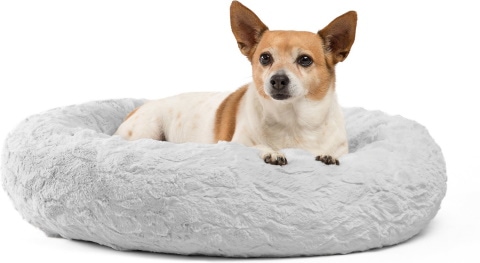
A donut-style dog bed is a perfect fit for a small-breed dog. These calming dog beds are made of plush material that surrounds your curled-up dog. They are designed to remind dogs of the sensation of cuddling.
The cave-style dog bed is a great choice for dogs that like to burrow when anxious. They provide a pocket for your dog to burrow into when they are distressed, similar to how you might hide under the covers when stressed.
Where Is It Used?
While there are no scientific studies to back these claims often, calming dog beds are used for dogs that experience anxiety. This can include general feelings of fear or feelings of distress that are specific to a situation or environment. Anecdotal evidence suggests that if a dog suffers from separation anxiety, a calming dog bed may be a helpful way to increase the likelihood of them settling down and taking a nap while the owner is away.
Again, this is not a scientifically proven approach, and the trend is more based on anecdotal reports, however, it is unlikely that a calming dog bed would be the sole solution to a dog’s anxiety. Calming dog beds are often used in addition to behavioral training, medication (if prescribed by a veterinarian), and other calming products.
Image By: Rhys Leonard, Shutterstock
Advantages of Calming Dog Beds
Beyond the effects that calming dog beds can have on anxiety and other feelings of distress, another benefit to these beds is the support offered by the raised rims. Most calming dog beds have raised edges around the sides, which support the neck and spine while your dog is resting. This helps to minimize joint and muscular pain or discomfort.
Other specific calming dog beds will provide additional benefits. For instance, the orthopedic dog bed can relieve signs of arthritis and chronic pain, while the self-warming dog bed can offer extra heat to your dog during colder days.
Not to mention, these beds tend to be very comfortable. At the very least, they can offer your dog a cozy place to settle down and nap!
Disadvantages of Calming Dog Beds
Since there is no one-size-fits-all approach to anxiety, it would be unfair to consider the calming dog bed’s inability to fix anxious behavior a disadvantage. There are no overall disadvantages to calming dog beds; however, there can be issues with individual products. If a product is poorly made, you may experience some difficulties.
For example, poor-quality materials may lead to a less durable bed that you will have to replace frequently. Other brands may include beds with no headrests, no digging space, and unwashable materials.
Frequently Asked Questions (FAQ)
What to Look for in Calming Dog Beds
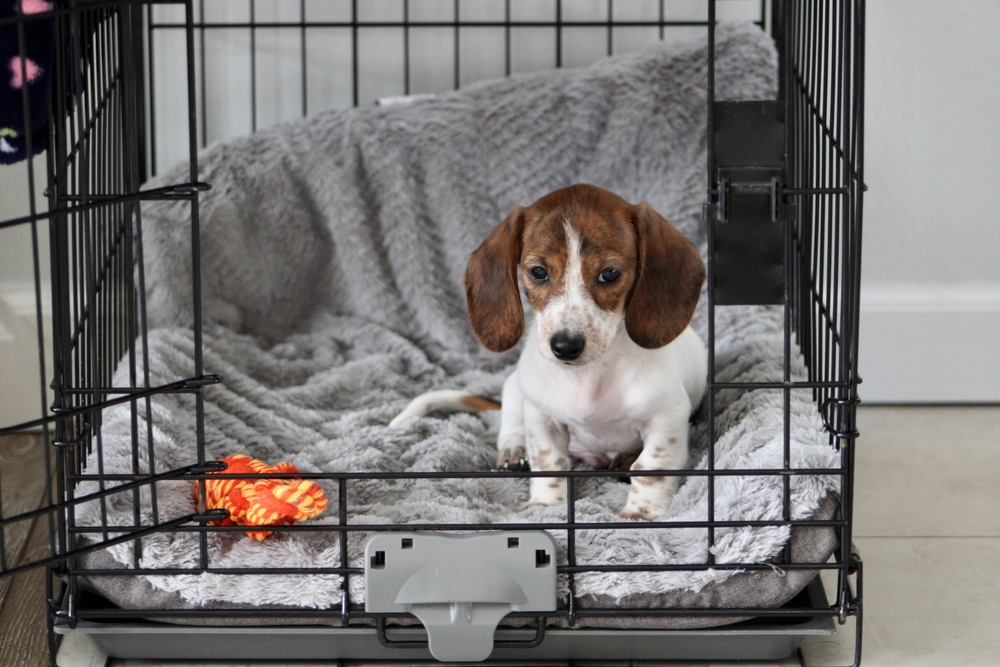
When looking for the right calming dog bed for you, there are some factors that you will want to consider. You will want to bed to be odor-resistant and machine washable at the bare minimum. A waterproof lining will be helpful for dogs prone to potty accidents, especially when anxious.
The bed should not slip around while your dog is in it. That could give them more reasons to feel anxious. If the bottom of your dog’s bed is not made to prevent slipping, you’ll want to find another bed. Likewise, it is vital to find the correct size. Your dog’s bed should be big enough to curl around inside but not so big that they lose the feeling of security.
Image By: everymmnt, Shutterstock
How to Know if a Calming Bed Is Right for Your Dog
Your dog doesn’t necessarily need to struggle with anxiety for you to get them a calming bed. If you want to get them a calming bed just for the sake of getting them a bed, that’s a perfectly fine reason.
If your dog displays common signs of anxiety, such as pacing, trembling, or hypervigilance, then a calming dog bed may support them. Likewise, if your dog has trouble in other areas of life, such as arthritis, a specialized calming dog bed may be beneficial.
Other Ways to Help Your Dog Calm Down
A calming dog bed can help soothe your dog, but it cannot do all of the work. If you need extra help settling your nervous dog down, you can try other products, such as synthetic pheromone diffusers. You can also create a designated safe space in your house that will allow your dog to feel comforted and secure.
In Conclusion
Calming dog beds may help soothe your dog and work as a great supplemental product to other anxiety-relieving medications, therapies, or products you may already use. Several calming dog beds are available, but some models may suit your dog better, depending on its needs. While calming dog beds cannot be the one solution to your dog’s anxiety, anecdotal evidence suggests that they can help provide comfort and relief.
Pets are Jordyn’s passion, especially cats. Whenever she has the opportunity, she loves to learn about animals and share her knowledge with everyone. She is devoted to her mischievous tabby cat named Jack and works hard to buy him his favorite toys and treats. Discovering new ways to better care for her pet is always on the top of her to-do list, and she is eager to help pet parents everywhere who have similar pursuits. In her free time, she loves to write, read, and take long walks. She has a creative spirit, which often helps her to come up with funny cat names.
Domestication has profoundly affected our canine companions. They have gone from carnivorous predators to pampered pets. Roughly 95% consider them members of their...
Dogs are known as “man’s best friend.” As a pet owner, it is important to provide your furry friend with the best diet possible to ensure they live a long and healthy life. Check out our list of the best...
We’re just dotty about Dalmatians! The perfect dog for children, Dalmatians are loyal, playful, and affectionate. As Disney royalty, they stand out among all other breeds with their unique white and black spotted coat. With all the different types of...
Review Summary Joy Dog Food has been making pet food since 1943. It started as Best Feeds, intending to provide supplies to the farming communities around Pennsylvania, but by the mid-50s, it moved into making dog food. Through thorough research...
Both Blue Buffalo and Purina Pro Plan are well-known brands that sell a wide variety of dog food. At a quick glance, both brands look very similar. However, a closer examination will reveal several key differences between these brands. It’s...
Congratulations on your new Golden Retriever puppy! You now have a beautiful, smart, and loyal dog who will love you for life. To make sure they grow into a healthy and happy companion, you need to feed them the right...
The Cavapoo is a popular companion dog that’s a cross between a Cavalier King Charles Spaniel and a Poodle. While this dog breed tends to be pretty healthy, it can be challenging to find the right diet for Cavapoos. Many...
Many dog owners today are looking for healthier food options for their pets, including fish. Most fish are high in protein and other nutrients and are an excellent addition to a dog’s diet. One question you might have is whether...
* Use code PETKEEN15 and save 15%. Based in Long Beach, California, Pawstruck, is a small business specializing in wholesome products for dogs—including dog chews and treats, supplements, and grooming supplies. Since 2014, Pawstruck has been run by fellow dog...
Stay informed with expert pet care insights delivered straight to your inbox! Discover professional guidance on animal behavior, feeding tips, trusted product picks, and much more.
You may opt-out at any time. View our Privacy Policy for more information.
Sign up for the Dogster Email Newsletter
You may opt-out at any time. View our Privacy Policy for more information.
You may opt-out at any time. View our Privacy Policy for more information.